


- by wangfred
Augmented Reality and Evolution: The Next Leap in Human Experience
- by wangfred
Imagine a world where the line between the digital and the physical doesn't just blur—it disappears. Your morning run is guided by virtual checkpoints left by friends, historical figures narrate the ruins you're exploring, and complex repair instructions are projected directly onto the engine you're fixing. This is not a distant science fiction fantasy; it is the imminent future being built today through the rapid evolution of augmented reality (AR), a technology poised to become the most significant interface between humans and information since the invention of the smartphone. We are standing at the precipice of a new sensory layer for humanity, a development that represents a profound evolutionary step in how we perceive, interact with, and ultimately shape our world.
At its core, augmented reality is a simple yet revolutionary concept: the seamless integration of digital information—be it images, sound, or data—with a user's real-world environment in real-time. Unlike its cousin, virtual reality, which seeks to replace the real world with a simulated one, AR aims to supplement and enhance reality. This fundamental difference makes it a far more ubiquitous and, arguably, more powerful technology. The goal is not escape, but empowerment.
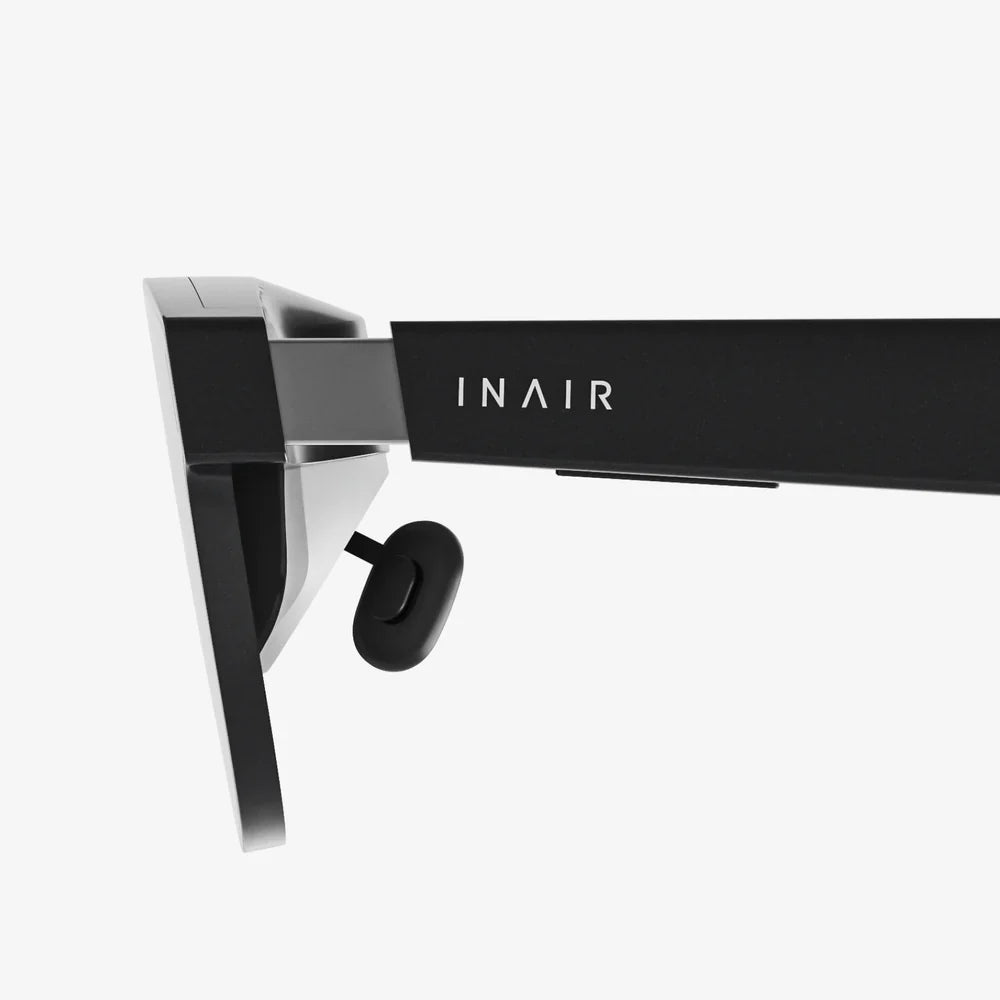
The technological pillars that make this possible are a symphony of advanced hardware and sophisticated software. It begins with sensors—cameras, LiDAR, and depth sensors—that constantly scan the environment, mapping the physical space in intricate detail. This spatial map is then processed by powerful onboard processors and algorithms that understand the geometry of the world, distinguishing a flat wall from a curved table, and calculating precise distances and angles. Finally, the display technology—whether through a smartphone screen, smart glasses, or future neural interfaces—renders the digital content and anchors it convincingly to a specific point in the physical world. This entire process, from scanning to rendering, happens in milliseconds, creating the illusion that the digital and physical are coexisting in the same plane.
To truly appreciate the seismic shift AR represents, we must view it not as an isolated invention, but as the latest step in the long evolution of how humans interface with technology and information. Our journey began with the command-line interface (CLI), a text-based system requiring users to learn complex syntax to communicate with machines. This was a powerful but exclusive tool, accessible only to a priesthood of technicians.
The graphical user interface (GUI), popularized in the late 20th century, was a monumental leap. It introduced the metaphor of the desktop, with files, folders, and trash cans, allowing users to interact with digital information through intuitive visual representations. This democratized computing, moving it from research labs and corporate backrooms into homes and offices. The touch interface, catalyzed by the smartphone, was the next paradigm shift. It removed the intermediary mouse and keyboard, allowing for direct manipulation of digital objects with our fingers. It made technology portable, personal, and tactile.
Augmented reality is the logical successor, evolving the interface from a screen we look at to an environment we look through. It is the shift from a destination (opening an app) to a context (information available based on where you are and what you're doing). This represents a move towards what Mark Weiser, former chief scientist at Xerox PARC, termed "ubiquitous computing" or "calm technology," where technology recedes into the background of our lives, weaving itself into the fabric of everyday existence until it is indistinguishable from it.
The evolutionary impact of AR is already being felt across a vast spectrum of industries, solving real-world problems and enhancing human capability in tangible ways.
In medicine, AR is revolutionizing both training and practice. Medical students can now practice complex surgical procedures on detailed, interactive holograms of human anatomy, overlaying digital organs onto medical mannequins. This allows for risk-free repetition and mastery. In the operating room, surgeons can use AR headsets to project critical information—such as a patient's vital signs, 3D models of tumors, or the precise path for an incision—directly into their field of view. This eliminates the need to look away at a monitor, maintaining focus and potentially improving surgical outcomes. It is an evolution from relying on memory and separate screens to having contextual intelligence integrated directly into the task at hand.
This is perhaps one of the most mature applications for AR. Technicians performing maintenance on complex machinery, from jet engines to industrial printers, can use AR glasses to see digital arrows and annotations pointing directly to components that need attention. Step-by-step instructions can be overlaid onto the physical equipment, guiding them through each procedure and reducing errors. For engineers and architects, AR allows them to project full-scale 3D models of their designs onto a physical site. They can "see" a new building on an empty lot or a new engine component inside an existing assembly, identifying design clashes and spatial issues long before physical construction begins, saving immense time and resources.
AR is evolving education from a passive to an active and immersive experience. Instead of reading about ancient Rome, students can walk through a digitally reconstructed Roman forum on their school grounds. Chemistry students can manipulate and combine virtual molecules, watching reactions unfold without any physical risk. This contextual, hands-on learning aligns with how the human brain best acquires and retains knowledge, moving beyond abstract textbooks into experiential understanding.
The way we shop is undergoing an AR-driven evolution. Customers can now use their smartphones to see how a new sofa would look in their living room, how a pair of glasses fits their face, or even how a new shade of paint would transform a room. This reduces the uncertainty of online shopping and decreases return rates. In physical stores, pointing a phone at a product could reveal information about its origins, materials, or customer reviews, creating a richer, more informed shopping experience.
Beyond practical applications, the deeper evolution AR promises is cognitive and social. It has the potential to fundamentally alter human perception and social interaction.
Cognitively, AR acts as an externalized, contextual memory. It offloads the burden of remembering instructions, directions, or information, allowing our brains to focus on higher-order problem-solving, creativity, and decision-making. This is not a dilution of intelligence but an augmentation of it, much like the invention of writing allowed us to externalize memory and foster more complex thought. We are evolving from having to recall information to knowing how to access and apply it contextually.
Socially, AR introduces the concept of shared persistent digital spaces. Friends separated by geography could meet in a shared AR environment to play a virtual board game on a real table, collaborate on a 3D model, or simply share a experience as digital avatars in a physical park. This creates a new paradigm for connection that is richer than a video call but still grounded in a sense of shared physical presence. Public art could become dynamic and interactive, with digital sculptures and narratives layered over cityscapes, accessible to anyone with a device, creating new forms of communal experience.
No evolutionary leap is without its perils and challenges, and AR is no exception. For this technology to reach its positive potential, several significant hurdles must be overcome.
Privacy and the Ethics of Surveillance: An always-on, context-aware AR device is, by its very nature, a powerful sensor. It sees what you see, and potentially records it. The data collected—your location, what you look at, for how long, and even your biometric responses—is incredibly sensitive. Without robust ethical frameworks and privacy-by-design principles, we risk building a world of corporate and government surveillance that makes current data collection seem primitive. The very technology that enhances our vision could be used to monitor us in unprecedented ways.
The Digital Divide 2.0: This technological evolution risks creating a new, more profound socio-economic chasm. Those with access to advanced AR technology will benefit from enhanced learning, productivity, and access to information, while those without may be left further behind. This could exacerbate existing inequalities in education, employment, and social mobility.
Information Overload and Reality Dilution: Constant notifications and digital stimuli vying for our attention in the real world could lead to severe cognitive overload and anxiety. When everyone can project their own digital reality into shared spaces, we also risk a fragmentation of shared experience and a further erosion of a common, objective reality. Distinguishing between what is real and what is digital augmentation could become a genuine challenge.
Physical Safety and Social Etiquette: Walking around with a heads-up display poses obvious physical dangers, from tripping over curbs to distracted driving. Furthermore, the social etiquette of AR is yet to be written. Is it rude to wear AR glasses during a conversation? How do we know if someone is recording us? These social norms will need to evolve alongside the technology.
The ultimate trajectory of AR's evolution points toward a more seamless and symbiotic relationship between humans and machines. Current hardware, like bulky headsets, will give way to lighter, more socially acceptable forms, eventually evolving towards contact lenses or even direct brain-computer interfaces. The interface will become more intuitive, moving from hand gestures to voice commands and eventually to neural input—simply thinking about an action will make it so.
The "killer app" for AR might not be a single application, but the platform itself—a pervasive, intelligent layer of context that understands our needs and intentions before we even articulate them. It could act as a real-time universal translator, not just of language, but of cultural context. It could serve as a personalized health monitor, analyzing our gait, posture, and even subtle facial cues to provide early warnings of medical issues.
In the long arc of human history, we have evolved from using tools to shape our environment to now developing tools that will shape our perception of that environment itself. Augmented reality is the key that unlocks this next phase. It represents a shift in the human condition, offering a future where our digital and physical realities are not competing realms but a single, integrated, and enhanced continuum of human experience.
The promise of AR is a world less cluttered with screens yet infinitely richer with information, a world where technology doesn't demand our attention but quietly amplifies our human potential. The next chapter of our evolution won't be written in our genes alone, but in the digital layer we choose to weave into the very fabric of our reality. The interface is disappearing, and what emerges in its place will redefine what it means to be human in an increasingly digital age.