


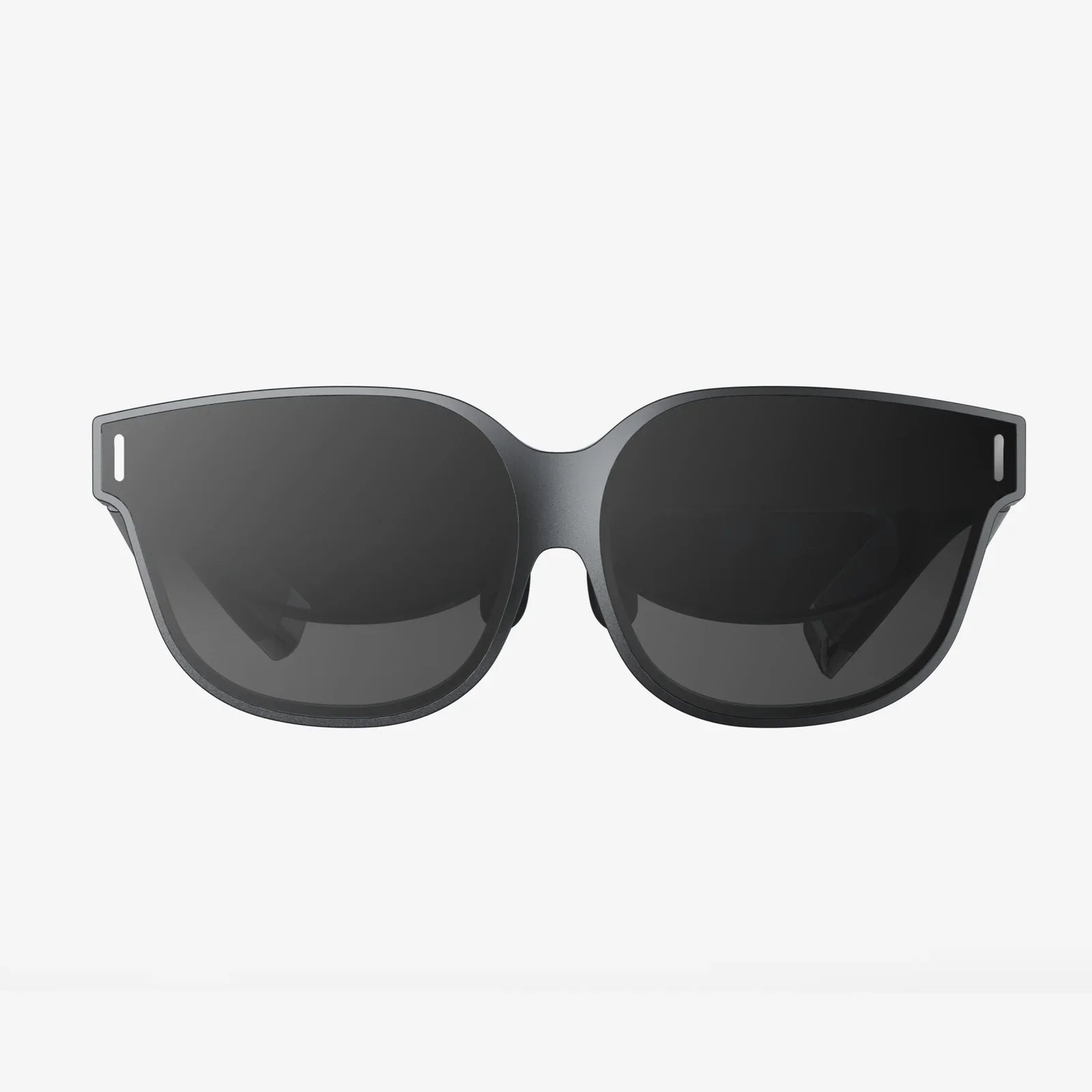
Imagine a world where digital information doesn't confine you to a screen but spills out into your living room, where historical figures stand beside you to narrate their stories, and where complex repair manuals come to life, hovering over the very machinery they describe. This is not a distant science fiction dream; it is the rapidly evolving reality being built today through the power of augmented reality and its usage. This technology, which superimposes computer-generated sensory inputs onto our perception of the real world, is poised to become as ubiquitous and transformative as the smartphone, fundamentally altering how we work, learn, play, and connect.
The Foundation: What Exactly is Augmented Reality?
At its core, augmented reality is an experiential technology that enhances one's current perception of reality. Unlike virtual reality (VR), which creates a completely immersive, digital environment that replaces the real world, AR adds digital elements to a live view, often by utilizing the camera on a device like a smartphone, tablet, or a specialized headset. The magic lies in its ability to anchor digital content—be it 3D models, text, video, or audio—to specific points in the physical environment, making it appear as if they truly coexist with the user.
The Technological Pillars of AR
The seamless experience of AR is powered by a sophisticated convergence of several key technologies:
- Sensors and Cameras: These are the eyes of the device, gathering real-world data. Cameras capture the environment, while sensors like gyroscopes, accelerometers, and magnetometers track the orientation, rotation, and movement of the device in space.
- Processing Power: AR requires significant computational power to merge digital content with the real world in real-time. This involves complex algorithms for object recognition, spatial mapping, and rendering high-fidelity graphics instantly.
- Projection and Display: This is how the user sees the augmented world. It can range from smartphone screens and tablets to more advanced head-mounted displays (HMDs), smart glasses, and even experimental systems that project light directly onto the retina.
- Simultaneous Localization and Mapping (SLAM): This is the true brain behind advanced AR. SLAM algorithms allow a device to simultaneously understand its environment (mapping) and track its position within that environment (localization) without prior knowledge. This is what allows a digital dragon to sit convincingly on your coffee table, staying in place as you walk around it.
Transforming Industries: The Practical Usage of Augmented Reality
The theoretical potential of AR is vast, but its true value is revealed in its practical, real-world applications that are solving problems and creating new opportunities today.
Revolutionizing Retail and E-Commerce
One of the most visible uses of AR for consumers is in the shopping experience. The "try before you buy" dilemma, which has long been a drawback of online shopping, is being solved. Customers can now use their smartphones to see how a new sofa would look in their actual living room, scaled to the correct size and placed precisely where they want it. They can virtually try on glasses, makeup, or even see how a new shade of paint would transform their walls. This not only enhances consumer confidence and reduces return rates but also creates an engaging and interactive shopping journey that bridges the gap between the digital and physical store.
Enhancing Manufacturing, Maintenance, and Repair
In industrial settings, augmented reality and its usage are driving immense gains in efficiency, accuracy, and safety. Technicians performing complex repairs on machinery can wear AR glasses that overlay digital schematics, animated instructions, and torque specifications directly onto the equipment in their field of view. This hands-free access to information eliminates constant glances back at a manual or laptop, drastically reducing errors and speeding up procedures. Furthermore, AR can be used for remote expert assistance, where an off-site expert can see what a field technician sees and annotate their live view with arrows and notes to guide them through a process, saving time and travel costs.
Advancing Healthcare and Medicine
The field of medicine is leveraging AR to improve outcomes for both practitioners and patients. Surgeons can use AR headsets to visualize critical information, such as a patient's vital signs or 3D reconstructions of tumors from MRI scans, directly within their surgical field of view without turning away from the operating table. This enhances precision and situational awareness. Medical students can practice procedures on detailed, interactive holograms of human anatomy, gaining valuable experience without risk. AR can also aid in vein detection for nurses, projecting a map of veins directly onto the patient's skin to make injections quicker and less painful.
Reimagining Education and Training
AR has the power to turn any classroom or training facility into an interactive learning environment. Instead of reading about ancient Rome, students can walk through a digitally reconstructed Colosseum from their desks. Complex abstract concepts in chemistry or astronomy become tangible as 3D molecules float in front of students or the solar system rotates in the center of the room. This immersive, visual, and kinesthetic learning style caters to different learning modalities and dramatically improves engagement and knowledge retention compared to traditional textbooks.
Enriching Navigation and Tourism
Gone are the days of constantly looking down at a phone map. AR navigation apps can overlay directional arrows and street names onto a live video feed of the street, making it intuitive to find your way in a new city. For tourists, pointing a device at a monument, building, or even a restaurant can trigger an overlay of historical information, reviews, or translations of menus, creating a deeply contextual and informative exploration of a new place.
Beyond Utility: AR in Entertainment and Social Connection
While its professional applications are profound, AR has also exploded into the mainstream through entertainment. The viral phenomenon of a mobile game that had millions of people chasing digital creatures in public parks demonstrated the mass appeal of location-based AR gaming. Social media filters and lenses, which add whimsical effects to selfies and videos, are a lightweight but incredibly popular form of AR that has normalized the technology for hundreds of millions of users, fostering new forms of creative expression and interaction.
The Flip Side: Challenges and Ethical Considerations
The integration of a persistent digital layer into our reality is not without significant challenges and risks that society must grapple with.
Privacy in a Perceived World
AR devices, particularly always-on smart glasses, require a constant stream of visual and auditory data from the user's environment to function. This raises monumental privacy concerns. Who has access to this data? How is it stored and used? The potential for mass surveillance, both by corporations and governments, is unprecedented. Furthermore, the concept of consent becomes blurred when someone wearing glasses can potentially record video, identify faces, and pull up personal data about strangers in a crowd without their knowledge. Establishing robust ethical frameworks and regulations for data collection and usage is paramount.
The Digital Divide and Accessibility
As AR becomes more integral to professional training, education, and daily life, a new form of digital divide could emerge. Those who cannot afford the necessary hardware or lack access to the high-bandwidth connectivity required for advanced AR risk being left behind, exacerbating existing social and economic inequalities. Furthermore, designing AR experiences that are accessible to people with disabilities is a crucial and often overlooked challenge.
Real-World Safety and Psychological Impact
Walking through the world with a digital overlay presents tangible physical dangers. Users engrossed in an AR experience may become unaware of obstacles, traffic, or other hazards in their path, leading to accidents. The long-term psychological effects are also unknown. Will constant augmentation lead to a diminished appreciation for the unadulterated real world? Could it alter our cognitive processes, memory, and social skills? These questions require careful and ongoing study.
The Future is Layered: What Lies Ahead?
The trajectory of AR points towards lighter, more powerful, and more socially acceptable wearable technology, eventually evolving towards sleek glasses that are indistinguishable from regular eyewear. The move from mobile AR to these ubiquitous wearables will be the true catalyst for its mass adoption. We are also moving towards a concept often called the "spatial web" or "Web 3.0," where the internet will not be a separate space we visit on screens but a layer of information and experience integrated into the physical world itself. This will fundamentally change how we interact with information and with each other.
The journey of augmented reality is just beginning. From its current applications that are already boosting productivity and enriching experiences, to a future where a digital layer is seamlessly woven into the fabric of our existence, AR represents a paradigm shift in human-computer interaction. The challenge ahead is not just technological; it is profoundly human. It requires us to thoughtfully guide its development, to confront its ethical dilemmas head-on, and to harness its incredible potential to augment not just our reality, but our humanity—fostering understanding, unlocking creativity, and solving some of the world's most pressing problems in ways we are only starting to imagine.
Share:
Difference Between AR and VR Glasses: A Comprehensive Guide to Seeing Through the Tech
What Are the Risks of Augmented Reality? Navigating the Hidden Dangers of Our Digital Overlay