Imagine a world where digital information doesn't just live on a screen but is seamlessly woven into the fabric of your everyday life—where directions float on the street before you, historical figures reenact battles on the very ground they were fought, and complex machinery reveals its inner workings through a simple glance. This is no longer the realm of science fiction; it is the rapidly evolving present and future being built by augmented reality applications. This technology is poised to fundamentally alter how we work, learn, play, and connect, and understanding its scope is the first step into a new dimension of human-computer interaction.
The Foundation: Defining Augmented Reality
At its core, augmented reality (AR) is a technology that superimposes a computer-generated image, video, or 3D model onto a user's view of the real world, thus providing a composite view that enriches the physical environment with digital data. Unlike virtual reality (VR), which creates a completely immersive, artificial digital environment, AR enhances the real world by adding to it. This key distinction makes AR uniquely suited for applications that require a user to remain present and engaged in their immediate surroundings.
The Engine Room: How AR Applications Work
The magic of AR is powered by a sophisticated combination of hardware and software. Modern AR applications, particularly those on powerful smartphones and dedicated headsets, utilize a suite of technologies to function seamlessly.
Computer Vision and Scene Recognition
This is the brain of the operation. Using the device's camera, computer vision algorithms constantly analyze the video feed to understand the environment. They identify flat surfaces (like floors or tables), recognize distinct images or objects (known as markers or triggers), and map the physical space. This allows the digital content to be placed and anchored accurately in the real world.
Simultaneous Localization and Mapping (SLAM)
SLAM is a critical technology that allows a device to simultaneously map an unknown environment and track its own location within that space in real-time. It's what enables persistent AR experiences where digital objects can be left in a specific location and remain there even if the user walks away and returns later.
Sensors and Tracking
An array of sensors—including accelerometers, gyroscopes, magnetometers (compass), and increasingly, LiDAR scanners—work together to track the device's precise orientation, movement, and position in space. This ensures that the digital overlay moves and behaves in a way that is consistent with the laws of physics and the user's perspective.
Transforming Industries: The Practical Power of AR
The theoretical potential of AR is vast, but its real value is demonstrated in the tangible applications already revolutionizing various sectors.
Revolutionizing Retail and E-Commerce
The retail landscape is being reshaped by AR, effectively bridging the gap between online shopping and the physical store experience. Applications now allow consumers to visualize products in their own space before purchasing. Shoppers can see how a new sofa would fit in their living room, try on watches or makeup virtually, or see how a new shade of paint would look on their walls. This not only enhances consumer confidence and reduces return rates but also creates a novel and engaging shopping experience.
Advancing Healthcare and Medicine
In healthcare, AR applications are moving from novelty to necessity. Surgeons use AR headsets to overlay critical information—such as 3D reconstructions of organs, the location of blood vessels, or real-time vital signs—directly into their field of view during procedures, reducing the need to look away at monitors. Medical students can practice complex anatomy on detailed holograms, and patients can use AR to better understand their conditions and treatment plans through interactive 3D models.
Empowering Manufacturing and Field Service
This is one of the most mature and valuable arenas for AR. Technicians working on complex machinery, from aircraft engines to industrial printers, can use AR glasses to see digital work instructions overlaid onto the physical components they are repairing. They can visualize internal parts, access remote expert guidance (where an expert can draw annotations that appear in the technician's view), and follow step-by-step guides hands-free, drastically reducing errors and training time.
Reimagining Education and Training
AR brings textbooks and learning materials to life. Instead of reading about the solar system, students can have planets orbit around them in their classroom. History lessons can be transformed with reenactments on their desks, and chemistry students can safely conduct virtual experiments. This interactive, immersive form of learning boosts engagement, improves knowledge retention, and caters to a variety of learning styles.
Enhancing Navigation and Wayfinding
AR is set to replace the traditional map. Instead of looking down at a phone screen, users can simply hold up their device and see arrows and directions painted onto the sidewalk, with labels for stores and points of interest floating over their real-world locations. This is being explored for complex indoor navigation in places like airports, museums, and large shopping malls, making it incredibly intuitive to find your gate, a specific exhibit, or a store.
The User Experience: Design Principles for Effective AR
Creating a successful AR application requires more than just technical prowess; it demands a deep focus on user-centered design. The digital content must feel like a natural part of the environment, not a distracting obstruction. Key principles include ensuring user safety by keeping critical information within the central field of view, designing intuitive gestures and voice commands for interaction, and respecting user privacy by being transparent about data collection, especially when using cameras. The goal is to create an experience that feels effortless and magical, not cumbersome and confusing.
Challenges and Considerations on the Road to Adoption
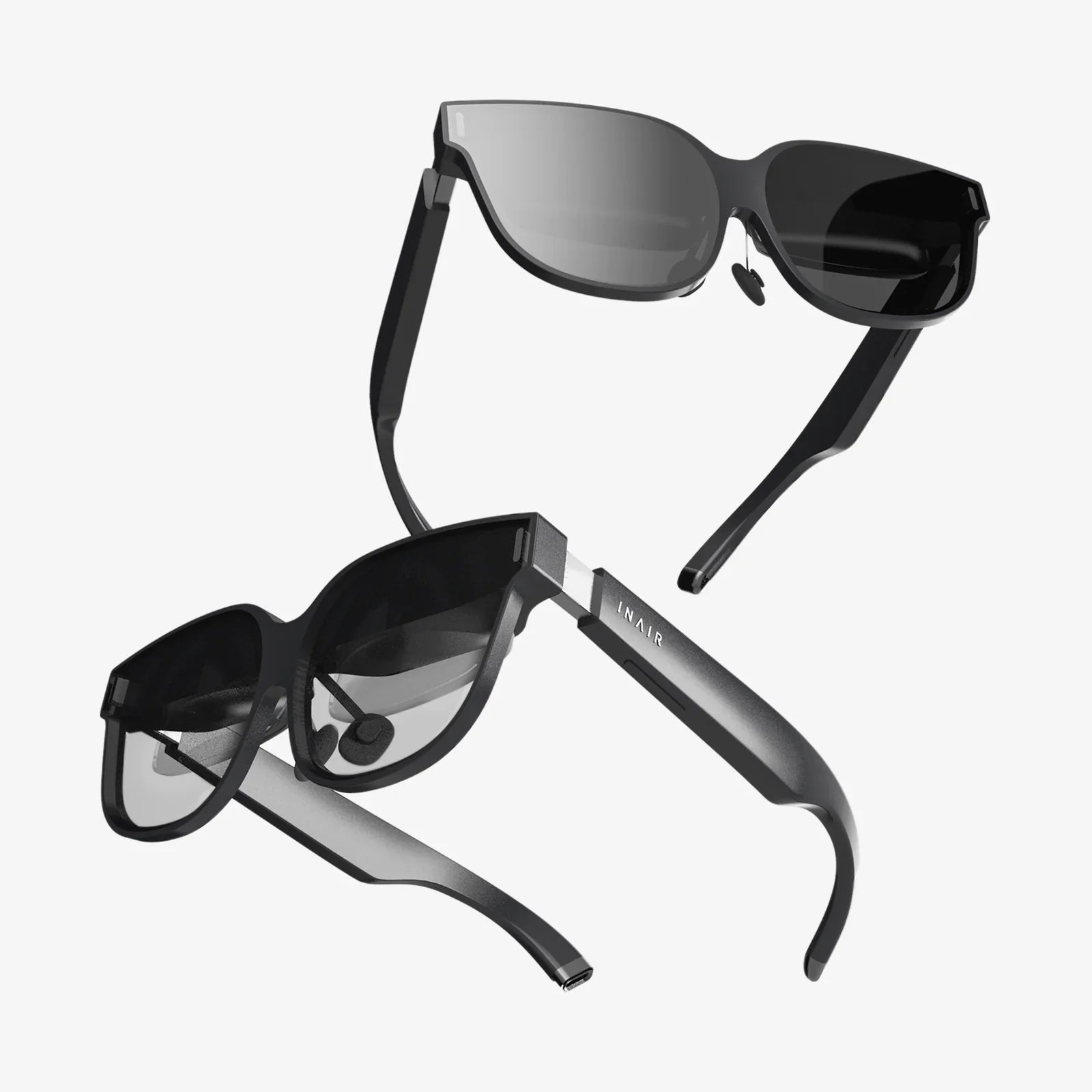
Despite its promise, the widespread adoption of AR faces several significant hurdles. The hardware, particularly comfortable, stylish, and powerful standalone headsets with all-day battery life, is still evolving. Developing sophisticated AR applications remains complex and expensive, requiring specialized skills. There are also serious concerns around privacy, as devices with always-on cameras collect vast amounts of environmental data, and security, as the blending of digital and physical worlds creates new vectors for cyber-attacks. Furthermore, long-term usage raises unanswered questions about potential health impacts, such as eye strain and altered spatial perception.
The Future is Overlaid: What's Next for AR?
The trajectory of AR points towards a future where digital overlays become an invisible, ubiquitous layer on our reality. We are moving towards lightweight AR glasses that will eventually replace smartphones as our primary gateway to digital information. The advent of 5G and future 6G networks will provide the high-bandwidth, low-latency connectivity required for cloud-based AR, offloading processing and enabling incredibly complex and shared experiences. The concept of the "digital twin"—a perfect virtual replica of a physical object or system—will be interactable through AR, allowing for unprecedented design, monitoring, and simulation. Ultimately, AR will evolve into a contextual, AI-driven interface that provides the right information at the right time, based entirely on what you are looking at and what you are doing.
The line between the digital and the physical is not just blurring; it is being intentionally and intelligently merged. Augmented reality applications are the brushes with which we are painting this new hybrid world, offering a canvas limited only by our imagination. From transforming how we save lives and build cities to changing the way we tell stories and explore our own neighborhoods, this technology promises a more informed, efficient, and astonishingly connected human experience. The future is not somewhere we are going; it is something we are actively building, layer by digital layer, right before our eyes.


Share:
Elementary and Virtual Reality: Revolutionizing the Modern Classroom Experience
Virtual Reality Captions: The Unseen Key to Unlocking True Immersive Accessibility