


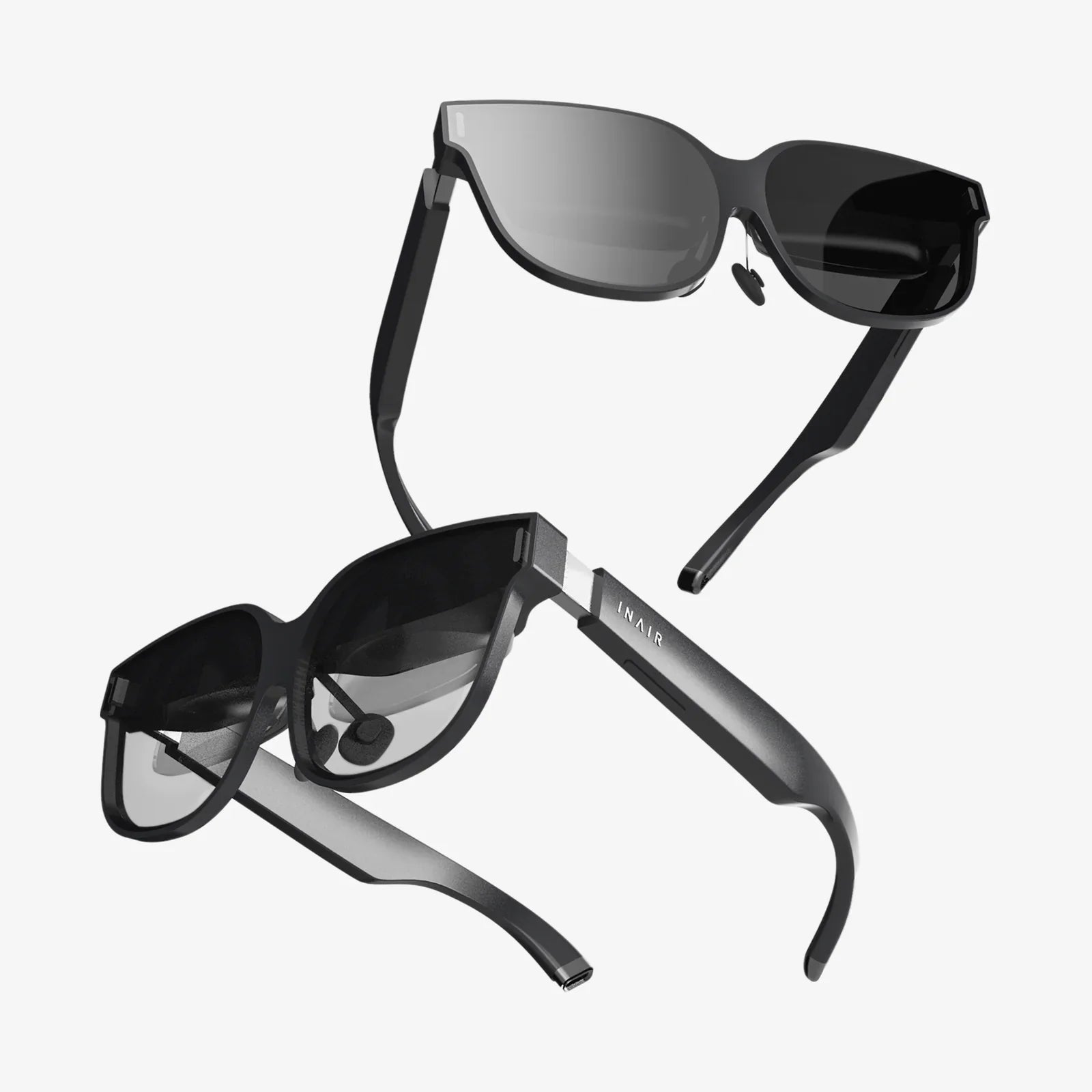
Imagine a world where information doesn't confine you to a screen in your hand or on your desk, but instead, it floats effortlessly in your field of vision, seamlessly integrated with the reality you see. This is the promise of the Augmented Reality AR based Heads-Up Display (AR HUD), a technology that is rapidly transitioning from science fiction to a tangible, transformative force. It’s not just about seeing data; it’s about enhancing human perception, redefining safety, and unlocking new dimensions of productivity and entertainment. The way we interact with the digital layer of our existence is on the verge of a fundamental shift, moving from something we look at to something we look through.
From Cockpits to Cars: The Evolution of a Vision
The concept of a heads-up display is not new. Its origins are firmly rooted in military aviation, where pilots needed critical flight information—airspeed, altitude, targeting reticles—projected onto their cockpit canopies to maintain situational awareness without looking down at their instruments. This technology was a literal lifesaver, allowing for faster reaction times and superior focus. The automotive industry was the next logical adopter, introducing basic, monochrome HUDs that projected speed and navigation arrows onto the windshield. These early systems were a novelty for many, but they hinted at a greater potential.
The true paradigm shift arrived with the maturation of Augmented Reality. Unlike its predecessor, Virtual Reality (VR), which seeks to replace the real world with a digital one, AR aims to supplement it. An AR-based HUD doesn't just project a flat image; it uses a sophisticated combination of sensors, cameras, GPS, and processing power to understand the environment and anchor digital information to specific objects or locations in real space. This contextual awareness is what separates a simple projection from an intelligent visual assistant.
How It Works: The Magic Behind the Glass
Creating the illusion of holographic graphics floating meters ahead of the viewer is a feat of optical engineering and software integration. The process typically involves several key components:
- Projection Unit: A high-brightness micro-display, often using technologies like DLP or LCoS, generates the digital image.
- Combiner: This is the surface onto which the image is projected. In automotive applications, it's often a specially shaped section of the windshield or a separate combiner glass. Its coating is designed to reflect the specific wavelengths of the projector while allowing all other light to pass through.
- Optical System: A series of mirrors and lenses magnifies the tiny image from the projector and corrects for distortion, creating a virtual image that appears to be at a distant focal point, typically 10 to 15 meters ahead of the vehicle. This allows the driver's eyes to focus on the road while simultaneously perceiving the sharp, clear digital information.
- AR Core: The brain of the system. This software platform fuses data from the vehicle's cameras (for object detection), LiDAR or radar (for distance ranging), GPS (for location), and inertial measurement units (for orientation). It processes this data in real-time to determine exactly where and how to place graphics so they align perfectly with the real world.
For example, when the navigation system instructs a turn, the AR HUD doesn't just show an arrow; it paints a glowing line on the road itself, precisely indicating the lane and path to follow. When adaptive cruise control identifies the car ahead, it can highlight that vehicle with a colored halo, making it instantly clear which car the system is tracking.
Transforming the Driver's Experience: Safety and Situational Awareness
The most immediate and profound impact of AR HUDs is in the automotive realm, where they are set to become the central hub for driver information and advanced driver-assistance systems (ADAS).
Enhanced Navigation: Traditional navigation systems require glancing away from the road to interpret a map and a small arrow. AR navigation integrates turn-by-turn directions directly onto the roadway. A driver approaching a complex intersection sees a giant, unmistakable arrow flowing into the correct lane, eliminating confusion and last-minute maneuvers.
Advanced Driver Assistance Systems (ADAS) Visualization: Modern vehicles are packed with safety sensors, but their feedback is often limited to beeping sounds or icons on a dashboard screen. An AR HUD makes these warnings contextual and intuitive. It can highlight a pedestrian stepping out from between parked cars with a bright outline, draw a braking path indicator on the road if following distance becomes unsafe, or display a speed limit sign that seamlessly integrates with the roadside environment, changing instantly as you pass new signs.
Reduced Cognitive Load: By presenting information within the driver's natural line of sight and anchoring it to the real world, AR HUDs significantly reduce cognitive load and distraction. The driver no longer needs to mentally map data from a separate screen to their surroundings; the connection is made visually and instantly. This split-second preservation of attention can be the difference between avoiding an accident and being involved in one.
Beyond the Dashboard: A New Platform for Productivity and Play
While the automotive application is the current driving force, the potential of wearable AR HUDs extends far beyond the car. Lightweight, stylish glasses with full AR capabilities represent the next evolution of personal computing.
The Ultimate Productivity Tool: Imagine walking through a warehouse and seeing inventory levels, locations, and picking instructions overlaid on the shelves themselves. A technician performing a complex repair could see schematics and step-by-step instructions superimposed directly on the machinery they are fixing. Architects and engineers could walk through a physical space and see their digital models integrated at scale, allowing for unparalleled design review.
Revolutionizing Social Interaction and Entertainment: AR HUDs could transform how we connect with others. Instead of video calls on a phone screen, a life-sized, spatially aware hologram of a friend could appear sitting on your couch for a conversation. Live events, from concerts to sports games, could be enhanced with real-time stats and graphics floating above the action. Gaming would leap out of the screen and into your living room, blending the digital and physical in entirely new ways.
Accessibility and Navigation: For individuals with visual or auditory impairments, AR HUDs could serve as powerful assistive technologies. They could amplify text, translate signs in real-time, identify objects, and provide enhanced audio cues mapped to the visual environment, granting a new level of independence and interaction with the world.
Navigating the Roadblocks: Challenges on the Path to Adoption
Despite its immense potential, the widespread adoption of AR HUD technology faces significant hurdles that engineers and designers are racing to overcome.
- Cost and Complexity: High-quality optical systems and the powerful processing required for real-time environmental understanding are currently expensive, limiting them to premium vehicles and specialized industrial applications.
- Hardware Limitations: Creating displays that are bright enough to be visible in direct sunlight yet subtle enough for night driving is a challenge. Furthermore, designing systems with a large enough "eyebox"—the area within which the driver can see the full display without moving their head—requires clever optical engineering to avoid bulky hardware.
- Information Overload: There is a critical design challenge in presenting information that is helpful rather than distracting. UI/UX designers must develop a visual language that is intuitive, minimal, and only presents the most crucial information at the most appropriate time. Cluttering the driver's view with unnecessary graphics could ironically become a safety hazard.
- Privacy and Security: As with any connected technology, AR HUDs that record and process the environment raise serious questions about data privacy. Who owns the video feed of your daily commute? How is that data stored and used? Furthermore, the systems themselves must be hardened against cyberattacks that could manipulate what the user sees, with potentially catastrophic consequences.
The Horizon: What Does the Future Hold?
The trajectory of AR HUD technology points toward a future of even deeper integration and capability. We are moving toward full-windscape displays that can turn the entire windshield into a dynamic AR canvas. The next generation of systems will leverage machine learning to become predictive, anticipating user needs and presenting information before it's even requested.
The ultimate goal is the development of true contextual awareness, where the display understands not just the environment, but the user's intent within it. It will fade into the background, an invisible interface that is only present when needed, providing a calm, reassuring, and incredibly powerful layer of intelligence over our perception of reality.
The journey of the Augmented Reality AR based Heads-Up Display is just beginning. It represents more than an incremental upgrade to our dashboards or a new gadget for tech enthusiasts; it is a fundamental reimagining of the human-machine interface. By seamlessly blending the digital and physical, it has the potential to make us safer, more efficient, and more connected to the world around us. The future is not on a screen—it’s all around you, waiting to be enhanced.
This isn't just a new way to see your dashboard; it's a new way to see the world itself, and the race to perfect this vision is already reshaping entire industries, promising a future where your reality is personalized, interactive, and infinitely more informative from the moment you open your eyes.
Share:
Effective Virtual Meetings: The Ultimate Guide to Boosting Engagement and Productivity
Brands Using AR Technology: The New Frontier in Customer Engagement and Immersive Storytelling