


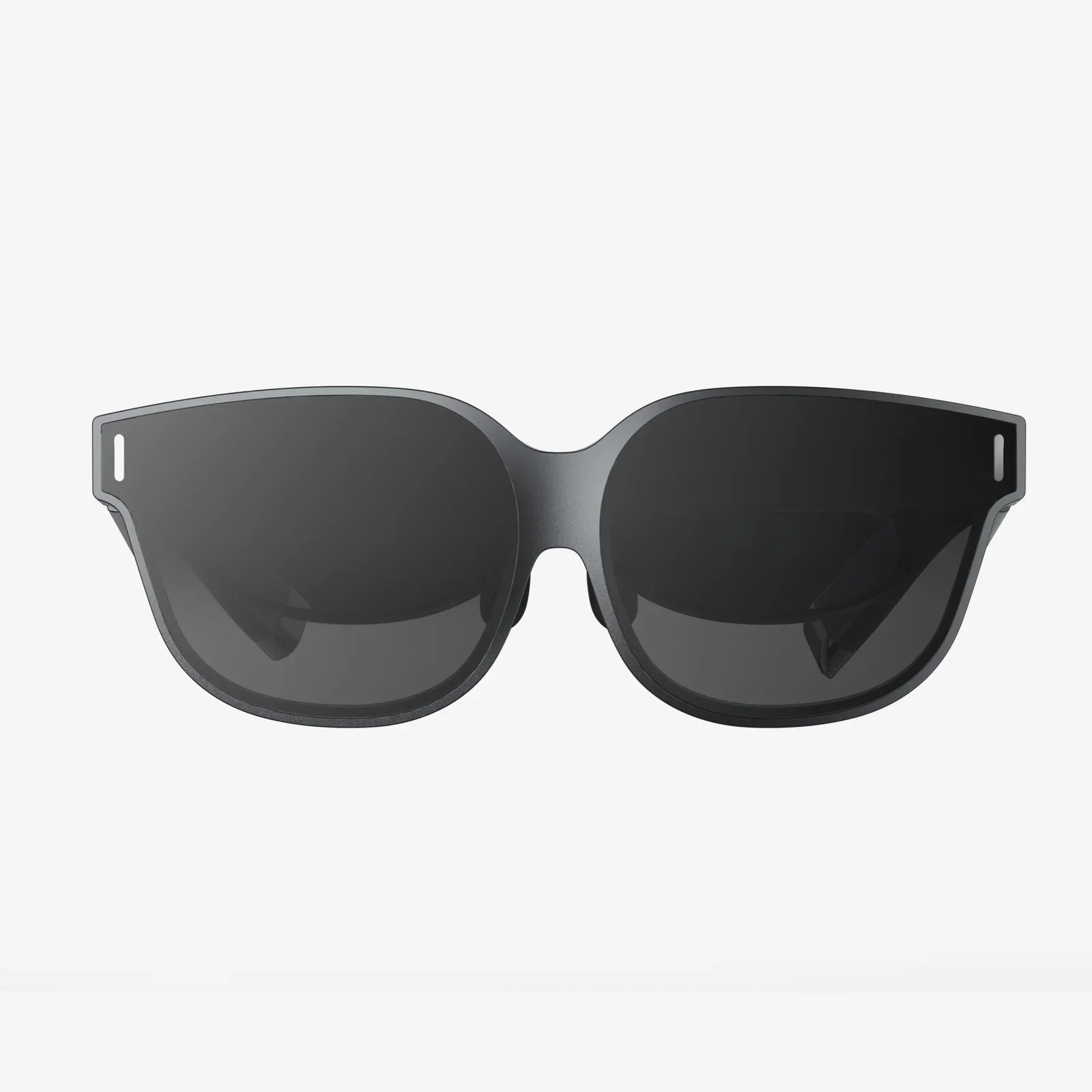
Imagine a world where digital information doesn’t just live on a screen in your hand but is seamlessly woven into the fabric of your reality. This is the promise of augmented reality, and it’s a promise that is finally being delivered by a new generation of devices now readily available. The search for augmented reality AR glasses for sale is no longer a quest for a distant sci-fi fantasy; it’s a practical shopping query for anyone looking to step into the next computing revolution. From enhancing productivity to redefining entertainment, these devices are poised to change how we interact with everything, and the opportunity to be an early adopter has never been more compelling.
The Evolution of a Vision: From Concept to Consumer Shelf
The journey to today's commercially available augmented reality glasses is a story of relentless innovation. The core concept of augmenting our view of the real world with computer-generated graphics has been around for decades, first finding specialized use in military, aviation, and industrial applications. These early systems were monumental in size, cost, and complexity, far from anything a consumer could use.
The turning point came with the miniaturization of technology. Critical components like micro-displays, waveguides, sensors, and processors became small, powerful, and energy-efficient enough to be packaged into a form factor resembling traditional eyewear. The release of developer kits and early consumer models generated significant buzz, albeit with mixed results, highlighting the immense technical challenges of blending digital and physical worlds flawlessly.
Today, the market has matured. We are in what industry experts call the 'second wave' of AR wearables. The current generation of augmented reality AR glasses for sale benefits from years of iterative software updates, refined hardware design, and a clearer understanding of real-world use cases. They are no longer clunky prototypes but sophisticated devices designed for specific purposes, whether for the enterprise professional, the creative developer, or the tech-savvy consumer.
How Do AR Glasses Actually Work? Demystifying the Magic
At first glance, the ability to overlay persistent digital images onto your field of view seems like pure magic. However, it's the result of several complex technologies working in perfect harmony.
The Optical Engine: Projecting the Image
This is the heart of the device. Most modern systems use either MicroLED or Liquid Crystal on Silicon (LCoS) micro-displays to generate incredibly bright, sharp images. These tiny displays are then paired with an optical combiner, often a waveguide. This transparent piece of glass or plastic uses diffraction gratings to "bend" the light from the micro-display and project it directly into the user's eye, all while allowing ambient light to pass through. This creates the illusion that the digital image is floating in the real world at a specific depth.
The Sensor Suite: Understanding the Environment
For digital content to interact believably with the physical world, the glasses must understand their surroundings. This is achieved through a suite of sensors typically including:
- Cameras: Used for computer vision, tracking objects, and understanding depth (often with SLAM technology - Simultaneous Localization and Mapping).
- Inertial Measurement Units (IMUs): Accelerometers and gyroscopes that track the precise movement and orientation of the user's head.
- Depth Sensors: Some advanced models use LiDAR or time-of-flight sensors to create a detailed 3D map of the environment, allowing for precise occlusion where digital objects can hide behind real ones.
The Brain: Processing and Connectivity
All this data requires serious processing power. Some glasses are tethered to a powerful smartphone or computer that acts as the brain, handling the heavy computational load. Others are classified as standalone devices, with a dedicated processing unit, often based on a mobile system-on-a-chip (SoC), built directly into the frames. These devices also include Wi-Fi and Bluetooth for connectivity, and some feature built-in spatial audio speakers for an immersive soundscape.
A World of Applications: More Than Just Games
While gaming and entertainment are often the first applications that come to mind, the true power of AR glasses is their versatility. The range of augmented reality AR glasses for sale today reflects a diverse set of needs.
Revolutionizing Enterprise and Industry
This is where AR has found its strongest initial footing. Enterprises are leveraging the technology for:
- Remote Assistance and Collaboration: A field technician can wear glasses through which an expert thousands of miles away can see their viewpoint and annotate the real world with arrows, diagrams, and notes to guide them through a complex repair.
- Design and Prototyping: Architects and engineers can visualize full-scale 3D models of buildings or products on an empty lot or factory floor, making adjustments in real-time.
- Warehousing and Logistics: Workers can see digital pick lists and navigation arrows superimposed on warehouse shelves, dramatically increasing efficiency and reducing errors.
- Training: Medical students can practice procedures on virtual patients, and mechanics can learn to service new equipment with interactive digital instructions overlaid on the physical machinery.
Transforming Everyday Life
For consumers, the applications are becoming increasingly compelling:
- Navigation: Imagine walking through a new city with floating directional arrows on the sidewalk and information bubbles popping up over landmarks, all without ever looking down at your phone.
- Information and Context: Look at a restaurant, and see its reviews and menu hover by the door. Glance at a product on a shelf to see comparison prices and detailed specifications.
- Immersive Entertainment: Watch a movie on a virtual 100-inch screen from anywhere, or play games that transform your living room into a digital battlefield.
- Fitness and Health: Receive real-time performance metrics and coaching hints during a workout, or use guided meditation apps that create a calming augmented environment.
Navigating the Market: Key Considerations Before You Buy
With an increasing number of options for augmented reality AR glasses for sale, choosing the right pair requires careful thought. Your decision should be guided by your primary intended use.
Defining Your Use Case: Consumer vs. Enterprise
This is the most critical question. Are you looking for a device for media consumption, light gaming, and everyday information (consumer), or do you need a robust tool for specialized professional tasks like complex 3D visualization or hands-free technical work (enterprise)? Enterprise-grade glasses often prioritize functionality and durability over style and comfort, and they come with a significantly higher price tag and software ecosystem tailored to business needs.
Form Factor and Design: The Battle of Style vs. Substance
How important is looking like you're wearing normal glasses? Some models are remarkably sleek and could almost pass for premium sunglasses or standard eyewear, often by offloading the battery and processor to a separate device. Others are bulkier, housing all the technology in the frames themselves. Consider weight, comfort for extended wear, and whether you need prescription lens compatibility.
Display Quality: Field of View and Brightness
Two of the most important technical specs are Field of View (FoV) and brightness. A narrow FoV means the digital image will appear like a small floating window in your vision, which can break immersion. A wider FoV is more immersive but technically challenging. Brightness is crucial for outdoor use; if the display isn't bright enough, digital content will be washed out and difficult to see in sunlight.
Processing Power: Standalone vs. Tethered
Do you want a self-contained device that works anywhere (standalone), or are you comfortable with glasses that need to be connected to a phone or computer to function? Standalone offers ultimate freedom but often has less power and shorter battery life. Tethered glasses can leverage the power of another device for more graphically intense experiences but limit your mobility.
Battery Life: The Tether of Reality
Battery life is a major constraint. Depending on the model and usage, you can expect anywhere from two to six hours on a single charge. For enterprise users on long shifts, this might mean swapping batteries. For consumers, it's a key factor in how you'll use the device throughout the day.
Software and Ecosystem: The Invisible Foundation
The hardware is useless without a robust software platform. Investigate the operating system and the available app store. Is there a healthy ecosystem of developers creating applications for your specific needs? For enterprise buyers, compatibility with existing business software like Microsoft Teams, SAP, or custom enterprise platforms is non-negotiable.
The Future is Transparent: What's Next for AR Glasses?
The devices available today are impressive, but they are merely stepping stones to an even more integrated future. The next decade will see rapid advancements aimed at solving the remaining challenges.
We are moving towards true all-day wearable AR. This will require massive improvements in battery technology, perhaps leveraging low-power displays and more efficient processors. The form factor will continue to shrink, eventually converging with the style and weight of regular glasses. Advances in photonics and metamaterials will lead to wider fields of view and more vivid colors.
The user interface will evolve beyond simple hand gestures and voice commands. Research into neural interfaces, though far off for consumer use, points to a future where we might control digital elements with our thoughts. Furthermore, the line between AR and Virtual Reality (VR) will blur with the development of devices that can smoothly transition between fully immersive virtual worlds and context-aware augmented overlays.
The ultimate goal is a contextually aware, always-available assistant that provides information exactly when and where you need it, enhancing human capability without being intrusive. This will require not just better hardware, but smarter artificial intelligence that can understand user intent and the environment at a deeply intuitive level.
The hunt for the perfect pair of augmented reality AR glasses for sale is more than a purchase; it's an investment in a new way of perceiving and interacting with reality. The technology is here, it's real, and it's advancing at a breathtaking pace. Whether you're a developer building the next killer app, an enterprise leader seeking a competitive edge, or a curious consumer ready to experience the future, there has never been a better time to explore what these remarkable devices have to offer. The digital world is waiting to break free from its screen—all you have to do is put on a pair of glasses and see it for yourself.
Share:
Head-Mounted Display News: The Next Frontier in Personal Computing and Immersive Experience
Augmented Reality Glasses News Past 48 Hours: Major Leaks and a Surprise Enterprise Shift