


Imagine a world where information doesn't live on a screen in your hand but is woven into the very fabric of your reality. Where directions appear as a glowing path on the sidewalk, a recipe hovers beside your mixing bowl, and a colleague's 3D model materializes on your coffee table during a video call. This is the promise of augmented reality, and the latest wave of news surrounding AR glasses suggests this future is no longer a distant sci-fi fantasy—it's knocking on our door today.
The Evolutionary Leap: From Clunky Prototypes to Fashion-Forward Frames
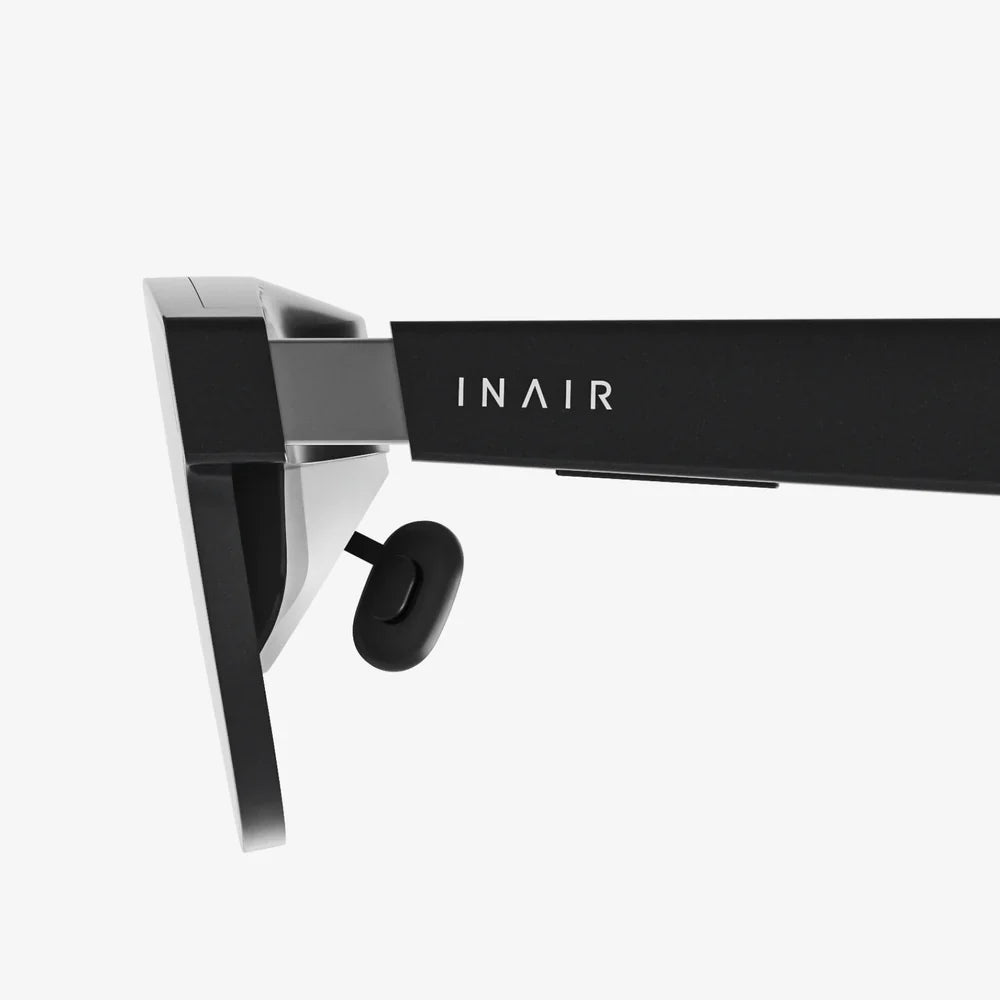
For years, the concept of AR glasses was synonymous with bulky, expensive, and socially awkward headgear, often confined to industrial applications or the realm of eager developers. The news today, however, tells a story of radical transformation. The focus has decisively shifted from mere functionality to a harmonious blend of form and function. The latest announcements and leaks from R&D departments highlight a relentless pursuit of miniaturization. Waveguide optics, micro-LED displays, and advanced spatial audio systems are being packed into frames that increasingly resemble the sleek, fashionable eyewear people already choose to wear.
This design evolution is critical. For AR to become a all-day, every-day technology, the hardware must be lightweight, comfortable, and, most importantly, socially acceptable. The current generation of devices in development is tackling this head-on, with designs ranging from minimalist smart frames that augment audio and offer subtle notifications to more feature-complete spectacles that still manage to avoid the "cyborg" aesthetic of their predecessors. The message is clear: the next battlefield for AR glasses is not just the tech spec sheet, but the consumer's face and their personal style.
The AI Revolution: The Invisible Engine Powering AR
While hardware gets the headlines, the most profound advancements in today's AR glasses news are often happening in software, specifically in artificial intelligence. AI is the silent, intelligent engine that makes contextual AR possible. Early AR was often little more than a screen overlay, but modern systems powered by machine learning can understand, interpret, and interact with the environment in real-time.
Computer vision algorithms can now identify objects with stunning accuracy—is that a historical landmark, a specific model of car, or a rare plant? Natural language processing allows for seamless voice-controlled interactions, freeing users from the awkwardness of gesture controls or handheld remotes. Furthermore, AI is crucial for persistent AR, where digital objects and information remain locked in a specific physical location across multiple sessions. This requires a sophisticated understanding of spatial mapping and memory, a feat made possible by powerful neural networks processing sensor data on the device itself. This shift from "see-through screens" to "context-aware companions" is arguably the most significant development in the field.
Beyond Gaming and Gimmicks: The Expanding Universe of Use Cases
The narrative around AR glasses has successfully broken free from its initial confinement to gaming and novelty filters. Today's news showcases an explosion of practical, life-enhancing applications across every major sector.
Transforming the Modern Workplace
In enterprise and industry, AR glasses are already proving to be a game-changer. Field technicians can have schematics and live instructions overlaid onto the machinery they are repairing, with remote experts able to see their view and annotate the real world to guide them. Surgeons can access vital patient statistics and imaging data without looking away from the operating field. Architects and interior designers can walk clients through full-scale, interactive 3D models of unbuilt structures. The gains in efficiency, accuracy, and safety are tangible and are driving significant investment and adoption in these professional domains.
Redefining Social Connection and Content Consumption
On the consumer side, the potential is even more revolutionary. Imagine watching a sports game with live stats floating around the players, or a film where the environment extends beyond the confines of your television wall. Social media could evolve from a flat feed to a shared, immersive experience where you and a friend on another continent can watch a virtual concert together as if you were in the same room. The very concept of a "screen" becomes fluid, allowing for multi-tasking on a colossal, virtual canvas that only you can see. This isn't just about consuming content differently; it's about redefining shared experiences and presence.
The Next Computing Platform: Your Eyes
The ultimate goal, hinted at in every major tech company's roadmap, is to position AR glasses as the successor to the smartphone. The idea is to move beyond a device we look at and toward technology we look through. This spatial computing paradigm aims to make technology an ambient, intuitive extension of ourselves. It promises a world less cluttered by devices, where information is presented contextually and interaction is more natural and human-centric. The recent flurry of partnerships and developer toolkit releases is a clear signal that the industry is laying the groundwork for this next platform, enticing creators to build the "killer apps" that will define its early life.
Navigating the Hurdles: The Roadblocks to Ubiquity
Despite the exciting progress, the path to mainstream AR glasses is not without its significant challenges. Today's news doesn't shy away from these hurdles, which remain critical areas of focus.
Battery Life: High-resolution displays, powerful processors, and constant sensor data processing are incredibly power-intensive. Achieving a full day of use on a single charge with a form factor that fits in an eyeglass arm is a monumental engineering challenge that continues to push the boundaries of battery technology and computational efficiency.
The Connectivity Conundrum: Will these devices be standalone powerhouses or lean on a paired smartphone for processing? The trade-off is between weight, heat, and battery life (standalone) versus relying on another device (tethered). Many companies are exploring a hybrid approach, but finding the perfect balance is key to consumer acceptance.
The Privacy Paradigm: This is perhaps the most debated issue. Glasses with always-on cameras and microphones that constantly scan your environment raise profound questions about surveillance, data ownership, and personal privacy. How do we prevent misuse? How is the captured data stored and used? Establishing clear ethical guidelines and robust, transparent privacy controls is not just a technical necessity but a societal imperative for this technology to be adopted widely.
A Glimpse into Tomorrow: What the Future Holds
Looking at the trajectory of today's developments, the future of AR glasses appears to be one of increasing integration and intelligence. We are moving toward a world of multi-device ecosystems, where your glasses, your headphones, and your phone work in concert to provide a seamless experience. Haptic feedback gloves and other wearables will add a tactile dimension to AR interactions.
Ultimately, the technology will become so miniaturized and integrated that it may disappear entirely into standard prescription lenses, making the augmented world accessible to everyone. The distinction between assistive technology and enhancement will blur, offering new possibilities for individuals with disabilities while providing superhuman capabilities to all users.
The news today is no longer about if augmented reality glasses will become a part of our daily lives, but how and when. The pieces are falling into place: the hardware is getting smarter and sleeker, the AI is becoming more intuitive, and developers are dreaming up applications we haven't even considered. We are standing at the precipice of a fundamental shift in how we perceive and interact with both our digital and physical worlds. The age of staring down at a handheld rectangle is fading, and the age of looking up and out into an enriched, augmented reality is beginning.
Share:
Can I Get Augmented Reality on Glasses? The Ultimate Guide to AR Eyewear
Can I Get Augmented Reality on Glasses? The Ultimate Guide to AR Eyewear