


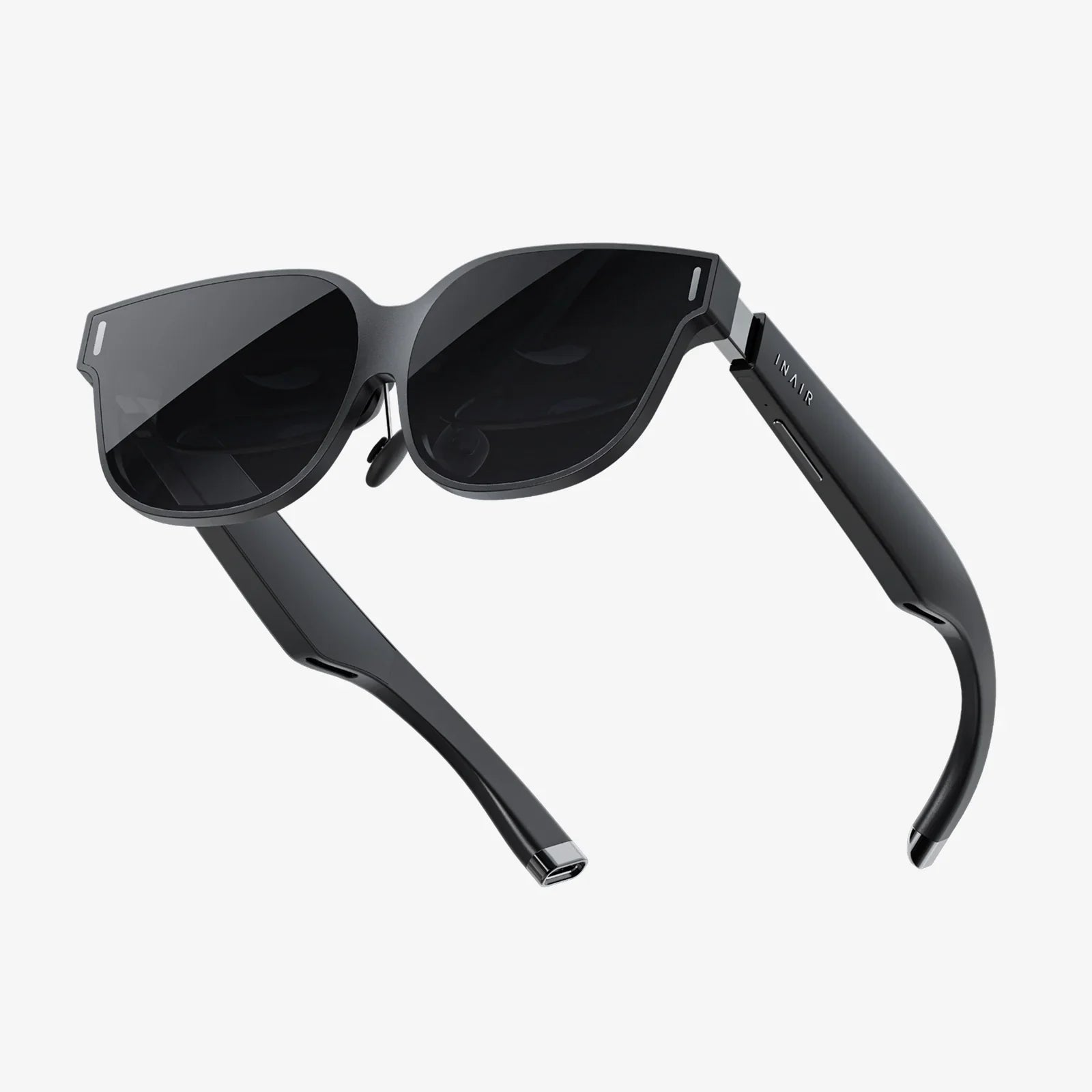
The world is on the cusp of a visual revolution, one where digital information doesn't just live on screens but is seamlessly woven into the very fabric of our reality. The question on many people's minds is a simple one, yet it unlocks a universe of technological complexity and futuristic potential: can I get augmented reality on glasses? The short answer is a resounding yes, but the journey to a ubiquitous, consumer-ready pair of smart glasses is a fascinating tale of innovation, challenge, and extraordinary possibility. This comprehensive guide will demystify the current landscape of AR glasses, exploring the technology that powers them, the forms they take, and the future they are building right before our eyes.
The Spectrum of Augmented Reality Glasses
Not all AR glasses are created equal. The term itself encompasses a wide range of devices with varying capabilities, from simple notification displays to fully immersive spatial computers. Understanding this spectrum is key to answering whether you can get them.
True AR Glasses (Spatial Computing)
This category represents the holy grail of augmented reality. These advanced glasses use waveguides, holographic optics, and sophisticated spatial mapping to project high-fidelity, interactive 3D graphics that appear to coexist with your physical environment. You can place a virtual screen on your wall, examine a digital model of a human heart on your coffee table, or get directional arrows painted onto the street in front of you. This technology is incredibly complex, requiring powerful processors, advanced display systems, and a suite of sensors including cameras, LiDAR, and IMUs (Inertial Measurement Units) to understand the world and your place within it. Currently, these are predominantly enterprise-focused devices, prized by designers, engineers, and surgeons for their transformative capabilities, though they often come with a higher price point and higher power consumption.
Assisted Reality Glasses (Monocular Displays)
Occupying a more accessible middle ground are assisted reality devices. These typically feature a small, monocular (one-eye) display that sits in the upper corner of your field of view. They are designed for information delivery, not immersion. Think of them as a smartwatch for your face—perfect for receiving notifications, reading step-by-step instructions, scanning barcodes, or making hands-free video calls. They are less intrusive, more affordable, have longer battery life, and are widely used in logistics, manufacturing, and field service. For many practical, professional applications, this streamlined flow of information is exactly what is needed.
Smart Glasses with Basic AR Features
This emerging category aims to blend style with substance. These look like standard eyeglasses or sunglasses but embed simple AR functionalities like audio speakers, basic voice assistants, and occasionally a tiny LED array for minimal light-based notifications. Their primary goal is social acceptance; they are designed to be worn all day without drawing undue attention. Their AR capabilities are extremely limited but represent a crucial step toward a future where advanced AR is integrated into a socially palatable form factor.
How Augmented Reality Glasses Actually Work
The magic of AR glasses lies in their ability to convincingly blend light from the real world with light generated from a digital projector. It’s a delicate dance of optics, sensors, and software.
The Display Systems: Seeing the Unseeable
There are several competing methods to achieve this optical illusion:
- Waveguide Technology: This is the most common method in high-end glasses. Light from a micro-LED projector is "coupled" into a thin, transparent piece of glass or plastic (the waveguide). This light then travels through the material via total internal reflection before being "decoupled" out and into the user's eye. Tiny nanostructures or holographic films on the waveguide's surface are responsible for bending the light precisely. The result is a bright, digital image that appears to float in the distance, all while allowing the user to see the real world clearly through the transparent glass.
- Birdbath Optics: This design uses a beamsplitter (a semi-transparent mirror) curved like a birdbath. A micro-display projects an image upward onto this beamsplitter, which then reflects the light back into the user's eye. While effective and capable of rich colors, this design can be bulkier than waveguides.
- Curved Mirror Optics: Simpler and often used in earlier prototypes, this system uses a free-form curved mirror to reflect a projected image into the eye. It can offer a wide field of view but struggles with miniaturization.
The "Brain" of the Operation: Processing Power
For AR glasses to understand the world, they need significant computational power. This can be handled in two ways:
- Standalone Processing: The glasses themselves contain a System-on-a-Chip (SoC), similar to a smartphone processor, with dedicated components for computer vision and AI tasks. This allows for complete untethered freedom but generates heat and consumes battery life quickly.
- Tethered/Companion Processing: The glasses act as a sophisticated display and sensor hub, offloading the heavy computational lifting to a nearby device—be it a powerful smartphone in your pocket or a dedicated computing pack on your waist. This extends battery life and allows for more powerful processing but creates a physical tether or dependency on another device.
Perceiving the World: The Sensor Suite
To anchor digital content in your physical space, the glasses must see and comprehend it. This is done through a combination of:
- Cameras: Used for tracking, object recognition, and capturing the environment.
- Depth Sensors (LiDAR/ToF): These sensors fire out invisible lasers to measure the distance to every surface in a room, creating a precise 3D depth map. This is essential for placing virtual objects behind real-world tables or having digital balls bounce accurately on the floor.
- Inertial Measurement Units (IMUs): These accelerometers and gyroscopes track the precise movement and orientation of your head in real-time, ensuring the digital world stays locked in place when you move.
The Current Market: Who Can Get AR Glasses Today?
Your ability to "get" AR glasses depends heavily on who you are and what you want to use them for.
For the Enterprise and Professional User
The answer is a definitive yes. The enterprise market is where AR glasses are already thriving and delivering tangible value. Companies across the globe are deploying them to:
- Remote Assistance: A field technician wearing glasses can stream their point-of-view to an expert thousands of miles away, who can then annotate the technician's real-world view with arrows and instructions.
- Design and Prototyping: Automotive designers can visualize full-scale 3D models of new cars, and architects can walk clients through digital mock-ups of unbuilt structures.
- Warehousing and Logistics: Workers see picking lists and bin locations overlaid directly on shelves, dramatically increasing speed and accuracy.
- Healthcare: Surgeons can visualize critical patient data, like blood vessel maps, directly on their field of view during procedures.
For these users, the high cost of premium AR glasses is justified by the immense gains in efficiency, accuracy, and safety.
For the Consumer and Everyday User
The landscape here is more nuanced. You can absolutely purchase consumer-targeted AR glasses today, but they largely fall into the "Assisted Reality" or "Smart Glasses" categories mentioned earlier. Their functionality is often centered around:
- Media consumption (watching videos on a virtual screen)
- Audio experiences (high-quality, spatial audio)
- Basic notifications and voice commands
True, immersive spatial computing for consumers is still in its early adopter phase. The technology exists, but the perfect blend of all-day battery life, wireless performance, social acceptability, and a compelling consumer software ecosystem is still being refined by major tech companies. The consumer AR revolution is imminent, but for now, it's just beginning to dawn.
The Challenges on the Path to Ubiquity
Several significant hurdles must be cleared before AR glasses become as common as smartphones.
- Battery Life: Powering high-resolution displays, multiple sensors, and powerful processors is a immense challenge. The goal is all-day battery life, which currently requires compromises in performance or offloading processing to another device.
- Form Factor and Social Acceptance: No one wants to wear bulky, obtrusive, or "dorky"-looking technology on their face. The ultimate success of consumer AR hinges on creating glasses that are indistinguishable from—or even more stylish than—traditional eyewear. This requires monumental advancements in miniaturizing components like batteries and projectors.
- The "Killer App": Beyond novelty, what is the indispensable application that will make AR glasses a must-have for millions? While enterprise has found its killer apps in remote assistance and guided workflows, the consumer killer app—whether it's a revolutionary social platform, a new gaming genre, or an indispensable life tool—is still emerging.
- Privacy and Security: Glasses with always-on cameras raise legitimate societal concerns about surveillance and data collection. Establishing clear social norms and robust, transparent privacy controls is not just a technical challenge but a societal one that must be addressed for widespread adoption.
A Glimpse Into the Future
The trajectory is clear: AR glasses will become lighter, more powerful, and more integrated into our daily lives. We are moving toward a future where your glasses will be your primary computing device, replacing your phone, your monitors, and even your wallet. They will recognize people you meet and display their name and how you know them, translate foreign street signs in real-time, and overlay historical information about the building you're looking at. The boundary between the digital and physical will continue to blur, creating new forms of art, communication, and productivity we can only begin to imagine.
So, the next time you ask, "Can I get augmented reality on glasses?" remember that you're not just asking about a product. You're asking about a paradigm shift in human-computer interaction. The technology is here, it's real, and it's evolving at a breathtaking pace. While the perfect pair of consumer AR glasses for everyone may still be a few years out, the foundation is being laid today. The future is not something we enter; it's something we create, and it will be viewed through a lens that enhances our reality, empowers our capabilities, and redefines our connection to the world and to each other.
Share:
Augmented Reality AR Glasses News Today: The Dawn of a Seamless Digital Overlay
Augmented Reality AR Glasses News Today: The Dawn of a Seamless Digital Overlay