


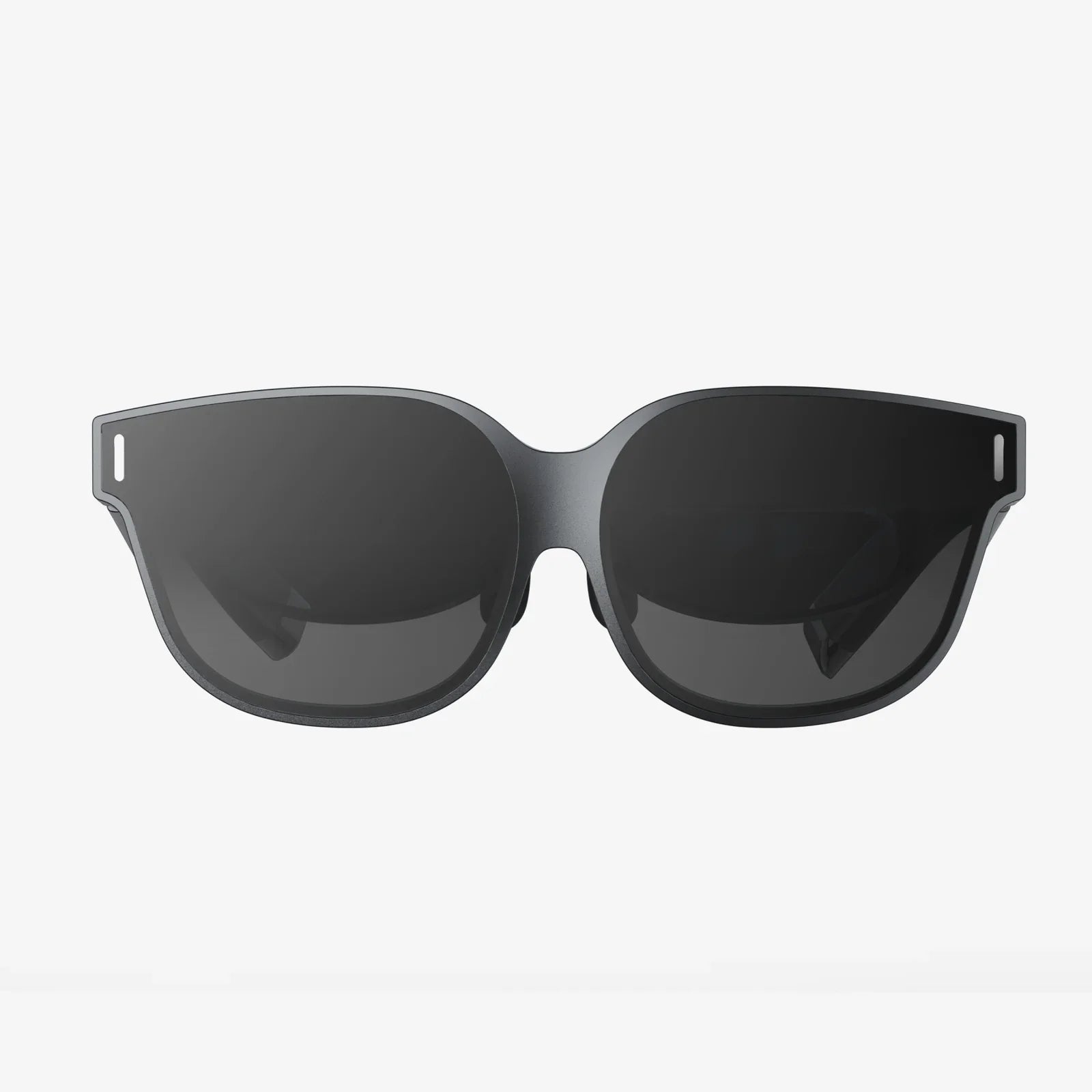
Imagine a world where digital information doesn't just live on a screen but is seamlessly woven into the fabric of your physical reality, enhancing everything from how you work and learn to how you shop and play. This is no longer the stuff of science fiction; it is the present and future being built today through widespread augmented reality (AR) integration. This technological fusion is quietly revolutionizing our daily lives and industrial processes, creating a new layer of interactive experience that promises to fundamentally alter our relationship with the digital realm.
The Foundation: Understanding the Technology Behind the Magic
At its core, augmented reality integration is the process of blending computer-generated perceptual information with the user's real-world environment. Unlike its cousin, virtual reality, which creates a completely artificial digital experience, AR enhances the real world by superimposing digital content—images, video, 3D models, data streams—onto the user's field of view. This is achieved through a sophisticated technological stack that has matured significantly in recent years.
The hardware for AR experiences ranges from powerful smartphones and tablets to specialized smart glasses and headsets. These devices act as the window into the augmented world. They are equipped with a suite of sensors—cameras, GPS, accelerometers, gyroscopes, and depth sensors like LiDAR—that work in concert to understand the physical space. The camera captures the live environment, while the sensors track the device's position and orientation in real-time, a process known as simultaneous localization and mapping (SLAM). This allows the software to accurately place and anchor digital objects within the physical world, making them appear stable and integrated.
The software layer is where the magic is orchestrated. Advanced computer vision algorithms analyze the camera feed to identify surfaces, planes, and objects. Powerful rendering engines then generate the digital content and composite it into the live video stream or directly onto the user's retina in the case of optical see-through headsets. The convergence of more powerful mobile processors, high-speed connectivity like 5G, and sophisticated machine learning has finally made robust and convincing AR integration not just possible, but practical and scalable.
Transforming the Assembly Line: AR in Industrial and Manufacturing Settings
Perhaps the most impactful and mature application of AR integration is found in industrial and manufacturing environments. Here, AR is moving beyond proof-of-concept to become a critical tool for improving efficiency, accuracy, and safety.
One of the primary use cases is in complex assembly and maintenance. Technicians working on intricate machinery, such as aircraft engines or industrial robots, can use AR glasses to see digital work instructions overlaid directly onto the physical components they are handling. Instead of constantly glancing back and forth at a paper manual or a static screen, animated arrows can point to specific parts, torque values can be displayed next to bolts, and warnings can pop up if a step is missed. This hands-free access to contextual information drastically reduces errors, shortens training times for new employees, and accelerates the overall pace of work.
Remote assistance is another game-changer. An expert engineer located thousands of miles away can see what a field technician sees through a live AR feed. The remote expert can then draw digital annotations—circles, arrows, notes—that appear in the technician's field of view, guiding them through a complex repair procedure in real-time. This eliminates travel costs and downtime, allowing companies to leverage their top talent instantly and globally.
Furthermore, AR integration is revolutionizing design and prototyping. Engineers can project full-scale 3D models of new products into a physical space, allowing them to assess ergonomics, identify potential design flaws, and collaborate with colleagues in a shared augmented environment long before a physical prototype is ever built. This digital twin concept saves immense amounts of time and resources in the product development cycle.
Enhancing the Customer Journey: Retail, Marketing, and E-Commerce
In the consumer realm, AR integration is fundamentally altering the retail landscape, blurring the lines between online and in-store shopping and creating deeply engaging marketing experiences.
The try-before-you-buy concept has been supercharged by AR. Shoppers can now use their smartphones to see how a new sofa would look in their living room, accurately scaled to their space. They can virtually try on watches, glasses, and makeup, seeing how the products look on their own face from every angle. This not only provides immense convenience but also significantly reduces purchase hesitation and lowers return rates, as consumers have a much clearer understanding of the product before it arrives.
Marketing campaigns have found a powerful new medium in AR. Instead of a static print ad, a magazine page or a poster can be transformed into an interactive experience. By scanning an image with a smartphone, consumers can unlock 3D animations, play mini-games, or access exclusive content. This creates a memorable, interactive brand connection that far surpasses traditional advertising.
Inside physical stores, AR integration can enhance navigation and provide rich product information. Shopping apps can guide customers to the exact aisle where an item is located. Pointing a phone at a product on the shelf could reveal detailed specifications, customer reviews, or even show complementary items. This fusion of digital data with the physical store environment creates a more informed and efficient shopping experience.
Revolutionizing Knowledge Transfer: Education and Training
The educational potential of AR integration is vast, offering a move from abstract learning to experiential and immersive knowledge acquisition.
In classrooms, AR can bring textbooks to life. A chapter on human anatomy can be augmented with a interactive, rotating 3D model of the heart that students can explore from all angles. History lessons can be transformed as students point their devices at a image of a historical site to see a reconstruction of how it looked in its prime. This interactive, visual learning style caters to different learning modalities and dramatically improves engagement and information retention.
For vocational and professional training, the implications are even more profound. Medical students can practice surgical procedures on virtual patients, receiving real-time feedback without any risk. Mechanics-in-training can learn to diagnose and repair virtual engine malfunctions. This allows for the safe repetition of complex tasks, building muscle memory and confidence before individuals work on real, expensive equipment or, in the medical field, with actual patients. AR integration creates a sandbox for failure and learning that was previously impossible or prohibitively expensive to replicate.
Navigating the Implementation Maze: Key Challenges and Considerations
Despite its immense potential, successful AR integration is not without significant challenges. Organizations looking to adopt this technology must navigate a complex landscape of technical, design, and human factors.
On the technical front, creating high-fidelity AR experiences requires substantial computational power, which can lead to device overheating and rapid battery drain on mobile platforms. Ensuring accurate and robust tracking in diverse lighting conditions and on non-textured surfaces remains a hurdle. Furthermore, developing AR content is currently more complex and costly than traditional 2D application development, requiring expertise in 3D modeling, computer vision, and spatial design.
From a user experience (UX) perspective, designing for AR is a nascent field. The conventions of flat screen design do not apply. Designers must consider spatial sound, gesture controls, voice commands, and how digital objects behave in a three-dimensional world. A critical challenge is avoiding user interface clutter that can lead to cognitive overload, obscuring the very reality the technology is meant to enhance. The mantra must be to augment, not overwhelm.
Perhaps the most pressing concerns are those of privacy and data security. AR devices, with their always-on cameras and sensors, continuously scan and interpret their surroundings. This raises profound questions about what data is collected, how it is stored, and who has access to it. The potential for unauthorized surveillance or the creation of detailed behavioral profiles is a serious issue that requires clear ethical guidelines and robust regulatory frameworks.
The Invisible Future: The Long-Term Trajectory of AR
Looking ahead, the trajectory of AR integration points toward a future where the technology becomes increasingly invisible and ubiquitous. The bulky headsets of today will evolve into sleek, socially acceptable glasses, and eventually to contact lenses or even direct neural interfaces, making the digital layer an imperceptible part of our perception.
The concept of the spatial web is emerging as the next evolution of the internet. In this paradigm, information and experiences are not tied to URLs on a browser but are anchored to specific locations, objects, and contexts in the real world. Your surroundings become the interface. Walking through a city could reveal historical data floating near landmarks, navigation arrows painted onto the sidewalk, and reviews hovering over restaurant entrances.
This will be powered by a convergence of technologies. 5G and future networks will provide the low-latency, high-bandwidth connectivity required for streaming complex AR experiences from the cloud. Artificial intelligence will become the intelligent engine that understands user intent and serves up the most relevant digital information at the right time and place. The Internet of Things (IoT) will provide a wealth of real-time data from connected devices that can be visualized and interacted with in AR.
The ultimate goal is not to lose ourselves in a digital world, but to use that digital world to enhance our understanding, efficiency, and connection to our physical reality. The success of AR integration will be measured not by the wow factor of its visuals, but by its ability to fade into the background, becoming an intuitive and indispensable tool that amplifies human potential.
The seamless merger of our physical and digital lives is accelerating, and those who learn to harness this powerful synthesis will unlock unprecedented levels of productivity, creativity, and connection. The question is no longer if augmented reality will become a mainstream platform, but how quickly you will adapt to the new layer of reality it unveils.
Share:
How to Use Augmented Reality for Marketing: A Comprehensive Strategy Guide
How to Implement Augmented Reality: A Comprehensive Development Guide