


Imagine a world where a factory technician, staring at a complex machine, can see digital arrows pointing directly to a faulty component, a novice surgeon can visualize a patient's anatomy layered perfectly over the operating site, or a homeowner can see a virtual new sofa sitting exactly in their living room before making a purchase. This is not a scene from a science fiction movie; this is the tangible, transformative power of augmented reality support tools, and they are quietly revolutionizing everything from the factory floor to the living room. The line between our digital and physical realities is blurring, creating a new, enhanced layer of interaction that promises to boost efficiency, slash errors, and democratize expertise on an unprecedented scale.
The Core Mechanics: How AR Support Tools Create a New Reality
At its heart, augmented reality is a technology that superimposes computer-generated images, sounds, and other sensory enhancements onto a user's real-world view. Unlike Virtual Reality (VR), which creates a completely artificial environment, AR starts with the real world and adds to it. AR support tools leverage a combination of sophisticated hardware and intelligent software to achieve this seamless blend.
The process typically begins with a camera-equipped device—be it a smartphone, tablet, smart glasses, or a specialized head-mounted display (HMD)—capturing the user's environment. Advanced computer vision algorithms and sensors like gyroscopes, accelerometers, and GPS then work in concert to understand the geometry and context of the space. This is where simultaneous localization and mapping (SLAM) technology often comes into play, allowing the device to map the environment and track its own position within it in real-time.
Once the environment is understood, the software layer takes over. Digital content—what is known as a "digital twin" or a 3D model, an animation, a text instruction, or a live video feed—is precisely anchored to a specific point in the physical world. This content is then rendered on the device's display, appearing to the user as an integral part of their surroundings. The magic of modern AR support tools lies in the stability and precision of this anchoring; a virtual wireframe diagram doesn't jitter or drift away from the physical machine it's explaining but stays locked in place as the user moves around it.
Beyond the Gimmick: The Tangible Benefits Driving Adoption
The value of AR support tools is not in their novelty but in the profound practical benefits they deliver across a spectrum of applications. These tools are solving real-world business problems and creating new paradigms for work and communication.
Supercharging Efficiency and Productivity
One of the most immediate impacts is a dramatic increase in efficiency. Tasks that once required constant referral to paper manuals, PDFs on a laptop, or distant expert advice can now be completed with digital information presented contextually. A technician performing repairs no longer needs to stop, put down tools, and consult a document. Instead, step-by-step instructions are overlaid directly onto the equipment, highlighting the exact bolt to turn or the specific port to connect. This "see-what-I-see" guidance eliminates guesswork and search time, reducing task completion times by significant margins—often cited as 30% or more in field service scenarios.
Drastically Reducing Errors and Enhancing Quality
Human error is a constant risk in complex assembly, maintenance, and training procedures. AR support tools act as a digital checklist and guide, ensuring that every step is performed correctly and in the right sequence. In manufacturing, workers can see exactly where each part belongs, with arrows and outlines preventing misassembly. In healthcare, AR can guide the placement of instruments or the administration of injections with pinpoint accuracy. This not only improves first-time fix rates and product quality but also enhances safety by providing clear warnings and highlighting potential hazards in the environment.
Democratizing Expertise and Enabling Remote Collaboration
Perhaps the most revolutionary aspect is the ability to bridge the expertise gap. AR support tools empower less experienced frontline workers to perform tasks typically reserved for seasoned experts. When a novel problem arises, a remote expert thousands of miles away can see the worker's live view, annotate their field of vision with digital arrows, circles, and notes, and guide them through the process in real-time. This "remote assist" functionality eliminates costly and time-consuming travel for specialists, ensures problems are resolved faster, and allows knowledge to be transferred and captured visually, creating a powerful library for future training.
Revolutionizing Training and Skill Development
Training is being transformed from a theoretical exercise into an immersive, hands-on experience. Instead of learning from a book or a video, a trainee can use AR to practice procedures on a physical mock-up or even in thin air, receiving interactive guidance. This experiential learning accelerates skill acquisition, improves knowledge retention, and allows for safe practice in high-risk environments without any real-world consequences. From practicing complex surgical procedures to learning how to operate heavy machinery, AR creates a risk-free sandbox for mastery.
The Arsenal: A Look at the Types of AR Support Tools
The ecosystem of AR support tools is diverse, encompassing various hardware and software solutions tailored to different use cases and environments.
Hardware: The Window to an Augmented World
The choice of hardware is critical and depends on the required level of immersion, hands-free operation, and computing power.
- Smartphones and Tablets: These are the most accessible entry points for AR. Their ubiquity, powerful cameras, and processing capabilities make them ideal for consumer applications, simple remote assist calls, and initial pilot programs within enterprises. They are often described as "hand-held" AR.
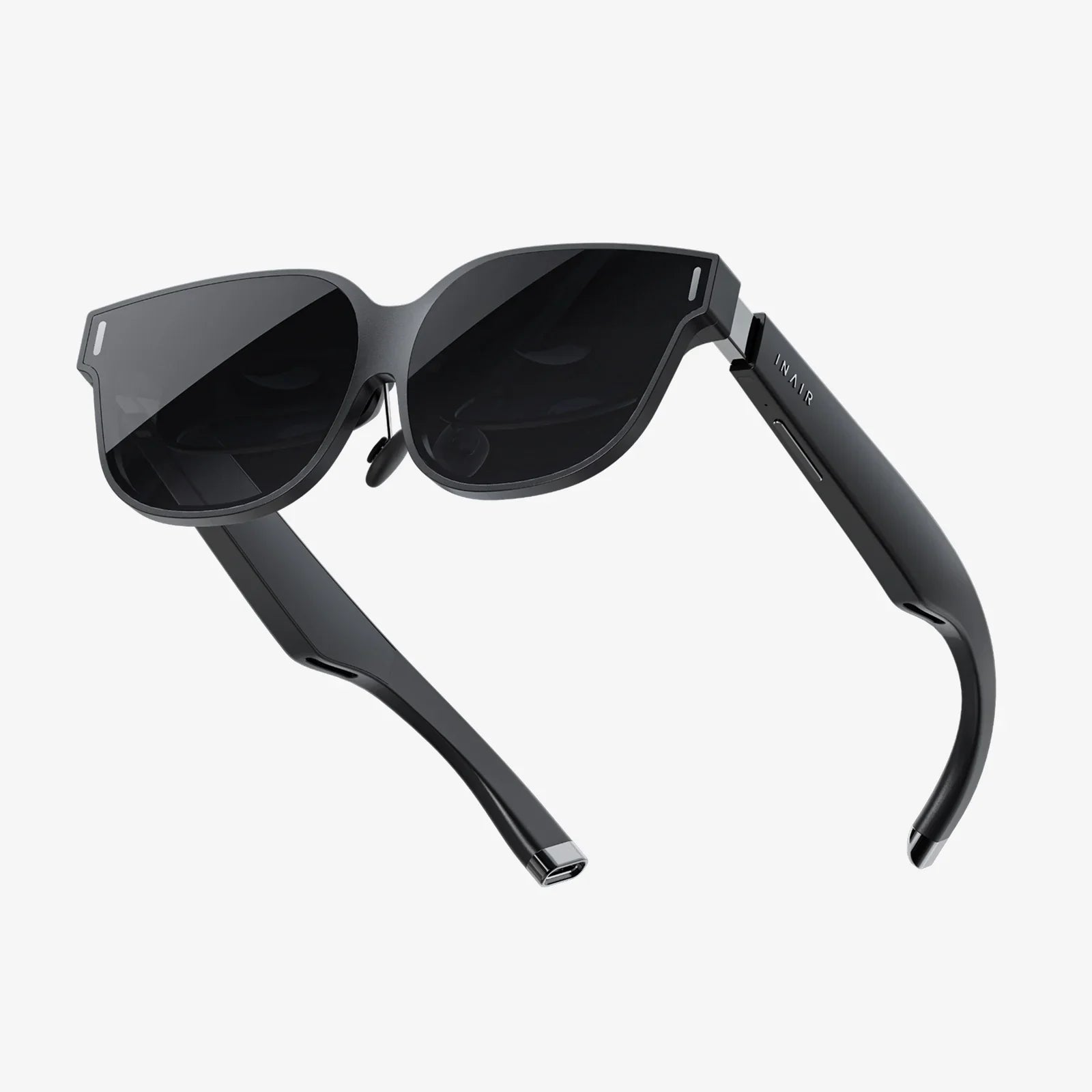
- Smart Glasses and Head-Mounted Displays (HMDs): For truly immersive and hands-free operation, dedicated wearables are the gold standard. These devices project information directly into the user's line of sight, either through optical see-through lenses or via a camera feed (video see-through). This allows workers to interact with digital content while keeping their hands free to perform tasks, which is essential for complex assembly, maintenance, and logistics operations like order picking.
Software: The Brains Behind the Operation
The software platform is where the magic of creation and deployment happens. These tools can be broadly categorized:
- Authoring and Content Creation Platforms: These are used to create the AR experiences themselves. They allow instructional designers, engineers, and developers to import 3D models, create animated sequences, add textual annotations, and define the logic that triggers certain information based on object recognition or location.
- Remote Assistance Platforms: Focused specifically on live collaboration, these tools facilitate secure video calls with annotation features, user management, and often session recording for later review and training.
- Computer Vision and Tracking SDKs: These are the underlying engines that provide developers with the capabilities for object recognition, image tracking, and SLAM, which are fundamental for anchoring digital content to the real world.
Transforming Industries: Real-World Applications of AR Support
The theoretical benefits of AR are being proven daily in practical, high-value applications across the global economy.
Industrial Maintenance and Field Service
This is arguably the most mature and proven application. Technicians servicing industrial equipment, HVAC systems, or network infrastructure use AR glasses or tablets to receive work orders, access digital manuals, and see interactive diagrams overlaid on the machinery. Remote experts can guide on-site personnel, seeing what they see and providing visual instructions, drastically reducing mean time to repair and improving first-time fix rates.
Manufacturing and Complex Assembly
On production lines, particularly for high-mix, low-volume or complex custom products, AR guides workers through intricate assembly processes. Digital work instructions show the exact location and orientation for each part, specify torque values for fasteners, and ensure proper wiring and cabling. This reduces errors, shortens training time for new hires, and increases overall production throughput.
Healthcare and Medical Training
In medicine, the stakes are incredibly high, and AR support tools are rising to the challenge. Surgeons can use AR to visualize CT or MRI scan data—such as tumors or blood vessels—precisely registered on a patient's body during pre-surgical planning or even in the operating room. Medical students can learn anatomy through immersive 3D models, and nurses can be guided on proper procedures for inserting IVs, improving accuracy and patient outcomes.
Design, Architecture, and Construction
Architects and interior designers can project their 3D digital models onto a physical empty space, allowing clients to "walk through" a building before a single brick is laid. On construction sites, workers can use AR to see where hidden elements, like electrical conduits or plumbing, are located behind walls, preventing costly damages and rework. They can also verify that structures are being built according to the digital plan by overlaying the BIM model onto the physical construction.
Navigating the Challenges: Barriers to Widespread Implementation
Despite its immense potential, the path to ubiquitous AR adoption is not without obstacles. Organizations must thoughtfully address these challenges to successfully harness the technology.
Technical Hurdles: Hardware and Connectivity
Hardware limitations remain a significant barrier. For a truly seamless experience, wearables need to be lightweight, have all-day battery life, offer high-resolution displays, and possess immense processing power—all while being affordable. Many current devices represent a compromise between these factors. Furthermore, complex AR experiences often require robust, low-latency connectivity (like 5G), especially for real-time remote collaboration, which may not be available in all operational environments, such as remote field sites or on factory floors with significant wireless interference.
Content Creation and Integration
Creating high-quality, accurate, and useful AR content can be time-consuming and expensive. It requires 3D models of assets, which many companies may not have in a usable format. Integrating AR platforms with existing enterprise systems like ERP, CMMS, or PLM software is crucial for pulling live data and work orders into the AR experience but can be a complex IT project. The challenge of creating a scalable content strategy is often underestimated.
User Experience and Human Factors
Designing intuitive AR interfaces is a unique challenge. Information overload is a real risk; displaying too much data can overwhelm and distract the user, negating the benefits. The technology must provide information that is contextually relevant and easy to act upon. Furthermore, factors like user comfort, digital eye strain, and ensuring the technology is adopted by a workforce that may not be digitally native are critical human-centric considerations for successful deployment.
The Future is Overlaid: What's Next for AR Support Tools?
The evolution of AR is accelerating, driven by advancements in adjacent fields like artificial intelligence and connectivity. The next generation of AR support tools will be even more powerful, context-aware, and intuitive.
We are moving towards a future where AI will deeply augment AR. Instead of simply displaying pre-programmed instructions, AR systems will use AI to analyze the live camera feed in real-time, automatically diagnose problems, and generate contextual guidance on the fly. Imagine an AR system that can not only show a repair step but also look at a machine, identify wear and tear, and predict a failure before it happens.
The rollout of widespread 5G and subsequent network generations will unlock the potential for cloud-rendered AR, where the heavy processing is done remotely, enabling incredibly complex and photorealistic AR experiences on lighter, less expensive wearable devices. Furthermore, the development of more natural user interfaces, like gesture control and voice commands, will make the technology even more seamless and hands-free.
The convergence of AR with the Internet of Things (IoT) will be particularly powerful. AR will become the visual interface for the digital twin of a physical asset, pulling real-time sensor data and performance metrics and displaying them directly in the user's field of view, creating a truly intelligent and interactive support system.
The potential is limitless, stretching from empowering a single individual fixing their car to coordinating global teams designing the next marvel of engineering. We are standing at the precipice of a new era of human capability, one where our physical limitations are steadily eroded by a digital layer of intelligence, guidance, and information. The tools to build this augmented world are here today, and they are poised to become as indispensable as the smartphone, reshaping our reality one overlay at a time.
Share:
Virtual Reality vs Monitor: An In-Depth Exploration of Digital Immersion and Clarity
Augmented Reality Glasses Movie Experience: The Ultimate Cinematic Revolution