


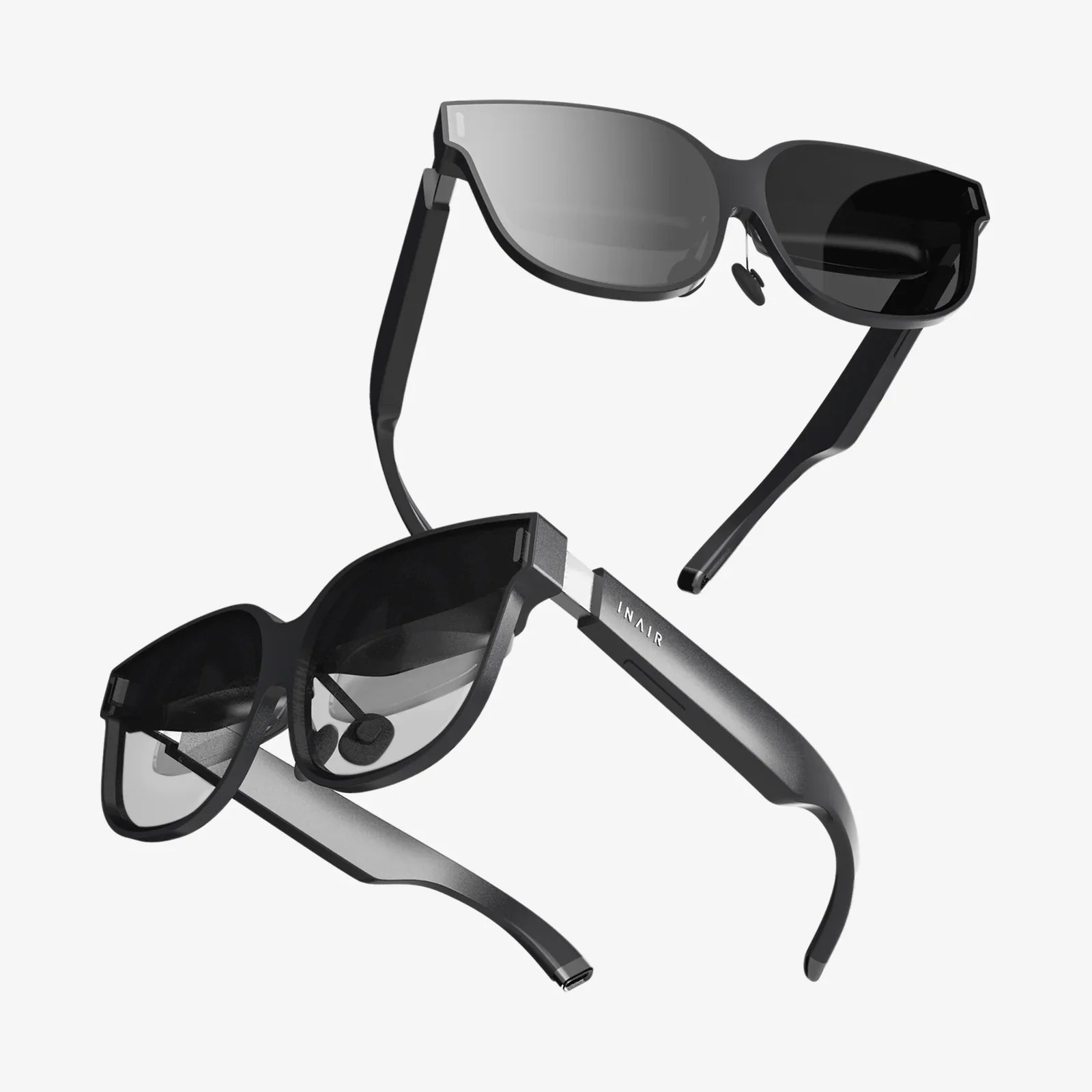
Imagine a world where digital information doesn't just live on a screen but is woven into the very fabric of your reality, enhancing everything you see, do, and understand. This is the promise and the present power of augmented reality, a technology that is rapidly moving from novelty to necessity.
The Core Mechanics: How AR Builds Upon Our Reality
At its essence, Augmented Reality (AR) technology helps in creating a composite view of the world by superimposing computer-generated perceptual information—images, text, sounds, and even haptic feedback—onto the user's real-world environment. Unlike Virtual Reality (VR), which creates a fully immersive, digital experience, AR enhances the real world, allowing users to remain present and engaged with their physical surroundings.
This magic is achieved through a sophisticated combination of hardware and software. Cameras and sensors scan the environment, while sophisticated algorithms perform simultaneous localization and mapping (SLAM) to understand the geometry and content of the space. This digital understanding allows the system to anchor holograms and data points precisely onto physical objects, making them appear as if they truly exist there. This technological ballet is what allows AR to help in such a diverse range of applications, from a surgeon visualizing a patient's anatomy during an operation to a mechanic seeing the internal wiring of an engine block.
Transforming the Operating Room: A Surgeon's Digital Scapel
Perhaps one of the most profound applications is in the medical field, where augmented reality technology helps in saving lives and improving surgical outcomes. Surgeons are using AR headsets to project critical patient data, such as MRI scans, CT imagery, and real-time vital signs, directly into their field of view. This allows them to keep their focus on the patient rather than constantly glancing away at distant monitors.
For complex procedures, AR can project a 3D model of a tumor or a delicate network of blood vessels directly onto the patient's body, acting as a GPS for surgery. This precise visual guidance helps in minimizing incision size, reducing operation time, and drastically lowering the risk of human error. Furthermore, AR is revolutionizing medical training, allowing students to practice intricate procedures on detailed, interactive holograms before ever touching a real patient, thereby accelerating learning curves and enhancing competency.
Building Smarter and Safer: The Industrial Revolution 4.0
In the industrial and manufacturing sectors, augmented reality technology helps in boosting efficiency, ensuring quality, and protecting workers. Technicians on assembly lines can use AR glasses to see digital work instructions overlaid on the machinery they are assembling, reducing errors and speeding up training for new employees. Instead of fumbling through massive paper manuals, a worker can simply look at a complex engine and see animated arrows pointing to the exact bolt that needs tightening, along with the correct torque specification.
For maintenance and repair, AR is a game-changer. A field service engineer can point a device at a malfunctioning piece of equipment and see its internal components, historical service data, and a step-by-step guide for repair, all in real-time. This not only fixes problems faster but also empowers less experienced technicians to perform complex tasks. Most importantly, AR helps in safety training by simulating hazardous scenarios—like a chemical leak or a electrical fault—in a completely controlled environment, allowing workers to learn and practice their response without any real-world danger.
Reimagining the Classroom: Interactive Learning Landscapes
Education is undergoing a dramatic shift as augmented reality technology helps in creating immersive, engaging, and highly effective learning experiences. Textbooks are transforming from static pages into dynamic portals. A student studying anatomy can explore a life-sized, beating heart hologram from every angle. A history class can walk through a digitally reconstructed ancient Roman forum, witnessing historical events unfold around them.
This kinesthetic, visual learning caters to diverse learning styles and makes abstract concepts tangible. Chemistry students can combine virtual elements to see the reaction without the risk or cost of a physical lab. AR helps in breaking down the walls of the classroom, allowing for virtual field trips to the depths of the ocean or the surface of Mars, fostering a deeper curiosity and understanding of the world.
Redefining Retail and Architecture: Try Before You Buy, Build Before You Build
The consumer world is being reshaped as augmented reality technology helps in bridging the gap between imagination and reality. In retail, customers can use their smartphones or AR mirrors to virtually try on clothes, accessories, or makeup, seeing how an item looks and fits without ever entering a changing room. Similarly, furniture shoppers can project true-to-scale 3D models of sofas, tables, and decor into their own living rooms to ensure everything fits perfectly with their existing space and style.
For architects, interior designers, and real estate professionals, AR is an indispensable visualization tool. Instead of relying on clients to interpret 2D blueprints, they can walk them through a full-scale, holographic model of a proposed building or renovation. Clients can experience the flow of space, the play of light at different times of day, and the overall feel of the design before a single brick is laid. This collaborative visualization ensures everyone is on the same page, reduces costly change orders, and leads to far more satisfying outcomes.
The Invisible Challenges: Navigating the AR Landscape
Despite its immense potential, the widespread adoption of AR faces significant hurdles. Hardware remains a barrier; for AR to be truly seamless, devices need to be lightweight, have all-day battery life, offer high-resolution displays, and be socially acceptable to wear in public—a form factor akin to regular eyeglasses. The software and digital content creation ecosystem also needs to mature, requiring powerful and easy-to-use development platforms.
Furthermore, serious questions around privacy and data security arise. AR systems constantly capture and analyze the user's environment, which could include sensitive information about people and private spaces. Establishing robust ethical frameworks and data protection protocols is paramount. There is also the risk of digital overload or reality blurring, where the constant influx of information becomes distracting or overwhelming, potentially leading to new forms of digital addiction or a diminished appreciation for the un-augmented world.
The Future is Overlaid: What Lies Ahead
The trajectory of AR points towards a future of ubiquitous computing, often referred to as the spatial web or the metaverse. We are moving towards always-available, context-aware AR experiences delivered through sleek, unobtrusive eyewear. This will fundamentally change how we interact with information and with each other. Navigation will involve arrows painted on the street, language barriers will dissolve with real-time translation overlays on signs and conversations, and remote collaboration will feel as natural as being in the same room with shared 3D holograms.
As the technology converges with artificial intelligence and the Internet of Things, our environments will become responsive and intelligent. Your AR device will not only show you how to assemble furniture but could also connect to the smart lights in your house to highlight the tools you need. The potential for AR to help in creating a more accessible, efficient, and connected world is limited only by our imagination.
The line between the digital and the physical is not just blurring; it's being intelligently woven together. This isn't about escaping reality but about empowering it, offering a new layer of understanding and interaction that promises to redefine expertise, enhance creativity, and solve some of our most persistent challenges. The age of augmentation is here, and it's poised to become as integral to our lives as the smartphone itself, fundamentally altering the human experience one overlay at a time.
Share:
Running Virtual Meetings: The Definitive Guide to Mastering Digital Collaboration
Running Virtual Meetings: The Definitive Guide to Mastering Digital Collaboration