


Imagine a world where your morning run is guided by digital avatars, your home's walls transform into dynamic art galleries with a voice command, and complex heart surgery is rehearsed on a perfect, shimmering hologram hovering over the patient. This is not a distant science fiction fantasy; it is the rapidly dawning reality being built today through the powerful and often misunderstood trio of technologies: Augmented Reality, AR, and Virtual realms. The line between what is real and what is digital is not just blurring—it is being deliberately and creatively fused, promising to revolutionize every facet of our lives in ways we are only beginning to comprehend.
The Foundational Trinity: Defining the Digital Spectrum
To understand the future, we must first demystify the present. The terms Augmented Reality (AR), Virtual Reality (VR), and the broader concept of the virtual are often used interchangeably, but they represent distinct points on a spectrum known as the Reality-Virtuality Continuum.
At one end lies our physical reality, the world as we perceive it through our senses. At the opposite end exists Virtual Reality (VR), a completely computer-generated, immersive digital environment. Using a head-mounted display, VR blocks out the physical world and transports the user into a simulated one, whether it's the cockpit of a fighter jet, the surface of Mars, or a fantasy game world. The user's presence is entirely within the virtual.
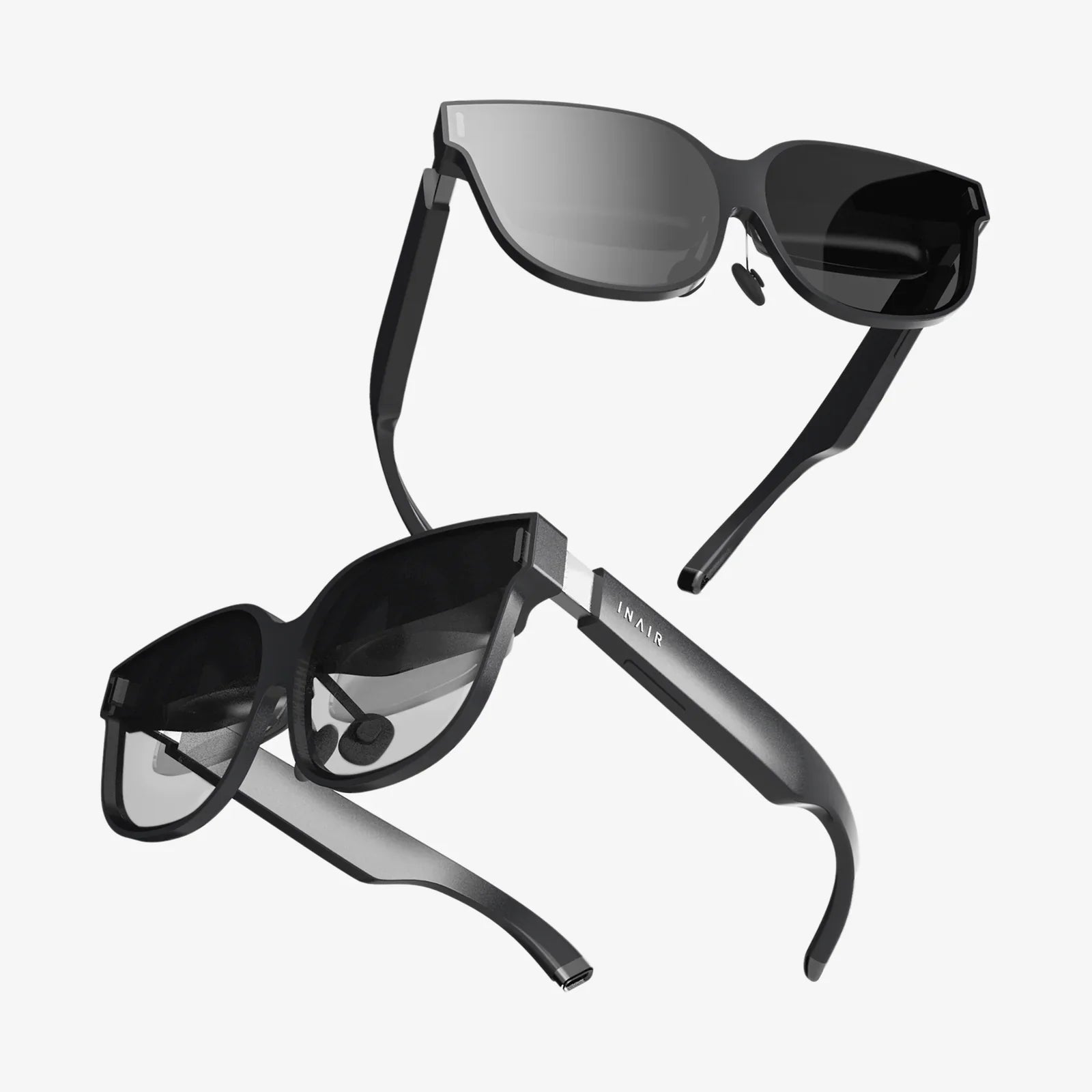
Occupying the crucial middle ground is Augmented Reality (AR). Unlike VR, which replaces reality, AR supplements it. It seamlessly overlays digital information—images, video, 3D models, data—onto the user's view of the real world. This is most commonly experienced today through smartphone cameras, where apps can place furniture in your living room or show constellations in the night sky. However, the true potential is unlocked through specialized glasses or headsets that project digital content directly onto the retina, allowing for hands-free interaction and a more natural blend of real and virtual. The core of AR is context; the digital content is anchored to and interacts with the real-world environment.
Finally, the term virtual serves as the overarching adjective describing anything that exists in software, is generated by a computer, and is not physically tangible. It is the digital clay from which both AR and VR experiences are sculpted.
A Journey Through Time: The Evolution of Augmented and Virtual Concepts
The dream of overlaying information onto our vision or escaping into another world is centuries old, finding expression in the camera obscura, stereoscopes, and even in early science fiction literature. However, the technological journey began in earnest in the mid-20th century.
In 1968, computer scientist Ivan Sutherland and his student Bob Sproull created "The Sword of Damocles," widely considered the first head-mounted display system. It was a primitive and terrifying apparatus that hung from the ceiling, displaying simple wireframe graphics. Yet, it contained the foundational idea of VR. The term "Augmented Reality" itself was coined much later, in 1990, by researchers Thomas P. Caudell and David Mizell while working at a major aerospace company.
The 1990s and early 2000s saw these technologies remain largely within military, aviation, and academic research labs due to prohibitive costs and technical limitations. The true catalyst for the modern era was the smartphone. The proliferation of powerful processors, high-resolution cameras, accurate sensors (gyroscopes, accelerometers), and GPS in every pocket provided the perfect platform for AR to take its first steps into the mainstream. The 2016 phenomenon of a certain location-based mobile game was a global cultural moment that introduced hundreds of millions to the basic thrill of AR.
Simultaneously, VR underwent a renaissance. The development of more affordable, high-quality headsets driven by advancements in display technology and computer graphics brought immersive virtual experiences to consumers and professionals alike. We now stand at an inflection point where AR and VR are converging, giving rise to Mixed Reality (MR) and Spatial Computing—environments where physical and digital objects not only co-exist but can interact with each other in real-time.
The Architectural Engine: How AR and Virtual Technologies Work
The magic of overlaying a digital dinosaur onto your coffee table or building a virtual skyscraper is underpinned by a complex symphony of hardware and software.
Sensing the World: For AR to work, the device must first understand its environment. This is achieved through a suite of sensors. Cameras capture the visual field, while technologies like LiDAR (Light Detection and Ranging) fire out invisible laser beams to measure the distance to objects, creating a precise depth map of the surroundings. Simultaneous Localization and Mapping (SLAM) algorithms use this sensor data to simultaneously map the environment and track the device's position within it. This is the AR system's equivalent of human proprioception—knowing where it is in space.
Processing and Rendering: Once the environment is mapped, the software takes over. The desired digital content is rendered by the device's processor and graphics unit. This is no small feat; the virtual object must be lit to match the real-world lighting, it must cast accurate shadows, and it must remain locked in place, resisting drift even as the user moves. For VR, the processing demand is even higher, as it must generate two high-resolution, high-frame-rate images (one for each eye) to maintain immersion and prevent motion sickness.
Display and Interaction: The final step is presenting the fused reality to the user. Smartphones use their screens as viewfinders. Dedicated AR glasses use waveguides or micro-projectors to beam light directly onto the user's retina. VR headsets use high-density displays placed mere centimeters from the eyes, with lenses to focus the image. Interaction is the final frontier, achieved through hand-tracking cameras, controllers, voice commands, and even eye-tracking, making the experience feel intuitive and magical.
Transforming Industries: The Practical Power of Merged Realities
Beyond games and filters, AR and virtual technologies are driving profound efficiency, safety, and innovation across the global economy.
Manufacturing and Design: Engineers and designers use VR to prototype and test new vehicles, products, and buildings in a virtual space long before physical resources are committed. AR empowers factory technicians by overlaying assembly instructions, wiring diagrams, and safety information directly onto machinery, reducing errors and training time. Remote experts can see what a field worker sees and annotate their view in real-time to guide them through a complex repair, eliminating travel costs and downtime.
Healthcare and Medicine: This is perhaps one of the most impactful applications. Medical students can practice procedures on virtual patients, and surgeons can use AR to visualize a patient's anatomy—such as CT scans or MRI data—precisely overlaid on their body during an operation, effectively granting them X-ray vision. VR is also proving to be a powerful tool for pain management, physical rehabilitation, and treating phobias and PTSD through controlled exposure therapy.
Retail and E-commerce: The "try before you buy" problem is being solved. Customers can use AR to see how a sofa would look in their lounge, how a new shade of paint would transform a room, or how a pair of glasses fits their face. This not only enhances consumer confidence and reduces returns but also creates a novel and engaging shopping experience.
Education and Training: These technologies make learning experiential. Instead of reading about ancient Rome, students can walk through a historically accurate virtual recreation of the Forum. Instead of watching a safety video, a warehouse employee can practice navigating hazards in a risk-free VR simulation. This shift from passive learning to active doing dramatically improves knowledge retention and skill acquisition.
The Human and Societal Impact: A Double-Edged Sword
As with any transformative technology, the rise of pervasive AR and virtual environments presents a host of ethical, social, and psychological challenges that society must proactively address.
The Privacy Paradigm: AR devices, by their very nature, are constantly scanning and capturing the world around them. This raises immense privacy concerns. Who owns the data collected about your home, your workplace, or a public street? How is facial recognition data used and stored? The potential for constant surveillance, both by corporations and governments, is a significant threat that requires robust legal and ethical frameworks.
The Reality Divide: There is a risk of creating a new socioeconomic chasm between those who can afford advanced AR/VR systems and those who cannot. Furthermore, if people begin to spend significant portions of their lives in curated, virtual utopias, what happens to our shared physical reality and our communities? Will we become more isolated, or will these tools help us connect in deeper, more meaningful ways across geographical boundaries?
Mental and Physical Health: Prolonged use can lead to issues like simulator sickness, eye strain, and disorientation. The psychological effects are less understood. How does the ability to constantly filter or alter our perceived reality impact our mental health, our self-image, and our relationship with an unfiltered world? The potential for addiction and escapism is real and must be studied.
Gazing into the Crystal Ball: The Future is Spatial
The next evolutionary step is the concept of the Metaverse or the Spatial Web—a persistent, shared network of 3D virtual spaces linked to the physical world and accessible through various devices, primarily AR glasses. This is not about putting on a headset to play a game; it is about wearing lightweight, stylish glasses that seamlessly weave a layer of useful, contextual digital information into the fabric of our daily lives.
Your directions to a meeting won't be on a phone screen but painted onto the sidewalk in front of you. The history of the building you're looking at will appear next to it. You'll have a conversation with a colleague's lifelike hologram as if they were standing in the room, eliminating the concept of geographical distance for work and social connection. Digital art and ownership will be tied to physical locations, creating new forms of culture and commerce.
This future will be built on advancements in artificial intelligence, 5G/6G connectivity for low latency, and even more miniaturized and powerful hardware. It promises a world where computing is not a destination we go to on a screen, but an ambient, intelligent utility that enhances our human capabilities.
The convergence of Augmented Reality, AR, and virtual technologies is not merely another tech trend; it is a fundamental shift in the human-computer interface, a new lens through which we will perceive, interact with, and ultimately understand our world. It holds the power to augment not just our reality, but our very humanity—expanding the limits of creativity, empathy, and knowledge. The door between the physical and the digital is now open, and we are all stepping through.
Share:
Digital Space Interaction: The Unseen Architecture of Modern Human Connection
Teams Virtual Meeting: The Ultimate Guide to Mastering Digital Collaboration