


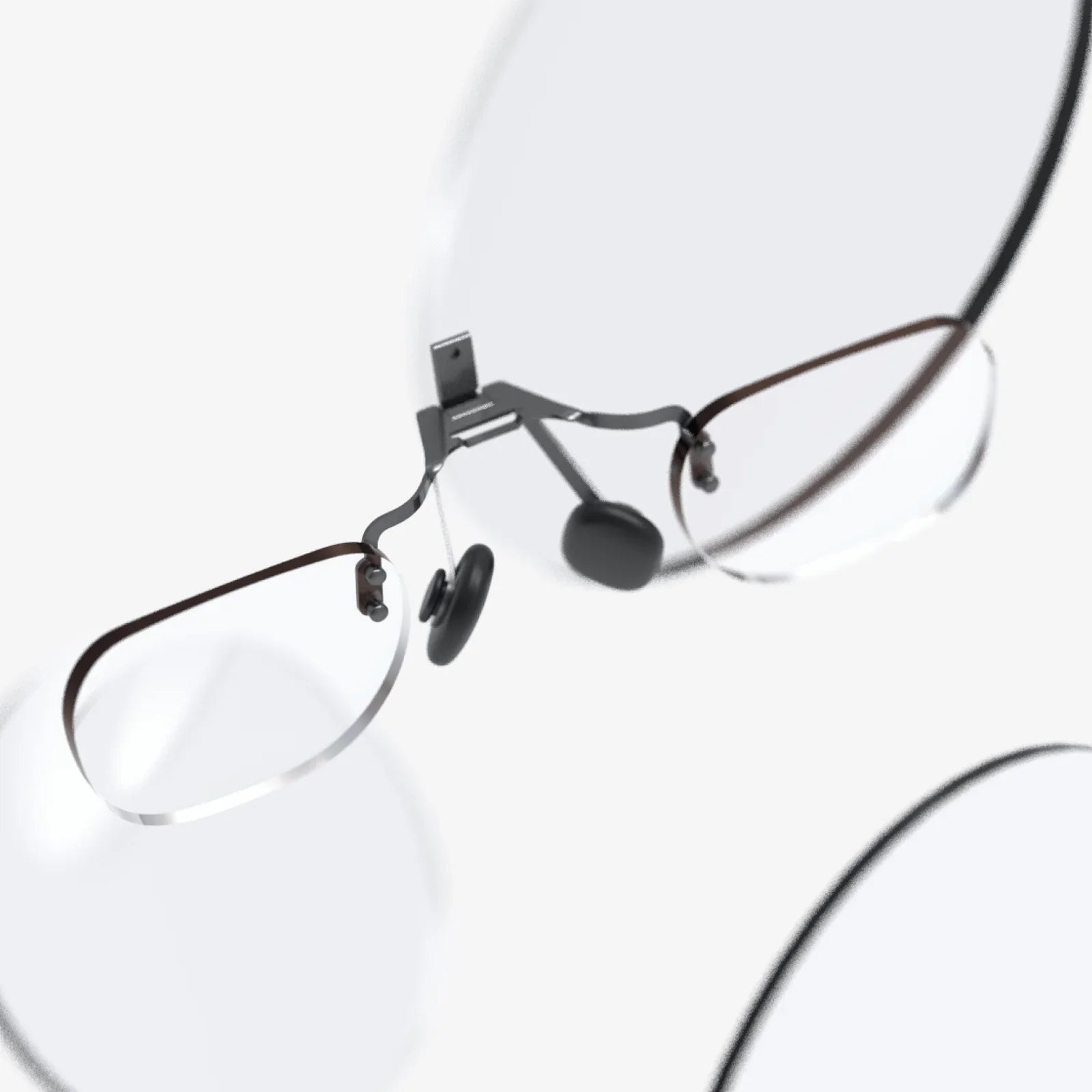
Imagine pointing your phone at a city street and seeing its history unfold before your eyes, or looking through a pair of glasses to see step-by-step instructions floating over a broken engine. This isn't a glimpse into a distant sci-fi future; this is the reality for millions today. The digital and physical worlds are converging in a seamless dance, and the doorway is the device already in your pocket or on your face. The era of waiting is over; sophisticated, powerful, and transformative augmented reality is available now, and it’s quietly reshaping everything from how we shop and learn to how we work and connect.
Beyond the Hype: Defining the Augmented Present
It's crucial to distinguish augmented reality (AR) from its technological cousins. Unlike virtual reality (VR), which immerses you in a completely digital environment, AR overlays digital information—images, text, animations, and 3D models—onto your real-world view. It enhances your reality rather than replacing it. This overlay, often called the "digital twin" or "AR layer," is precisely anchored to the physical world, responding to it and interacting with it in real-time.
The magic that makes this possible hinges on a suite of advanced technologies working in concert. Modern smartphones and dedicated AR wearables are equipped with high-resolution cameras that act as the eyes of the system. Sophisticated computer vision algorithms and simultaneous localization and mapping (SLAM) software process the camera feed to understand the environment, detecting flat surfaces like tables and floors, recognizing objects, and tracking their position in space. Powerful onboard processors then render complex digital content and perfectly align it within the live camera view, creating the illusion that the digital object is truly part of your world.
The Unseen Engine: How AR Works on Your Device
The accessibility of AR hinges on its ability to run on ubiquitous hardware. The journey begins with Environmental Understanding. Your device's camera scans the surroundings. Advanced algorithms identify feature points and textures, creating a live depth map of the space. This allows the device to understand not just what it's looking at, but the geometry of the environment—where the walls, floor, and objects are in relation to you.
Next comes Tracking and Anchoring. Using the environmental map, the device can maintain its position within the space. When you place a virtual chair in your living room, SLAM technology ensures it stays in that exact spot even as you walk around it, viewing it from different angles. This persistent anchoring is what sells the illusion of reality.
Finally, there's Rendering and Display. The device's GPU draws the high-fidelity 3D model or information overlay, factoring in lighting, shadows, and occlusion (where real-world objects can pass in front of virtual ones). This is displayed on your screen, perfectly composited over the live video feed. For wearable glasses, this is projected directly onto the lenses, creating a hands-free, always-available experience.
Transforming Commerce: The Try-Before-You-Buy Revolution
Perhaps the most visible and widespread application of AR today is in the retail sector. It has fundamentally solved a core problem of digital commerce: the inability to physically interact with a product. Now, consumers can visualize products in their own space with stunning accuracy.
Furniture shoppers can see how a new sofa fits their living room, checking its scale, color, and style against their existing décor before committing to a purchase. This drastically reduces purchase anxiety and has been shown to significantly lower return rates. Similarly, home improvement stores allow customers to project virtual appliances into their kitchens or see how a new shade of paint would look on their walls.
The personalization extends further. Beauty brands offer virtual try-on for makeup and accessories, allowing users to test dozens of lipstick shades or pairs of glasses in minutes without setting foot in a store. Fashion retailers enable virtual fitting rooms, overlaying clothing onto a user's live image. This is not a gimmick; it's a powerful utility that bridges the gap between the online and in-store experience, providing tangible value to the consumer and driving sales for businesses.
Redefining the Workspace: From the Factory Floor to the Operating Room
While consumer applications are flashy, some of the most impactful uses of AR are happening in enterprise and industrial settings, where it is boosting productivity, enhancing safety, and reducing errors.
On manufacturing and assembly lines, technicians wearing AR glasses can see digital work instructions overlaid directly onto the machinery they are repairing. Annotations, arrows, and 3D models guide them through complex procedures, highlighting exactly which bolt to turn or which wire to connect. This allows for hands-free operation, reduces training time for new employees, and minimizes costly mistakes. Remote experts can see what an on-site worker sees and provide visual guidance, effectively teleporting their expertise anywhere in the world.
In healthcare and medicine, AR is proving to be a life-saving tool. Surgeons can use AR projections to visualize a patient's anatomy, such as CT scans or MRI data, directly onto their body during procedures. This provides an X-ray-like view, improving precision and reducing incision sizes. Medical students can practice complex surgeries on detailed, interactive 3D holograms of the human body, accelerating their learning curve without risk. Furthermore, AR is aiding in physical therapy by turning exercises into interactive games and helping patients correctly perform rehabilitation movements.
Education and Storytelling: Bringing History and Data to Life
AR has the unique power to make the abstract tangible and the distant immediate, making it a revolutionary educational tool. Interactive learning is transformed as students can explore the solar system with planets orbiting around them in their classroom, dissect a virtual frog without the smell, or watch historical events play out on their desk.
Museums and cultural institutions are using AR to create deeply engaging exhibits. Pointing a device at a fossil might show a rendering of the dinosaur it came from, roaring and moving. An ancient ruin can be restored to its former glory on-screen, allowing visitors to understand its scale and significance. This contextual, experiential learning fosters a deeper connection and understanding than any textbook could provide.
For professionals, data visualization is being revolutionized. Architects and urban planners can walk through full-scale 3D models of their building designs before a single brick is laid. Meteorologists can visualize complex storm systems in 3D to better understand their development. AR turns vast, complex datasets into intuitive, interactive holograms that can be manipulated and understood naturally.
The Path Forward: Challenges and the Invisible Future
Despite its rapid advancement, AR's journey is not without hurdles. For widespread adoption of wearable AR, devices need to become lighter, more socially acceptable, and have all-day battery life. Network latency and processing power must continue to improve to enable more complex and shared experiences. Crucially, the development of a robust and ethical framework for data privacy and security is paramount, as these systems collect vast amounts of visual and spatial data about our lives.
Yet, the trajectory is clear. The goal is not to have users constantly staring at screens, but to develop AR that is contextual, intuitive, and invisible. The technology will fade into the background, becoming a seamless layer of information that appears only when needed and enhances our natural perception without overwhelming it. We are moving towards a world of ambient computing, where digital intelligence is woven into the fabric of our existence, always available but never obtrusive.
The most powerful technology is often the one you stop noticing because it works so perfectly. The foundational tools are already here, humming in the devices we use every day. This is no longer a beta test or a niche curiosity; it's a fundamental shift in the human-computer interface. The next time you look at your world, remember there’s an invisible layer of possibility waiting to be unlocked, offering a richer, more informed, and more connected way to experience life all around you.
Share:
10 Augmented Reality Technologies That Are Reshaping Our World
Best Mobile VR Glasses: Your Ultimate Guide to Affordable Immersion