


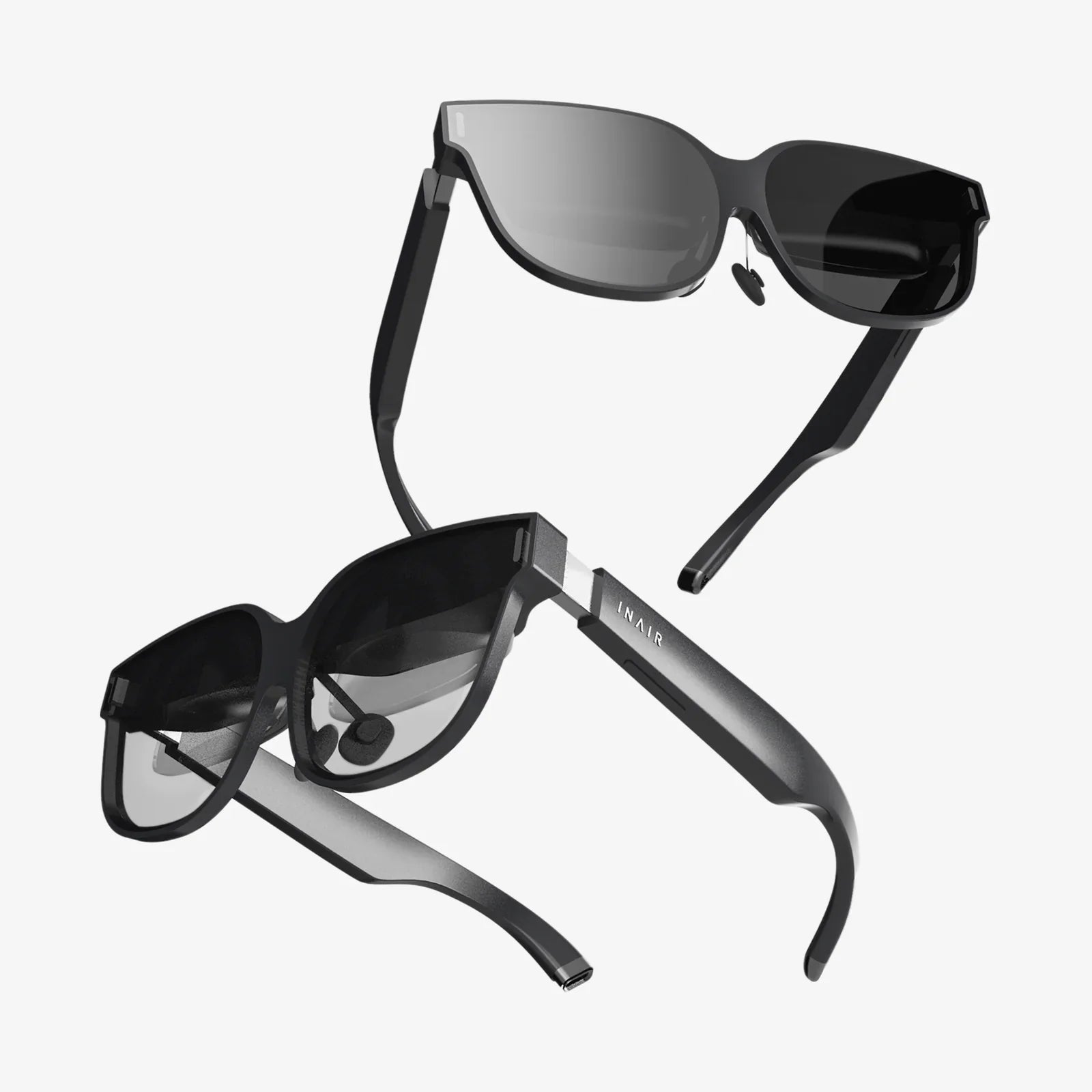
Imagine a world where your customers can try on your products from their living room, your field technicians can see repair instructions overlaid on a broken machine, and your entire workforce can collaborate on a 3D prototype from different continents. This isn't a distant sci-fi fantasy; it's the tangible, transformative power of augmented reality (AR) available to businesses today. The conversation has shifted from whether AR is a viable technology to how quickly enterprises can integrate it to secure a formidable competitive advantage. Forward-thinking leaders are no longer asking 'if' but 'how soon' they can harness its potential to revolutionize their operations, marketing, and customer service.
The Foundation: Understanding Augmented Reality in a Business Context
Before delving into the myriad of benefits, it is crucial to establish a clear understanding of what augmented reality entails. Unlike virtual reality (VR), which creates a completely immersive, digital environment, AR overlays digital information—such as images, text, data, and 3D models—onto the user's real-world view. This is typically achieved through devices like smartphones, tablets, smart glasses, and heads-up displays. The magic of AR lies in its ability to bridge the gap between the digital and physical worlds, creating a rich, interactive, and contextual experience that enhances reality rather than replacing it. For businesses, this translates into a powerful tool for visualizing information, providing guidance, and delivering immersive experiences directly into the hands of employees and customers.
Revolutionizing Customer Engagement and Shopping Experiences
The most visible and rapidly adopted application of AR lies in its capacity to fundamentally alter how consumers interact with products and brands. This shift is creating a new paradigm for customer engagement, moving from passive observation to active participation.
Virtual Try-On and Product Visualization
One of the most significant augmented reality benefits for business is the eradication of uncertainty in the purchasing process. In sectors like retail, furniture, and interior design, AR allows customers to project products into their personal space. They can see how a new sofa fits in their lounge, how a shade of paint looks on their wall, or how a pair of glasses suits their face—all in real-time and true to scale. This capability dramatically reduces purchase hesitation and buyer's remorse, leading to higher conversion rates and significantly lower return rates. It transforms the e-commerce experience from a gamble into an informed decision-making process.
Interactive Marketing and Brand Storytelling
AR campaigns create memorable, interactive experiences that forge a deeper emotional connection with a brand. Instead of simply watching an advertisement, users can engage with it. A printed poster can come to life with a smartphone, a product package can unlock a hidden game or tutorial, and a physical location can be enriched with digital content through geotagging. This level of interactivity generates buzz, encourages social sharing, and elevates brand perception from being a mere vendor to an innovative experience provider. It turns marketing from a one-way broadcast into a two-way conversation.
Driving Operational Excellence and Enhancing Workforce Capabilities
Beyond customer-facing applications, AR delivers immense value internally by optimizing complex processes, reducing errors, and accelerating workflows. This operational upside often provides the strongest and fastest return on investment.
Streamlined Training and Onboarding
Training new employees, especially for complex manual tasks, is traditionally time-consuming and costly. AR revolutionizes this by providing interactive, step-by-step guidance overlaid directly onto equipment or work environments. A trainee mechanic can see instructions and arrows pointing to specific components on an engine block. A new warehouse worker can see the most efficient picking route visualized on the floor through smart glasses. This hands-on, contextual learning accelerates skill acquisition, improves knowledge retention, and ensures consistency in training outcomes across the organization, all while reducing the reliance on senior staff as constant mentors.
Empowering Remote Assistance and Expert Collaboration
AR shatters geographical barriers for expertise. A field service technician facing a novel problem can stream their live point-of-view to a centralized expert miles away. The expert can then annotate the technician's real-world view with arrows, notes, and diagrams to guide the repair, effectively saying, "See this bolt? Turn it." This "see-what-I-see" capability resolves issues faster, minimizes costly site visits by experts, and drastically reduces equipment downtime. It allows companies to leverage their top talent more effectively, ensuring that the right knowledge is delivered at the right place and time.
Enhanced Design, Prototyping, and Manufacturing
In design and manufacturing, AR enables stakeholders to visualize and interact with 3D digital prototypes overlaid onto the physical world. Engineers can examine a full-scale model of a new component within an existing assembly before any physical tooling is created, identifying potential design clashes and ergonomic issues early. On the factory floor, assembly instructions can be projected directly onto workstations, guiding workers through complex wiring harnesses or intricate assemblies, which reduces errors and improves production speed and quality.
Transforming Data Visualization and Remote Collaboration
In the modern data-driven enterprise, AR offers a revolutionary way to interact with complex information, making it intuitive and actionable.
Immersive Data overlays
For roles that require interpreting vast amounts of data in real-time, AR can present critical metrics and key performance indicators directly within the user's line of sight. A logistics manager walking through a distribution center could see live inventory levels, shipment statuses, and efficiency metrics overlaid on each rack and workstation. This contextual presentation of data allows for quicker, more informed decision-making without needing to constantly refer to a computer screen or clipboard.
The Future of Remote Meetings
While video conferencing connects people, AR meetings can connect people with things. Participants wearing AR headsets can appear as avatars in a shared virtual space and collaborate on a 3D model of a product, a architectural plan, or a medical scan as if they were standing next to each other. They can manipulate, annotate, and dissect the model together, fostering a level of collaboration and understanding that flat screens simply cannot match. This is invaluable for global teams working on complex engineering, design, or architectural projects.
Quantifying the Impact: The Tangible ROI of AR Implementation
The benefits of AR are not merely conceptual; they translate into hard, measurable business outcomes that impact the bottom line. Companies implementing AR solutions report substantial improvements in key operational metrics. These include a dramatic reduction in training time, sometimes by over 50%, and a significant decrease in errors during complex assembly tasks, often by over 30%. Furthermore, productivity gains of 20-35% are common in fields like order picking and equipment repair. Perhaps most compelling is the reduction in downtime; by enabling faster and first-time-right repairs through remote expert guidance, businesses can save millions by keeping critical machinery and operations running. The return on investment is clear, calculated through reduced operational costs, increased sales, and enhanced customer satisfaction.
Navigating the Path to Implementation
Adopting AR is a strategic journey that requires careful planning. Businesses should start by identifying a specific pain point or process with a high potential for improvement. A pilot program focused on a single use case, such as remote assistance or interactive manuals, allows an organization to test the technology, measure its impact, and build internal competency without a massive upfront investment. Choosing the right hardware—whether consumer-grade smartphones for customer apps or enterprise-grade smart glasses for hands-free worker applications—is critical. Success hinges on seamless integration with existing enterprise systems like CRM, ERP, and CMS to ensure the digital information overlays are dynamic and relevant.
The future of business is not just digital; it is spatially aware and contextually enhanced. The organizations that will lead the next decade are those that recognize augmented reality not as a novelty for gaming but as a fundamental layer of the computing interface, seamlessly blending the analytical power of data with the intuitive understanding of the physical world. The question is no longer about the validity of the technology but about the vision of the leadership. The tools are here, the ROI is proven, and the first-mover advantage is ripe for the taking. Will your business be a spectator or a pioneer in this augmented revolution?
Share:
Real Augmented Reality: Bridging the Digital and Physical Worlds
What AR VR Headsets Could Look Like: A Glimpse Into the Future of Wearable Computing