


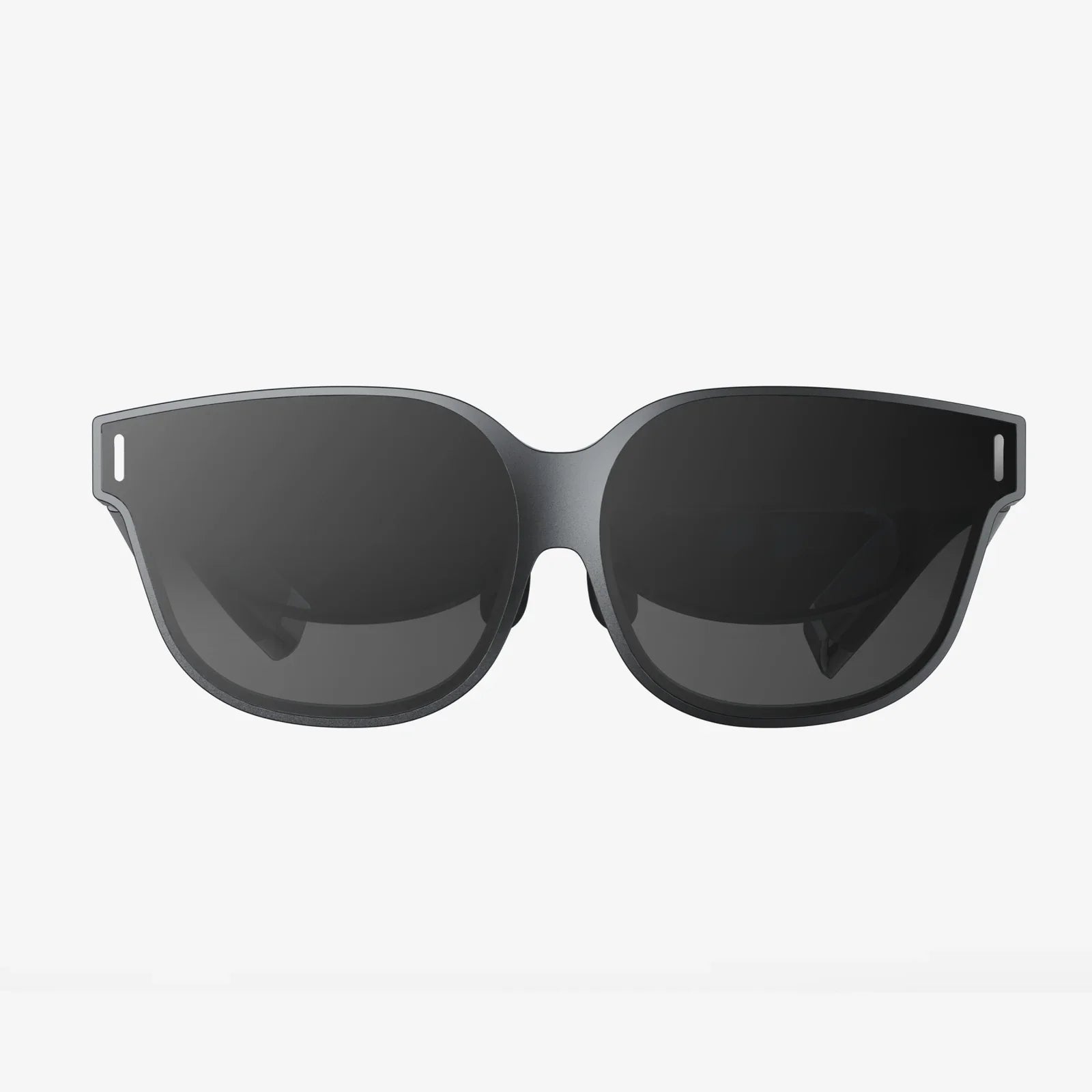
Imagine holding the future in your hands, not as a static drawing on a page, but as a living, breathing hologram you can walk through, inspect from every angle, and interact with before a single physical resource is ever committed. This is no longer the stuff of science fiction; it's the powerful reality being unlocked by a transformative technology known as augmented reality blueprints. This convergence of the digital and physical is poised to fundamentally alter how we design, build, manufacture, and maintain the world around us, moving us from an era of interpretation into an age of immersive experience.
Beyond Paper and Pixels: Defining the New Dimension of Design
To understand the seismic shift, we must first move beyond the traditional concept of a blueprint. For centuries, these documents—whether inked on vellum or rendered in a computer-aided design (CAD) program—have been two-dimensional representations of three-dimensional intent. They are a language of lines, symbols, and annotations that require years of training to interpret accurately. This translation from 2D to 3D happens in the mind of the architect, engineer, and construction worker, a process fraught with the potential for error, ambiguity, and costly miscommunication.
Augmented reality (AR) blueprints shatter this paradigm. They are not a new type of file, but rather a revolutionary method of overlaying rich, digital design data directly onto the user's physical field of view. Using a device—be it a tablet, smartphone, or, more powerfully, a set of AR glasses—the user sees the proposed structure, machine part, or interior layout superimposed at a 1:1 scale onto the real world. This digital twin is anchored to the physical space, allowing the user to walk around it, peer inside it, and understand its spatial relationships with undeniable clarity. It is the ultimate synthesis of the abstract plan and the tangible site.
The Architectural and Construction Revolution: From Site to Skyline
Nowhere is the impact of AR blueprints more immediately transformative than in architecture, engineering, and construction (AEC). The technology is streamlining the entire project lifecycle, from the first client meeting to the final commissioning walkthrough.
Immersive Design Reviews and Client Presentations
Gone are the days of clients struggling to decipher complex architectural elevations or floor plans. With AR, an architect can project a full-scale model of a new home onto the empty plot of land where it will be built. The clients can don a headset and literally walk through their future living room, assessing the height of the ceilings, the flow between rooms, and the placement of windows to capture the morning light. This visceral experience fosters deeper understanding, builds excitement, and allows for informed design changes early in the process, when they are least expensive to implement.
Enhanced On-Site Construction and Error Reduction
On the construction site, AR blueprints are a powerful tool for precision and efficiency. A foreman can use a tablet to view the holographic plan of a complex plumbing system directly over the open slab, seeing exactly where pipes should be run and how they connect to the main line. This eliminates constant cross-referencing of paper plans and reduces the risk of rework. For tasks like layout and marking, AR can project the exact locations for walls, electrical outlets, and structural elements directly onto the floors and foundations, drastically improving accuracy and speed.
Seamless Collaboration and Clash Detection
Modern construction involves the intricate coordination of multiple trades—electrical, mechanical, plumbing, structural. AR facilitates this by allowing each team to see their own systems in context with others. An electrician can see where the HVAC ducts will be run, enabling them to plan conduit routes that avoid conflicts. This real-time, on-site clash detection prevents the expensive and time-consuming discoveries of interference that often occur mid-construction, keeping projects on schedule and within budget.
The Manufacturing and Industrial Metamorphosis
The factory floor is another domain being reshaped by this technology. Here, AR blueprints evolve into dynamic assembly guides and maintenance manuals.
Streamlined Assembly and Complex Fabrication
For assembling intricate machinery or custom components, workers can use AR glasses to see animated, step-by-step instructions overlaid directly onto the physical parts in front of them. Arrows can point to specific connection points, torque settings can be displayed next to bolts, and warnings can pop up if a step is attempted out of sequence. This reduces training time, minimizes assembly errors, and empowers workers to tackle increasingly complex tasks with confidence.
Revolutionizing Maintenance and Repair Operations
When a piece of equipment fails, every minute of downtime costs money. A maintenance technician equipped with AR can look at a malfunctioning engine and see an interactive schematic highlighting the likely culprit. They can then follow guided instructions for disassembly and repair, with virtual arrows showing which bolts to remove and in what order. This can drastically reduce diagnostic and repair times, especially for less experienced technicians, and ensures procedures are followed correctly, enhancing safety and equipment longevity.
Empowering Remote Expertise and Training
AR blueprints enable a powerful form of remote assistance. An off-site expert can see what a field technician sees through a live feed, and then draw annotations and holographic arrows into the technician's field of view, guiding them through a complex procedure as if they were standing right beside them. This democratizes expertise, reduces travel costs, and ensures problems are resolved quickly, regardless of location.
The Technical Backbone: How the Magic is Woven
This seamless blending of realities is powered by a sophisticated stack of technologies working in concert.
- Simultaneous Localization and Mapping (SLAM): This is the foundational technology that allows the AR device to understand its position in the physical world. It uses cameras, sensors, and algorithms to map the environment in real-time and precisely anchor digital content within it.
- Building Information Modeling (BIM): AR blueprints are most powerful when fed by a rich BIM model. Unlike a simple 3D model, a BIM is a intelligent database containing not just geometry, but also information about materials, specifications, performance data, and even cost. AR acts as the immersive visual interface for this deep well of data.
- Cloud Computing: The heavy processing required for complex models and real-time rendering is often handled in the cloud. This allows even lightweight AR glasses to display incredibly detailed holograms, as the computational burden is offloaded to powerful remote servers.
- Wearable Technology: The evolution of hardware—from handheld tablets to hands-free smart glasses—is critical for adoption. Comfort, battery life, field of view, and display clarity are all areas of rapid advancement, making the technology more practical for all-day use in demanding environments.
Navigating the Challenges: The Path to Widespread Adoption
Despite its immense potential, the path to ubiquitous AR blueprinting is not without obstacles.
Hardware Limitations and User Experience: For true hands-free operation, AR glasses need to become lighter, more comfortable, and offer all-day battery life. Display technology must improve to work flawlessly in the bright, variable lighting conditions of a construction site or factory floor. Overcoming these hardware hurdles is essential for mass adoption.
Integration with Existing Workflows: The technology cannot exist in a vacuum. It must integrate smoothly with existing design software, project management platforms, and enterprise systems. Creating a seamless flow of data from the BIM model to the AR headset is a significant technical and logistical challenge that industry leaders are actively solving.
Data Security and Digital Hygiene: As critical project data moves onto connected devices and into the cloud, robust cybersecurity measures are paramount. Protecting sensitive architectural and engineering data from theft or manipulation is a top priority. Furthermore, in shared AR experiences, establishing protocols for digital hygiene—managing who can add, remove, or alter the holographic data—is crucial to prevent virtual vandalism or errors.
The Human Factor and Training: Introducing any new technology requires change management. A workforce accustomed to 2D plans must be trained not only to use the new hardware and software but also to trust the digital information overlaid on their physical reality. Building this confidence is a gradual process.
The Future Built with Digital Hands: What Lies Ahead
The evolution of AR blueprints is pointing toward an even more integrated and intelligent future. We are moving toward a world where the physical and digital are permanently intertwined in what some call the "Internet of Places."
Future developments will likely include the integration of artificial intelligence, where the AR system could proactively identify potential problems or suggest optimizations based on the live data it's receiving. Haptic feedback could allow users to "feel" the digital models they are manipulating. Furthermore, as the technology becomes more pervasive, we will see the rise of persistent digital layers tied to locations and objects—a permanent, updatable history of a building's design, construction, and maintenance that can be accessed by anyone with permission, forever linking the physical asset to its digital twin.
This technology promises to democratize design and complex information, making it accessible and understandable to all, not just trained specialists. It fosters a new era of collaboration, erasing geographical barriers between teams. Most importantly, it empowers us to build and create with a level of foresight and precision previously unimaginable, minimizing waste—both material and temporal—and allowing human creativity to be realized with unparalleled fidelity.
The next time you see a construction crew or a factory worker, look closer. They might not just be reading a plan; they might be conversing with the future, their vision enhanced by an invisible digital layer that is quietly, profoundly, building a better world. The blueprints are no longer confined to the page; they have escaped into our reality, ready to guide our hands and reshape our tomorrow.
Share:
Augmented Reality Production Equipment: The Unseen Engine Reshaping Reality
Sustainable Smart Glass: The Transparent Revolution Reshaping Our Built Environment