


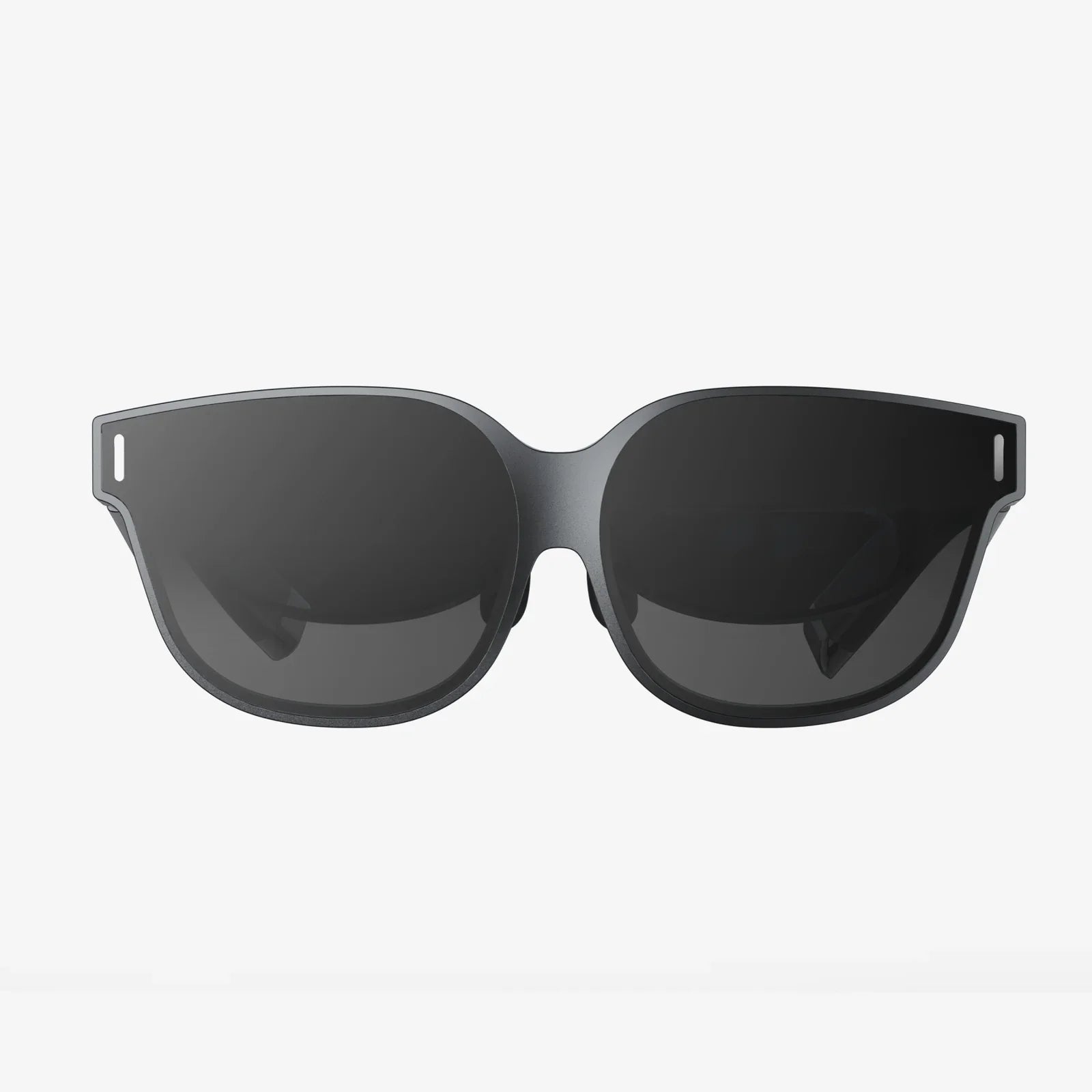
Imagine a world where the digital and the physical are no longer separate realms, but a seamless, interactive tapestry. Where a surgeon can see a patient's vital signs and 3D anatomical models overlaid directly onto the operating field, a mechanic can view repair instructions superimposed onto a faulty engine, and a history student can walk through a digitally reconstructed ancient Roman forum right from their classroom. This is not a distant science fiction fantasy; it is the reality being built today through the proliferation of sophisticated augmented reality cases. While consumer applications often grab the headlines, the most profound and impactful use cases are emerging in enterprise, medicine, education, and industry, quietly revolutionizing how we work, learn, and interact with the world around us.
Beyond the Novelty: Defining the Modern AR Landscape
To understand the depth of these cases, we must first move beyond the simplistic view of augmented reality as mere smartphone filters or whimsical gaming experiences. At its core, AR is a technology that superimposes a computer-generated image, data, or a 3D model onto a user's view of the real world, thus providing a composite perspective that enhances reality. This is achieved through a combination of hardware—like smart glasses, headsets, and advanced cameras—and sophisticated software that understands the environment through techniques like simultaneous localization and mapping (SLAM). The power of modern AR lies in its contextuality; it delivers the right information at the right time and, most importantly, in the right place.
Revolutionizing the Operating Room: Surgical Precision Reimagined
Perhaps one of the most critical and life-saving applications of AR is in the field of medicine, particularly surgery. Traditional surgery, while advanced, often requires surgeons to divide their attention between the patient, monitors displaying vital signs, ultrasound images, and pre-operative scans like CT or MRI. This constant shift in focus can be cognitively taxing and can, in rare instances, lead to error.
Augmented reality cases in surgery are eliminating this divide. Through AR headsets or specialized surgical scopes, surgeons can now have crucial data projected directly into their field of view. A neurosurgeon can see a 3D reconstruction of a patient's tumor, its exact boundaries, and surrounding blood vessels layered perfectly onto the brain tissue they are operating on. This allows for incredibly precise removal of malignant tissue while preserving healthy, critical structures. Similarly, in orthopedic surgery, AR can project the precise placement guides for implants and screws directly onto the patient's bone, streamlining complex procedures like spinal fusions and knee replacements, reducing surgery time, and improving patient outcomes.
Beyond the scalpel, AR is also transforming medical training. Medical students can practice procedures on hyper-realistic digital holograms, receiving instant feedback without any risk to a patient. They can explore intricate anatomical structures from every angle, peeling back layers of muscle, bone, and organ systems in a way a textbook or even a cadaver could never allow. This hands-on, immersive learning accelerates understanding and skill acquisition, preparing the next generation of medical professionals for greater success.
The Industrial Metaverse: Augmenting the Factory Floor
If the operating room demands precision, the factory floor and construction site demand efficiency, safety, and accuracy on a massive scale. Here, augmented reality cases are creating what many are calling the "industrial metaverse"—a digital twin of physical assets and processes that workers can interact with in real-time.
Consider a complex assembly task, such as wiring an aircraft cockpit, which traditionally involves poring over massive, complex paper manuals or digital schematics on a static screen. An AR solution can change this entirely. A technician wearing AR smart glasses can be guided, step-by-step, with digital arrows and highlights pointing to exact connection points. The next wire to be connected can be visually indicated, and torque settings for specific bolts can be displayed right next to the tool being used. This not only drastically reduces errors and training time for new employees but also significantly speeds up the entire assembly process.
Maintenance and repair operations are similarly being transformed. A field service engineer tasked with fixing a malfunctioning wind turbine no longer needs to be an expert on that specific model. Instead, they can use AR to stream a live video feed of the machinery to a remote expert hundreds of miles away. That expert can then draw annotations and instructions directly into the engineer's field of view, guiding them through the repair as if they were standing right there. This "see-what-I-see" functionality empowers less experienced workers to perform complex tasks, reduces travel costs for specialists, and minimizes equipment downtime, which is a massive cost savings in industrial settings.
Building the Future: Architecture, Engineering, and Construction
In architecture, engineering, and construction (AEC), the gap between blueprint and building has always been a source of potential error and miscommunication. Augmented reality is brilliantly bridging this gap. Architects and clients can now use AR to visualize a full-scale 3D model of a new building on the empty plot of land where it will be constructed. They can literally walk through the digital hologram of the structure, assessing sightlines, spatial relationships, and design choices long before the first foundation is poured.
On the construction site, workers can use tablets or headsets to see where hidden elements, like electrical conduits, plumbing, or rebar, are located within a concrete slab before they drill, preventing costly damage and rework. Project managers can overlay the digital building information model (BIM) onto the ongoing physical construction to instantly identify any deviations from the plan, ensuring that what is being built perfectly matches what was designed. This fusion of the digital model with the physical world is enhancing safety, reducing waste, and ensuring projects are completed on time and on budget.
Knowledge at Your Fingertips: Transforming Education and Training
The educational potential of augmented reality cases is staggering, moving learning from a passive to an active and deeply engaging experience. Textbooks become dynamic portals. A student studying astronomy can point their device at a page about the solar system and see the planets orbit the sun in the middle of their classroom. A chemistry student can interact with and combine 3D molecules to understand reactions without the risk or cost of a physical lab.
History and cultural education are particularly powerful use cases. Museums are deploying AR apps that bring exhibits to life; a static fossil of a dinosaur can be seen as a moving, roaring creature in its natural habitat. Visitors to historical ruins can use their smartphones to see a site reconstructed to its former glory, overlaying the ancient world onto the crumbling remains of today. This contextual learning creates emotional connections and deeper understanding that is impossible to achieve through text alone. This technology also enables personalized learning pathways, where students can explore complex subjects at their own pace, interacting with digital content that makes abstract concepts tangible.
The New Consumer Journey: Retail and Try-Before-You-Buy
In the realm of commerce, augmented reality is solving a fundamental problem of online shopping: the inability to interact with a product physically. The most prominent consumer-facing cases are in the retail sector. Furniture retailers now widely offer AR apps that allow customers to see how a sofa, table, or lamp will look and fit in their actual living space at true-to-life scale. This eliminates the guesswork and buyer's remorse associated with online furniture shopping.
The fashion and beauty industries have embraced this technology with equal fervor. Consumers can virtually try on clothes, glasses, watches, and makeup from the comfort of their homes. They can see how a shade of lipstick looks on their skin tone or how a pair of sunglasses fits their face shape before making a purchase. This not only enhances consumer confidence and reduces return rates but also creates a fun, engaging shopping experience that strengthens brand loyalty. It represents a fundamental shift from e-commerce to experiential commerce.
Navigating the World: Enhanced Travel and Navigation
Wayfinding is being redefined through AR. While GPS navigation apps tell us where to go, AR navigation shows us. Imagine holding up your smartphone in a dense urban environment or a sprawling airport terminal and seeing digital arrows and directions painted onto the sidewalk and through buildings, guiding you seamlessly to your gate or your hotel. This contextual guidance is intuitive and eliminates the confusion of determining which way is north on a spinning map.
For tourists, this technology is a game-changer. Pointing a device at a monument, building, or restaurant can overlay historical information, reviews, menus, or even translation of signs directly onto the view. It turns every city into an interactive, informative museum, allowing for serendipitous discovery and a much richer travel experience. This layer of digital information transforms our perception of a location, making the invisible visible and the unknown, known.
Challenges and The Path Forward
Despite the incredible promise, the widespread adoption of augmented reality faces significant hurdles. Hardware remains a challenge; for AR to be truly seamless, devices need to be socially acceptable, comfortable to wear for long periods, have all-day battery life, and offer high-resolution, wide-field-of-view displays—all at a consumer-friendly price point. There are also substantial software challenges related to spatial understanding, object recognition, and creating realistic digital objects that interact believably with the physical world, including lighting and occlusion.
Furthermore, serious questions around data privacy, digital distraction, and the creation of a new digital divide must be addressed. As our world becomes increasingly augmented, who owns the digital data layered over physical spaces? How do we prevent these enhancements from becoming a dangerous distraction, especially when used in contexts like driving? The industry must develop robust ethical frameworks and standards alongside the technology itself.
The future, however, is undoubtedly bright. The convergence of AR with other transformative technologies like 5G (for high-speed, low-latency data transmission) and artificial intelligence (for smarter, more context-aware applications) will unlock possibilities we are only beginning to imagine. We are moving towards a world of persistent AR, where digital information is permanently anchored to locations and objects, creating a shared, collaborative layer of intelligence over our entire reality.
The true potential of this technology lies not in replacing our reality, but in amplifying human capability. It is about providing knowledge and superpowers to everyone, from the surgeon saving a life to the student discovering ancient history, to the mechanic fixing a engine. These compelling augmented reality cases are not just technological demonstrations; they are the early blueprints for a more efficient, knowledgeable, and connected human experience, proving that the most powerful reality is an augmented one.
Share:
What Does Augmented Reality Do? Reshaping Our Digital and Physical Worlds
How Do AI Glasses Differ From VR Headsets? A Guide To The Future On Your Face