


- by wangfred
Augmented Reality Comparison: A Deep Dive into the Future of Overlaying Our World
- by wangfred
Imagine a world where digital information doesn't just live on a screen but is seamlessly woven into the fabric of your reality, enhancing everything from how you work and learn to how you play and connect. This is the promise of augmented reality (AR), a technology rapidly evolving from a science fiction fantasy into a tangible tool with the power to reshape human interaction with the digital realm. But with so many different approaches, devices, and platforms emerging, navigating this complex landscape requires a clear and detailed augmented reality comparison to understand which path is right for you and the future we are building.
At its core, augmented reality is the technology that superimposes a computer-generated image, video, or 3D model onto a user's view of the real world. However, not all AR is created equal. The first critical point in any augmented reality comparison is understanding the different technological approaches that enable this digital overlay.
Marker-Based AR: Often considered the foundational approach, marker-based AR relies on a physical visual cue—such as a QR code, a specific image, or a printed symbol—to trigger and anchor the digital content. The device's camera identifies this predefined marker, calculates its position and orientation, and then overlays the digital object precisely on top of it. This method is highly reliable and accurate for specific, controlled tasks, making it a staple in industrial maintenance (showing repair instructions on a machine part), education (bringing textbook images to life), and early marketing campaigns. Its primary limitation is its lack of spontaneity; the experience is tethered to the presence of the physical marker.
Markerless AR: This represents a significant leap forward in sophistication and user freedom. Markerless AR, also known as location-based or position-based AR, uses a combination of technologies like GPS, digital compasses, accelerometers, and, most importantly, advanced computer vision to understand and interact with the environment without predefined markers. The device continuously scans the surroundings, identifying flat surfaces like floors, tables, and walls to place and persist digital objects in the real world. This is the technology behind popular mobile AR games and furniture apps that let you visualize a new sofa in your living room. It offers a much more natural and immersive experience, as the digital content becomes a true part of the environment.
Projection-Based AR: This method takes a different physical approach by projecting artificial light onto real-world surfaces, creating interactive displays. These projections can be used to simulate surfaces, provide instructions directly onto a workbench, or even create touch-sensitive interfaces on any wall. While less common in consumer applications, it has powerful uses in manufacturing, logistics, and live events.
Superimposition-Based AR: This approach relies heavily on object recognition. Instead of just placing a new object in the scene, it replaces the original view of an object with an augmented view. A prime example is in medicine, where a surgeon might use AR to see a reconstructed CT scan superimposed directly onto a patient's body, effectively providing "X-ray vision." The accuracy of the recognition is paramount here.
The hardware you use to experience AR fundamentally defines the experience. The ecosystem is broadly divided into three categories, each with distinct advantages, limitations, and target audiences.
For the vast majority of people, their first encounter with AR is through the device already in their pocket. Modern smartphones and tablets are powerful AR machines, equipped with high-resolution cameras, fast processors, motion sensors, and sophisticated software frameworks.
Pros:
Cons:
This platform excels as a gateway and for specific applications like trying on makeup virtually, viewing 3D models in an e-commerce store, or playing casual AR games.
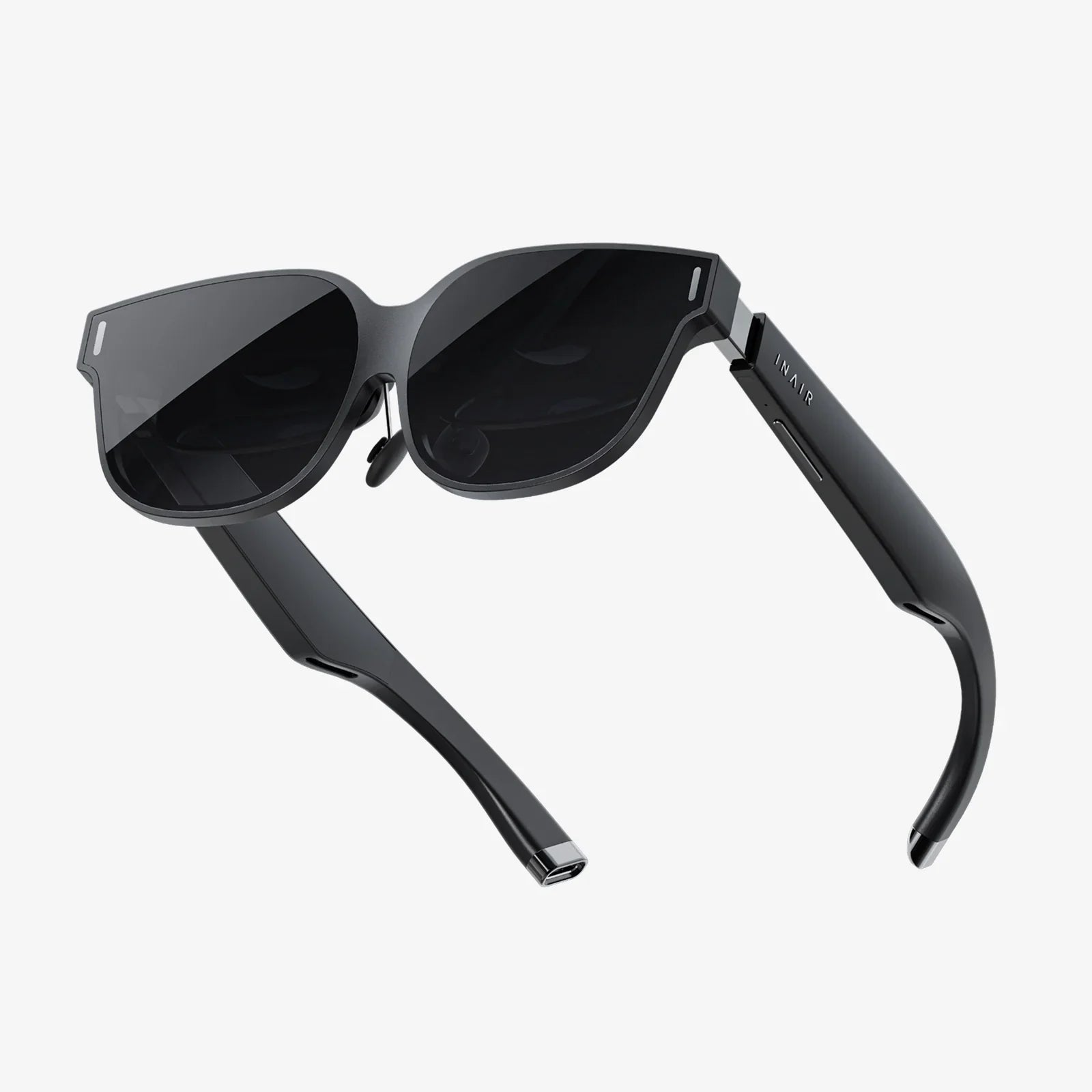
Smart glasses represent the form factor most associated with the ideal of AR: a hands-free, always-available overlay of information onto your natural field of view. However, this category itself is diverse, requiring a further internal augmented reality comparison.
Assisted Reality Glasses: These are monocular devices (displaying information in one eye) designed primarily for enterprise and logistics. They display static information like checklists, diagrams, or real-time data feeds. They do not feature advanced environmental understanding or 3D object placement but are prized for their long battery life, durability, and ability to keep a worker's hands free. They are tools for efficiency and safety in fields like warehousing, manufacturing, and field service.
True AR Glasses: These are the immersive, stereoscopic devices that represent the cutting edge. They use waveguide or other optical technologies to project high-resolution, full-color 3D imagery into both eyes, seamlessly blending it with the real world. They possess powerful spatial computing capabilities, understanding the geometry of the environment and allowing for persistent digital objects and complex interactions.
Pros:
Cons:
These are dedicated, often tethered, devices that prioritize performance and graphical fidelity above all else. They are used for the most demanding AR applications.
Pros:
Cons:
Hardware is nothing without software. The platform and development tools chosen dictate what an AR experience can do. In our augmented reality comparison, we must consider the two dominant paradigms.
Mobile-Centric Platforms (ARKit & ARCore): These software development kits (SDKs) from Apple and Google have standardized high-quality AR on mobile devices. They handle the complex computer vision tasks—simultaneous localization and mapping (SLAM), plane detection, and occlusion—so developers can focus on the application itself. They have created a largely unified and accessible ecosystem for mobile AR.
Dedicated AR Operating Systems: Some AR glasses and headsets run on their own purpose-built operating systems designed from the ground up for spatial computing. These OSes manage how multiple AR applications coexist in a user's space, handle system-level interactions through gaze and gesture, and ensure digital objects from one app don't interfere with those from another. This is a critical differentiator for creating a seamless and persistent AR environment, a challenge that mobile platforms, which treat AR as a single-app experience, do not solve.
The theoretical promise of AR is compelling, but its real value is proven in practical application. Different technologies are suited to different tasks.
Enterprise and Industrial: This is where AR is currently having its most significant impact. Using assisted reality glasses or powerful headsets, technicians can access hands-free manuals and remote expert guidance, warehouse workers can see optimized picking paths, and architects can visualize full-scale building plans on a construction site. The return on investment in saved time, reduced errors, and improved training is clear and measurable.
Retail and E-Commerce: Mobile AR dominates here. Apps allow customers to "try on" clothes, glasses, or makeup virtually, or to see how a piece of furniture would look and fit in their actual home before buying. This reduces uncertainty and product returns, enhancing consumer confidence.
Healthcare: From medical students learning anatomy on 3D holographic models to surgeons using superimposition-based AR for precise incisions, the technology is revolutionizing medicine. It provides a new layer of visual data that can improve outcomes and democratize expertise.
Education and Training: AR can turn static diagrams in textbooks into interactive 3D models, allowing students to explore the human heart or a historical artifact from every angle. It provides safe, repeatable, and cost-effective training simulations for dangerous or expensive procedures.
Navigation: The next step beyond turn-by-turn directions on a phone screen is AR navigation, where arrows and directions are painted onto the real world through your smart glasses or phone camera, making it intuitive to find your gate in a busy airport or a product in a vast supermarket.
The lines between these categories are already beginning to blur. The future of AR is not a single winning device or platform, but a continuum of experiences that adapt to the user's context. We are moving towards:
Choosing the right AR technology today is less about finding a single perfect solution and more about understanding the trade-offs. Do you prioritize accessibility and cost (smartphone), hands-free enterprise utility (assisted reality glasses), or immersive graphical power (dedicated headsets)? This augmented reality comparison reveals a field in rapid flux, where each technological approach is carving out its essential role in building a future where our digital and physical realities are no longer separate, but meaningfully and magically combined. The revolution won't be contained on a screen; it will be layered onto the world itself, waiting for you to look up and see it.
Share:
What Are the Two Forms of Augmented Reality? A Deep Dive into Marker-Based and Markerless AR
Augmented Reality Widespread: The Invisible Revolution Reshaping Our World