


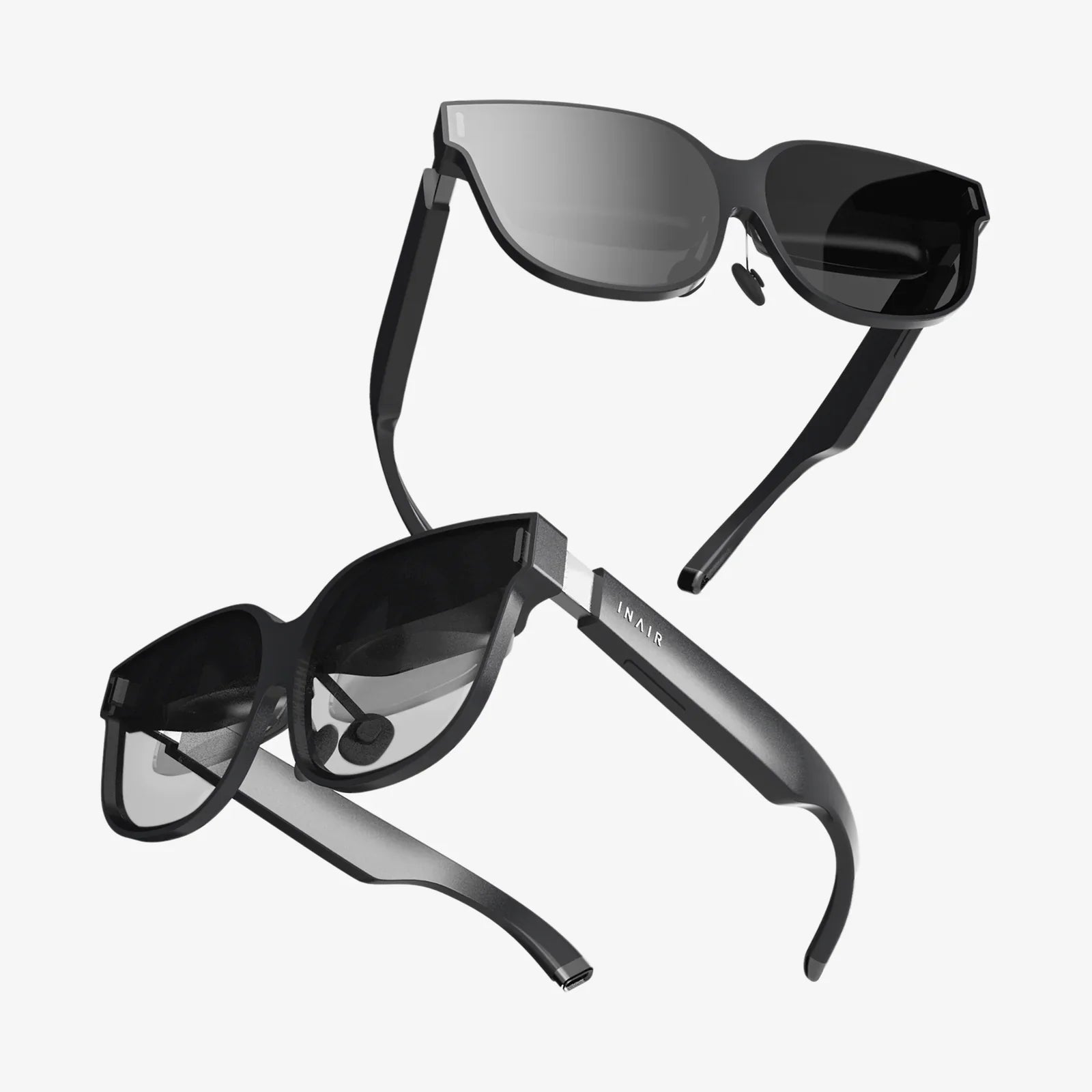
Imagine a world where the digital and the physical are no longer separate realms, but a single, unified experience. This is the promise of the augmented reality concept, a technology that is quietly poised to revolutionize everything from how we work and learn to how we socialize and perceive the world around us. It’s not just about donning a headset; it’s about fundamentally augmenting human potential and reshaping the fabric of our daily lives.
The Essence of Augmentation: Defining the Concept
At its core, the augmented reality concept is deceptively simple: a live, direct or indirect, view of a physical, real-world environment whose elements are augmented by computer-generated perceptual information. Unlike virtual reality, which seeks to replace the real world with a simulated one, AR aims to supplement it. The key differentiator is that AR maintains a user’s presence in their actual environment, simply enhancing that reality with digital overlays—be they visual, auditory, haptic, or even olfactory.
This augmentation is typically achieved through three key components:
- Registration and Tracking: The system must understand the physical space and the user's position within it. This involves complex computer vision algorithms, simultaneous localization and mapping (SLAM), and sensors like cameras, gyroscopes, and accelerometers to track head, eye, and hand movements with precision.
- Display Technology: This is the medium through which the digital content is presented to the user. This can range from handheld screens like smartphones and tablets to more immersive head-mounted displays (HMDs), which can be either optical see-through (using waveguides and combiners to project light onto the retina) or video see-through (using cameras to capture the real world and then blending graphics onto the video feed).
- Content Generation: The digital assets themselves—3D models, text, video, animations—must be rendered in real-time and aligned perfectly with the physical world to create a convincing and cohesive experience.
The magic of AR lies in the seamless integration of these three components to create a believable, interactive, and valuable enhancement of reality.
A Journey Through Time: The Evolution of an Idea
While it feels like a futuristic invention, the seeds of the augmented reality concept were sown decades ago. The term itself is often credited to former Boeing researcher Tom Caudell in 1990, but the foundational ideas emerged much earlier.
In 1968, computer scientist Ivan Sutherland, often called the “father of computer graphics,” created “The Sword of Damocles,” a head-mounted display system so primitive and heavy it had to be suspended from the ceiling. It displayed simple wireframe graphics, but it established the visionary blueprint for all AR and VR to follow. Throughout the 1970s and 80s, research continued within military and academic labs, with applications like heads-up displays (HUDs) in fighter jets being an early, successful implementation of the concept.
The true catalyst for bringing AR into the public consciousness was the proliferation of the smartphone. Equipped with high-resolution screens, powerful processors, cameras, GPS, and motion sensors, the modern smartphone became the perfect AR delivery device. The release of major mobile operating systems with built-in AR development platforms marked a pivotal moment, democratizing access to the technology for millions of developers and users alike. This shifted AR from a specialized, expensive tool to a mass-market phenomenon, paving the way for its next evolution into wearable glasses.
How It Works: The Technical Symphony Behind the Magic
Creating a persistent and believable augmented experience is a technical marvel that relies on a symphony of hardware and software working in perfect harmony.
Vision and Understanding: Seeing the World as a Computer Does
The first and most critical step is for the device to perceive and comprehend its environment. This is primarily accomplished through a process called scene understanding. Using its camera(s), the AR system scans the surroundings. Advanced algorithms then analyze this visual data to identify flat surfaces (like floors and tables), estimate depth, and map the environment in 3D. This creates a digital spatial mesh, a virtual representation of the physical space that allows digital objects to be placed and occluded correctly.
Another crucial technique is visual-inertial odometry (VIO). This fuses data from the camera (visual) with data from the inertial measurement unit (IMU)—which includes the accelerometer and gyroscope (inertial)—to precisely track the device's position and orientation in space without needing external markers or GPS. This is what allows a digital dinosaur to stay rooted to a spot on your lawn as you walk around it, maintaining the illusion that it is truly there.
Projection and Display: Painting Light onto Reality
Once the environment is understood, the system must project the digital content. For head-worn devices, there are two primary methods:
- Optical See-Through: These devices use transparent lenses that act as waveguides. Tiny projectors within the frame shoot light into the edge of these lenses. This light bounces through the lens via internal reflection until it is directed into the user’s eye, painting the digital imagery onto their view of the real world. This method allows the user to see the real world with full, natural light and resolution.
- Video See-Through: This method uses cameras mounted on the outside of the device to capture a live video feed of the real world. A processor then composites the digital graphics onto this video feed in real-time and displays the combined image on opaque screens inside the device. This allows for more control over the blend between real and virtual but can suffer from latency and a reduced field of view.
Emerging technologies like holographic optics and retinal projection promise even more immersive and visually stunning displays in the future.
Transforming Industries: The Practical Power of AR
The value of the augmented reality concept is not in the novelty of digital overlays, but in its profound practical applications across countless fields.
Revolutionizing Enterprise and Manufacturing
Perhaps the most immediate and impactful adoption of AR is happening in the industrial sector. Here, it is solving real-world problems and delivering significant returns on investment.
- Assembly, Maintenance, and Repair: Technicians can wear AR glasses that overlay digital instructions, diagrams, and animations directly onto the machinery they are working on. A novice worker can be guided, step-by-step, through a complex repair procedure with arrows highlighting specific components and text displaying torque specifications, drastically reducing errors and training time.
- Design and Prototyping: Engineers and designers can project full-scale 3D models of new products into a physical space. This allows for collaborative review and iteration long before a physical prototype is built, saving immense time and resources. Architects can walk clients through a life-sized 3D model of a building still on the drawing board.
- Logistics and Warehousing: In massive distribution centers, AR can visually guide warehouse workers to the exact shelf location for an item, display optimal packing instructions, and verify that the correct items have been selected, supercharging efficiency and accuracy.
Redefining Healthcare and Medicine
In medicine, where precision is paramount, AR is becoming a life-saving tool.
- Surgical Guidance: Surgeons can see critical information—such as a patient’s vital signs, 3D reconstructions of tumors, or the precise path for an incision—superimposed directly onto their field of view during an operation without looking away at a separate monitor.
- Medical Training: Students can practice procedures on detailed, interactive holographic models of human anatomy, peeling back layers to study muscles, organs, and the circulatory system in ways a textbook or cadaver could never allow.
- Patient Education and Rehabilitation: Doctors can use AR to visually explain a complex condition or procedure to a patient. In physical therapy, AR games can motivate patients to complete repetitive exercises by turning them into engaging interactive experiences.
Enhancing Retail and E-Commerce
AR is closing the gap between online shopping and the in-store experience.
- Try-Before-You-Buy: Consumers can use their smartphone cameras to see how a new sofa would look in their living room, how a pair of glasses fits their face, or how a shade of paint changes the mood of a room. This reduces purchase uncertainty and product returns.
- Interactive In-Store Experiences: Pointing a phone at a product on a shelf might trigger an AR experience showing detailed specifications, customer reviews, or demonstration videos, empowering customers with more information.
Creating New Frontiers in Education and Navigation
AR turns the entire world into a dynamic learning environment and a context-aware map.
- Immersive Learning: History students can witness historical events unfold in their schoolyard. Astronomy students can explore the solar system hovering above their desk. Chemistry students can manipulate and combine virtual molecules, seeing the reactions happen in front of them.
- Contextual Navigation: Instead of looking down at a 2D map on a phone, pedestrians can follow floating arrows and directions overlaid onto the street in front of them. Inside large venues like airports or museums, AR can provide intuitive wayfinding cues directly in the user’s line of sight.
The Flip Side of the Coin: Challenges and Ethical Considerations
For all its promise, the widespread adoption of the augmented reality concept is not without significant hurdles and profound ethical questions.
Technical and Social Hurdles
- Hardware Limitations: For AR glasses to become an all-day wearable, they must overcome challenges related to battery life, processing power, form factor (they must be socially acceptable and comfortable), field of view, and display brightness. The quest for the perfect blend of high performance and lightweight design continues.
- Digital Divide and Accessibility: As with any advanced technology, there is a risk that AR could exacerbate social inequalities, creating a divide between those who can afford and access these digital tools and those who cannot.
- Social Acceptance and Etiquette: How will constant AR usage affect human interaction? Is it rude to wear AR glasses during a conversation? Will we become more disconnected from the immediate physical world and the people in it?
Profound Ethical and Privacy Dilemmas
- The Privacy Apocalypse: AR devices, by their very nature, are data collection machines. They have cameras and sensors constantly scanning everything and everyone around the user. This raises monumental privacy concerns. Who owns this data? How is it stored and used? Could it lead to pervasive surveillance, either by corporations or governments? The potential for misuse is staggering.
- Reality Manipulation and Misinformation: If AR allows anyone to alter anyone else’s perception of reality, it becomes the ultimate tool for misinformation. Malicious actors could overlay false information, deface buildings with digital graffiti, or even create dangerous AR traps in the physical world. Establishing a shared, objective reality could become increasingly difficult.
- Psychological Effects: What are the long-term cognitive effects of continuously blending the real and the virtual? Could it lead to addiction, dissociation, or a devaluation of the un-augmented physical world?
Addressing these challenges requires proactive collaboration between technologists, policymakers, ethicists, and society at large to establish clear norms, regulations, and ethical frameworks before the technology becomes ubiquitous.
Glimpsing the Future: The Path Ahead
The current state of AR is merely the prelude. The next decade will see the technology evolve from a device we look at to one we look through as a seamless part of our lives. We are moving towards a world of spatial computing, where digital information is not confined to rectangles in our pockets but is interwoven with the fabric of our environment.
The eventual goal is a contextually aware, always-available AR that requires no conscious activation—a kind of perceptual superpower. Imagine walking into a meeting and instantly seeing the names and relevant LinkedIn profiles of everyone in the room floating subtly above them. Your AR assistant could highlight your lost keys on the couch or translate a street sign in a foreign language instantly. The potential to eliminate friction from our daily tasks and amplify our innate abilities is boundless.
This future will be built on the convergence of AR with other transformative technologies like 5G/6G connectivity for streaming immense data, artificial intelligence for smarter context recognition, and the Internet of Things for connecting and controlling the smart objects around us.
The journey of the augmented reality concept is just beginning. It is a tool of immense power, capable of enriching human experience in ways we are only starting to imagine, but it also demands a thoughtful and deliberate approach to its integration into society. It challenges us to decide not just what we can build, but what we should build. The line between the human and the machine, the physical and the digital, is blurring, and in that convergence lies the next great chapter of our technological evolution. Will you be ready to see the world anew?
Share:
How AR Technology Facilitates Virtual Product Demonstrations: A Revolution in Customer Experience
Virtual Office Description: The Definitive Guide to the Future of Work