


- by wangfred
Augmented Reality Definition: Bridging Our Digital and Physical Worlds
- by wangfred
Imagine a world where digital information doesn't just live on a screen but is seamlessly painted onto the fabric of your reality, where the line between what's physically present and what's digitally generated becomes beautifully blurred. This is no longer the realm of science fiction; it is the present and future being shaped by a transformative technology whose very definition is evolving as rapidly as its capabilities. To understand this revolution, we must start at the beginning: the augmented reality definition.
At its most fundamental level, the augmented reality definition describes a technology that superimposes a computer-generated image, video, or 3D model onto a user's view of the real world. Unlike its cousin, Virtual Reality (VR), which creates a completely artificial digital environment, AR enhances one's current perception of reality by overlaying contextual and interactive digital elements onto the existing physical world. The key differentiator is that AR starts with the real world as its foundation and then adds a layer of digital augmentation.
This augmentation is experienced in real-time and is typically interactive, meaning the digital content can respond to changes in the user's environment or to user commands. The goal is to create a unified and enhanced experience where virtual objects coexist and interact with the real world in a way that provides valuable information, entertainment, or assistance.
Understanding the augmented reality definition is one thing, but comprehending how it functions is what truly demystifies the technology. The process is a sophisticated dance between hardware and software, involving several key steps:
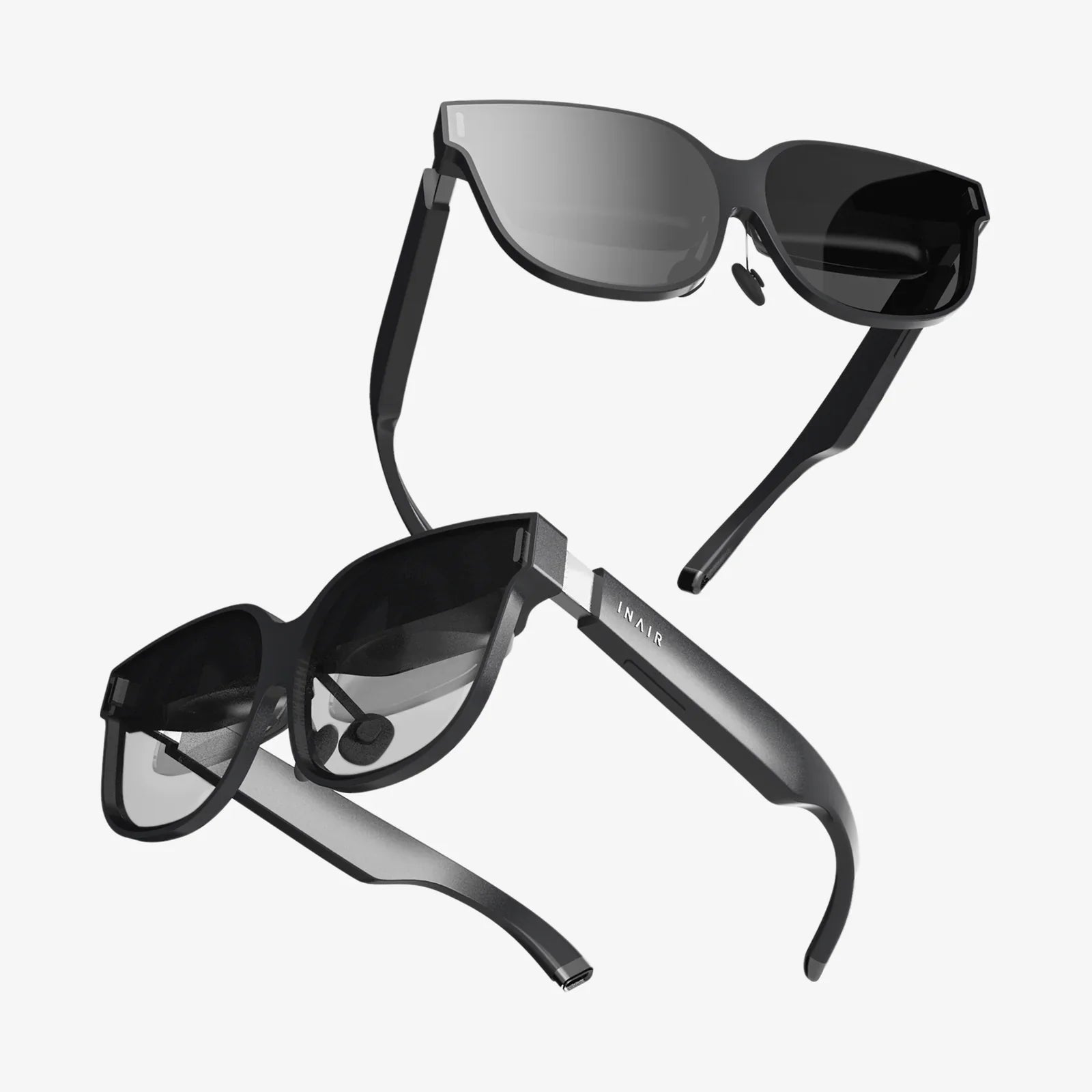
The experience of AR is delivered through a spectrum of devices, each with its own strengths and applications, further expanding the practical augmented reality definition.
While often mentioned in the same breath, AR and VR are distinct technologies with different goals. Clarifying this difference is essential to a complete augmented reality definition.
Virtual Reality (VR) is an immersive, all-encompassing experience. It completely replaces the user's real-world environment with a simulated, digital one. Using a headset that blocks out the physical world, VR transports the user to a computer-generated reality, whether it's a game, a simulation, or a virtual tour. The user is isolated within this digital realm.
Augmented Reality (AR), as defined, does not replace the real world. It augments it. It adds digital elements to the live, real-world view. The user remains present and engaged in their physical surroundings while interacting with digital information that is contextually relevant to that environment. AR is about enhancement, not escape.
A simple analogy: VR is like being inside a video game. AR is like having a game character appear on your living room floor.
The power of AR lies in its versatility. The augmented reality definition finds practical expression across a stunning array of industries, transforming how we work, learn, shop, and play.
AR is solving one of online shopping's biggest drawbacks: the inability to try before you buy. Customers can now use their smartphones to see how a piece of furniture would look in their home, how a new shade of paint would transform a room, or how a pair of glasses or makeup would look on their face. This "try-it-on" functionality drastically reduces purchase uncertainty and returns while increasing consumer confidence.
AR brings textbooks and manuals to life. Instead of static diagrams of a human heart or a historical artifact, students can interact with 3D holographic models, exploring them from every angle. In vocational training, mechanics can see repair instructions overlaid on the actual engine they are working on, and medical students can practice complex surgical procedures on virtual patients superimposed onto mannequins, reducing risk and improving learning outcomes.
On factory floors and construction sites, AR is a powerful tool for efficiency and accuracy. Warehouse workers can use AR glasses to see the most efficient picking routes and instantly identify items. Engineers can view schematics and assembly instructions overlaid directly onto the machinery they are assembling or repairing. This "see-what-I-see" capability allows for remote expert assistance, where an off-site specialist can guide a local technician by drawing annotations into their field of view.
Turn-by-turn navigation is moving from the dashboard screen to the windshield. AR navigation systems overlay directional arrows, street names, and points of interest directly onto the real road ahead, making it more intuitive and less distracting for drivers. Similarly, pedestrians can use AR wayfinding apps that superimpose arrows and directions onto the live camera view of city streets, eliminating the confusion of traditional map interfaces.
The gaming industry has been one of the most visible adopters of AR. Games that use the real world as a playground have captivated millions, encouraging physical exploration and social interaction. Beyond gaming, AR is enhancing live events like concerts and sports, allowing attendees to access additional information, statistics, and interactive experiences by pointing their devices at the stage or field.
The current augmented reality definition is merely a snapshot in time. The technology is on a rapid evolutionary path, driven by advancements in 5G connectivity, artificial intelligence, and wearable hardware.
We are moving towards a future of always-available, context-aware AR. Imagine smart glasses that are as socially acceptable and comfortable as regular eyeglasses. These devices will recognize people you meet and discreetly display their name and how you know them. They will translate street signs in real-time, provide historical facts about a building you're looking at, or warn you of potential hazards on your path.
The concept of the spatial web or metaverse is deeply intertwined with AR's future—a layer of persistent digital information anchored to the physical world, accessible to anyone with the right device. This will fundamentally change how we interact with information and with each other, blurring the lines between our digital and physical lives in ways we are only beginning to imagine.
For all its promise, the path forward for AR is not without obstacles. Widespread adoption depends on solving significant technical challenges like improving battery life, creating more natural user interfaces (like gesture and voice control), and developing smaller, more powerful hardware. Furthermore, serious ethical and social questions regarding privacy, data security, and digital addiction must be addressed. The potential for constant recording and data collection through AR devices raises profound concerns that society will need to grapple with as the technology becomes more pervasive.
The journey to a perfect, seamless blend of our digital and physical realities is well underway, and it begins with a simple but powerful idea: that the world around us can be a canvas for infinite information, creativity, and connection. This is the true promise and ever-expanding definition of augmented reality, a technology not meant to replace our world, but to reveal its boundless potential.
Share:
How Did Augmented Reality Start: A Journey From Sci-Fi to Ubiquity
How Did Augmented Reality Start: A Journey From Sci-Fi to Ubiquity