


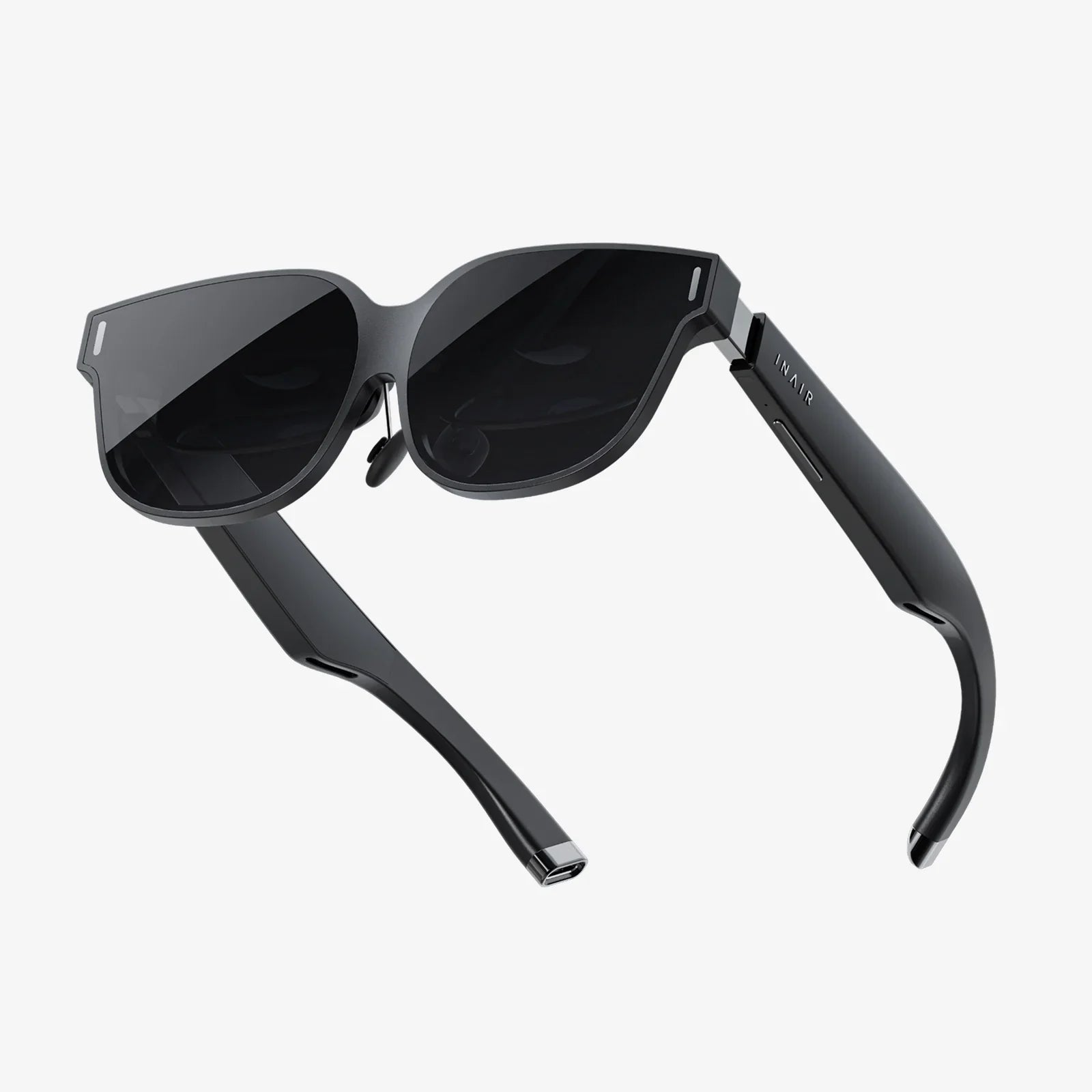
Imagine a world where digital information doesn't just live on a screen but is seamlessly woven into the fabric of your daily life—where a mechanic sees a holographic schematic overlaid on a faulty engine, a surgeon visualizes a patient's anatomy in 3D during a procedure, and a historian walks through a fully reconstructed ancient city right on its original site. This is the promise of augmented reality (AR), and it’s not a distant sci-fi fantasy; it’s a rapidly evolving technological frontier. The architects of this new reality aren't just self-taught coders or lone geniuses in garages; they are increasingly the products of a rigorous, interdisciplinary, and forward-thinking academic path: the Augmented Reality degree. This specialized field of study is emerging as one of the most critical and dynamic educational tracks for those who want to build the future, literally layer by digital layer.
The Educational Foundation: More Than Just Coding
Pursuing an Augmented Reality degree is a deep dive into a confluence of disciplines. It is a rigorous program that demands a strong foundation in both the theoretical and the practical. The curriculum is designed to equip students with a holistic skill set, ensuring they are not just technicians but innovators and problem-solvers.
Core Technical Pillars
The technical backbone of any AR program is formidable. Students must achieve proficiency in:
- Computer Vision: This is the eyes of AR. Courses delve into how software can identify, track, and understand real-world objects and environments. This involves complex algorithms for image recognition, 3D reconstruction, and simultaneous localization and mapping (SLAM), which allows a device to understand its position in space while mapping the environment around it.
- 3D Graphics and Modeling: Creating the digital assets that populate the augmented world is a fundamental skill. This includes 3D modeling, animation, texturing, and lighting. Students learn to use industry-standard software and game engines, which provide the powerful rendering capabilities needed to make virtual objects appear photorealistic and grounded in reality.
- Software Development and Programming: Fluency in languages like C#, C++, and Python is essential. Students learn to develop for various AR platforms and hardware, from smartphones and tablets to advanced optical head-mounted displays. This involves understanding operating systems, SDKs, and creating optimized, efficient code that can run in real-time.
- User Interface (UI) and User Experience (UX) Design for Spatial Computing: Designing for AR is radically different from designing for a 2D screen. It requires an understanding of spatial design, ergonomics, and human perception. How does a user interact with a floating menu? How do you design an interface that doesn’t cause fatigue or obstruct crucial real-world tasks? This pillar focuses on creating intuitive, comfortable, and effective experiences in three-dimensional space.
The Crucial Human-Centered Elements
What separates a good AR program from a great one is its emphasis on the human element. Beyond the code and graphics, students explore:
- Human-Computer Interaction (HCI): This field studies the design and use of computer technology, focusing on the interfaces between people and computers. In an AR context, this means understanding gesture control, voice commands, gaze tracking, and haptic feedback.
- Cognitive Psychology: To design effective AR experiences, one must understand how the human brain perceives and processes information. How does AR affect attention, memory, and situational awareness? This knowledge is critical for applications in safety-critical fields like medicine or aviation.
- Ethics and Social Impact:
A responsible curriculum must address the profound ethical questions AR raises. Students grapple with issues of digital privacy (e.g., always-on cameras mapping private spaces), data security, the potential for reality distortion, misinformation, and the societal implications of a world where the digital and physical are increasingly blurred. Preparing developers to build responsibly is as important as teaching them to build effectively.
A Spectrum of Specializations and Career Pathways
An Augmented Reality degree is not a one-size-fits-all ticket to a single job title. The field is vast, and programs often allow for specializations that lead to diverse and exciting careers.
Industry Verticals Transformed by AR
Graduates find themselves in high demand across virtually every sector:
- Healthcare: AR is revolutionizing medical training, surgical planning, and patient care. Graduates might develop applications that allow medical students to practice procedures on virtual patients or systems that project a patient's veins onto their skin to aid nurses.
- Manufacturing and Engineering: Here, AR is used for complex assembly, maintenance, and repair. Technicians can wear AR glasses that show them the exact next step in a process, overlaying arrows and diagrams directly onto machinery, reducing errors and training time.
- Education and Training: AR creates immersive learning experiences, from bringing historical events to life in a classroom to allowing mechanics to train on virtual engine models. Graduates in this space become creators of a new pedagogical toolkit.
- Retail and E-Commerce: The ability to "try before you buy" is supercharged with AR. Customers can see how furniture looks in their living room, how clothes fit, or how makeup appears on their skin, all through their smartphone.
- Architecture, Engineering, and Construction (AEC): Architects and engineers can walk clients through immersive 3D models of unbuilt structures, and construction workers can see building plans overlaid on the physical construction site.
Key Roles for AR Graduates
The degree opens doors to specific, high-value roles such as:
- AR Developer: The core software engineer who builds AR applications, integrates SDKs, and writes the code that makes everything work.
- UX Researcher/Designer (Spatial Computing): Focuses on studying user behavior and designing the flow and interface of AR experiences, ensuring they are intuitive and valuable.
- 3D Artist and Modeler: Creates the high-fidelity 3D assets and animations that populate the augmented world.
- Computer Vision Engineer: A highly specialized role focused on developing the advanced algorithms that allow AR systems to see and understand the world.
- Product Manager (AR/VR): Guides the strategy, development, and launch of AR products, balancing technical feasibility, user needs, and business goals.
The Future is an Augmented Canvas
The technological landscape that AR graduates are entering is one of constant and accelerated evolution. The field is moving beyond clunky headsets and simple smartphone overlays. The future points toward sleek, socially acceptable eyewear that will become as ubiquitous as smartphones, powered by increasingly sophisticated AI and 5G/6G connectivity for seamless cloud processing. This will enable persistent AR worlds—digital layers that are always present and shared across users, fundamentally changing social interaction, navigation, and how we perceive and interact with our environment. The next generation of AR professionals will be building the infrastructure for this spatial internet, a new layer of reality that will redefine human experience. They won't just be app developers; they will be digital urban planners, experience architects, and pioneers of a new hybrid world.
The decision to pursue an Augmented Reality degree is a commitment to becoming a builder of the next major computing platform. It’s a challenging path that demands a rare blend of artistic sensibility, technical rigor, and philosophical consideration for the human experience. For those with the vision and the drive, it represents a unique opportunity to leave a permanent mark on the world—not in stone or steel, but in the very fabric of perceived reality itself. The tools to shape this new dimension are now being taught in classrooms, and the first architects of our augmented future are already at their digital drafting tables, ready to redraw the lines between what is real and what is possible.
Share:
Top AR VR Companies Shaping Our Digital Future
Top AR VR Companies Shaping Our Digital Future