


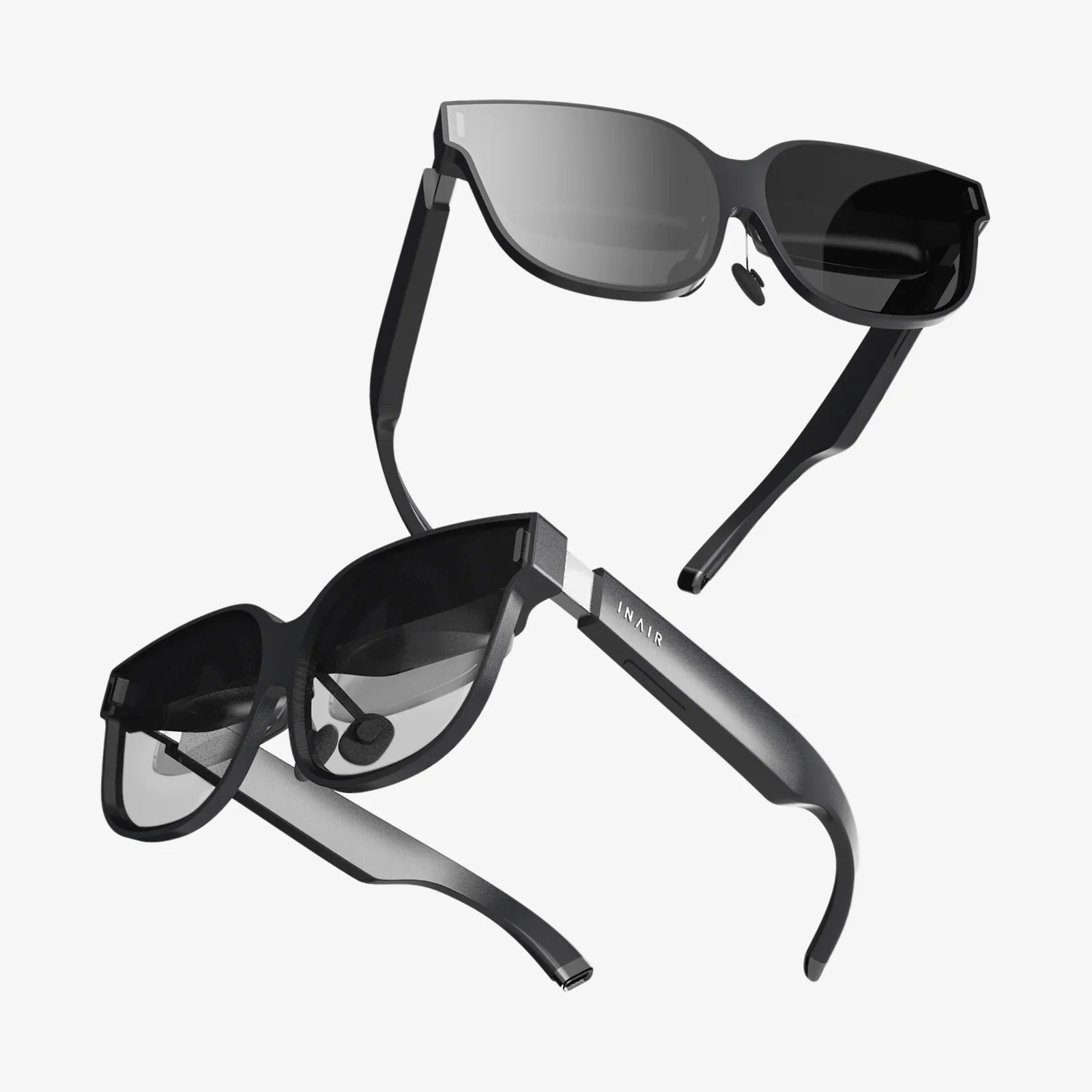
Imagine a world where digital information doesn't just live on a screen but is seamlessly woven into the very fabric of your physical reality. This isn't a scene from a science fiction novel; it's the present and future being built today through the power of augmented reality. The ability to overlay digital content—from simple text to complex, interactive 3D models—onto our view of the real world is fundamentally altering how we work, learn, play, and connect. This technology promises to become as ubiquitous and transformative as the smartphone, and understanding its description is the first step to navigating the new world it is creating.
Defining the Digital Overlay: What Exactly is Augmented Reality?
At its core, an augmented reality description centers on a simple but powerful concept: the real-time integration of digital information with a user's environment. Unlike Virtual Reality (VR), which creates a completely artificial digital environment, AR enhances the real world by superimposing computer-generated perceptual information onto it. This integration is interactive and registered in three dimensions, meaning the digital objects appear to coexist in the same space as physical objects.
The magic of AR lies in its ability to make the digital world feel tangible and present. A user might look at a historical monument through a device and see a reconstructed version of it from centuries past, complete with animated figures. A mechanic might look at a complex engine and see arrows and labels pointing to specific components, along with real-time diagnostic data. This blending is achieved through a sophisticated combination of hardware and software that works in concert to perceive, process, and project.
The Engine Behind the Illusion: Core Components of AR Systems
To deliver a convincing augmented experience, several key technological components must work in harmony. An accurate augmented reality description must account for these fundamental building blocks.
Sensors and Cameras
These are the eyes of the AR system. Cameras capture the live video feed of the user's surroundings. Meanwhile, a suite of sensors—including accelerometers, gyroscopes, magnetometers (digital compasses), and often depth sensors or Light Detection and Ranging (LiDAR)—work together to understand the device's position, orientation, and movement in space. This process, known as simultaneous localization and mapping (SLAM), allows the system to create a digital map of the environment and understand its place within it, ensuring digital content stays locked in place.
Processing Power
The data from the sensors and cameras is immense and must be processed at incredible speeds. This requires significant computational power to run complex computer vision algorithms, track the user's movements, calculate the perspective and lighting of the virtual objects, and render them in real-time. While early AR relied on powerful connected computers, this processing is now increasingly handled by sophisticated chips within standalone devices.
Projection and Display
This is how the user sees the augmented world. There are several primary methods:
- Smartphone and Tablet Displays: The most accessible form, using the device's screen to show the camera feed overlaid with digital content.
- Smart Glasses and Headsets: These wearable devices use small projectors or waveguides to beam images directly onto the user's retina or onto a transparent lens in front of their eye, creating the illusion that the digital content is out in the world.
- Spatial Projectors: Less common but emerging, these systems project light directly onto physical surfaces, turning walls or tables into interactive displays without the need for a headset.
Bridging the Digital and Physical: How AR "Sees" and Understands the World
The true genius of AR is its ability to understand context. It doesn't just throw graphics onto a screen; it anchors them intelligently. This is achieved through several methods of environmental recognition.
Marker-Based AR
This was one of the earliest methods. It uses a predefined visual marker, like a QR code or a specific image, as a anchor point. The AR software recognizes this unique pattern through the camera and uses its position and orientation to place the digital content on top of it. While simple and reliable, it requires the physical marker to be present.
Markerless AR (or Location-Based AR)
This is a more advanced and flexible approach. It uses GPS, digital compass, and accelerometer data from the device to pin digital content to a specific real-world location. For example, you could point your device at a city street and see historical facts, restaurant reviews, or directions floating over the buildings. This technology powers popular world-scale games and navigation tools.
Projection-Based AR and Superimposition-Based AR
Projection-based AR involves projecting artificial light onto physical surfaces, sometimes allowing that projection to be interactive. Superimposition-based AR uses object recognition to replace the original view of an object with an augmented one. For instance, a medical student could use AR to superimpose a detailed 3D model of a heart over a mannequin, seeing both the exterior and the intricate interior structures at once.
A World of Applications: How AR is Transforming Industries
The potential applications for AR are virtually limitless, stretching across every sector of the economy and facets of daily life.
Revolutionizing Retail and E-Commerce
AR is solving one of the oldest problems of online shopping: the inability to try before you buy. Customers can now use their smartphones to see how a piece of furniture would look in their living room, how a new shade of paint would change their wall, or how a pair of glasses would fit their face. This "virtual try-on" capability drastically reduces purchase uncertainty and return rates, creating a more confident and engaging shopping experience.
Enhancing Industrial Manufacturing and Maintenance
In factories and on job sites, AR is a powerful tool for efficiency and accuracy. Technicians wearing AR smart glasses can see schematics, instruction manuals, and safety information overlaid directly on the machinery they are repairing. Assembly line workers can see digital arrows and guidelines showing the next steps, reducing errors and training time. Remote experts can see what an on-site worker sees and annotate their field of view to guide them through complex procedures, saving time and travel costs.
Advancing Medical Training and Patient Care
In healthcare, AR is literally providing a new perspective. Surgeons can use AR overlays to visualize a patient's anatomy, such as the precise location of tumors or blood vessels, directly on the patient's body during procedures, improving precision and outcomes. Medical students can practice complex surgeries on detailed, interactive 3D models. AR can also assist in physical therapy by guiding patients through exercises with proper form and providing real-time feedback.
Creating Immersive Educational Experiences
Education is being transformed from passive learning to active exploration. Instead of reading about ancient Rome, students can walk through a digitally reconstructed Forum on their classroom table. Anatomy classes can explore a life-sized, beating heart. Complex abstract concepts in physics or mathematics can be visualized as interactive 3D models, making them intuitive and understandable. AR turns any space into a dynamic learning environment.
Powering the Future of Entertainment and Social Connection
The success of global gaming phenomena has shown the world the mass appeal of AR entertainment. But it goes beyond games. Artists are creating immersive AR art installations accessible in public spaces. Social media filters have become a cultural touchstone. In the future, AR could allow friends and families to share experiences as if they were in the same room, watching a movie together or playing a board game on a virtual table, regardless of physical distance.
Navigating the New Frontier: Challenges and Ethical Considerations
As with any transformative technology, the widespread adoption of AR brings forth a host of challenges that society must address.
Privacy in a Perceived World
AR devices, by their very nature, are perception machines. They are equipped with cameras and sensors that are constantly scanning and interpreting the environment. This raises profound privacy questions. Who has access to this data? How is it stored and used? The potential for unauthorized surveillance, facial recognition in public spaces, and the collection of incredibly detailed behavioral analytics is a significant concern that requires robust legal and ethical frameworks.
The Digital Divide and Accessibility
There is a risk that the benefits of AR could exacerbate existing social and economic inequalities. High-quality AR experiences currently require powerful hardware and fast internet connections, which may not be accessible to all. Furthermore, designing AR interfaces that are inclusive and accessible to people with disabilities is a critical challenge that must be prioritized from the outset.
Digital Addiction and Reality Blurring
As digital content becomes more deeply embedded in our perception of reality, the line between the physical and digital worlds may blur. This could lead to new forms of digital addiction, where individuals prefer a curated augmented world to an imperfect real one. There are also concerns about the potential for misinformation, as malicious actors could create convincing AR overlays that alter people's perception of events or locations.
The Next Evolution: What Lies Beyond the Horizon?
The current state of AR is just the beginning. The future points toward even more seamless and immersive experiences. We are moving toward AR contact lenses and eventually neural interfaces that could project information directly into our visual cortex, eliminating the need for any external hardware. The concept of the spatial web or metaverse envisions a persistent, shared digital layer over the entire world, where information and experiences are tied to places and objects, not just websites.
In this future, your AR device will not only recognize a coffee shop but could show you its current wait time, the bio of the barista, and a friend's message they left there for you. The world itself will become a searchable, interactive interface. This evolution will require breakthroughs in miniaturization, battery life, connectivity (like 6G), and artificial intelligence to become a reality.
The journey into this augmented age is already underway, and its trajectory is set to redefine human-computer interaction in the most profound way since the personal computer. It promises a future where technology enhances our human capabilities, amplifies our creativity, and deepens our understanding of the world around us. The key to harnessing its potential lies not just in the technology itself, but in our collective wisdom to guide its development toward empowering humanity, fostering connection, and enriching our shared reality, rather than detracting from it. The world is about to get a whole new layer, and it's one we will all help build.
Share:
AI in Augmented Reality: The Invisible Engine Powering a New World
Glasses for Gaming: The Ultimate Guide to Enhancing Your Visual Performance