


- by wangfred
Augmented Reality Devices Lens Glasses: The Invisible Revolution Reshaping Our World
- by wangfred
Imagine a world where the digital and the physical are no longer separate realms, but a seamless, intertwined experience. Where information floats effortlessly before your eyes, directions are painted onto the pavement, and a distant colleague appears as a photorealistic hologram sitting across your table. This is not a distant sci-fi fantasy; it is the imminent future being built today, and it will be delivered through a pair of unassuming augmented reality devices lens glasses. This technological leap promises to be as transformative as the smartphone, but instead of a device we look down at, it’s one that looks out at the world with us, augmenting our very perception of reality.
At their essence, augmented reality devices lens glasses are sophisticated computers designed to understand the environment and then convincingly overlay digital content onto the user’s field of view. This feat of engineering relies on a symphony of components working in perfect harmony.
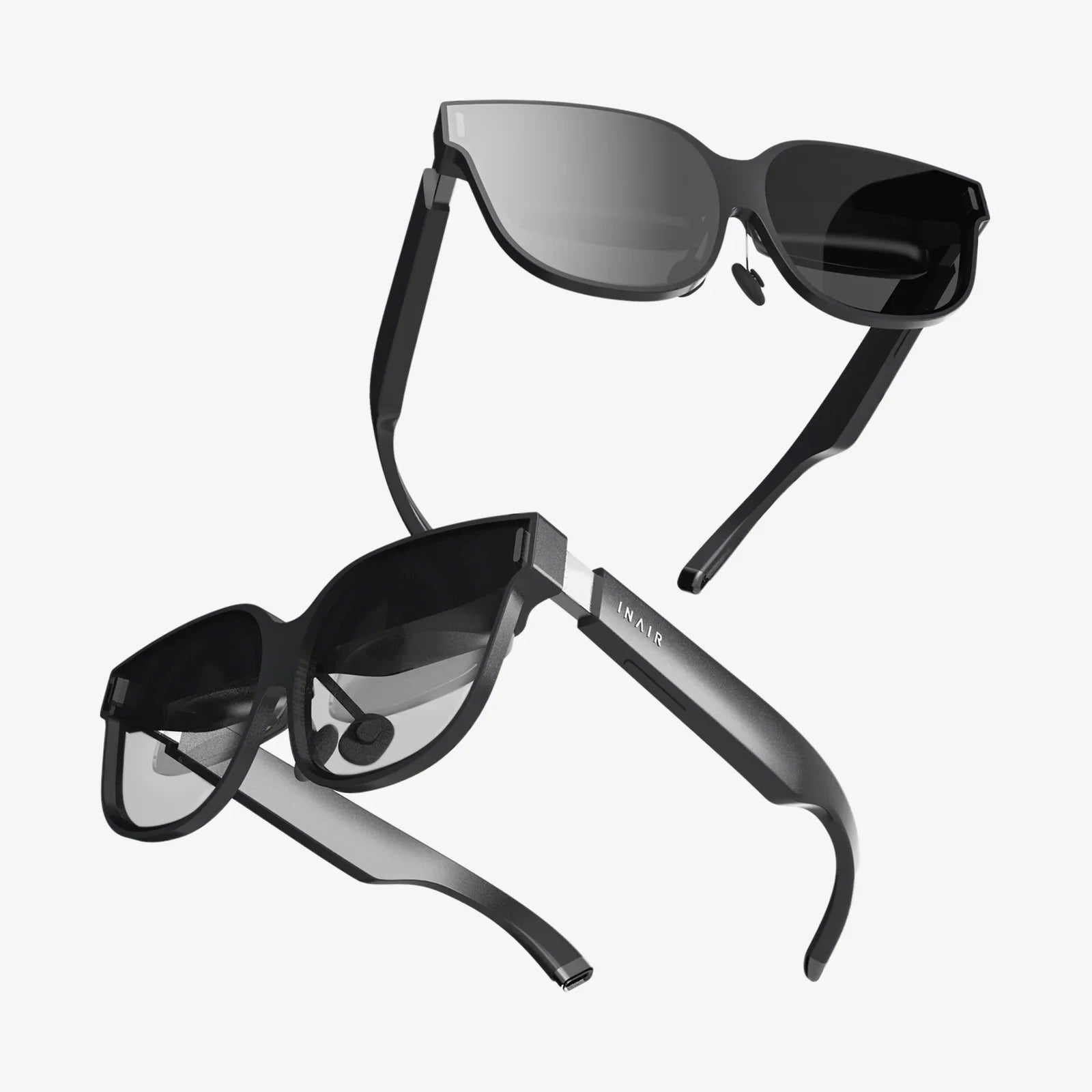
The most critical component, and the one from which the user experiences everything, is the lens system. Unlike simple glass or plastic, these are complex optical waveguides. Imagine etching microscopic patterns onto a transparent substrate; these patterns act like highways for light, channeling the light from tiny projectors at the frame's edge into the user’s eye. This creates the illusion that bright, sharp images are floating in space several feet away, all while allowing the user to clearly see the real world behind them. Advancements in holographic and diffractive optics are making these lenses thinner, lighter, and capable of offering a much wider field of view, which is crucial for immersion.
To anchor digital objects in the real world, the glasses must first understand it. This is the job of a vast array of sensors:
All this sensor data is meaningless without immense computational power to process it. This happens through a combination of on-device processors and, often, cloud computing. Simultaneous Localization and Mapping (SLAM) algorithms fuse the data from all sensors to create a live, understanding of the space. This is the magic that allows a virtual pet to convincingly sit on your real rug or for a navigation arrow to stick to the correct path on the road ahead. This processing must be incredibly efficient to preserve battery life, pushing the boundaries of mobile computing architecture.
The true power of augmented reality devices lens glasses lies not in the technology itself, but in the profound ways it can be applied across every facet of our lives.
The enterprise and industrial sectors are early adopters, as AR glasses solve critical problems with dramatic efficiency gains.
On the consumer front, AR glasses promise to unlock new forms of play, storytelling, and human connection.
The ultimate promise is an ambient computing interface that provides information contextually and effortlessly.
For this vision to become a mainstream reality, significant technological and social challenges must be overcome.
The ultimate goal is a device that is indistinguishable from regular eyewear—lightweight, stylish, and comfortable enough for all-day wear. Current technology often requires trade-offs between performance, battery life, and size. Achieving high-resolution, bright displays with a wide field of view in a slim package is the holy grail of optical engineering. Battery technology is another major constraint; powering all the sensors, processors, and displays for a full day remains a formidable challenge, often leading to external battery packs.
This is perhaps the most significant societal hurdle. AR glasses, by their nature, are equipped with always-on cameras and microphones. This raises profound questions:
Robust, transparent, and enforceable privacy frameworks will be non-negotiable. Technical solutions like clear physical indicators when recording (e.g., a bright LED light) and on-device processing that anonymizes data before it is sent to the cloud will be critical for building public trust.
As with any transformative technology, there is a risk of exacerbating social inequalities. Will AR glasses create a new class of "augmented" individuals with access to superior information and capabilities, leaving others behind? Furthermore, new social norms will need to be established. Is it rude to wear glasses during a conversation? How do we know if someone is recording us? Navigating these new etiquettes will be a gradual, cultural process.
The journey of augmented reality devices lens glasses is just beginning. The current state is akin to the brick-sized mobile phones of the 1980s. The future trajectory points toward even more seamless integration.
The next evolutionary step may be moving beyond glasses altogether. Research into technologies like direct retinal projection or even brain-computer interfaces suggests a future where digital information is directly streamed into our perception without any wearable hardware. However, for the foreseeable future, lens-based glasses represent the most practical and powerful pathway to blending our digital and physical lives.
This technology will not just change what we do; it will change how we think, learn, and connect. It will redefine creativity, allowing artists to paint with light in three dimensions. It will revolutionize education, turning abstract concepts into tangible, interactive models. It will make us more efficient workers and more knowledgeable citizens. The world itself will become our user interface, and our perception will be the cursor. The revolution won't be televised on a screen; it will be seen through a new kind of lens, one that forever changes our reality.