


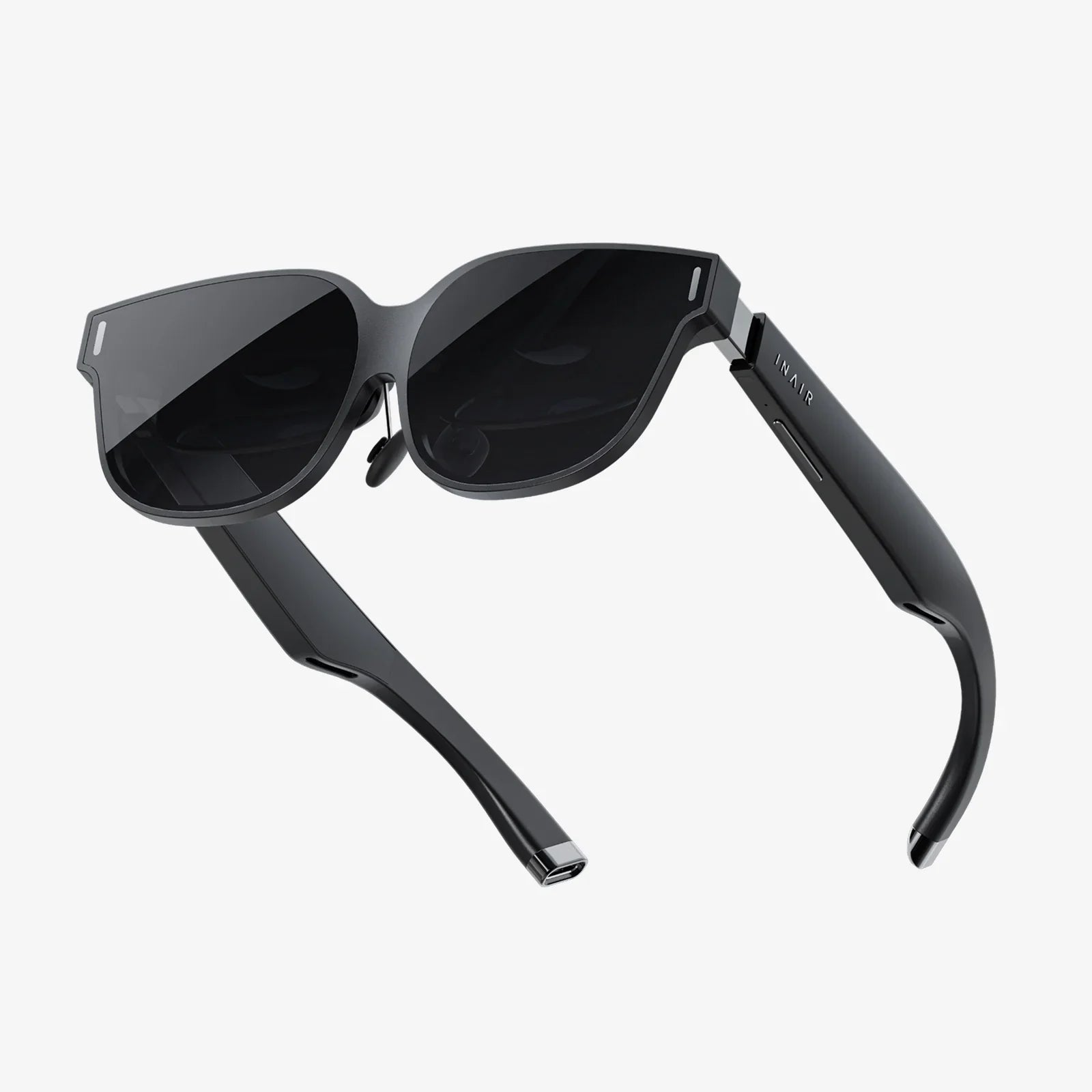
Imagine a world where digital information doesn't confine you to a screen but spills out into your living room, overlays your workspace, and guides you through complex tasks with intuitive, visual cues. This is no longer the realm of science fiction; it is the present and rapidly expanding reality being built by Augmented Reality Diensten (AR services). These powerful services are weaving an invisible digital layer over our physical world, fundamentally altering how we work, learn, shop, and connect. The revolution isn't coming; it's already here, and it's being delivered as a service, accessible to anyone with a vision and a device.
Demystifying the Magic: What Exactly Are Augmented Reality Diensten?
At its core, Augmented Reality (AR) is a technology that superimposes computer-generated images, sounds, and other sensory enhancements onto a user's real-world view. Unlike Virtual Reality (VR), which creates a completely artificial environment, AR starts with the real world and adds to it. Augmented Reality Diensten are the cloud-based platforms, software development kits (SDKs), and managed solutions that provide the tools, infrastructure, and expertise to create, manage, and deploy these AR experiences at scale.
Think of it like this: building a complex AR application from scratch requires immense resources—specialized 3D modeling, complex computer vision algorithms, robust cloud storage, and cross-platform development. Augmented Reality Diensten abstract away this complexity. They offer:
- Content Management Systems (CMS): Platforms to easily upload, manage, and update 3D models, animations, and digital information without rewriting code.
- Tracking and Recognition Engines: Powerful services that allow AR applications to recognize images, objects, and even entire spaces (a process known as SLAM - Simultaneous Localization and Mapping) to anchor digital content securely in the real world.
- Cross-Platform Deployment: Services that allow a single AR experience to run on a multitude of devices, from smartphones and tablets to specialized AR glasses.
- Analytics and Insights: Tools to track user engagement with AR content, providing valuable data on what users interact with and for how long.
This service-based model democratizes AR, enabling small startups and massive corporations alike to harness its power without building a dedicated AR division from the ground up.
The Engine of Innovation: Core Technologies Powering AR Services
The seamless magic of a well-executed AR experience is powered by a sophisticated symphony of technologies working in concert. Augmented Reality Diensten integrate and manage these technologies so the end-user developer doesn't have to.
- Computer Vision: This is the eyes of the operation. It allows the device to understand and interpret the visual world. Through your camera, it identifies flat surfaces, recognizes unique images or objects (markers), and maps the environment to place digital objects convincingly.
- Spatial Mapping: Advanced services use sensors like LiDAR (Light Detection and Ranging) to create a detailed depth map of a room. This allows digital objects to occlude realistically behind real-world furniture or interact with the geometry of the space.
- Cloud Computing: The heavy processing of storing complex 3D models, running powerful recognition algorithms, and managing user data is often handled in the cloud. This keeps the AR application lightweight on the user's device and ensures content is always up-to-date.
- 5G Connectivity: The high bandwidth and low latency of 5G networks are a catalyst for AR services, enabling the streaming of rich, high-polygon 3D content in real-time without pre-downloading massive files.
Transforming Commerce: The Retail Revolution
Perhaps the most visible application of Augmented Reality Diensten is in the retail sector, where they are solving age-old customer pain points and creating entirely new shopping paradigms.
Virtual Try-On and Preview: The "will this fit?" and "how will this look in my home?" questions are being rendered obsolete. AR services enable customers to use their smartphone cameras to virtually try on eyewear, makeup, watches, and even clothes. For home goods, they can project life-sized 3D models of sofas, tables, and lamps into their actual living space, allowing them to check for fit, style, and color coordination with existing decor before making a purchase. This drastically reduces return rates and increases consumer confidence.
Interactive Product Storytelling: Instead of a static image on a website, products can come to life. Pointing a phone at a product's packaging could launch a video demonstrating its use, show its internal components, or display detailed nutritional information. This immersive form of storytelling creates a deeper brand connection and provides far more value than traditional media.
In-Store Navigation and Information: Large retail stores can use AR wayfinding. Customers simply open an app, point their phone down an aisle, and digital arrows overlay the real world to guide them to the exact shelf they need. Pointing the camera at a product could instantly display reviews, price comparisons, or inventory levels for different colors.
Redefining Industry: The Rise of the Augmented Workforce
Beyond consumer applications, Augmented Reality Diensten are having a profound impact on industrial fields, creating what is known as the "augmented workforce."
Remote Expert Guidance and Assistance: This is a game-changer for field service and maintenance. A technician facing a complex repair can wear AR glasses or use a tablet equipped with an AR service. A remote expert, seeing exactly what the technician sees, can annotate the real-world view with digital arrows, highlights, and text instructions, guiding the technician through the process step-by-step. This minimizes downtime, reduces travel costs for experts, and empowers less experienced workers to perform complex tasks.
Complex Assembly and Manufacturing: On assembly lines, AR can project digital work instructions directly onto the physical components a worker is handling. This can show the exact placement of parts, the torque sequence for bolts, and highlight any potential errors in real-time, drastically improving accuracy, speed, and reducing training time for new employees.
Design and Prototyping: Engineers and designers can collaborate around full-scale 3D holograms of new products or machinery, examining them from every angle and making changes in real-time before a single physical prototype is ever built. This accelerates the design cycle and saves significant resources.
Enhancing Our Daily Lives: Education, Navigation, and Beyond
The influence of Augmented Reality Diensten extends deeply into our daily routines and leisure activities.
Immersive Education and Training: Textbooks become interactive portals. Students studying anatomy can explore a beating heart hologram from all angles. History lessons can be transformed as students point their devices at a monument to see a historical reenactment play out on their screens. AR makes abstract concepts tangible and immensely engaging.
Intelligent Navigation: The next evolution of GPS is AR navigation. Instead of looking at a blue dot on a map, directions are overlaid onto the real world through your phone's camera. Giant arrows appear on the road telling you exactly which turn to take, and your destination is clearly highlighted on the building in front of you. This is invaluable for navigating complex intersections or large campuses.
Tourism and Cultural Heritage: Tourists can point their devices at a historic ruin to see a digital reconstruction of what it looked like centuries ago. Museums can use AR to make exhibits interactive, allowing statues to tell their own stories or paintings to animate, providing a deeply enriching cultural experience.
Navigating the Challenges: Privacy, Accessibility, and the Digital Divide
For all its promise, the widespread adoption of Augmented Reality Diensten is not without significant challenges that must be thoughtfully addressed.
Privacy and Data Security: AR applications, by their very nature, have unprecedented access to our physical environments. They are constantly processing video and spatial data of our homes, offices, and public spaces. This raises critical questions: Where is this environmental data stored? Who owns it? How is it used? Robust regulations and transparent data policies from service providers are essential to build and maintain user trust.
Hardware Accessibility and the Digital Divide: While smartphone-based AR is widespread, the most immersive experiences often require specialized, and often expensive, AR glasses. There is a risk that the most powerful applications of this technology will initially be accessible only to enterprises or wealthy consumers, creating a new kind of digital divide. The industry must strive for hardware affordability and ensure core services remain functional on ubiquitous devices.
User Experience and Digital Fatigue: Poorly designed AR experiences can be clunky, difficult to use, or simply add more digital noise to our already screen-saturated lives. The focus of Augmented Reality Diensten must be on creating intuitive, value-added experiences that feel like a natural extension of reality, not a distracting overlay.
The Future is Overlaid: What Lies Ahead for AR Services
The trajectory of Augmented Reality Diensten points toward a future where the digital and physical are inextricably linked in a seamless, intelligent spatial web.
We are moving towards lighter, more powerful, and socially acceptable AR wearables that will become as commonplace as smartphones. The services will become more intelligent, leveraging Artificial Intelligence and machine learning to understand context and user intent at a deeper level. They will proactively deliver information and assistance precisely when and where it is needed.
We will see the rise of a persistent AR cloud—a shared, digital twin of our world that multiple users can interact with simultaneously. This will enable truly collaborative experiences, from multiplayer games played on your kitchen table to global teams designing and manipulating 3D models in a shared virtual space. The potential for connection, efficiency, and creativity is limitless. The service providers that build the secure, scalable, and intuitive platforms for this new reality will become the indispensable infrastructure of tomorrow.
The invisible layer is settling into place, and it promises to make our reality richer, smarter, and infinitely more connected. The question is no longer if Augmented Reality Diensten will change everything, but how quickly you will harness them to change your world.
Share:
How to Use Augmented Reality in Android: A Developer's Complete Guide
How to Use Augmented Reality in Android: A Developer's Complete Guide