


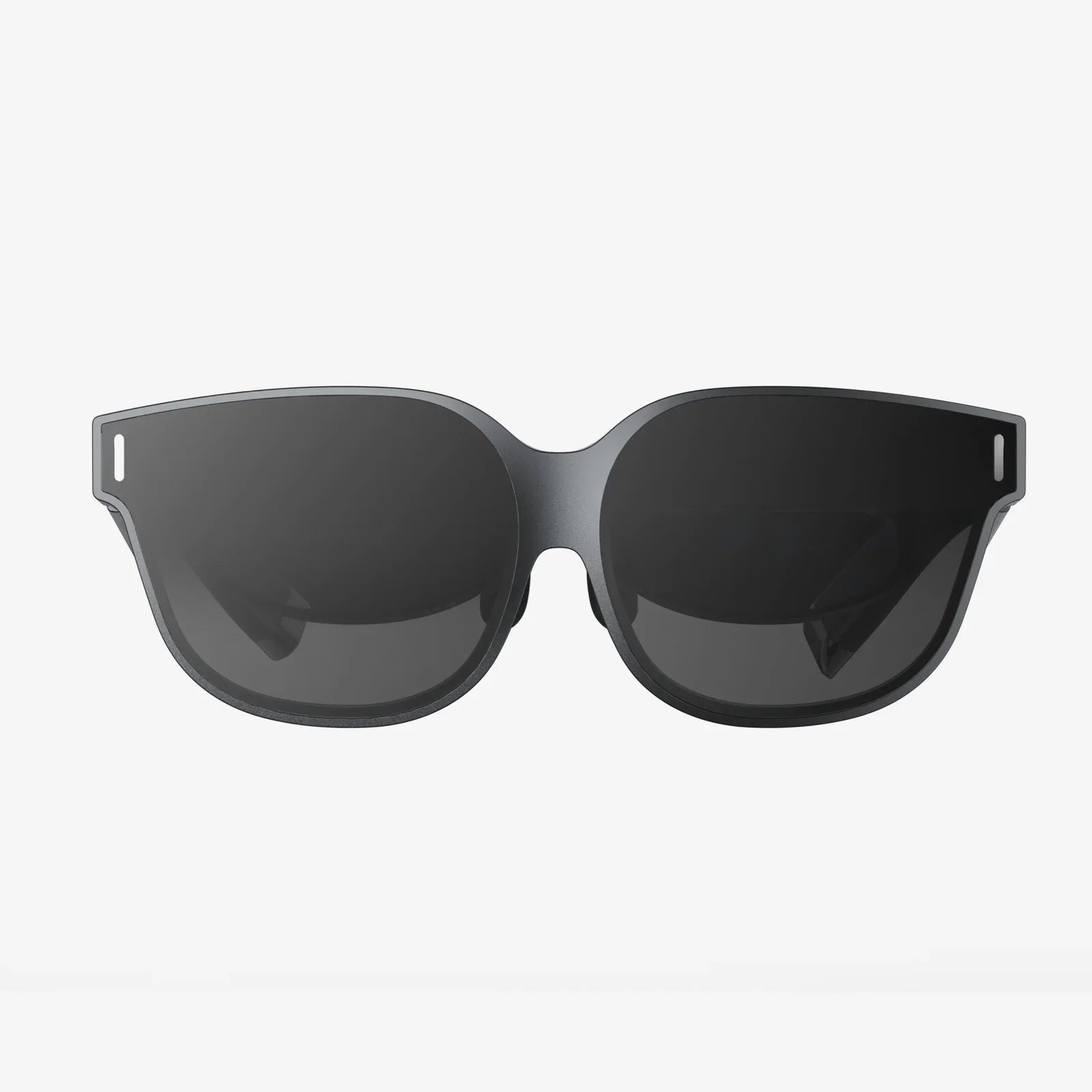
Imagine a world where the digital and the physical are no longer separate realms but a single, intertwined experience. This is the promise, and increasingly the reality, being delivered by the latest wave of innovation in augmented reality displays. The news today isn't just about incremental improvements; it's about a fundamental leap forward, moving the technology from a niche novelty to a powerful, pervasive tool. The bulky, obtrusive headsets that once defined the category are rapidly receding into memory, replaced by sleek, sophisticated, and even invisible displays that promise to seamlessly overlay our world with a rich tapestry of digital information, context, and creativity. This isn't science fiction; it's the emerging reality, and its implications are nothing short of revolutionary.
Beyond the Headset: The New Form Factors Dominating the News
For years, the public perception of augmented reality was synonymous with cumbersome goggles or the fleeting experience of holding up a smartphone. The most exciting news in the sector today revolves around the shattering of this form factor limitation. The race is on to create displays that are socially acceptable, comfortable for extended wear, and ultimately, indistinguishable from ordinary eyewear.
Major developments are occurring in several key areas:
- Slimmed-Down Smart Glasses: The next generation of eyewear is shedding weight and bulk at an astonishing rate. Advances in micro-optics, waveguide technology, and ultra-compact projection systems are enabling manufacturers to design glasses that look nearly identical to high-end fashion frames. The goal is to make the technology disappear, allowing the user to focus on the augmented experience, not the device enabling it.
- Holographic Displays: Pushing the boundaries even further, research into true holographic displays is making significant strides. These systems aim to project three-dimensional light fields into the user's environment, creating digital objects that possess genuine volume and depth and can be viewed from different angles without special glasses. While still primarily in labs, recent breakthroughs suggest a path toward commercialization that was previously thought to be decades away.
- Contact Lenses and Implants: The ultimate endpoint for invisibility is a display that requires no external hardware at all. Several pioneering companies and research institutions are making waves with prototypes of augmented reality contact lenses. These devices, embedded with microscopic circuitry and projection systems, aim to overlay information directly onto the retina. While significant hurdles around power, safety, and biocompatibility remain, the progress reported today is a strong indicator that this once-fantastical idea is moving toward feasibility.
The Engine Room: Breakthroughs in Core Technologies
The sleek new form factors are only possible because of parallel revolutions happening under the hood. The news today is filled with announcements of foundational technologies that are solving the historic challenges of augmented reality displays.
Revolutionary Waveguide and Light Field Technology
At the heart of most modern AR glasses is waveguide technology. These are transparent substrates that use diffraction gratings to pipe light from a micro-projector on the temple of the glasses into the user's eye. Recent news highlights dramatic improvements in the efficiency, field of view, and clarity of these waveguides. New materials and nanofabrication techniques are enabling wider, brighter, and more vibrant displays while simultaneously reducing unwanted artifacts like rainbow effects and dimness.
Complementing this is progress in light field technology, which replicates the way light naturally interacts with our eyes. Instead of projecting a flat image, light field displays project bundles of light rays, creating a more natural and comfortable 3D experience that reduces the vergence-accommodation conflict—a major source of eye strain and nausea in earlier AR systems.
Unprecedented Processing Power and AI Integration
A high-fidelity augmented reality display is useless without the brainpower to drive it. Today's news underscores the critical role of specialized processors and artificial intelligence. New chipsets are being designed from the ground up for spatial computing, handling immense tasks like real-time scene reconstruction, object recognition, and persistent anchor placement with incredible efficiency and low power consumption.
AI is the silent partner making AR displays truly intelligent. Machine learning algorithms are now capable of instantly understanding the user's environment, distinguishing between a table, a wall, and a person, and allowing digital content to interact with the physical world in a believable way. This contextual awareness, powered by AI, is what transforms a simple display into a window to a blended reality.
Transforming Industries: The Practical Applications Making Headlines
While the technology itself is fascinating, the most compelling news about augmented reality displays today is found in their real-world applications. Across the globe, industries are deploying this technology to solve complex problems, increase safety, and unlock new levels of efficiency.
Healthcare and Surgery
In the medical field, AR displays are moving from experimental tools to essential equipment. Surgeons are using them to overlay critical patient data—such as MRI scans, ultrasound imagery, and vital signs—directly into their field of view during procedures. This allows for a "heads-up" experience where they no longer need to look away from the operating table to consult a monitor. Medical students are using AR to practice complex surgeries on detailed holographic patients, and technicians are using guided AR instructions for repairing sensitive equipment.
Manufacturing, Maintenance, and Logistics
On the factory floor and in the warehouse, AR displays are revolutionizing workflows. Technicians performing maintenance on complex machinery can see digital arrows and annotations pointing directly to components that need inspection, along with animated instructions for repairs. Warehouse workers are guided by AR visual cues to the exact location of items, optimizing picking and packing routes. This "see-what-I-see" capability also allows remote experts to guide on-site workers through complex tasks, reducing travel costs and solving problems faster.
Architecture, Engineering, and Construction (AEC)
For architects and engineers, the ability to visualize a 3D model superimposed onto a physical construction site is transformative. Teams can walk through a full-scale building before a single foundation is poured, identifying design clashes and spatial issues that would be costly to fix later. On the job site, workers can see precisely where electrical conduits or plumbing should be run directly on the walls in front of them, drastically reducing errors and rework.
The Human Factor: Social, Ethical, and Privacy Considerations
As the technology advances at a breakneck pace, the news today is also filled with crucial conversations about its societal impact. The prospect of a world where everyone is constantly wearing cameras and displays that can record, analyze, and overlay information onto people and places raises profound questions.
- Privacy: How do we prevent a future of constant, unsolicited surveillance? The ethical development of AR must include robust privacy frameworks that give individuals control over how their image and data are captured and used by others' devices.
- Digital Divide: Will this technology create a new socio-economic chasm between those who can afford advanced AR systems and those who cannot? Ensuring equitable access and preventing a "reality divide" is a critical challenge.
- Information Overload and Reality Blurring: With a constant stream of digital information vying for our attention, how do we maintain focus on the physical world and our real-world relationships? The design of these systems must prioritize user well-being and the ability to disconnect.
- Advertising and Manipulation: The potential for hyper-targeted, context-aware advertising is a marketer's dream but could become a user's nightmare. The industry must establish clear norms to prevent our visual field from becoming a cluttered, unavoidable billboard.
Gazing into the Crystal Ball: The Future Being Built Today
The trajectory of augmented reality display technology points toward a future where the interface between humans and computers becomes almost imperceptible. The news and research emerging from labs today provide a glimpse of what's to come. We are moving toward a "perceptual internet" where information is not something we seek out on a screen, but something that is presented to us contextually in the world around us.
Future displays will likely be multi-focal, dynamically adjusting to where our eyes are looking, and will eventually be able to simulate all visual phenomena, effectively replacing reality if desired. The convergence of AR with other technologies like 5G/6G connectivity, the Internet of Things, and brain-computer interfaces will create experiences we can scarcely imagine today. The device itself will fade away, leaving only the enhanced perception.
The news today is clear: we are standing at the precipice of a new era. The advancements in augmented reality displays are not merely about better gadgets; they are about redefining the very fabric of human experience, communication, and interaction with our environment. The revolution is no longer coming; it is being displayed right before our eyes.
From the operating room to the factory floor, the way we see our world is changing in real-time, and the devices making it possible are finally becoming as unobtrusive as the visions they project. The next time you put on a pair of glasses, you might just be putting on a window to an entirely new layer of reality—one where information, imagination, and the physical world finally converge into a seamless whole. The future is transparent, contextual, and already here.
Share:
Best AI Virtual Meeting Tools 2025: The Ultimate Guide to Smarter Collaboration
AR in Events: Augmented Reality Technology is Reshaping the Live Experience