


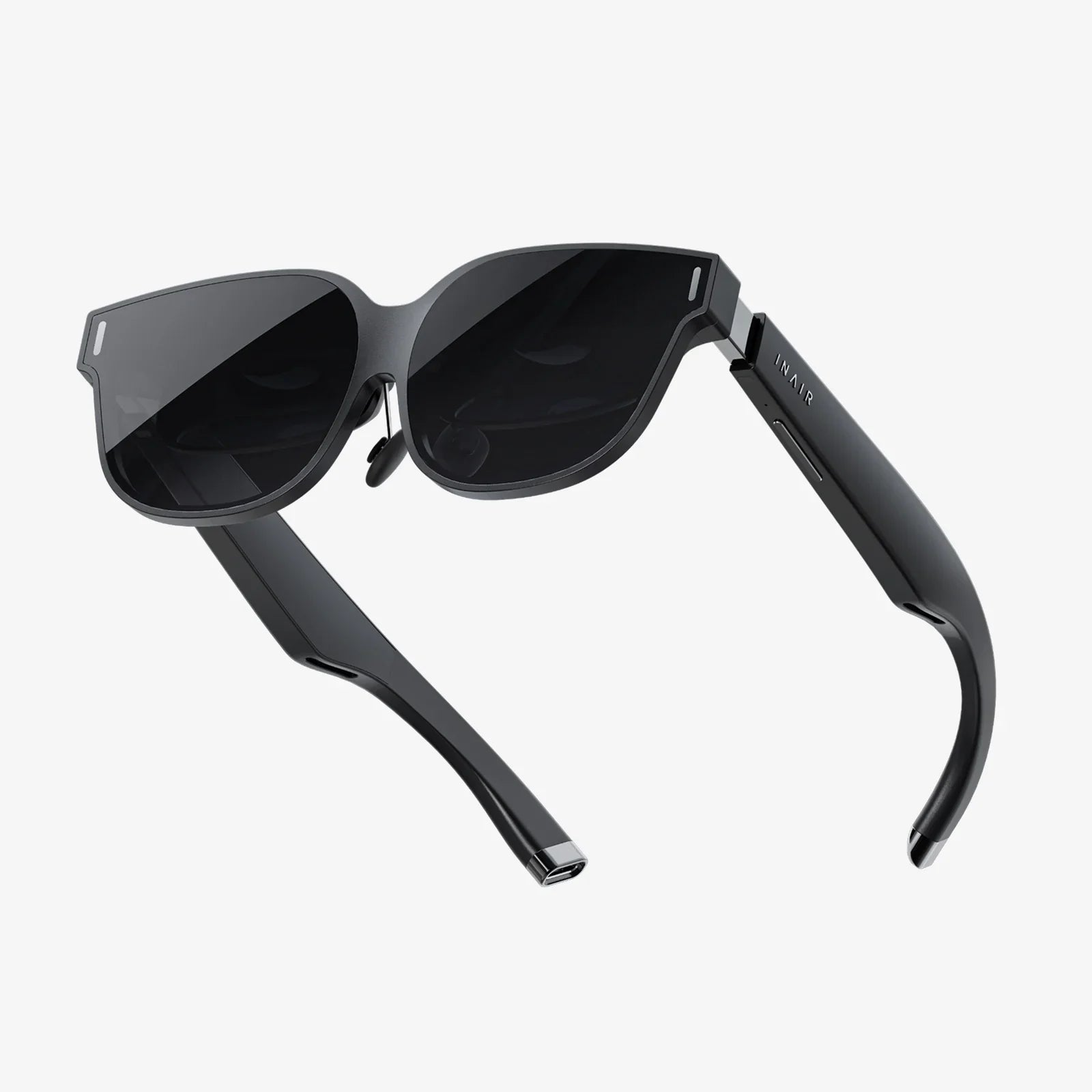
Imagine pointing your phone at a starry night sky and seeing the names and constellations traced out in brilliant, shimmering light. Or picture a mechanic looking at a complex engine, their smart glasses highlighting exactly which bolt to tighten next. This isn't science fiction; it's the magic of augmented reality, and it’s already here, transforming how we see and interact with our world. If you've ever wondered what this buzzword truly means but found technical explanations overwhelming, you're in the right place. We're about to demystify AR with a simple, straightforward definition and explore its incredible potential.
So, What Exactly Is Augmented Reality? The Easy Definition
Let's cut through the complexity. At its most fundamental level, augmented reality (AR) is a technology that superimposes digital information—images, sounds, text, and 3D models—onto the real world around you.
Think of the word "augment." It means to add to or enhance something. That's precisely what AR does: it adds a digital layer on top of our physical reality, enhancing what we see, hear, and feel. Unlike Virtual Reality (VR), which creates a completely artificial, digital environment that you immerse yourself in (often with a headset), AR keeps you grounded in the real world. It simply adds a helpful or entertaining digital garnish to your existing surroundings.
The easiest analogy is to think of it as a heads-up display for your life. Just as a pilot sees critical flight data projected onto their cockpit windshield without looking away, AR projects digital content onto your view of the world, whether through a smartphone screen, a tablet, or a pair of specialized glasses.
How Does It Work? The Simple Mechanics Behind the Magic
While the underlying technology is sophisticated, the basic process is logical and can be broken down into a few key steps that work together seamlessly.
1. Seeing the World: Sensors and Cameras
First, an AR-enabled device needs to understand its environment. It uses a suite of sensors, primarily a camera, to capture the real world. But it doesn't just take a picture; it analyzes it. Advanced algorithms and computer vision work together to identify surfaces, edges, objects, and even specific markers (like a QR code) to understand the geometry and content of the space.
2. Making Sense of It All: Processing and Alignment
Next, the device's processor kicks into high gear. It takes the visual data from the camera and combines it with input from other sensors like a gyroscope, accelerometer, and GPS. These sensors answer crucial questions: How is the device tilted? How is it moving? Where is it located? By synthesizing all this data, the device can accurately determine its position and orientation in space. This is called simultaneous localization and mapping (SLAM), and it's the crucial step that allows digital objects to stay locked in place in the real world.
3. The Augmentation: Projecting the Digital Layer
Once the device understands the environment and its own place within it, it can render the digital content. This could be a animated character sitting on your coffee table, a floating text box explaining a historical monument, or a new piece of furniture visualized in your living room. The software perfectly aligns this digital asset with the real world, ensuring it moves and scales correctly as you move your device.
4. The Final Output: Displaying the Enhanced Reality
The final step is you seeing the combined result. This happens on a display. For most people, this is the screen of their smartphone or tablet. For more advanced applications, it's through transparent lenses in smart glasses or headsets, which project light directly into your eyes, making the digital objects appear as if they are truly part of your environment.
AR vs. VR vs. MR: Untangling the Acronyms
It's easy to get these terms confused, but the distinction is important for our easy definition.
- Virtual Reality (VR): Replaces your world. You put on a headset and are fully immersed in a computer-generated environment. The real world is completely blocked out. Think: exploring a fantasy game world.
- Augmented Reality (AR): Adds to your world. Digital elements are overlaid on your view of the real world. You remain present in your actual environment. Think: seeing navigation arrows on the road through your car's windshield.
- Mixed Reality (MR): A more advanced blend. MR not only overlays digital objects but allows them to interact with the real world in a believable way. A digital ball in MR could bounce off your real wall and roll under your real table. It's often seen as the next evolution of AR.
In short: VR is a digital escape, AR is a digital enhancement, and MR is a digital fusion.
Where Do We See AR Today? Everyday Applications
You might be surprised how integrated AR already is into our daily lives. It's not a distant future tech; it's here now.
Gaming and Entertainment
This is where many people had their first taste of AR. Remember the global phenomenon that had people chasing digital creatures in parks and streets? That game used your phone's camera to make it look like Pokémon were inhabiting your world. Similarly, social media filters that add bunny ears, funny masks, or artistic effects to your face are a form of AR, overlaying digital art onto your live video feed.
Retail and Shopping
AR is revolutionizing how we shop. Instead of wondering if a new sofa will fit in your living room, you can use an app to place a full-size, photorealistic 3D model of it in your space. You can "try on" glasses, makeup, or even clothes using your phone's camera, seeing how they look on you before making a purchase. This reduces uncertainty and has the potential to drastically cut down on return rates.
Education and Training
Textbooks come to life with AR. By scanning an image, students can see a 3D model of a human heart beat and rotate it to explore its chambers. Medical students can practice complex procedures on virtual patients overlaid onto mannequins. Mechanics in training can see step-by-step instructions and part names superimposed on the actual machinery they are learning to repair, drastically accelerating the learning curve.
Navigation and Exploration
Imagine walking through a new city and holding up your phone to see historical facts and figures pop up about the buildings around you. Or using your phone's camera to get live walking directions painted onto the street in front of you, so you never have to look down at a map again. This is the power of AR for navigation, making it more intuitive and contextual.
Industrial and Manufacturing Design
This is one of the most impactful uses of AR. Architects and engineers can project full-scale building plans onto a physical construction site. Factory workers can receive real-time data and assembly instructions while keeping their hands free. Designers can collaborate on 3D holographic models, making changes and seeing them reflected instantly in a shared physical space.
The Future of AR: What's Next?
The current smartphone-based AR is just the beginning. The future points towards wearable, always-on AR. Lightweight, stylish glasses that look like ordinary eyewear but can project information directly into your field of vision are the holy grail. This would make the technology seamless and hands-free, unlocking even more potential:
- Real-time translation: Look at a foreign street sign and see the translation instantly appear beneath it.
- Enhanced social interaction: See the name and professional details of someone you just met at a networking event displayed near them.
- Personalized information: Your glasses could highlight the exact brand of cereal you're looking for on a crowded supermarket shelf.
- Remote assistance: A expert technician could see what you see and draw digital arrows and circles into your field of view to help you fix something, from thousands of miles away.
Challenges and Considerations
Of course, this exciting future comes with questions. Widespread AR adoption will raise important issues about privacy (constant recording and data collection), digital addiction (further blending of digital and physical lives), and safety (distraction in public spaces). Developing ethical guidelines and robust privacy controls will be just as important as developing the technology itself.
The journey into an augmented world is just beginning, and its path will be shaped not just by engineers, but by all of us. It’s a tool of immense power, and its ultimate definition will be written by how we choose to use it—to distract, to inform, to isolate, or to connect. One thing is certain: the layer between the digital and the physical is getting thinner every day, and our reality will never be the same.
From trying on a watch without leaving your couch to helping a surgeon visualize a complex procedure, augmented reality is quietly weaving a digital thread into the fabric of our physical existence. This easy definition is just the starting point—a gateway into understanding a technology that is poised to redefine everything from how we learn and work to how we play and connect. The real world is about to get a lot more interesting.
Share:
Is AR and VR the Future? Exploring the Next Digital Revolution
Are AI Glasses Safe? A Deep Dive Into The Privacy, Health, and Security Implications