


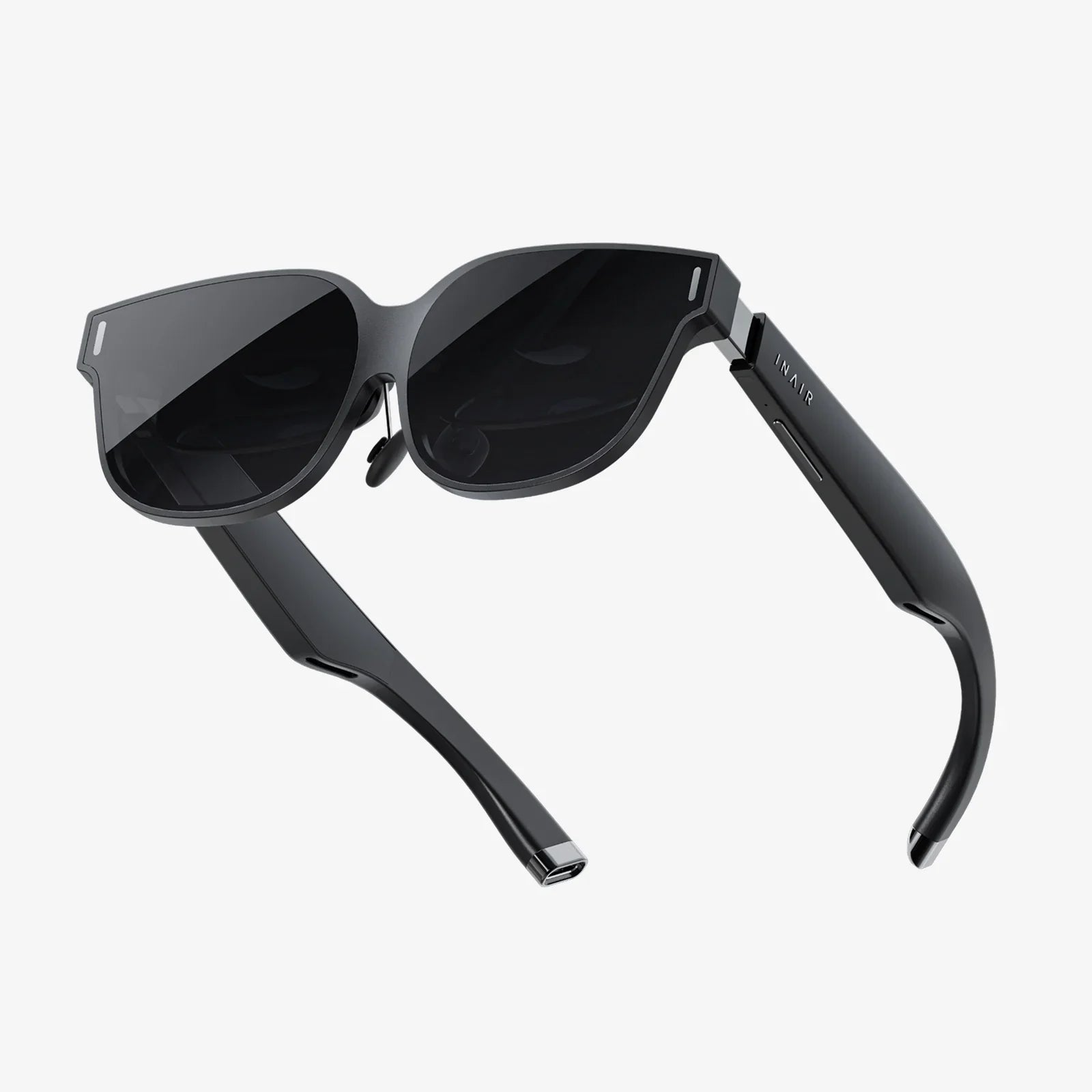
Imagine a world where a factory technician in one country can see through the eyes of a colleague on the other side of the globe, with digital schematics and instructions overlaid directly onto the machinery they are both viewing. Envision a design team walking through a full-scale, holographic prototype of a new jet engine before a single piece of metal is ever cut. This is not a glimpse into a distant sci-fi future; this is the reality being built today by enterprises harnessing the transformative power of Augmented Reality (AR). The latest wave of enterprise news isn't just about quarterly earnings or mergers; it's about this fundamental shift in how companies operate, train, and connect, making the digital world an interactive layer atop our physical reality. The enterprise AR revolution is here, and it's rewriting the rules of business.
The Foundation: Understanding AR in the Enterprise Context
Before diving into the breaking news, it's crucial to distinguish enterprise Augmented Reality from its consumer-facing cousin. While consumer AR often focuses on entertainment and social media filters, enterprise AR is a serious tool designed to solve complex business problems, increase efficiency, enhance safety, and reduce costs. It involves the use of wearable technology—such as smart glasses—or handheld devices like tablets and smartphones to superimpose computer-generated information, including images, 3D models, data, and instructions, onto the user's view of the real world. This seamless blend creates a powerful contextual interface between humans, machines, and data systems.
Breaking News: Key Trends Dominating the Headlines
The narrative around enterprise AR is evolving rapidly. The news cycle is no longer focused on if it will be adopted, but how and where it is delivering staggering returns on investment. Several key trends are consistently making headlines.
The Remote Expert Revolutionizes Field Service
One of the most compelling and widely adopted use cases is remote assistance. In the past, repairing a critical piece of equipment might have required a highly specialized engineer to board a plane, leading to costly downtime. Now, a less experienced on-site worker can wear AR glasses, sharing a live first-person view with an expert thousands of miles away. The remote expert can then draw digital annotations—arrows, circles, highlighted components—directly into the on-site worker's field of view, guiding them through complex procedures step-by-step. This "see-what-I-see" functionality slashes travel costs, reduces machine downtime from days to hours, and empowers local workforce.
Immersive Training and Onboarding
Enterprises are reporting dramatic improvements in training efficacy through AR. Instead of reading a manual or watching a video, new employees can learn by doing in a risk-free, digital environment. For instance, a trainee mechanic can practice assembling an engine with virtual parts, receiving real-time feedback. Complex safety procedures for hazardous environments can be rehearsed without exposure to any actual danger. This hands-on, immersive learning leads to higher knowledge retention, faster proficiency, and a significant reduction in errors once the employee moves to the physical equipment.
Digital Twins and Advanced Design
The concept of a "digital twin"—a virtual replica of a physical asset, process, or system—is supercharged by AR. Engineers and designers can interact with life-size, 3D holograms of their creations. An automotive design team can walk around a full-scale model of a new car, examining the interplay of light on its virtual surfaces and making adjustments in real-time. Architects and construction managers can project digital building plans onto an empty physical site, identifying potential clashes between systems before construction begins, saving millions in rework costs.
Next-Level Logistics and Warehousing
The logistics sector has been an early and aggressive adopter. AR smart glasses can visually guide warehouse pickers along the most efficient route, instantly highlighting the exact shelf and item they need to retrieve, all while keeping their hands free. This technology, often integrated with Warehouse Management Systems (WMS), has been shown to increase picking accuracy to near 100% and boost productivity by over 15%. It also drastically reduces the training time for new hires, as the technology does the heavy lifting of navigation and identification.
The Technology Stack: What Powers Enterprise AR?
Behind these transformative applications lies a sophisticated technology stack. Understanding this stack is key to appreciating the latest advancements in enterprise news.
- Hardware: This includes the devices that deliver the AR experience. Ruggedized smart glasses designed for industrial environments are leading the charge, offering hands-free operation, but tablets and smartphones remain vital entry points due to their ubiquity and lower cost.
- Software and Development Platforms: These are the engines of AR. They provide the tools to create AR experiences (authoring tools), the ability to recognize objects and surfaces (computer vision), and the platform to manage and deploy content across a global workforce.
- Connectivity (5G and Wi-Fi 6): High-fidelity AR, especially remote expert applications, requires massive bandwidth and ultra-low latency. The rollout of 5G networks is a critical enabler, allowing for the seamless streaming of high-definition video and complex 3D models without lag.
- Cloud Computing: The immense processing power needed for spatial mapping and rendering complex models is often handled in the cloud. This allows lighter-weight devices to be used on the front end while leveraging virtually unlimited computational resources in the background.
Overcoming the Hurdles: Challenges in Adoption
Despite the exciting news, the path to widespread AR integration is not without its obstacles. Enterprises are actively working to solve these challenges.
Cost and Return on Investment (ROI): While hardware prices are decreasing, a full-scale enterprise deployment still represents a significant investment. Companies are meticulously building business cases focused on hard metrics like reduced downtime, faster assembly times, and lower training costs to prove a clear ROI.
User Experience and Design: A poorly designed AR experience that is clunky or difficult to use will be rejected by employees. The focus is now on creating intuitive, user-centric interfaces that provide genuine assistance without overwhelming the user with information.
Data Security and Privacy: AR devices, with their always-on cameras and microphones, introduce new vectors for potential data breaches. Enterprises are implementing stringent security protocols, including end-to-end encryption for video streams and robust device management software, to protect sensitive operational data.
Workforce Culture and Change Management: Introducing any new technology requires careful change management. Companies are finding success by involving employees early in the process, demonstrating clear benefits to their daily work, and providing comprehensive training on the new tools.
The Future is Now: What's Next in Enterprise AR?
The pace of innovation is accelerating. The next wave of enterprise news will likely be dominated by a few key developments. The integration of Artificial Intelligence and Machine Learning with AR will create "situationally aware" systems that can not only display information but also predict what information a worker needs next. The expansion of AR into the "metaverse" for enterprise will see the creation of persistent digital spaces where globally distributed teams can collaborate on 3D models as if they were in the same physical room. Furthermore, as hardware becomes lighter, more powerful, and more socially acceptable, its use will expand from industrial floor settings into front-office, sales, and customer engagement scenarios.
The stream of augmented reality enterprise news tells a consistent story: this technology has moved beyond the hype cycle and into a phase of tangible, measurable value creation. It is breaking down geographical barriers, unlocking human potential, and providing an unprecedented contextual understanding of complex data. For forward-thinking enterprises, the question is no longer whether to explore AR, but how quickly they can implement it to gain a decisive competitive advantage. The line between the physical and digital worlds has been blurred for good, and the businesses that learn to navigate this new combined reality will be the leaders of tomorrow.
Share:
Web AR VR: The Seamless Convergence Reshaping Our Digital Experience
Augmented Reality Business Meetings: The Dawn of a New Collaborative Era