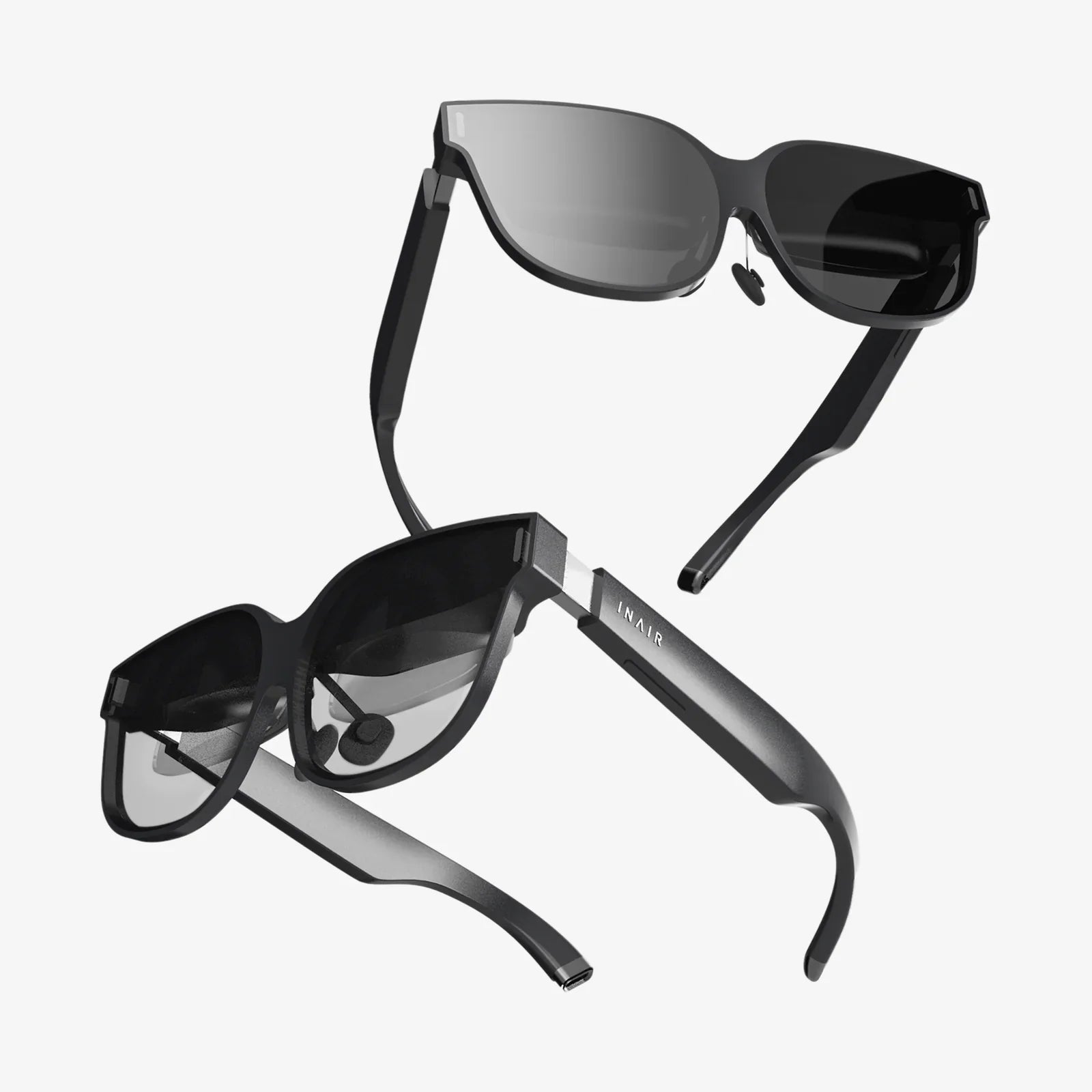
Imagine a world where information doesn't just live on your phone screen but is painted onto the very fabric of reality. Where a mechanic sees a holographic schematic overlaid on a faulty engine, a surgeon visualizes a patient's anatomy in three dimensions during an operation, and a historian walks through ancient ruins that spring back to life before their eyes. This is not a distant future; it is the burgeoning present, and it is all made possible by the rapid, relentless advancement of augmented reality equipment. This technology is quietly orchestrating a revolution, moving from niche novelty to a foundational tool that promises to reshape every aspect of our lives, from how we work and learn to how we connect and play. The device on your face, or soon to be in your field of view, is the key to unlocking this new layer of existence.
Beyond the Hype: Defining the Augmented Lens
At its core, augmented reality (AR) is a technology that superimposes a computer-generated overlay—comprising images, sounds, text, and haptic feedback—onto a user's real-world view. Unlike Virtual Reality (VR), which creates a completely immersive, digital environment that replaces the real world, AR enhances the real world by adding digital elements to it. The bridge between the digital data and our perception is built by sophisticated augmented reality equipment.
This equipment typically consists of a complex suite of components working in harmony:
-
Sensors: Cameras, LiDAR scanners, accelerometers, gyroscopes, and magnetometers constantly map the physical environment, tracking surfaces, objects, and the user's position and orientation within the space.
-
Processors: Powerful, miniaturized chipsets act as the brain, processing the sensor data in real-time, running complex algorithms for spatial mapping, and rendering the digital content.
-
Displays: This is the window to the augmented world. Technologies range from smartphone screens and heads-up displays (HUDs) to more advanced systems like waveguide optics, retinal projection, and holographic lenses that beam images directly onto the user's retina.
-
Connectivity: 5G and Wi-Fi enable cloud processing, allowing for more complex computations off-device and facilitating shared, multi-user experiences.
-
Input Methods: Voice commands, hand-tracking cameras, gesture recognition, and even eye-tracking allow users to interact intuitively with the digital layer.
The ultimate goal of this hardware is to achieve what pioneers call the "visual perfect"—digital overlays so precise, stable, and high-fidelity that they are indistinguishable from physical objects, seamlessly integrated into our natural field of view.
The Evolution of Form: From Bulky Headsets to Invisible Frames
The journey of augmented reality equipment is a story of dramatic miniaturization and refinement. The earliest systems were often room-sized, tethered to supercomputers, and reserved for multi-million-dollar military and industrial applications. The first wave of consumer-facing gear was notoriously bulky, expensive, and limited in functionality, often serving as a proof-of-concept rather than a practical tool.
Today, we are in the midst of a pivotal transition. The market is diversifying into several distinct form factors, each catering to different needs:
-
Handheld AR: The most accessible entry point, using smartphones and tablets as the display. While convenient, it requires a user to hold a device, breaking immersion and limiting practicality for prolonged use.
-
Smart Glasses: This category represents the first step toward true always-on AR. These glasses often look like slightly bulkier versions of standard eyewear and prioritize features like notifications, simple translations, and voice-assisted tasks. They typically offer a limited field of view for the digital content.
-
Standalone AR Headsets: These are the most powerful and immersive devices currently available. They are self-contained units with all the necessary processing power, sensors, and high-resolution displays built-in. They are designed for enterprise use, complex design visualization, and advanced training simulations.
-
The Future: Contact Lenses and Neural Interfaces: Research is already pushing the boundaries toward the ultimate form factor: invisibility. Prototypes for AR contact lenses exist, aiming to project images directly onto the eye. Further out, brain-computer interfaces could bypass the eyes entirely, rendering digital information directly into our perception.
The industry's holy grail is a pair of glasses that are socially acceptable to wear all day, with all-day battery life, a wide field of view, and stunning display clarity—a goal that is inching closer to reality with each passing year.
Transforming the Workspace: The Enterprise Revolution
While consumer applications capture the imagination, the most profound and immediate impact of augmented reality equipment is happening within the enterprise. Businesses are adopting AR to solve real-world problems, increase efficiency, reduce errors, and empower their workforce with superhuman capabilities.
-
Manufacturing and Field Service: Technicians can use AR glasses to see step-by-step repair instructions overlaid on the machinery they are fixing. They can receive remote expert guidance, with an off-site expert seeing what they see and drawing annotations into their field of view. This drastically reduces downtime, minimizes training costs, and eliminates manual referencing of bulky paper manuals.
-
Healthcare and Medicine: Medical students can practice procedures on detailed, interactive holograms of human anatomy. Surgeons can use AR to visualize critical information like patient vitals or a 3D model of a tumor during an operation, keeping their eyes on the patient instead of a distant monitor. It also aids in complex vein location and surgical planning.
-
Design and Architecture: Architects and engineers can project full-scale 3D models of their designs onto a physical empty lot or within a building's shell. Designers can iterate on virtual prototypes of products, manipulating digital objects with their hands before a single physical prototype is ever built, saving immense time and resources.
-
Logistics and Warehousing: AR smart glasses can display optimal picking routes and instantly identify items on shelves, dramatically speeding up order fulfillment and reducing errors in massive warehouses. Workers have their hands free to handle packages while receiving constant visual guidance.
In these professional contexts, augmented reality equipment is not a gimmick; it is a critical productivity tool that delivers a clear and calculable return on investment, driving its widespread adoption.
Redefining Daily Life: The Consumer Experience
Beyond the factory floor and operating room, AR is poised to weave itself into the tapestry of our everyday consumer lives, changing how we shop, learn, navigate, and socialize.
-
Retail and E-commerce: Imagine "trying on" clothes, glasses, or makeup virtually from your home. Or seeing how a new sofa would look and fit in your living room, scaled to perfect proportion, before clicking "buy." AR eliminates the guesswork from online shopping and bridges the gap between digital catalogs and physical spaces.
-
Education and Training: Textbooks become interactive portals. A student studying astronomy can point their device at the sky to see constellations labeled and myths animated. A chemistry student can safely conduct complex virtual experiments. Learning becomes experiential, immersive, and profoundly more engaging.
-
Navigation and Tourism: Walking through a new city, directional arrows can be painted onto the sidewalk. Looking at a restaurant could reveal its reviews and menu. Gazing at a historical monument could trigger a historical reenactment or show what the structure looked like centuries ago. The world becomes an information-rich, context-aware environment.
-
Social Connection and Entertainment: AR filters on social media are a primitive but wildly popular taste of this. The future promises shared AR experiences where friends can play a virtual board game on a real table, leave digital notes for each other in physical locations, or watch a movie together on a virtual big screen in their respective living rooms.
The Invisible Hurdles: Challenges on the Path to Ubiquity
Despite its immense potential, the path to a truly augmented world is not without significant obstacles. The development of perfect augmented reality equipment is one of the most formidable challenges in modern technology.
-
Technical Limitations: Battery life remains a constant battle, as high-resolution displays and powerful processors are energy-intensive. Achieving photorealistic graphics with a wide field of view in a small form factor requires breakthroughs in optics and display technology. Latency—the delay between a user's movement and the display updating—must be imperceptibly low to avoid motion sickness and maintain the illusion.
-
Social Acceptance and Design: For AR to become a constant companion, the hardware must be fashionable, comfortable, and unobtrusive. No one wants to wear a bulky, awkward device that draws stares in public. It must become as normalized as wearing a pair of prescription glasses or wireless earbuds.
-
The Privacy Paradox: AR devices, with their always-on cameras and microphones, are arguably the most intimate surveillance tools ever conceived. They continuously scan and record our environments. This raises profound questions: Who owns this data? How is it stored and used? How do we prevent unauthorized facial recognition or data harvesting? Establishing robust ethical frameworks and privacy-first designs is not optional; it is essential for public trust.
-
Digital Divide and Accessibility: As with any transformative technology, there is a risk that AR could exacerbate social inequalities. High costs could create a divide between those who can afford this enhanced layer of reality and those who cannot. Ensuring equitable access and designing for accessibility from the outset will be crucial.
A New Reality Awaits
The development of augmented reality equipment is more than just a race for a better gadget; it is a fundamental reimagining of the human-computer interface. We are moving away from a paradigm of looking at a device to one of looking through a device into an enriched world. The potential to amplify human intelligence, bridge geographical divides, and preserve knowledge and culture is staggering. The challenges are equally immense, demanding thoughtful collaboration between engineers, designers, ethicists, and policymakers. The next great platform for human experience is being built not on a desk or in a pocket, but directly within our line of sight, promising a future where the digital and physical finally become one.
We stand at the precipice of this new perceptual layer, where the only limit is the boundary of our own imagination. The tools to paint our dreams onto the canvas of reality are being forged in labs and workshops today, and they promise to redefine not just what we see, but how we see everything.