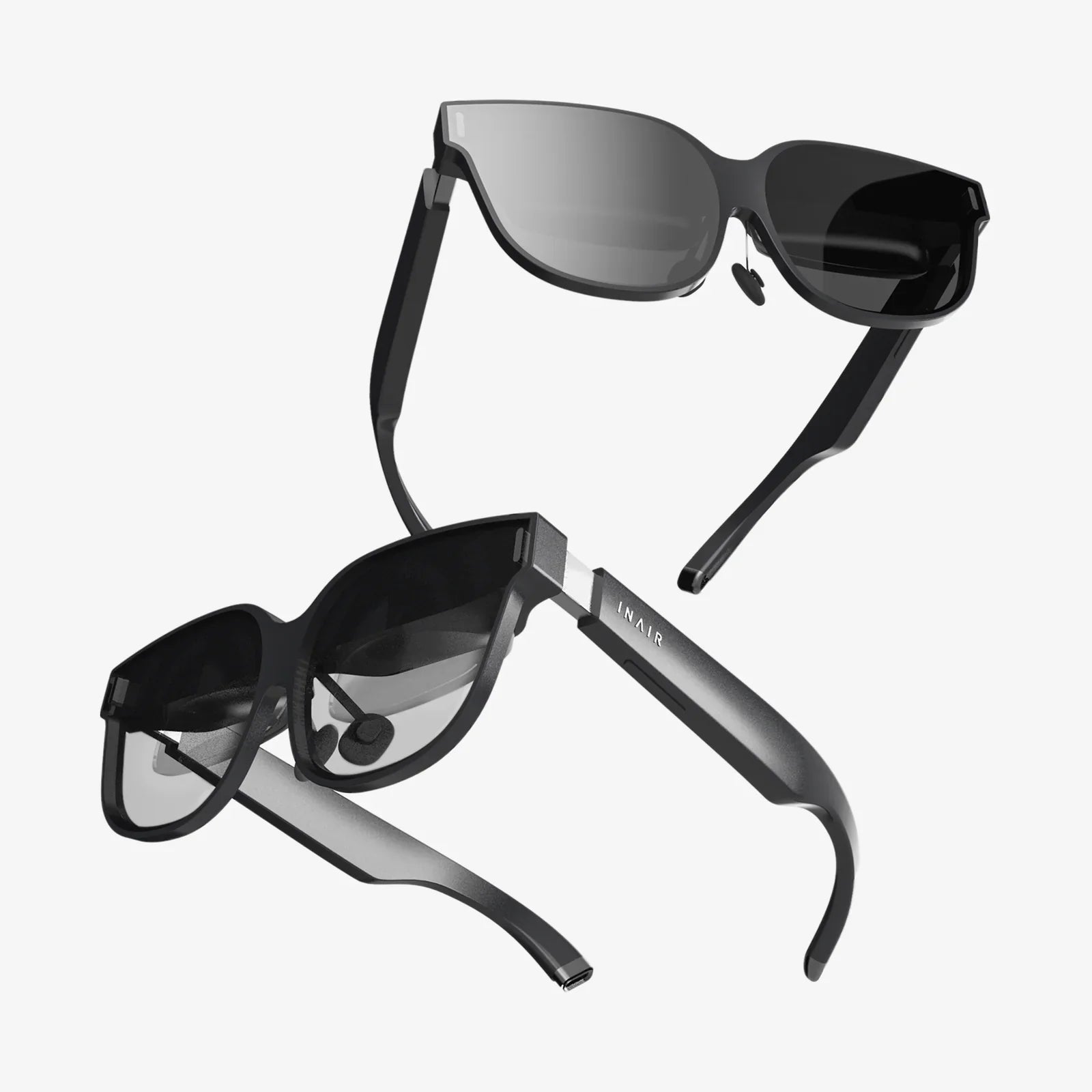
Imagine a world where the line between the digital and the physical doesn't just blur—it vanishes. Where information, creativity, and connection are not confined to rectangular screens in our pockets or on our desks but are woven intrinsically into the very fabric of our perception. This is the profound promise of augmented reality everyday glasses, a technology not of distant science fiction, but one that is steadily, inexorably, marching toward our present. This isn't about occasional entertainment or niche industrial applications; it's about a fundamental rewiring of human-computer interaction, poised to touch every facet of our daily existence, from the moment we wake to the moment we rest.
Beyond the Screen: The Paradigm Shift to Spatial Computing
To understand the potential of AR glasses, we must first move beyond thinking of them as merely a new type of display. They represent the gateway to spatial computing, a paradigm where the computer ceases to be a destination and becomes an ambient, intelligent companion that understands and enhances the space around us. Where today we navigate two-dimensional interfaces with a mouse or a finger, spatial computing allows us to interact with data as if it were a physical object—pinching, dragging, and placing digital elements into our real-world environment.
This shift is as significant as the move from the command line to the graphical user interface in the 1980s. It promises an end to "screen fatigue," not by removing digital content, but by integrating it contextually and ergonomically. Instead of hunching over a phone to get directions, a subtle arrow appears on the sidewalk ahead of you. Instead of juggling multiple monitors, your research, communications, and creative tools float effortlessly around your physical workspace. The device itself aims to fade into the background, allowing the experience to take center stage.
The Seamless Weave: Enhancing Daily Rituals
The true test of any "everyday" technology is its ability to integrate into our mundane routines without adding friction. AR glasses that succeed will become as unconscious and essential as a wristwatch or a pair of sunglasses.
-
The Morning Routine: Your day begins not with a jarring alarm, but with a gentle, simulated sunrise that brightens your field of view. As you prepare for the day, your calendar for the morning hovers near the mirror, your news digest is summarized in a corner of your vision, and a notification reminds you to take your vitamins. You glance at the fridge, and it highlights the ingredients you need to use today, suggesting a recipe.
-
Navigation and Exploration: Walking through a city is transformed. Historical buildings are annotated with their stories, restaurant reviews and ratings hover above their doors, and public transit times are displayed at the bus stop before you even think to check your phone. For a traveler in a foreign country, real-time translation could be overlaid on street signs and menus, dissolving language barriers.
-
The Connected Kitchen: A recipe isn't on a tablet that gets splattered with sauce; it's projected onto the countertop, guiding your knife skills with visual cues and pausing the instructions when it detects you're behind. It can warn you if the stove burner is too hot or timers are integrated directly into your perception of the cooking process.
-
Fitness and Wellness: A personal trainer appears in your living room, demonstrating proper form for an exercise. Your heart rate, pace, and other vital stats are displayed in the periphery of your vision as you run, allowing you to stay in the moment without constantly looking at your wrist. For mindfulness, guided breathing exercises could visually sync with your environment, helping you find calm.
Revolutionizing the World of Work and Productivity
While consumer applications are compelling, the professional and industrial sectors may see the most immediate and transformative benefits of AR glasses.
-
The Remote Collaborator: The concept of remote work evolves from flat video calls on a screen to feeling like your colleague is truly in the room with you. Using lifelike avatars and spatial audio, a remote expert can join you on the factory floor, seeing what you see and drawing diagrams directly onto a malfunctioning machine to guide your repairs, their digital annotations persisting in the correct location.
-
The Hands-Free Knowledge Worker: For field technicians, surgeons, or engineers, access to schematics, patient data, or complex instructions is invaluable. AR glasses can project this information directly into their line of sight, allowing them to work with both hands while referencing crucial data. A surgeon could see a patient's vital signs and a 3D model of the anatomy they are operating on without ever looking away from the surgical field.
-
Design and Architecture: Architects and interior designers can walk clients through a full-scale, photorealistic hologram of an unbuilt structure. Changes to materials, lighting, and layouts can be made in real-time, experienced immersively long before the first brick is laid. This ability to "see the future" saves immense time and resources.
-
Logistics and Warehousing: Warehouse workers could have the most efficient picking route highlighted on the floor before them, with digital indicators pointing precisely to the needed items on a crowded shelf, dramatically accelerating fulfillment and reducing errors.
The New Social Fabric: Connection and Expression
Human connection is the next frontier. AR glasses could enable shared experiences that feel tangibly real, even when participants are continents apart.
-
Spatial Social Media: Imagine leaving a digital note, a memory, or a piece of art tied to a specific location—a park bench, a concert venue, a landmark. Friends, or even strangers who pass by later with their own glasses, could discover these shared moments, creating a rich, invisible layer of community and history over the physical world.
-
Live Events and Entertainment: Attending a concert could allow you to see fantastical visual effects and artist information overlaid on the stage. Watching a sports game live could have player stats and key replays appear in your view, all without blocking the person behind you.
-
Avatars and Identity: Our digital identities could become an extension of our physical selves. We might choose to be represented by personalized avatars in social or professional meetings, or use digital filters to express our mood or style in the same way we choose clothing today.
The Invisible Guardian: Enhancing Safety and Accessibility
Perhaps the most noble application of this technology lies in its potential to protect and empower.
-
For Those with Impairments: For the hard of hearing, speech could be converted to real-time captions in their glasses. For the visually impaired, the world could be described audibly, obstacles could be highlighted, and text could be read aloud from any surface. This technology has the potential to create a more navigable and independent world for millions.
-
Personal Safety: Advanced computer vision could analyze your environment for potential hazards—a car approaching too quickly from your blind spot, a slippery surface ahead, or even an allergic ingredient in a product you're about to buy. It could provide discreet, immediate alerts that your conscious mind might miss.
The Daunting Challenges: The Path to Ubiquity
For this future to be realized, monumental hurdles in technology, design, and sociology must be cleared. The path to creating AR glasses that people will actually want to wear all day is fraught with difficulty.
-
The Form Factor: The ultimate goal is a pair of glasses that are indistinguishable in size, weight, and style from fashionable eyewear today. Current technology requires compromises in battery life, processing power, and display technology that often result in bulky, heavy, and socially awkward devices. Achieving all-day battery life in a slim form factor is one of the single greatest engineering challenges.
-
Display Technology: The displays must be bright enough to be seen in daylight but not so bright as to be blinding at night. They must offer high resolution, wide field of view, and the ability to blend digital light with real-world light seamlessly to create convincing, comfortable visuals.
-
Social Acceptance: This may be the highest barrier. How do we navigate a world where it's impossible to tell if someone is recording you, ignoring you in a conversation to look at digital content, or is genuinely engaged? New social norms and etiquettes will need to emerge. The issue of "digital distraction" could be amplified to a terrifying degree if not managed carefully.
-
The Privacy Apocalypse: AR glasses, with their always-on cameras and microphones, represent the most pervasive surveillance apparatus ever conceived. The potential for abuse by corporations and governments is staggering. Who has access to the continuous video feed of your life? How is that data stored, analyzed, and used? Robust, transparent, and enforceable privacy frameworks must be established before these devices become widespread. The very concept of public and private space will need to be renegotiated.
-
The Digital Divide: Will this technology become a great equalizer, providing access to information and assistance for all? Or will it create a new, even more extreme class divide between those who can afford this enhanced reality and those who cannot, leading to a world where two people standing in the same physical location experience entirely different, unequal realities?
A Crossroads of Humanity and Technology
The development of augmented reality everyday glasses is not merely a technical pursuit; it is a philosophical one. It forces us to ask fundamental questions: What is reality when it can be so easily annotated and altered? What is human connection when it can be so effortlessly mediated? Where is the line between a tool that enhances our cognition and one that replaces it? The choices made by developers, policymakers, and consumers in the coming decade will shape the answer to these questions for generations to come. The goal cannot be to replace reality, but to augment it in a way that respects human dignity, fosters genuine connection, and expands our potential. The spectacles of the future won't just help us see the world better; they will challenge us to decide what kind of world we want to see.
The future is not something we enter; it's something we create. And as the first prototypes of these transformative lenses make their way from R&D labs into the broader world, we stand at the precipice of one of the most significant creations in human history. The promise is a world unlocked, an existence amplified, and a human experience enriched beyond our current imagination. The question is no longer if this future will arrive, but how we will choose to build it, and more importantly, who we will become when we finally step into a world where anything is possible, right before our eyes.


Share:
Visible Wearable Device: The Unavoidable Future on Your Wrist
Visible Wearable Device: The Unavoidable Future on Your Wrist