Imagine a world where the digital and physical seamlessly intertwine, where information and imagination are painted onto the very fabric of reality, accessible not through a screen, but through the world itself. This is the promise of augmented reality (AR), a technology that has quietly evolved from a futuristic concept into a powerful tool embedded in countless aspects of our daily lives. While often associated with whimsical gaming filters, the true depth and breadth of augmented reality examples in real life reveal a silent revolution, one that is enhancing human capability, reshaping industries, and redefining our interaction with the environment. The invisible layer is here, and its applications are as practical as they are profound.
The Foundation: Understanding Augmented Reality
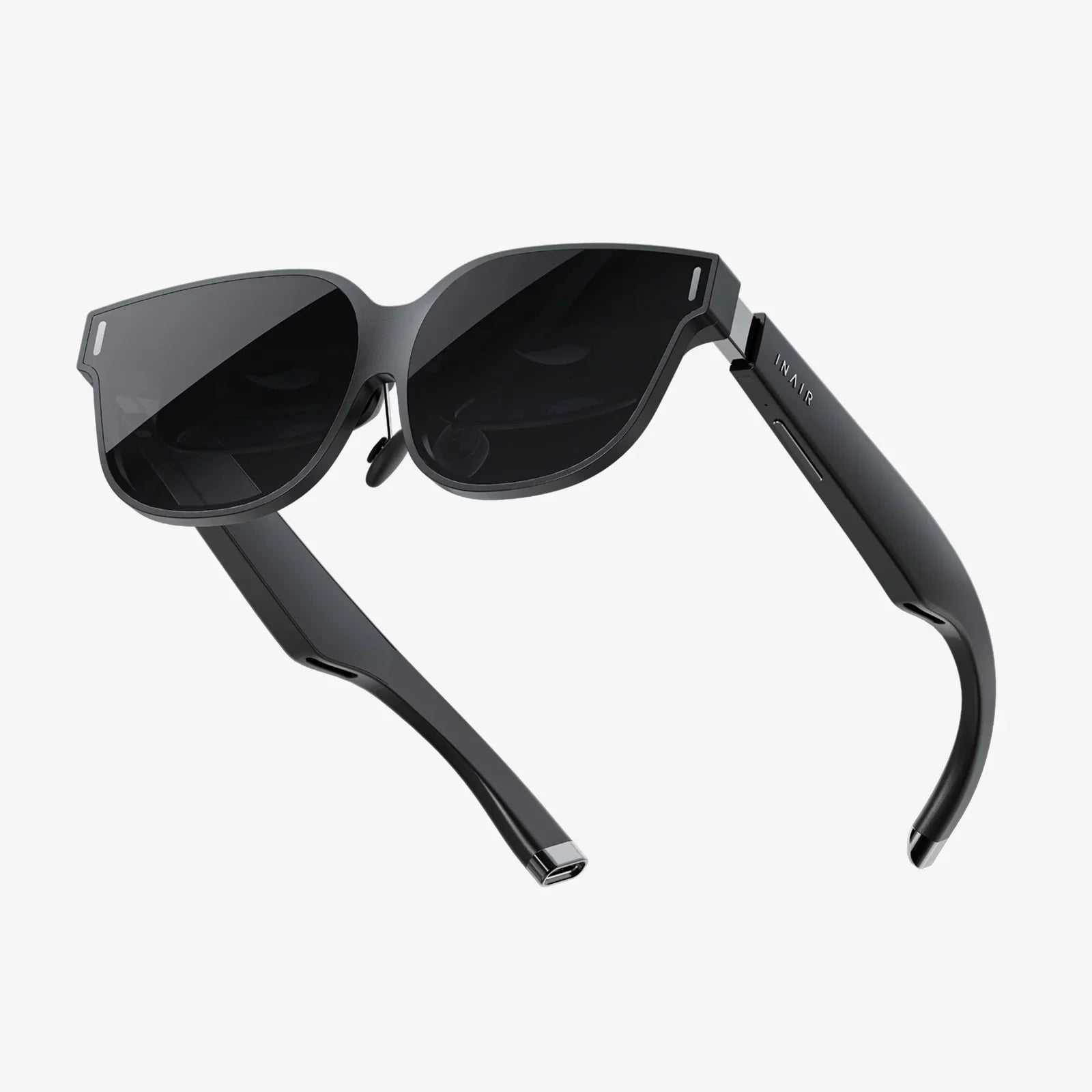
Before delving into specific examples, it is crucial to distinguish AR from its technological cousin, virtual reality (VR). Where VR aims to replace the user's reality with a completely digital, immersive environment, AR's goal is supplementation. It overlays digital information—be it images, text, data, or 3D models—onto the user's view of the real world. This is typically achieved through devices like smartphones, tablets, smart glasses, and heads-up displays (HUDs). The magic lies in the sophisticated combination of cameras, sensors, GPS, and computer vision algorithms that understand the environment and anchor digital content within it precisely. This foundational technology enables the vast array of practical applications we see today.
Transforming the Retail and E-Commerce Experience
One of the most visible and rapidly adopted arenas for AR is retail, where it solves a fundamental problem: the inability to try before you buy online.
Virtual Try-On and Visualization
Shopping for apparel, accessories, and cosmetics has been revolutionized. Applications now allow users to project virtual eyewear onto their own face, see how a watch looks on their wrist, or even try on different shades of lipstick in real-time using their device's camera. This extends far beyond personal items. Furniture retailers have pioneered AR tools that let customers place true-to-scale 3D models of sofas, tables, and décor directly into their living space. You can walk around a virtual coffee table, check if it fits under a window, or see how a new paint color would look on your wall, drastically reducing purchase anxiety and the rate of product returns.
In-Store Navigation and Product Information
Inside large physical stores, AR is enhancing the shopping journey. By pointing their smartphone at a store map, shoppers can see digital arrows overlaid on the live camera feed, guiding them directly to the aisle containing pasta sauce or light bulbs. Furthermore, pointing a device at a product on the shelf could trigger an overlay showing detailed specifications, customer reviews, or even a video demonstration, creating a rich, interactive information experience that bridges the gap between online and in-store shopping.
Revolutionizing Healthcare and Medicine
Perhaps the most impactful augmented reality examples in real life are found in healthcare, where the technology is literally saving lives and improving patient outcomes.
Enhanced Medical Training and Education
Medical students are no longer solely reliant on cadavers and textbooks. AR applications can project detailed, interactive 3D models of the human anatomy onto a mannequin or even a fellow student. This allows for exploring the layers of the body—peeling back skin to reveal muscles, then nerves, then bones—in a dynamic and unforgettable way. Surgeons use AR to practice complex procedures on virtual patients, honing their skills without risk.
Assisting Complex Surgical Procedures
In the operating room, AR is a game-changer. By integrating with pre-operative scans like CT or MRI, surgeons can wear AR headsets that project crucial information directly onto their field of view. For instance, during tumor removal surgery, the exact location and boundaries of the tumor can be visualized as a holographic overlay on the patient's actual body. This provides X-ray vision, allowing for incredible precision, minimizing damage to surrounding healthy tissue, and reducing operation time. Similarly, AR can guide needle placements for biopsies or injections by showing the optimal path directly on the patient's skin.
Patient Rehabilitation and Therapy
Rehabilitation exercises are often repetitive and monotonous, leading to poor patient adherence. AR introduces an element of gamification and visual feedback. A patient recovering from a stroke might use an AR system that projects a virtual cup onto a table, guiding them through the precise arm movements needed to pick it up. This makes therapy more engaging and provides therapists with precise data on a patient's range of motion and progress.
Redefining Industrial Maintenance and Manufacturing
In factories, construction sites, and repair shops, AR is becoming an indispensable tool for the workforce, boosting efficiency and safety.
Remote Expert Assistance and Guidance
When a field technician encounters a complex problem with a piece of machinery, they no longer need to wait for a specialist to fly in. Using AR glasses, they can stream their live point-of-view to an expert located anywhere in the world. This expert can then annotate the technician's real-world view with digital arrows, circles, and instructions, literally drawing the solution onto the machinery in front of them. This "see what I see" support drastically reduces downtime, travel costs, and error rates.
Overlaying Digital Manuals and Schematics
Technicians performing assembly, maintenance, or repair can have vital information hands-free. By looking at an engine, for example, an AR system can recognize the component and instantly overlay step-by-step instructions, torque specifications, or wiring diagrams directly onto the parts they are working on. This eliminates constant glancing back and forth between a physical manual and the task, streamlining workflows and reducing mistakes.
Design and Prototyping in Manufacturing
Engineers and designers use AR to visualize and interact with 3D prototypes at full scale before any physical manufacturing begins. A car designer can project a life-size model of a new vehicle into an empty space, walk around it, inspect details, and even sit in the virtual driver's seat to assess ergonomics. This allows for rapid iteration, identification of design flaws, and collaborative review in a shared augmented space, saving immense amounts of time and resources.
Enhancing Navigation and Urban Exploration
AR is beginning to change how we navigate and understand our cities and the wider world.
Next-Generation Wayfinding
While GPS navigation is incredibly useful, it still requires users to translate a 2D map into the 3D world. AR navigation apps overlay giant arrows, pathways, and directions directly onto the live camera view of the street in front of you. Simply holding up your phone shows you exactly which way to walk, making it intuitive to find a specific restaurant entrance or subway station. This technology is also being integrated into vehicle windshields as heads-up displays, projecting speed, directions, and safety alerts so drivers never have to look away from the road.
Interactive Tourism and Historical Context
Tourists pointing their phones at a historical monument or ruin can see it come to life. AR applications can reconstruct ancient buildings to their former glory, show how a battlefield looked centuries ago, or display informational plaques and stories about the site. This creates a deeply immersive and educational experience, layering rich historical context onto the physical location. Museums are also adopting AR to bring exhibits to life, allowing statues to move or paintings to explain their own history.
Empowering Education and Classroom Learning
The educational potential of AR is boundless, turning abstract concepts into tangible, interactive experiences.
Bringing Textbooks to Life
Students studying astronomy can point a tablet at a textbook page about the solar system and see a full 3D model of the planets orbiting the sun, which they can rotate and explore. A biology student can examine a beating human heart from every angle. Chemistry students can manipulate virtual molecules to understand their structure. This transforms learning from a passive activity into an active discovery process, greatly enhancing engagement and knowledge retention.
Interactive Skill Development
From vocational training to music lessons, AR provides visual, step-by-step guidance. A novice mechanic learning to change a tire could see each step overlaid on the actual car. A pianist could see digital notations fall onto the real keys in front of them, guiding their practice. This personalized, interactive form of instruction adapts to the learner's pace and environment.
The Future is Already Here, It's Just Evenly Distributed
The examples outlined are not distant sci-fi fantasies; they are active, working applications improving real-world processes today. From the operating room to the living room, the classroom to the factory floor, AR is demonstrating its value as more than just entertainment. It is a utility, an assistant, and a teacher. As the technology continues to advance—with improvements in wearable hardware, better spatial understanding, and faster 5G connectivity—this digital layer will become even more integrated, intuitive, and indispensable. We are moving towards a future where accessing information will be as simple as looking at the world, and the line between learning and doing, between imagining and creating, will blur into irrelevance. The next time you pick up your phone, remember, you might be holding a window into a richer, more informed, and astonishingly augmented world.


Share:
Advanced Augmented Reality: Reshaping Reality and Redefining Human Experience
Top Rated AI Glasses: The Ultimate Guide to the Future on Your Face