


- by wangfred
Augmented Reality Experience Meaning: A New Layer on Reality
- by wangfred
Imagine a world where the line between the digital and the physical isn't just blurred; it's elegantly woven together. Information doesn't live on a screen you hold in your hand but is painted onto the world itself, accessible with a glance. This is the promise, the magic, and the profound meaning behind the augmented reality experience, a technological evolution that is far more than a fleeting trend—it's a fundamental shift in how we perceive and interact with reality.
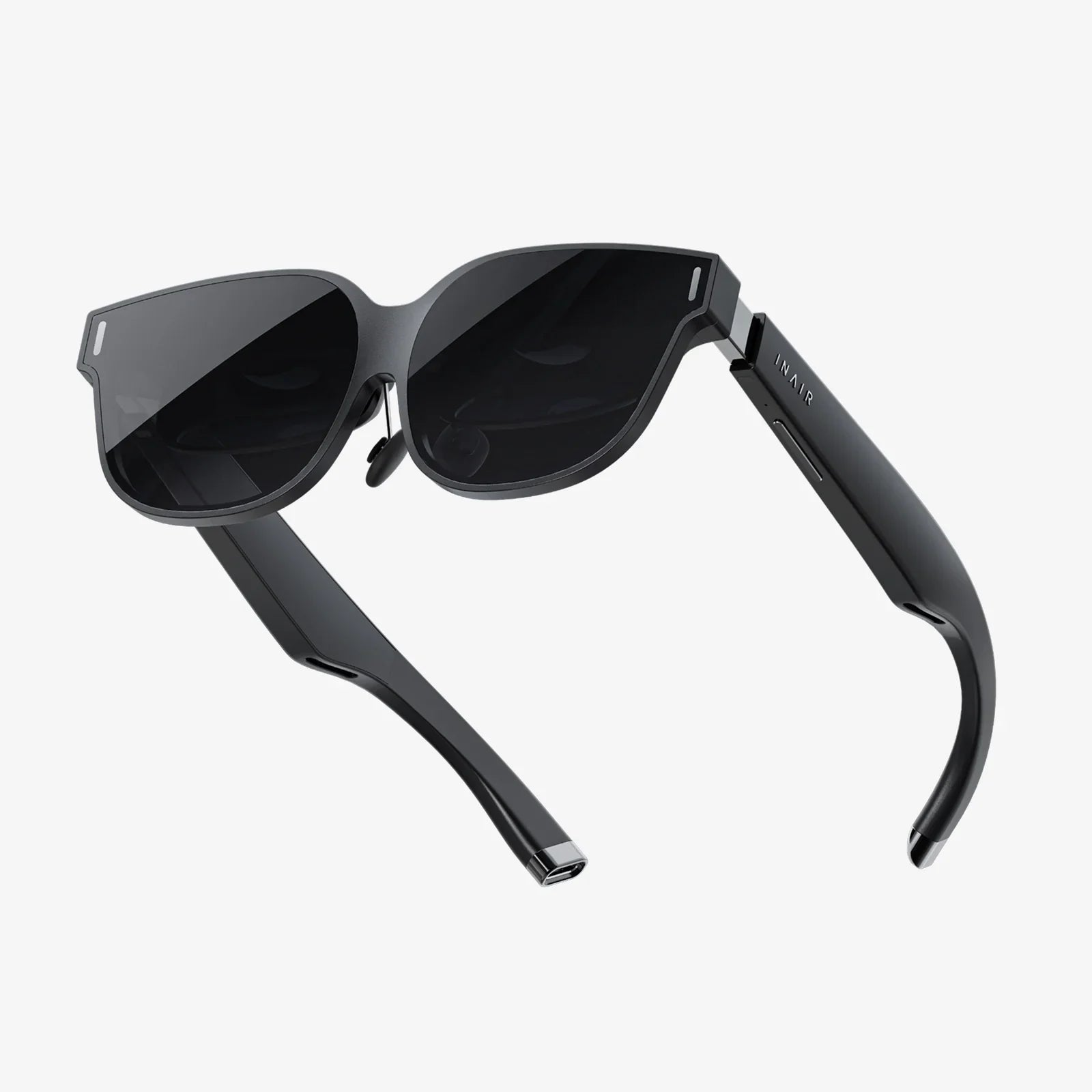
At its most basic technical level, an augmented reality (AR) experience is an interactive experience that enhances the real world by superimposing computer-generated perceptual information onto it. This information can span multiple sensory modalities, including visual, auditory, haptic, somatosensory, and olfactory. However, the most common and developed form is visual overlay through devices like smartphones, tablets, smart glasses, and heads-up displays.
But to define it merely as overlaying graphics
is to miss its entire essence. The true augmented reality experience meaning lies in its contextuality and interactivity. Unlike Virtual Reality (VR), which seeks to replace the real world with a simulated one, AR aims to supplement it. A successful AR experience isn't a separate entity; it's a symbiotic layer that understands its environment and responds to it in real-time. It's the difference between watching a video of a dinosaur and having a life-sized dinosaur roar and stomp through your living room, its feet tracking perfectly with your floor, its shadow cast by your actual lamp.
The magic of AR is powered by a sophisticated blend of hardware and software working in concert to create a believable blend of real and virtual.
Cameras act as the eyes of the AR device, continuously capturing the user's environment. Sensors, including accelerometers, gyroscopes, and magnetometers (often grouped as an Inertial Measurement Unit or IMU), track the device's precise position, orientation, and movement in space. More advanced systems use LiDAR (Light Detection and Ranging) scanners to create a detailed depth map of the surroundings, understanding the geometry of the world—where the walls, floors, and furniture are—with incredible accuracy.
This raw sensor data is processed by powerful algorithms. Computer vision techniques, particularly SLAM (Simultaneous Localization and Mapping), are the true heroes. SLAM allows the device to both map an unknown environment and localize itself within that map simultaneously. This is what enables a virtual character to sit convincingly on your real-world couch and not drift through it as you move. The processor then renders the digital content, ensuring its lighting, perspective, and scale are perfectly matched to the real-world view.
Finally, this composited view is presented to the user. This can be done through:
The augmented reality experience meaning extends deep into the realm of cognitive psychology. It fundamentally alters the way we acquire information and understand our environment.
By anchoring information directly to objects and locations, AR leverages our brain's innate strength for spatial memory. It's one thing to read about the parts of a car engine in a manual; it's entirely another to point your device at the engine and see labels and animations overlaid on the actual components. This contextual learning is proven to be more effective for retention and comprehension. The information becomes part of the environment, not an abstract concept separate from it.
A well-crafted AR experience can generate a powerful sense of presence
—the feeling that the digital object is truly there. When a virtual pet reacts to your touch or a navigation arrow appears to be painted on the road ahead, it creates a visceral, embodied interaction. This breaks down the traditional abstraction of human-computer interaction, moving us from using a tool to interacting with an environment.
The practical applications of AR are vast and are already revolutionizing fields from industry to art. The augmented reality experience meaning is defined by its utility.
In industrial settings, AR is a powerhouse for efficiency and accuracy. Technicians performing complex repairs can see step-by-step instructions overlaid directly on the machinery they are working on, highlighting which bolt to turn next. Warehouse workers equipped with AR glasses can have the most efficient picking route and item information displayed in their field of vision, freeing their hands and drastically reducing errors. Architects and engineers can project full-scale 3D models of their designs onto a construction site, allowing for clash detection and planning before a single foundation is poured.
The try before you buy
paradigm has been utterly transformed. Shoppers can see how a new sofa would look in their living room, how a pair of glasses fits their face, or how a shade of paint changes the feel of a room—all from their own home. This reduces purchase anxiety and product returns while creating a more engaging and confident shopping experience. It bridges the critical gap between the online and in-store retail worlds.
From elementary school to medical school, AR is an incredible pedagogical tool. History students can witness historical events unfold in their schoolyard. Medical students can practice complex surgical procedures on detailed, interactive holograms of human anatomy without risk. This hands-on, immersive learning is more engaging and effective than traditional textbook methods, catering to a variety of learning styles.
Artists are using AR to create dynamic, location-based sculptures and paintings that can only be viewed through a device. Museums are enhancing their exhibits, allowing statues to tell their own stories or paintings to come alive with animation. This creates a new, deeply personal form of public art that exists in a shared physical space but can contain personalized digital layers.
As AR technology advances toward sleek, consumer-ready glasses and eventually contact lenses, its integration into daily life will become seamless and ubiquitous. This pervasive AR
will offer incredible benefits—constant contextual information, enhanced social interactions, and effortless navigation. However, this future also raises critical questions about the augmented reality experience meaning in a societal context.
Issues of data privacy become paramount, as AR devices by their nature must continuously scan and understand our personal spaces. The potential for persistent advertising and digital spam cluttering our vision is a real concern. There is also the risk of a new digital divide, between those who can afford and access these enhancing technologies and those who cannot. Furthermore, the long-term psychological effects of constantly mediating reality through a digital filter are unknown. Will it enhance our appreciation of the real world, or cause us to disengage from it?
These challenges are not reasons to halt progress, but rather a mandate to build ethical considerations into the very foundation of AR development. The goal should be to create technology that augments human capability and connection without compromising our privacy, autonomy, or sense of unadulterated reality.
The journey into an augmented world is already underway, and its ultimate meaning will be defined not by the technology itself, but by how we choose to wield it. It holds the potential to be the most intuitive and powerful interface between humankind and the digital universe ever created, enriching our lives, supercharging our productivity, and deepening our understanding of the world around us—if we navigate its path with wisdom, creativity, and a keen eye on the human experience it seeks to enhance.
Share:
How to Create an Augmented Reality Image: A Comprehensive Guide for Beginners and Pros
High Technology Glasses Are Revolutionizing the Way We See and Interact with the World