


Imagine a world where digital information doesn't just live on a screen but is seamlessly woven into the fabric of your everyday life. Where historical figures can walk you through ancient ruins, complex engine parts float in mid-air for a mechanic to examine, and a simple glance at a restaurant reveals its menu and reviews hovering by the door. This isn't a distant sci-fi fantasy; it's the rapidly evolving reality of augmented reality (AR), a technology that is quietly revolutionizing everything from how we shop and learn to how we work and play. But beyond the popular filters and gaming phenomena lies a deeper, more complex story waiting to be told.
The Surprising History and Definition of AR
Many people believe augmented reality is a product of the 21st century, a child of the smartphone era. However, the conceptual groundwork was laid decades earlier. The term itself was coined in 1990 by Boeing researcher Tom Caudell, who was developing a head-mounted display system to help workers assemble intricate electrical wiring systems. He needed a name for the digital diagrams that were virtually overlaid onto the physical reality of the aircraft fuselage, and "augmented reality" was born.
But the idea stretches back even further. In 1968, computer scientist Ivan Sutherland, often called the "father of computer graphics," created the Sword of Damocles, a head-mounted display system so primitive and heavy it had to be suspended from the ceiling. It displayed simple wireframe graphics that changed perspective as the user moved their head, establishing the fundamental principle of immersive, interactive computing. This device is widely considered the first-ever AR/VR headset, proving the core concept over half a century ago.
So, what exactly is it? At its simplest, augmented reality is an interactive experience that enhances the real world by superimposing computer-generated perceptual information onto it. This can involve multiple sensory modalities—visual, auditory, haptic (touch), somatosensory (body awareness), and olfactory (smell). Unlike Virtual Reality (VR), which creates a completely artificial digital environment, AR uses the existing environment and simply layers new information on top of it. The key differentiator is that AR adds to reality, it doesn't replace it.
How Augmented Reality Actually Works: The Magic Behind the Filter
The seamless magic of a dinosaur walking through your living room is made possible by a sophisticated blend of hardware and software working in perfect harmony. The process generally involves three key steps:
- Capture: A camera, often on a smartphone or headset, captures the user's real-world environment in real-time.
- Process and Analyze: Sophisticated algorithms, including Simultaneous Localization and Mapping (SLAM), process this visual data. SLAM technology allows the device to simultaneously map the environment (identifying flat surfaces, edges, and objects) and localize itself within that mapped space. This is how the digital content knows to stay pinned to your table or hide behind your couch.
- Overlay: The processed data is combined with pre-programmed 3D digital content—the dinosaur, a piece of furniture, or an informational label. This composite view is then projected back to the user through a display, whether it's a smartphone screen, smart glasses, or a windshield.
The hardware enabling this includes sensors (cameras, accelerometers, gyroscopes), processors, and displays. Modern systems also use advanced computer vision and machine learning to better understand the scene, recognizing specific objects, images (like a QR code), or even human hands and gestures for interaction.
Fascinating Facts About the Present and Future of AR
The popular perception of AR is often limited to social media games, but the technology's applications and implications are far more profound. Here are some facts that illustrate its true scope and potential.
1. The Market is Vast and Growing Exponentially
The global augmented reality market is not a niche sector. It's a multi-billion-dollar industry projected to grow at a staggering compound annual growth rate (CAGR) of over 40% for the next several years. This explosive growth is driven by massive investment from tech giants and startups alike, signaling a strong belief that AR is the next major computing platform.
2. It's Revolutionizing Medicine and Healthcare
One of the most impactful uses of AR is in saving and improving lives. Surgeons are now using AR headsets to overlay critical patient data, like MRI scans and vital signs, directly into their field of view during operations. This allows them to keep their focus on the patient instead of constantly glancing away at a monitor. Medical students use AR to practice complex procedures on detailed, interactive 3D models of the human body, accelerating their learning curve without risk.
3. The Industrial and Manufacturing Sectors Are Early Champions
Long before it hit consumer phones, AR was proving its worth on factory floors. Technicians wearing smart glasses can see step-by-step repair instructions overlaid directly onto the malfunctioning machinery they are fixing. Warehouse workers use AR to visualize the most efficient picking paths, with digital arrows guiding them to items, dramatically improving logistics and reducing errors. Architects and engineers can project full-scale 3D models of their designs onto empty construction sites, allowing for better planning and client presentations.
4. It's Creating a New Paradigm for Retail
The "try before you buy" problem is being solved by AR. Customers can now use their phones to see how a new sofa would look in their living room, how a pair of glasses fits their face, or even how a new shade of lipstick appears on their skin. This not only enhances the customer experience but also significantly reduces return rates for online retailers, saving the industry billions.
5. Navigation is Getting a Major Upgrade
Forget looking down at your phone on a map. The next generation of navigation uses AR to superimpose directional arrows and street names onto a live video feed of the road ahead. This is being integrated into car windshields (head-up displays) and is a killer app for smart glasses, offering intuitive, context-aware guidance that allows users to stay engaged with their surroundings.
6. The "Metaverse" Relies Heavily on AR
While much of the current discussion around the metaverse focuses on fully immersive VR, its most practical and widespread iteration will likely be through AR. The concept of a persistent digital layer over the physical world—where you can leave a note for a friend on a restaurant table or see public art installations that only exist digitally—is a core AR proposition. It’s about augmenting our shared reality, not escaping from it.
7. Privacy Concerns Are a Significant Hurdle
The very nature of AR—constantly scanning and analyzing the real world—raises serious privacy questions. These devices have the potential to collect unprecedented amounts of data about your environment, your habits, and even your biometric responses. Establishing clear ethical guidelines and robust data protection frameworks is one of the most critical challenges facing the widespread adoption of this technology.
8. A New Digital Divide is Emerging
As AR becomes more integral to fields like education, medicine, and manufacturing, a gap could form between those who have access to the necessary hardware and connectivity and those who do not. Ensuring equitable access to this powerful tool will be crucial to prevent a new form of technological inequality.
9. It's Changing How We Tell Stories
Museums are using AR to bring exhibits to life, allowing visitors to see historical artifacts restored to their original glory or watch reenactments of historical events on the very ground they occurred. Authors and filmmakers are exploring new narrative formats where the story unfolds in the user's own environment, blurring the line between fiction and reality.
10. The Future is Bright, and Probably Transparent
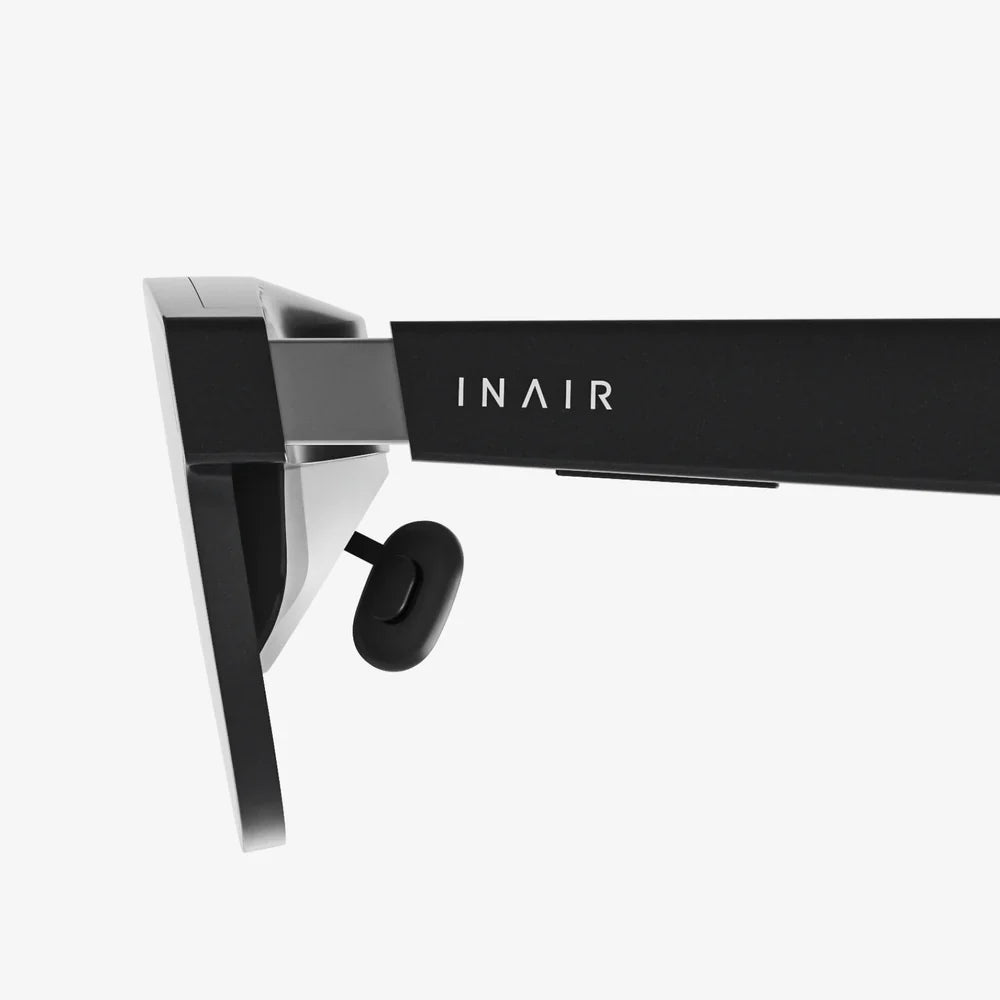
The ultimate goal for many in the industry is to move beyond handheld devices and even bulky headsets toward lightweight, socially acceptable smart glasses that look no different from standard eyewear. Advances in waveguide technology, micro-LED displays, and battery life are steadily pushing toward this future, where digital augmentation will be a continuous, seamless part of our perception.
The journey of augmented reality, from a suspended laboratory prototype to a technology in billions of pockets, is a testament to human ingenuity. It’s a tool that amplifies our capabilities, enhances our understanding, and adds a new dimension of wonder to our daily routines. The facts show a technology still in its adolescence, brimming with untapped potential and poised to redefine our relationship with the digital universe. We are no longer mere consumers of content on a screen; we are becoming active participants in a blended world where the only limit is the imagination of the creators building it. The next time you raise your phone, remember—you're not just holding a device; you're holding a window into the future, and it's a view that is becoming more incredible every single day.
Share:
AI Smartglasses: The Invisible Revolution Reshaping Our World
VR Headset Glasses: The Invisible Revolution Reshaping Our Digital Lives