Imagine a world where digital information doesn't just live on a screen but is seamlessly woven into the fabric of your reality, enhancing everything you see, do, and experience. This is no longer the realm of science fiction; it is the present and future being built by the powerful suite of augmented reality features and functions. This technology is poised to fundamentally alter our perception of the world, and understanding its core mechanics is the first step to unlocking its boundless potential.
The Foundational Pillars: How AR Perceives the World
At its heart, Augmented Reality (AR) is a sophisticated ballet of hardware and software working in concert to blend digital content with the physical environment. This process relies on a set of fundamental features that allow a device to understand and interact with the world around it.
Tracking and Registration: The Art of Precision Placement
Perhaps the most critical function of any AR system is its ability to track its position in space and accurately register digital objects within the user's environment. This is achieved through a combination of technologies:
-
Visual Inertial Odometry (VIO): This is the workhorse of modern AR. VIO fuses data from camera sensors (visual) with data from inertial measurement units (IMUs) like gyroscopes and accelerometers (inertial). The camera analyzes feature points in the environment, while the IMU tracks the device's movement and rotation. By combining these data streams, the device can precisely calculate its position and orientation in real-time without needing any external markers or pre-knowledge of the space.
-
Plane Detection: For digital objects to interact believably with the real world, they need to sit on surfaces. Plane detection functions allow the AR system to identify horizontal surfaces (like floors and tables) and vertical surfaces (like walls). This enables features like placing a virtual lamp on your real desk or having a digital poster adhere to your real wall.
-
Image and Object Recognition: This function allows AR to be context-aware. Using machine learning, the system can be trained to recognize specific images (a movie poster, a manual page) or even complex 3D objects (a car engine, a piece of machinery). Once recognized, the AR system can trigger associated digital content—for example, overlaying repair instructions onto the specific engine part you're looking at.
Environmental Understanding: Beyond Flat Surfaces
Advanced AR features go beyond simple planes to develop a rich, 3D understanding of the environment.
-
Meshing and Occlusion: This function involves creating a real-time 3D mesh of the surroundings—a digital twin of the environment. This mesh allows digital objects to be occluded (hidden) by real-world objects. If a virtual character walks behind your real sofa, it will disappear from view and then reappear, creating a far more convincing and immersive experience.
-
Light Estimation: For digital objects to look like they truly belong, they must match the lighting conditions of the real world. Light estimation functions analyze the ambient light in the environment, determining its intensity, direction, and color temperature. The AR system then uses this data to cast realistic shadows from virtual objects and shade them correctly, ensuring they don't appear as brightly lit cartoons in a dimly lit room.
The Bridge to Interaction: How We Communicate with AR
Perceiving the world is only half the battle. A robust AR system must also offer intuitive ways for users to interact with the digital content it overlays.
Input Modalities: Beyond the Touchscreen
While touchscreens remain a primary input method for smartphone-based AR, the evolution towards hands-free interaction is a key functional area.
-
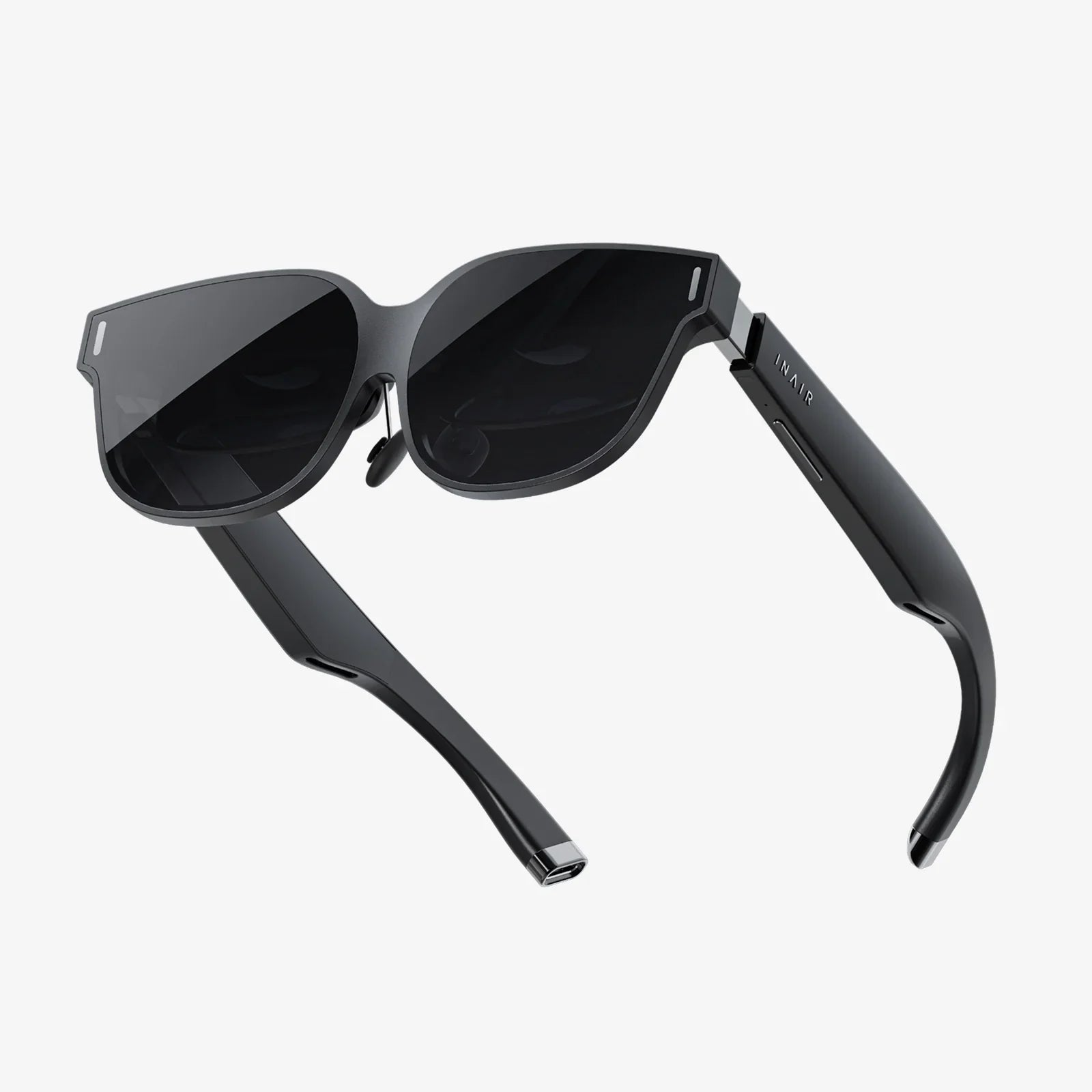
Gesture Recognition: Using cameras and depth sensors, AR systems can interpret hand and finger movements as commands. A pinch might select an object, while a swipe in the air could cycle through menus. This allows for more natural and immersive control, especially with head-mounted displays.
-
Voice Commands: Integrating natural language processing, users can interact with AR experiences through speech. Asking to "place a blue sofa here" or "show me the specifications for this part" creates a powerful and efficient hands-free workflow.
-
Gaze Tracking: Primarily used in AR glasses, this function determines where the user is looking on the display. This can be used for context-aware information display (showing details about the object you're gazing at) or as a control mechanism (dwelling on a button to select it).
Collaborative Experiences: Shared AR Realities
One of the most transformative functions of AR is its ability to create shared, multi-user experiences. This is often called persistent cloud AR or multi-user synchronization.
-
Shared Frames of Reference: Multiple users, each on their own device, can see and interact with the same digital objects anchored to a specific real-world location. This requires sophisticated networking and synchronization functions to ensure everyone sees the virtual object in the exact same place.
- Avatars and Annotation:
Users can often see representations of other participants (as avatars) and their interactions in real-time. This enables remote experts to annotate a mechanic's field of view with arrows and notes or allows friends to leave virtual messages and artwork in a physical space for others to discover later.
The Digital Layer: Rendering and Content Delivery
The magic of AR is made visible through its rendering engine—the software responsible for generating the digital content and compositing it onto the live camera feed or display.
3D Engine Integration
Most AR development platforms integrate powerful 3D rendering engines. These engines handle the real-time graphics processing required to create high-fidelity 3D models, animations, and visual effects that are responsive to user input and environmental changes.
Content Anchoring and Persistence
A crucial function for utility is the ability to anchor content to a specific point in space and have it persist across sessions. This means you could place a virtual navigation arrow on a street corner, and it would still be there when you return days later, or place virtual furniture in your room and have it remain in place even after you close the app. This relies on a technology often called cloud anchors, which saves the spatial data to the cloud for later retrieval.
Transforming Industries: The Applied Power of AR Functions
The theoretical features become profoundly practical when applied to real-world scenarios, revolutionizing entire sectors.
Industrial and Manufacturing
Here, the functions of object recognition, precise tracking, and hands-free interaction converge to create powerful tools.
-
Assembly Guidance: Digital instructions and arrows are overlaid directly onto physical assembly lines, reducing errors and training time.
-
Remote Assistance: A remote expert can see what a field technician sees and annotate their view with arrows, circles, and notes, guiding them through complex repairs.
-
Digital Twins: Complex machinery can have a live digital overlay showing performance metrics, internal parts, or maintenance history simply by pointing a device at it.
Retail and E-Commerce
AR's visualization functions are dismantling the barriers of online shopping.
-
Try-Before-You-Buy: Using plane detection and accurate scaling, customers can visualize products like furniture, décor, and eyewear in their own space or on their own person at true-to-life size.
-
Virtual Showrooms: Brands can create immersive AR experiences that allow users to explore products from every angle and in different configurations without needing a physical store.
Healthcare and Medicine
AR's precision offers life-changing applications in medicine.
-
Surgical Visualization: Surgeons can use AR headsets to overlay critical information like CT scans, ultrasound data, or patient vitals directly onto their field of view during procedures, without looking away at a screen.
-
Medical Training: Students can interact with detailed, 3D holographic models of human anatomy, peeling back layers to study musculature, organs, and skeletal structure in ways never before possible.
-
Vein Visualization: Specialized AR systems use projection functions to map a patient's vein network onto their skin, making it significantly easier to locate veins for injections.
The Future Horizon: Evolving Capabilities
The trajectory of AR features and functions points towards even greater integration and intelligence.
-
Semantic Understanding: Future systems will move beyond recognizing objects to understanding their purpose and context. An AR system wouldn't just see a chair; it would know it's a chair for sitting, its material, and its design era.
-
AI-Powered Contextual Awareness: Artificial intelligence will analyze the environment and the user's behavior to proactively offer relevant information. Looking at a monument could automatically bring up its history; glancing at a restaurant menu could show dietary information and reviews.
-
Haptic Feedback Integration: The addition of wearable haptic devices will allow users to not just see but also feel virtual objects, adding a crucial tactile dimension to AR interactions.
The seamless integration of digital information into our physical reality is rapidly moving from a novelty to a utility, and soon, to an inevitability. The sophisticated suite of augmented reality features and functions—from the precise tracking that anchors a digital twin to a machine, to the environmental understanding that lets a virtual character sit on your real couch—is building a new layer of human experience. This is not about escaping reality, but about augmenting it, making us more informed, efficient, and connected to the world and to each other in ways we are only just beginning to imagine.


Share:
What is AR Augmented Reality Definition: Bridging Our Digital and Physical Worlds
Best Uses of Augmented Reality: Transforming Industries and Redefining Human Experience