


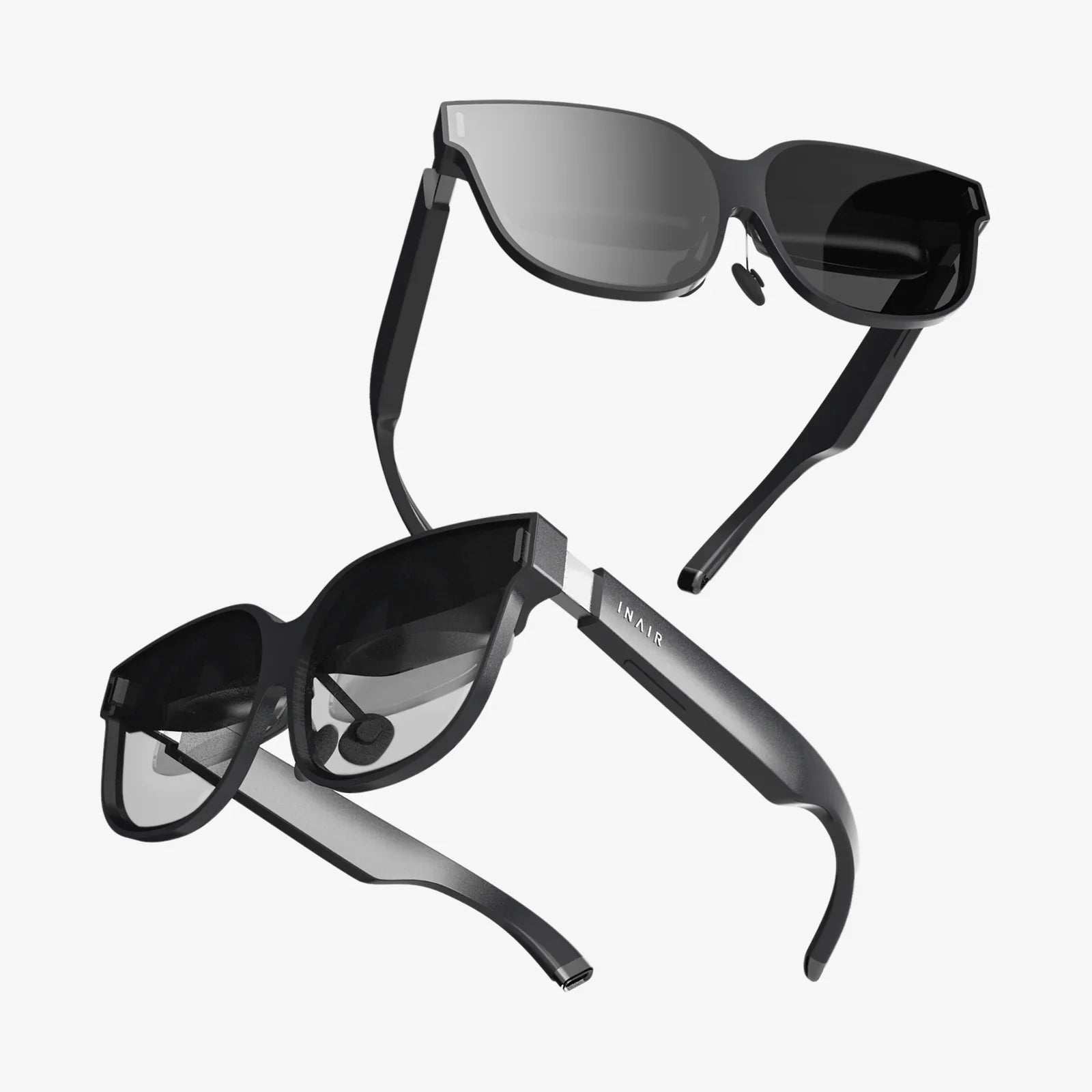
Imagine controlling a 100-inch high-definition display with a wave of your hand, pulling up spreadsheets that float in your living room, or watching a blockbuster movie projected onto your blank wall without a physical screen. This isn't science fiction—it's the cutting-edge reality being unlocked by advancements in augmented reality technology specifically engineered to create massive, virtual cinematic and interactive experiences. The convergence of sophisticated optics, spatial computing, and intuitive interfaces is pushing the boundaries of how we perceive and interact with digital information, transforming any environment into a personalized command center or entertainment hub. The promise of a truly seamless, large-scale digital overlay on our physical world is no longer a distant dream but an imminent revolution.
The Architectural Shift From Screens to Spaces
For decades, the paradigm of visual computing has been tethered to the screen. From the bulky cathode-ray tubes to the sleekest OLED panels, our portal to the digital realm has been a physical object with fixed dimensions and limitations. The concept of a 100-inch television is impressive yet undeniably cumbersome, often dominating a room's architecture and requiring significant financial and spatial investment. Augmented reality shatters this paradigm entirely. It represents a fundamental architectural shift from screen-based viewing to spatial computing, where the environment itself becomes the canvas.
The core magic lies in the ability to superimpose digital imagery onto the user's view of the real world. Unlike Virtual Reality (VR), which replaces reality with a simulated one, AR enhances it. Specialized optical systems, often embedded within stylish wearable glasses, project light directly into the user's eyes. By carefully manipulating this light, the system creates a perceptually convincing image that appears to reside at a specific distance in the real world—in this case, simulating a massive 100-inch screen positioned several feet away. This process, known as spatial registration, ensures the virtual display remains locked in place, allowing the user to move around and interact with it as if it were a tangible object.
Deconstructing the Technology Behind the Illusion
Creating a stable, bright, and high-resolution 100-inch virtual screen is a monumental feat of engineering. It requires the seamless integration of several sophisticated components.
Advanced Optical Waveguides
At the heart of any AR glasses capable of this feat are optical waveguides. These are transparent glass or plastic substrates etched with microscopic patterns that guide light from a micro-display on the temple of the glasses into the user's eye. Think of them as incredibly complex and tiny fiber optic cables that pipe the image from its source to your retina. The precision of these waveguides determines the clarity, field of view, and overall brightness of the virtual image. New manufacturing techniques are allowing for larger, more efficient waveguides, which are essential for creating the wide field of view needed to comfortably experience such a large virtual display.
High-Luminance Micro-Displays
To be visible overlayed on a sunlit room, the virtual image must be exceptionally bright. This is achieved using micro-displays based on technologies like MicroLED. These displays are incredibly small—often the size of a fingernail—but capable of emitting extremely high levels of luminance. This ensures that the virtual 100-inch screen remains vivid and clear, even in challenging lighting conditions, preventing it from appearing washed out or ghost-like.
Spatial Mapping and Persistence
For the virtual screen to feel real, it must stay put. This is accomplished through a combination of onboard cameras, sensors, and powerful algorithms. Cameras continuously scan the environment, identifying unique features, planes, and objects. Simultaneously, an Inertial Measurement Unit (IMU) tracks the precise movements and rotations of the user's head. By fusing this data in real-time, the AR system can anchor the virtual screen to a specific point in the physical world. If you place a screen on your wall and then walk around the room, the system understands its relationship to that wall, keeping the screen perfectly positioned and persistent. This complex dance of sensing and computation happens in milliseconds, creating a rock-solid illusion.
Transforming Industries and Experiences
The applications for a portable, personal 100-inch virtual display are as vast as the human imagination, poised to disrupt numerous sectors.
The Ultimate Home Entertainment Hub
The entertainment experience is fundamentally transformed. A user can sit on their couch and instantly conjure a massive cinema-style screen to stream movies, play games, or watch sporting events. This screen exists only for them, leaving the room's décor untouched and allowing others in the room to converse or watch something else entirely. For gamers, this offers an unparalleled level of immersion, placing them directly inside the game world with a panoramic view that dwarfs even the largest physical monitors. Multiplayer experiences could involve shared virtual objects and screens visible to all participants wearing AR glasses.
Revolutionizing Remote Work and Collaboration
The modern professional workspace will be radically redefined. The concept of a multi-monitor setup is liberated from the desk. A knowledge worker can surround themselves with floating windows—a video call with colleagues on one virtual screen, a complex 3D model on another, and reference documents on a third—all arranged spatially around them. During a remote collaborative session, teams can interact with the same virtual 3D model or data visualization, manipulating it with gestures as if it were a physical object between them. This creates a sense of shared presence and understanding that flat video calls cannot replicate, effectively building a virtual office in any physical location.
A New Paradigm for Education and Training
Education moves from passive observation to active, interactive exploration. Instead of watching a documentary about ancient Rome, students could walk around a life-sized, digitally reconstructed Colosseum projected into their classroom. Medical students could practice complex surgical procedures on detailed, virtual holograms of human anatomy, gaining valuable hands-on experience without risk. This kinesthetic learning approach, facilitated by a large, immersive virtual display, dramatically improves information retention and comprehension.
Enhancing Design and Creative Fields
For architects, engineers, and designers, this technology is a game-changer. An architect can project a full-scale, 3D model of a new building's interior directly onto the empty construction site, allowing them to walk through the space and make adjustments before a single brick is laid. Automotive designers can examine a full-size virtual prototype of a new car, assessing its lines and proportions from every angle in real-world lighting. This ability to visualize creations at their intended scale within a real context dramatically accelerates the design iteration process and reduces costly physical prototyping.
Navigating the Path to Mainstream Adoption
Despite the staggering potential, several significant challenges must be overcome for this technology to reach widespread consumer adoption.
The foremost hurdle remains the form factor and social acceptance of the hardware. Current generations of high-powered AR glasses are still too bulky, too expensive, and suffer from limited battery life for all-day use. The holy grail is a pair of glasses that are indistinguishable from fashionable eyewear, a goal that requires further miniaturization of components and breakthroughs in battery technology. Furthermore, social norms around wearing computers on our faces in public and private settings are still evolving.
Creating intuitive and powerful user interfaces is another critical frontier. Interacting with a large, virtual screen requires moving beyond the mouse and keyboard. Voice commands, hand tracking, and gesture recognition need to become flawless, responsive, and fatigue-free. The user experience must feel like magic, not a complex choreography of awkward motions.
Finally, a robust ecosystem of applications and content must be developed. The hardware is merely a portal; it is the software and experiences that will ultimately drive its value. Developers need powerful and accessible tools to create immersive AR applications that leverage the unique capabilities of a large virtual canvas.
The Invisible Infrastructure of an Augmented World
The seamless function of these complex systems relies on immense computational power. While some processing can be done on the device itself, many tasks, especially those involving complex graphics and real-time environmental understanding, will be offloaded to more powerful external computers or the cloud. The rollout of high-speed, low-latency 5G and future 6G networks is crucial here, acting as the invisible umbilical cord that ensures a smooth, high-fidelity experience without lag or stuttering. This distributed computing model allows the wearable device to remain lightweight and efficient while tapping into virtually unlimited processing resources.
The journey toward a world where 100-inch virtual displays are a commonplace tool is well underway. We are moving beyond the novelty of simple AR filters and toward a future where digital information is seamlessly and usefully integrated into our physical reality on a grand scale. The screen, as we know it, is fading away, destined to become a relic of a previous technological age. In its place, our entire world is poised to become an interactive, dynamic, and infinitely customizable display, limited only by the boundaries of our own creativity. The blank wall in front of you is no longer empty; it is a universe of potential, waiting for the right technology to bring it to life.
We stand at the precipice of a new sensory paradigm, one where the line between our digital and physical lives will blur into irrelevance. The ability to summon a pristine, larger-than-life virtual display with a simple voice command or gesture will redefine personal computing, making it more intimate, more contextual, and profoundly more powerful. This isn't just about watching a bigger movie; it's about expanding the very canvas of human thought and collaboration. The empty air around you is the next great frontier for innovation, and it's already beginning to glow with the light of a future waiting to be seen.
Share:
Augmented Reality Company Names: The Art and Science Behind Naming the Future
Augmented Reality Company Names: The Art and Science Behind Naming the Future