


- by wangfred
Augmented Reality for Everyone: The Invisible Revolution Reshaping Our World
- by wangfred
Imagine a world where digital information doesn’t confine you to a screen but instead, bleeds seamlessly into your physical reality, enhancing everything you see, do, and experience. This isn’t the distant dream of a science fiction novel; it’s the emerging present, powered by a technological revolution that is quietly becoming available to all. The era of exclusive, clunky, and prohibitively expensive augmented reality is over. We are standing at the precipice of a new age where augmented reality is for everyone, and its implications are nothing short of transformative. This is the story of how AR shed its niche status to become a ubiquitous tool, poised to redefine the very fabric of our daily lives.
Before we delve into its democratization, it's crucial to understand what we're talking about. Augmented reality (AR) is a technology that superimposes a computer-generated overlay—be it images, video, text, or 3D models—onto a user's view of the real world. Unlike virtual reality (VR), which creates a completely artificial environment, AR enhances the real world by adding a digital layer to it. Think of it not as an escape from reality, but as an upgrade to it.
The magic happens through a combination of hardware and sophisticated software. Cameras and sensors scan the environment, while processors and algorithms understand the geometry of the space, track surfaces, and anchor digital objects so they appear stable and interact realistically with the physical world. This digital layer can be viewed through various devices, which is key to its journey toward universal accessibility.
The journey of augmented reality from a specialized military and industrial tool to a mainstream phenomenon is a classic tale of technological democratization. For years, AR was the domain of large corporations and research institutions, requiring specialized headsets that cost thousands of dollars and powerful, stationary computers to run. It was impressive, but it was not for everyone.
The single most significant catalyst for change was the smartphone. Suddenly, nearly everyone had a powerful computer in their pocket, equipped with high-resolution cameras, motion sensors, gyroscopes, and GPS—all the essential ingredients for basic AR. This eliminated the number one barrier to entry: cost. Developers began creating AR experiences that could run on these ubiquitous devices, using their screens as a window into an augmented world. A user could simply point their phone at a street and see navigation arrows superimposed on the live camera feed, or point it at a product and see reviews pop up. The hardware hurdle had been dramatically lowered.
The democratization of AR is powered by a spectrum of hardware, ensuring there's an entry point for every level of interest and budget.
The mobile phone remains the most accessible AR platform on the planet. Its ubiquity means developers can reach billions of users instantly. Mobile AR applications have exploded, covering domains from gaming and social media filters to practical utilities like measuring tapes and furniture placement apps. While the experience is limited to the screen (often called "magic window" AR), it successfully introduced the core concept to the masses, proving there was a appetite for blended reality.
With larger screens and more processing power, tablets and newer laptops with advanced cameras offer a more immersive and stable AR experience. They are particularly effective for educational content, detailed design previews, and interactive storytelling, providing a richer canvas for digital overlays without requiring a user to invest in new, dedicated hardware.
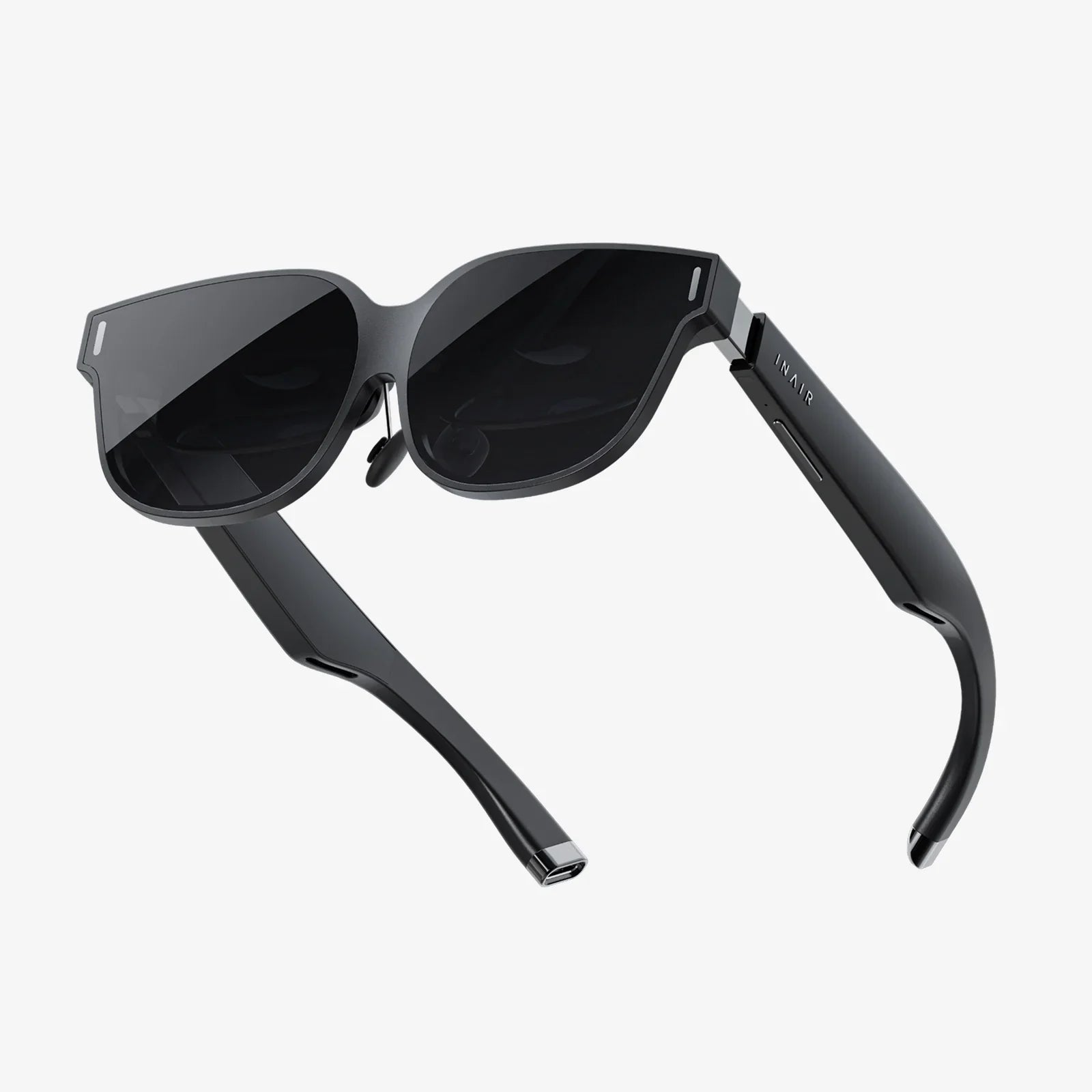
This is where the true vision of hands-free, always-available AR begins. Early smart glasses were often expensive and limited in functionality. However, the market is rapidly evolving. We are now seeing a new wave of more affordable, lightweight, and capable standalone glasses. These devices project information directly into the user's field of view, freeing them from the tyranny of the handheld screen. While high-end models with full field-of-view displays remain premium, a growing range of consumer-focused glasses is bringing this form factor to a wider audience, signaling the next phase of true, seamless augmentation.
Powerful hardware is useless without the software to drive it. The development of accessible software platforms and tools has been just as critical to the "for everyone" mission.
Major technology companies have released robust software development kits (SDKs) and platforms that make it easier than ever for developers to create AR experiences. These platforms handle the complex tasks of environmental understanding, surface detection, and object occlusion, allowing developers to focus on creativity and application logic rather than the underlying math. Furthermore, the rise of web-based AR means users don't even need to download an app; they can simply click a link in a web browser to launch an experience, removing yet another barrier to access.
The true measure of a technology's democratization is its impact across diverse fields. AR is no longer a novelty; it's a practical tool solving real-world problems.
In education, AR is a powerful equalizer. A student studying anatomy can explore a beating heart model from every angle, hovering in their classroom. A history class can witness a historical event unfold on their desk. Complex abstract concepts in physics or chemistry become interactive and intuitive. This interactive, visual learning style caters to different types of learners and makes education more engaging and effective for everyone, regardless of their learning background.
In healthcare, AR is improving outcomes and accessibility. Surgeons can use AR overlays to visualize a patient's anatomy during procedures, superimposing MRI data directly onto the surgical site. Medical students can practice procedures on virtual patients. For the general public, AR apps can explain complex medical conditions in an easy-to-understand visual format, empowering patients to better understand their own health.
The retail sector has been revolutionized. Customers can now use their phones to see how a new sofa would look in their living room, how a pair of glasses fits their face, or how a shade of paint changes a room's ambiance. This "try before you buy" capability reduces purchase anxiety and product returns, making shopping more convenient and accessible for people everywhere, bridging the gap between online and physical retail.
AR is turning the world itself into an interactive map. Instead of glancing down at a phone screen, users can follow arrows and directions overlaid on the street in front of them through their camera. This is invaluable in complex environments like airports, university campuses, or large shopping malls. It also makes navigation more intuitive and safer, as users can keep their heads up and remain aware of their surroundings.
Museums and historical sites are using AR to create immersive experiences. Pointing a device at an artifact might show how it was used in antiquity. A ruins site can be restored to its former glory before your eyes. This adds a dynamic, engaging layer to cultural education, making it accessible and fascinating for people of all ages and backgrounds.
Despite incredible progress, the mission of "augmented reality for everyone" still faces hurdles. Privacy concerns are paramount, as AR devices with always-on cameras collect vast amounts of environmental data. Creating a seamless and intuitive user interface that doesn't overwhelm users with information—a problem often called "information overload" or "AR spam"—is a significant design challenge. Furthermore, achieving a truly comfortable, socially acceptable, and stylish form factor for all-day-wear glasses remains the final frontier for hardware designers. Battery life and connectivity also need continuous improvement to support persistent AR experiences.
Looking ahead, the trajectory is clear. AR will become increasingly contextual and personalized, with artificial intelligence anticipating our needs and serving up relevant information before we even ask for it. The line between the digital and physical will continue to blur, giving rise to a new kind of spatial computing where our environment is the interface. The ultimate goal is a pair of lightweight glasses that look no different from standard eyewear but can instantly augment our reality with useful, beautiful, and meaningful information, available to anyone who wants it.
The promise of augmented reality for everyone is not just about putting a device in every hand or a pair of glasses on every face. It’s about empowering individuals with instant access to knowledge and context, leveling the playing field in education and training, fostering deeper understanding through visualization, and creating new, shared experiences that enhance our connection to the world and each other. This invisible revolution is already underway, quietly integrating into the apps we use and the workflows we depend on. The question is no longer if AR will become a universal tool, but how quickly we will adapt to a world where our reality is endlessly enhanced, personalized, and empowered, ready for anyone to explore.
Share:
AR and VR Refer to Respectively: A Deep Dive into the Realities of Our Digital Future
AI-Powered Future Glasses Are Redefining Reality and Human Potential