


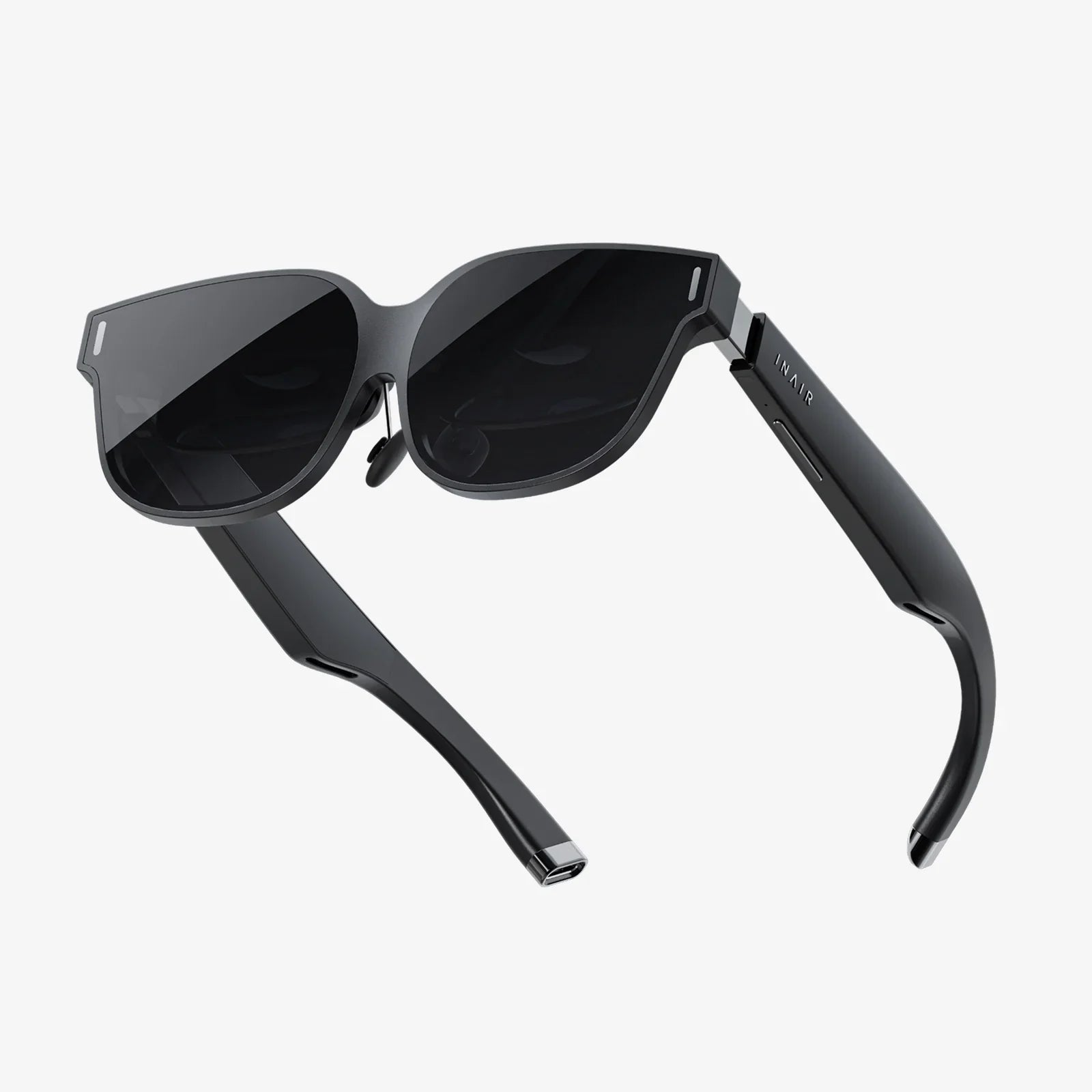
- by wangfred
Augmented Reality Glasses Are They HMD: The Ultimate Guide to the Future on Your Face
- by wangfred
Imagine a world where information floats before your eyes, where digital guides lead you through complex tasks, and where the line between the physical and digital realms isn't just blurred—it's erased. This isn't a distant sci-fi fantasy; it's the promise held within a sleek pair of augmented reality glasses. But what exactly are these devices? Are they simply a new iteration of the virtual reality headsets we've come to know, or do they represent something fundamentally different, a new paradigm for human-computer interaction? The journey to understand this emerging technology starts with a single, pivotal question: Augmented reality glasses, are they just Head-Mounted Displays, or are they something more?
To truly grasp the nature of augmented reality glasses, we must first define the term HMD. A Head-Mounted Display is, in its most fundamental form, any device worn on the head that incorporates one or more display elements. Its primary function is to present visual information directly to the user's eyes, effectively creating a personal, immersive screen that moves with them. This broad category encompasses a wide spectrum of technology, from the early monocular displays used in military applications to the fully immersive, binocular visors that dominate the virtual reality market today. The key characteristic of a generic HMD is its focus on displaying a generated image, often to the exclusion of the user's natural environment.
This is where the critical differentiation begins. While all augmented reality glasses are a type of HMD, not all HMDs are capable of augmented reality. The defining feature of AR glasses is their fundamental purpose: to augment the user's reality, not replace it. They are designed as a transparent window onto the world, overlaid with contextual digital information. This requires a sophisticated blend of hardware that goes far beyond a simple display. The core components that elevate AR glasses from a standard HMD include:
The goal of AR glasses is to make interaction with the digital layer feel as intuitive as turning a page or pressing a button. This has spurred innovation in input methods that move beyond traditional controllers. Voice commands allow users to summon information or control interfaces hands-free. Hand tracking, powered by outward-facing cameras, enables users to reach out and manipulate virtual objects with their fingers, pinching, dragging, and tapping as they would in the real world. Perhaps the most futuristic of all is gaze tracking, where the system understands precisely where you are looking, allowing for subtle menu selections or depth-of-field effects that mimic human vision. This shift towards more natural, embodied interaction is a key differentiator from the often controller-dependent world of immersive VR HMDs.
It's a common misconception that "augmented reality" is a single, monolithic experience. In reality, the market is developing along a spectrum, often categorized by the level of immersion and digital interaction they provide.
This spectrum demonstrates that the question "are they HMD?" has a nuanced answer. An assisted reality device is much closer to a simple head-mounted display, while a full AR/MR device is a powerful spatial computer.
The true test of any technology is its utility beyond entertainment. While gaming and immersive media are compelling drivers, the potential of AR glasses extends into nearly every professional and personal field.
For all their promise, AR glasses face significant challenges that have prevented them from becoming a mainstream consumer product. These hurdles are primarily rooted in the laws of physics and human physiology.
Despite these challenges, the trajectory is clear. Advancements in micro-LED displays, photonic chips, and battery technology are steadily shrinking components. AI is becoming better at understanding and interpreting the world in real-time, making interactions smoother and more intuitive. The development is a relentless march toward the goal: indistinguishable-from-real sunglasses that provide a magical window of context and connection onto our world.
We are moving toward a future where asking if AR glasses are an HMD will seem as quaint as asking if a smartphone is a telephone. The display is merely the conduit. The true innovation is the creation of a spatial canvas, a new layer of reality that sits between our eyes and the world, enhancing our perception, amplifying our abilities, and fundamentally changing how we work, learn, play, and connect. The device on your face will fade into the background, and the endless possibilities it unlocks will become the foreground of human experience.
The next time you put on a pair of sunglasses, take a moment to look at the world through them. Now, imagine that world alive with data, alive with connection, alive with possibility. That future is being built today, not as a replacement for reality, but as its ultimate enhancement. The age of staring down at a screen is ending; the age of looking up and out into an augmented world is dawning.
Share:
Mix Augmented Reality Glasses: Blending Your World with the Digital Frontier
Commercial Augmented Reality Glasses Are Reshaping the Modern Enterprise