


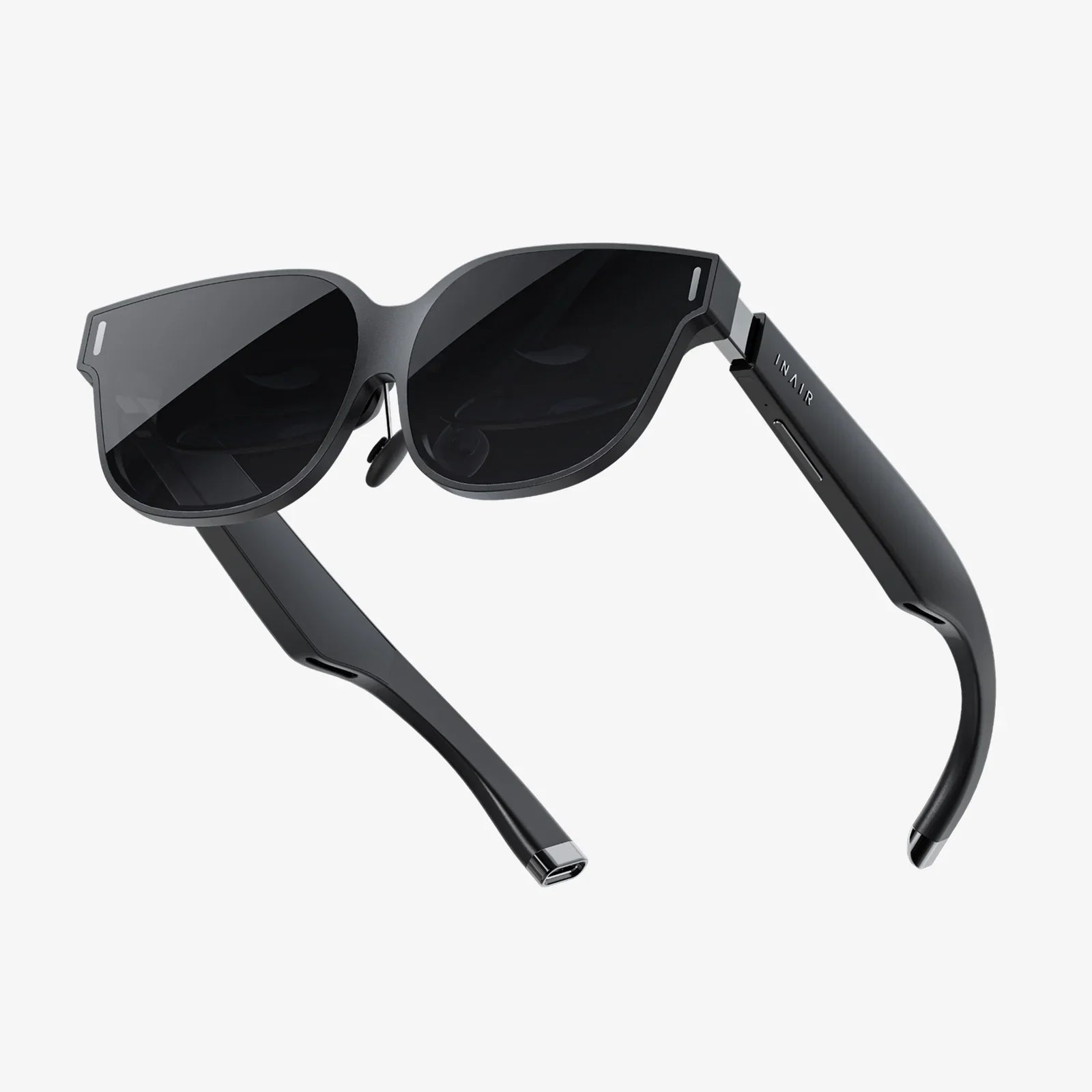
Imagine a world where digital information doesn't just live on a screen but is seamlessly woven into the fabric of your reality, accessible with a simple glance. This is the promise of augmented reality glasses, a technological marvel that feels like magic but is powered by an incredibly sophisticated and intricate symphony of hardware. The journey from a clunky prototype to a sleek, wearable device is a story of miniaturization, optical innovation, and computational power, all working in perfect harmony to overlay the virtual upon the real. To truly appreciate this feat of engineering, one must peer beneath the surface and understand the core augmented reality glasses components that make the impossible possible.
The Window to a New Reality: Optical Systems and Displays
At the very heart of the augmented reality experience is the optical system. This complex assembly is responsible for generating digital images and projecting them onto the user's retina, all while allowing them to see the real world clearly. It is the single most critical and challenging component to engineer, defining the quality, comfort, and immersion of the experience.
Waveguide Displays: Bending Light to Our Will
Many modern AR glasses utilize waveguide technology, a method of piping light from a micro-display to the eye. Think of it as a futuristic fiber optic cable etched with microscopic patterns. These patterns, created through processes like diffraction or reflection, act as a series of mirrors and lenses within a thin, transparent piece of glass or plastic. Light from the projector enters the waveguide, bounces along its length through total internal reflection, and is then gradually "coupled out" directly into the eye. This allows for a remarkably slim form factor, as the bulky projection components can be mounted on the temple, away from the direct line of sight.
Microdisplays: The Tiny Powerhouses
Feeding the waveguide is the microdisplay, the minuscule engine that generates the initial image. Several technologies compete in this space. Liquid Crystal on Silicon (LCoS) displays use a liquid crystal layer applied to a reflective silicon substrate to manipulate light with high resolution. Micro-LED displays, an emerging and highly promising technology, use arrays of microscopic light-emitting diodes that are incredibly bright, efficient, and offer superior contrast. Another common technology is Digital Light Processing (DLP), which uses a microscopic array of mirrors on a semiconductor chip to reflect light and create the image. The choice of microdisplay technology directly impacts key factors like brightness (essential for outdoor use), power consumption, and image fidelity.
Combiner Lenses: Merging Two Worlds
In some designs, combiner lenses are used instead of, or in conjunction with, waveguides. These are semi-transparent surfaces that reflect the projected image toward the eye while simultaneously allowing light from the real world to pass through. The "combining" effect literally merges the two light sources into a single, coherent view for the user. These can be made from various materials and coatings to optimize for transparency, reflectivity, and durability.
The Digital Brain: Processing Units and Sensors
For AR glasses to be more than just a simple heads-up display, they require a constant and sophisticated understanding of their environment and the user's place within it. This intelligence is provided by a suite of sensors and the processing units that interpret their data.
The System-on-a-Chip (SoC): The Central Nervous System
At the core of the device's computational power is a miniaturized System-on-a-Chip. This integrated circuit is a complete computer system packed onto a single chip, containing a Central Processing Unit (CPU) for general tasks, a Graphics Processing Unit (GPU) for rendering complex visuals, a Digital Signal Processor (DSP) for handling data from sensors, and a Neural Processing Unit (NPU) for accelerating machine learning and AI tasks. The NPU is particularly crucial for modern AR, enabling real-time object recognition, spatial mapping, and gesture tracking without draining the battery or creating latency. The relentless drive for more powerful yet energy-efficient SoCs is what enables untethered, all-day AR experiences.
Mapping the World: Cameras and Depth Sensors
To understand the world, AR glasses are equipped with an array of cameras. These are not for taking photos in the traditional sense, but for computer vision. Monocular RGB cameras capture the color and texture of the environment. Stereo cameras, much like human eyes, provide depth perception by comparing the slight differences between two images. Time-of-Flight (ToF) sensors actively measure distance by projecting an invisible infrared light pattern and calculating the time it takes for the light to bounce back, creating a precise depth map of the surroundings. This combination of sensors allows the device to construct a detailed 3D model of the room, understanding the position of walls, floors, tables, and other objects.
Knowing Your Place: Inertial Measurement Units (IMU)
An IMU is a workhorse sensor that tracks the precise movement and orientation of the glasses themselves. It typically combines a accelerometer (measuring linear acceleration), a gyroscope (measuring rotational velocity), and a magnetometer (acting as a digital compass). By fusing this data, the IMU provides incredibly responsive head-tracking, ensuring that digital objects remain locked in place in the real world as the user moves their head. Without a high-fidelity IMU, virtual content would drift and jitter, completely breaking the illusion of immersion.
Interacting with the Interface: Input Systems
A seamless AR experience requires intuitive ways for the user to interact with digital content without a mouse or keyboard. Input systems for AR glasses are diverse and often used in combination.
Voice Command: The Hands-Free Standard
Integrated microphones and sophisticated speech recognition software allow users to issue commands, search for information, or dictate notes using just their voice. This is one of the most natural and hands-free methods of interaction, making it ideal for situations where a user's hands are occupied or for quick, simple tasks.
Touchpads and Buttons: Tactile Control
Many glasses feature a small touchpad on the temple or frame, allowing for swipe gestures and taps to navigate menus. Physical buttons can also provide haptic feedback and reliable controls for common functions like volume, brightness, or activating the digital assistant. This offers a familiar and precise method of input.
Gesture Recognition: The Future at Your Fingertips
Forward-facing cameras can be trained to track the user's hand movements, interpreting specific gestures as commands. A pinching motion to select an object, a swipe in the air to change a menu, or a thumbs-up to confirm an action—this technology aims to make interaction as fluid and natural as possible, turning the space in front of the user into a limitless, invisible interface.
Sustaining the Experience: Power and Connectivity
All this advanced technology demands significant electrical power, making energy storage and management a primary design constraint.
Battery Technology: The Quest for Endurance
AR glasses typically use high-density lithium-polymer or lithium-ion batteries. Their placement is a key design challenge; they are often integrated into the thicker temple arms to balance weight or, in some designs, housed in a separate small puck that can be clipped to a pocket, allowing for a larger battery and a lighter frame. The industry is constantly pursuing new battery chemistries and more efficient components to extend usage time.
Wireless Connectivity: A Link to the Cloud
Integrated Wi-Fi and Bluetooth modules are essential. Bluetooth connects the glasses to a smartphone or dedicated controller for offloading processing or input. Wi-Fi provides a high-bandwidth connection to stream rich content and access cloud-based AI processing, which can supplement the onboard SoC to handle more complex tasks while conserving battery life. The emergence of high-speed, low-latency 5G networks promises to further unlock the potential of cloud-rendered AR experiences.
The Unseen Framework: Structural and Audio Components
Beyond the high-tech core, other vital components ensure the device is comfortable, usable, and durable.
Frames and Materials: The Foundation of Wearability
The frame must be a masterpiece of industrial design, balancing rigidity to protect delicate internal components with flexibility for comfort. Materials range from lightweight polymers and composites to premium metals like titanium. They must accommodate a wide range of head sizes and shapes, often with adjustable nose pads and temple tips, and potentially support prescription lens inserts.
Bone Conduction Audio: Private Soundscapes
Traditional speakers are impractical for AR glasses, as they would broadcast sound to everyone nearby. Instead, many devices use bone conduction audio transducers. These components vibrate against the user's skull, transmitting sound directly to the inner ear without blocking the ear canal. This allows the user to hear digital audio like notifications, music, or navigation prompts while remaining fully aware of ambient sounds in their environment—a critical safety feature.
Thermal Management: Keeping Your Cool
The intense computational workload generates heat. Effective thermal management is crucial for user comfort and component longevity. This is often achieved through passive heat dissipation using strategically placed heat sinks within the frame that draw heat away from the SoC and distribute it over a larger surface area, sometimes using the temples themselves as radiators.
The magic of seeing a digital dinosaur roam your living room or having turn-by-turn directions painted onto the street in front of you is not sorcery—it's science. It is the culmination of decades of advancement in optics, semiconductor manufacturing, sensor fusion, and artificial intelligence, all compressed into a device that rests on your nose. Each component, from the nano-etched waveguide to the power-sipping NPU, represents a hard-fought engineering victory in the quest to blend our physical and digital existences. As these components continue to evolve, becoming smaller, more powerful, and more efficient, the line between the world we see and the world we create will fade into nothing, forever changing how we work, learn, play, and connect.
Share:
Augmented Reality Glasses Benefits: A New Lens on the World
AI Trends in Digital Content: The Future of Creation, Distribution, and Consumption