


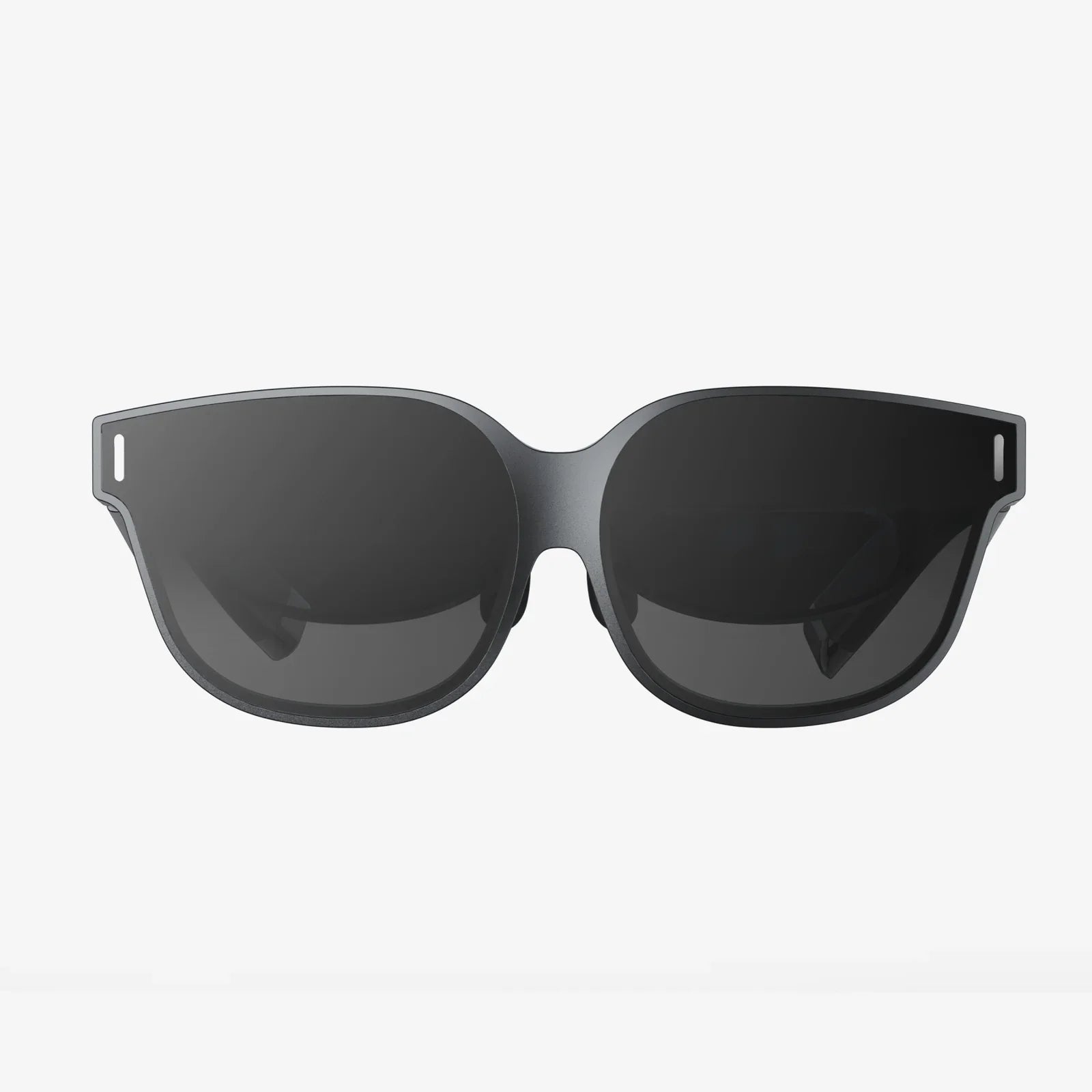
Imagine a world where the digital and the physical don’t compete for your attention on a clunky screen but are seamlessly, elegantly woven together right before your eyes, invisible to everyone else. This isn’t a scene from a science fiction novel; it’s the imminent future being built in labs and design studios today, centered on a single, transformative device: discreet augmented reality glasses. The race is no longer to create the most powerful headset, but the most imperceptible one—a device that grants you superpowers while looking like an ordinary, even stylish, pair of spectacles. This is the quiet revolution poised to change how we work, connect, and perceive reality itself, and it’s all happening right under our noses, or more accurately, right on them.
The Pursuit of Invisibility: Beyond the Geek Chic Aesthetic
The first generation of augmented reality wearables was defined by a trade-off: immense potential shackled to a bulky, obtrusive, and socially awkward form factor. They were technological marvels that screamed "prototype" to anyone in a hundred-yard radius. This inherent visibility created a significant barrier to mass adoption. Who wants to wear a computer on their face during a business meeting, a dinner date, or a walk in the park? The answer, for most, was a resounding no.
Discreet AR glasses represent a fundamental paradigm shift. The core design principle is no longer just raw computational power, but social acceptance. The goal is to create a device that you forget you're wearing and that others barely notice. This involves a multi-faceted approach attacking the problem from every angle: size, weight, aesthetics, and social signaling. The ultimate ambition is to achieve what industry insiders call "the final form factor"—a pair of glasses that are indistinguishable from standard eyewear yet capable of overlaying rich, interactive digital information onto the real world.
Engineering the Impossible: The Tech Behind the Transparency
Creating a full-color, bright, high-resolution display that can be projected onto clear lenses without blocking your natural vision is one of the most formidable engineering challenges of the decade. Discretion is not just about the external shell; it's about the internal magic.
Waveguide Optics: The Heart of the Disruption
At the core of most discreet AR glasses designs are waveguide optics. This technology is the master key to invisibility. Imagine a thin, transparent piece of glass or plastic embedded within the lens. A micro-projector, typically hidden in the temple of the glasses, shoots a beam of light containing the digital image into the edge of this waveguide.
This light then travels through the waveguide, bouncing off its internal surfaces through a process called total internal reflection—the same phenomenon that makes fiber optics work. Along its journey, a series of meticulously designed optical elements (like diffraction gratings or holographic optical elements) gradually "couple" this light out of the waveguide and directly into the user’s eye. The result? The user sees a crisp, stable digital image superimposed on the real world, while an observer sees nothing but a clear lens. It’s a brilliant magic trick with light, and it’s what makes true discretion possible.
The Power Dilemma: Processing and Battery Life
Projecting complex AR experiences requires serious processing power, which traditionally generates heat and consumes battery life—two enemies of a small, lightweight device. The solution is a concept known as tethered processing. The glasses themselves contain the minimal necessary components: sensors, displays, and basic computing. The heavy lifting—the intense number-crunching for graphics, computer vision, and AI—is handled by a separate device, most commonly a smartphone in your pocket or a small, dedicated processor pod on your waist.
This elegant division of labor allows the glasses to remain slim, cool, and comfortable while still accessing immense computational resources. Battery life, a constant headache for wearable tech, is also addressed here. By offloading power-hungry tasks, the glasses' own small battery can last for hours, focused solely on running the displays and sensors, while the larger battery in the tethered device handles the rest.
The Design Philosophy: Blending In, Not Standing Out
Technology alone is not enough. For AR glasses to become a true part of our daily wardrobe, they must adhere to the centuries-old culture and fashion of eyewear. This means embracing a human-centered design philosophy that prioritizes form as much as function.
- Materials: The use of lightweight alloys, titanium, and advanced polymers is crucial. Weight must be distributed evenly across the nose and ears to avoid pressure points and the tell-tale "headset headache."
- Form Factor: Designs are converging on classic eyeglass shapes: round, rectangular, and wayfarer styles. The aim is to offer a range of options that cater to different personal styles, from professional to casual. Customization through interchangeable arms and front frames will be key.
- The Camera Conundrum: Perhaps the biggest design challenge is the camera. For AR to understand the world, it must see it, which requires cameras. But a visible camera lens is a major privacy concern for others and a social faux pas. Solutions include extremely small, discreet camera pinholes that are virtually unnoticeable and clear indicators—like an LED light—that activate when the camera is in use, ensuring transparency and building trust.
A World Enhanced: The Practical Applications of Discreet AR
Why does discretion matter? Because it unlocks a universe of applications that are impossible with obtrusive gear. When the technology fades into the background, the human experience moves to the foreground.
Revolutionizing Professional Fields
In specialized professions, discreet AR glasses will be nothing short of revolutionary. A surgeon could see vital signs and 3D anatomical guides hovering over a patient without ever looking away from the operating field. An engineer could view schematics and instruction manuals hands-free while repairing complex machinery. A logistics worker could see picking instructions and inventory data directly in their line of sight, dramatically improving efficiency and accuracy. The glasses become a silent, knowledgeable assistant, providing information exactly when and where it's needed.
Redefining Social and Personal Interaction
This is where discretion becomes paramount. Imagine walking into a networking event and seeing a subtle, non-intrusive cue above each person you meet, reminding you of their name, where you last met, and their professional interests. Or navigating a foreign city with live translation subtitles appearing over street signs and arrows guiding your path, all without holding up your phone and looking like a tourist. During a presentation, you could see your talking points without the audience ever knowing you had notes. The device empowers you with information without forcing you into the antisocial behavior of constantly looking down at a phone.
The Invisible Elephant in the Room: Privacy and the Social Contract
The potential for discreet AR glasses is shadowed by a significant and valid concern: privacy. A device that can record audio and video without others knowing presents a profound societal challenge. The very feature that makes them powerful—their invisibility—also makes them potentially intrusive.
Addressing this is not a technological problem but a social and ethical one. It will require:
- Clear Hardware Indicators: Mandatory, non-defeatable LED lights that glow when cameras or microphones are active, providing a clear signal to those nearby.
- Robust Auditory Cues: Distinct sounds for recording activation, similar to a camera shutter, but designed for the AR age.
- Transparent Data Policies: Unambiguous user agreements about what data is collected, how it is processed (on-device vs. in the cloud), and who has access to it.
- New Social Norms and Etiquette: Just as phone call etiquette evolved, we will need to develop new social rules. Is it polite to wear AR glasses during a conversation? When should they be removed? Public spaces may develop "AR-free" zones.
Building this technology without building trust is a recipe for failure. The companies that succeed will be those that prioritize privacy as a core feature, not an afterthought.
The Road Ahead: From Niche to Normal
The journey to truly mainstream discreet AR glasses will be iterative. The first commercially viable models will likely be monochromatic, offering limited fields of view for specific use cases like navigation and notifications. They will be the quiet pioneers, normalizing the concept of augmented vision.
As waveguide technology advances, micro-LED displays become more efficient, and battery technology improves, the devices will evolve. They will offer full color, wider fields of view, and all-day battery life, eventually merging with prescription lens capabilities to become a necessity for millions. The endpoint is a device that is always on, always helpful, and always unseen—a seamless layer of intelligence integrated into the very fabric of our perception.
We stand at the precipice of a new era of computing, one that moves beyond the rectangle in our pocket and begins to intertwine with our very reality. The success of this transition hinges on a single, critical ingredient: discretion. It’s the difference between a tool that separates us from the world and one that helps us engage with it more deeply. The future isn’t about staring at a screen; it’s about looking through a window to a world where anything is possible, and the best part is, no one will even know you’re wearing it.
Share:
Digital Content and Its Types: The Complete Guide to the Modern Information Ecosystem
When to Buy an Augmented Reality Headset: The Ultimate Guide to Navigating the Next Computing Revolution