


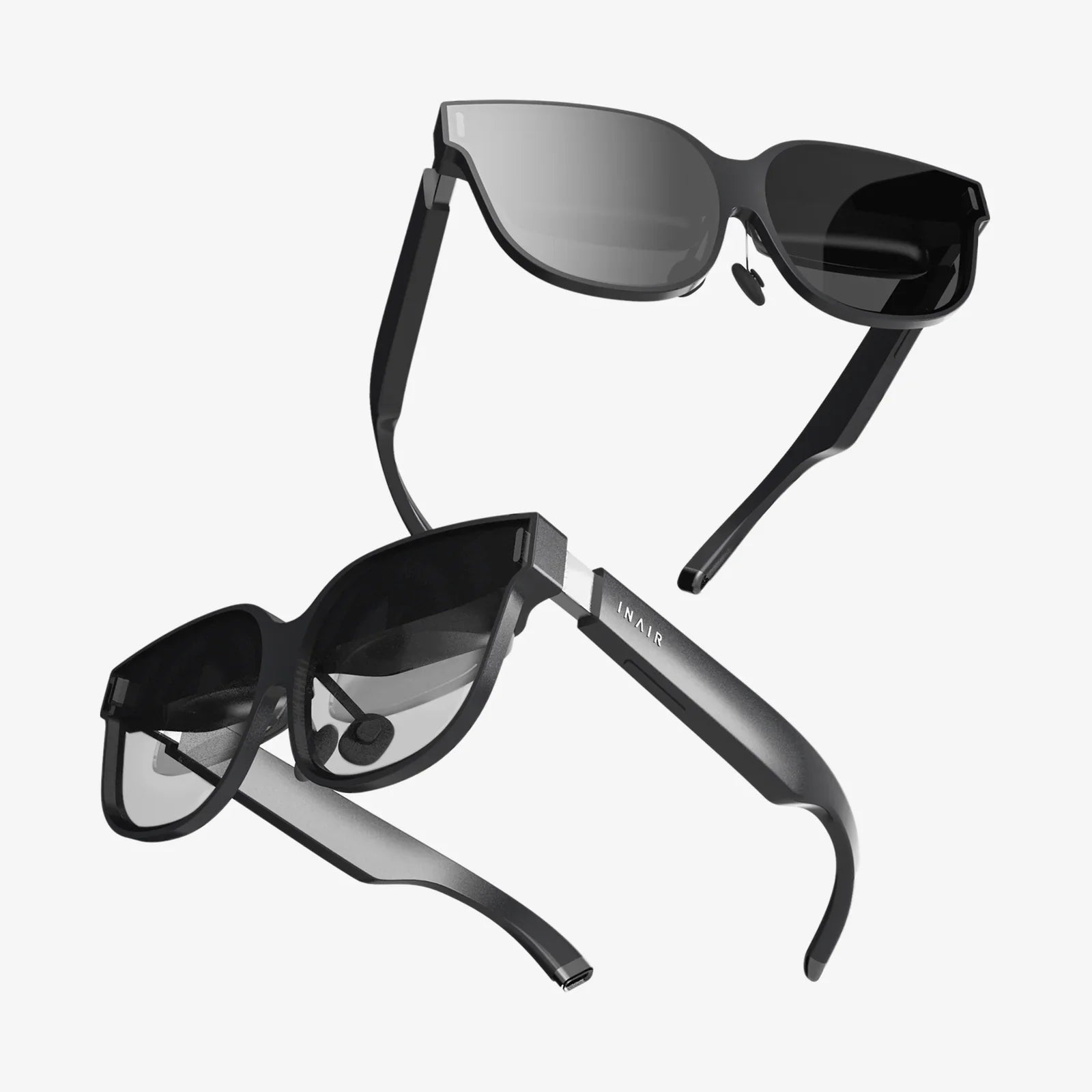
Imagine a world where digital information doesn't live trapped behind a screen but flows seamlessly into your physical surroundings, enhancing everything you see, do, and experience. This is the promise of augmented reality glasses, a technology poised to leap from the pages of science fiction into our daily lives, fundamentally altering our relationship with the digital and physical worlds. The journey from clunky prototypes to sleek, powerful wearables is packed with incredible facts and a future brimming with potential.
The Core Technology: How AR Glasses See and Shape Your World
At their heart, augmented reality glasses are sophisticated computers designed to perceive the environment and project digital imagery onto it. This feat of engineering relies on a symphony of components working in perfect harmony.
Sensors: The Eyes of the Device
AR glasses are equipped with a suite of sensors that act as their eyes, constantly scanning and interpreting the world. These typically include:
- Cameras: High-resolution cameras capture the user's field of view in real-time. This visual data is the canvas upon which digital content is overlaid.
- Depth Sensors: Using technologies like structured light or time-of-flight (ToF) sensors, these components measure the distance to objects in the environment. This creates a 3D map of the space, allowing digital objects to be placed realistically, occluded by real-world objects, and interacted with spatially.
- Inertial Measurement Units (IMUs): These contain accelerometers and gyroscopes that track the precise movement, rotation, and orientation of the user's head. This ensures the digital content remains locked in place in the real world, even as the user moves around.
- LiDAR (Light Detection and Ranging): Particularly in advanced models, LiDAR scanners fire out pulses of laser light to measure distances with extreme accuracy, creating detailed depth maps incredibly quickly. This is crucial for fast-paced interactions and accurate placement of AR objects.
Displays: Painting Light onto Reality
The magic of overlaying digital information is achieved through innovative display technologies. Unlike virtual reality, which blocks out the real world, AR displays must be semi-transparent. There are several primary methods:
- Waveguide Displays: This is a leading technology in many modern AR glasses. Light from a micro-display is coupled into a thin, transparent piece of glass or plastic (the waveguide). Using diffraction gratings or other optical elements, the light is "guided" through the material and then ejected directly into the user's eye. This allows for a sleek, eyeglass-like form factor while projecting bright, clear images.
- Birdbath Optics: This design uses a beamsplitter and a curved mirror (resembling a birdbath) to reflect the image from a micro-display into the user's eye while still allowing them to see the real world through the combiner lens. It can offer high image quality but often results in a slightly bulkier design.
- Retinal Projection: An emerging and futuristic approach, this technology bypasses a traditional screen altogether. It uses a low-power laser to scan images directly onto the user's retina. This can create a vast, always-in-focus image that appears to float in space in front of them, but it presents significant engineering and safety challenges.
Processing: The Brain Behind the Brows
All the data from the sensors must be processed instantaneously. This requires immense computational power for tasks like:
- Simultaneous Localization and Mapping (SLAM): This is the core software algorithm that allows the glasses to understand their position within an unknown environment while simultaneously building a map of that environment. It's what makes it possible for a digital dinosaur to stay on your living room floor as you walk around it.
- Computer Vision: The system must recognize objects, surfaces, and gestures. Is that a table? Is that your hand giving a thumbs-up? This recognition triggers the appropriate digital responses.
- Rendering: Finally, the desired 3D models and UI elements must be rendered with correct lighting, perspective, and occlusion, all in real-time and at a high frame rate to avoid user discomfort.
This processing can happen on a dedicated chip within the glasses themselves, on a tethered companion device like a smartphone or computer, or be streamed wirelessly from a powerful remote server (cloud processing).
Beyond Novelty: The Powerful Applications of AR Glasses
While consumer entertainment grabs headlines, the most profound and immediate impact of AR glasses is happening in enterprise and specialized fields.
Revolutionizing Industry and Manufacturing
On factory floors and in warehouses, AR glasses are becoming indispensable tools. Technicians can have repair manuals, schematics, and animated instructions overlaid directly onto the machinery they are fixing, freeing their hands and drastically reducing errors and training time. Warehouse pickers can see optimal routes and item locations highlighted in their vision, skyrocketing efficiency. Architects and engineers can walk through full-scale 3D models of their designs before a single brick is laid.
Transforming Healthcare and Medicine
In medicine, the stakes are high, and AR glasses are rising to the challenge. Surgeons can see critical patient data, like heart rate or a 3D model of a tumor, directly in their line of sight without looking away from the operating table. Medical students can practice complex procedures on detailed holographic anatomy. They can also assist in vein visualization for nurses or provide remote guidance, allowing a specialist miles away to see what a local medic sees and annotate their field of view to guide a procedure.
Redefining Education and Training
Learning becomes immersive and interactive. Instead of reading about ancient Rome, history students can walk through a digitally reconstructed Forum right in their classroom. Mechanics-in-training can practice disassembling a complex engine hologram before touching real, expensive equipment. This "learn by doing" in a risk-free digital overlay has the potential to revolutionize pedagogical methods.
Enhancing Everyday Life and Navigation
For the consumer, the applications are vast. Imagine walking through a foreign city with translation subtitles appearing over street signs and restaurant menus. Navigation arrows are painted onto the sidewalk in front of you, guiding you turn-by-turn without ever looking at your phone. At home, you could see how a new sofa would look in your living room before you buy it, or have a recipe hover conveniently next to your mixing bowl as you cook.
The Challenges and Considerations: A Reality Check
For all their potential, AR glasses face significant hurdles before achieving widespread, glasses-like adoption.
The Form Factor Dilemma
The ultimate goal is a device that is socially acceptable, comfortable to wear all day, and aesthetically pleasing—akin to regular eyeglasses. Current technology often forces a trade-off between performance and size. High-field-of-view, powerful displays require larger optics and more battery life, leading to bulkier designs. Shrinking this down without compromising capability remains the central engineering challenge.
Battery Life: The Power Struggle
Processing high-fidelity AR, running numerous sensors, and powering bright displays is incredibly energy-intensive. Many current devices only last a few hours on a single charge, which is insufficient for all-day use. Breakthroughs in battery technology and extreme power efficiency are required to untether users for a full day of work or play.
The Social and Privacy Conundrum
Wearing a camera on your face raises profound social and privacy questions. How will people react to being recorded during a conversation? Will establishments ban them? Establishing social etiquette and robust privacy controls—like clear, external indicators when recording—is essential for public acceptance. The potential for constant data collection also presents a significant privacy challenge that must be addressed through regulation and transparent user control.
The Digital Divide and Accessibility
As with any transformative technology, there is a risk of exacerbating inequality. High initial costs could create a divide between those who can afford this new layer of information and those who cannot. Furthermore, the technology must be designed to be accessible to people with different visual and physical abilities from the outset.
Gazing into the Future: What Comes Next?
The trajectory of AR glasses points toward a more integrated and intuitive future. We are moving toward devices that are lighter, more powerful, and eventually, indistinguishable from standard eyewear. The long-term vision often discussed is that of a "contextual computer"—a device that understands what you need before you ask for it, providing information and assistance that is relevant to your immediate situation and environment. The line between the digital and the physical will continue to blur, creating new forms of art, communication, and human experience we are only beginning to imagine.
The path from today's impressive devices to tomorrow's invisible interface is long, but the pace of innovation is breathtaking. The facts surrounding augmented reality glasses reveal a technology not of distant fantasy, but of imminent reality, one that is set to redefine our perception of the world itself. This isn't just about checking notifications on your glasses; it's about unlocking a new layer of human understanding and interaction, fundamentally changing how we work, learn, heal, and connect with the universe around us. The future isn't just something we will look at on a screen; it's something we will step into, and it will be waiting for us, visible through the lenses on our faces.
Share:
High Tech Contact Lenses Are Blurring the Line Between Vision and Reality
Best Group Virtual Meeting Space: The Ultimate Guide to Seamless Digital Collaboration