


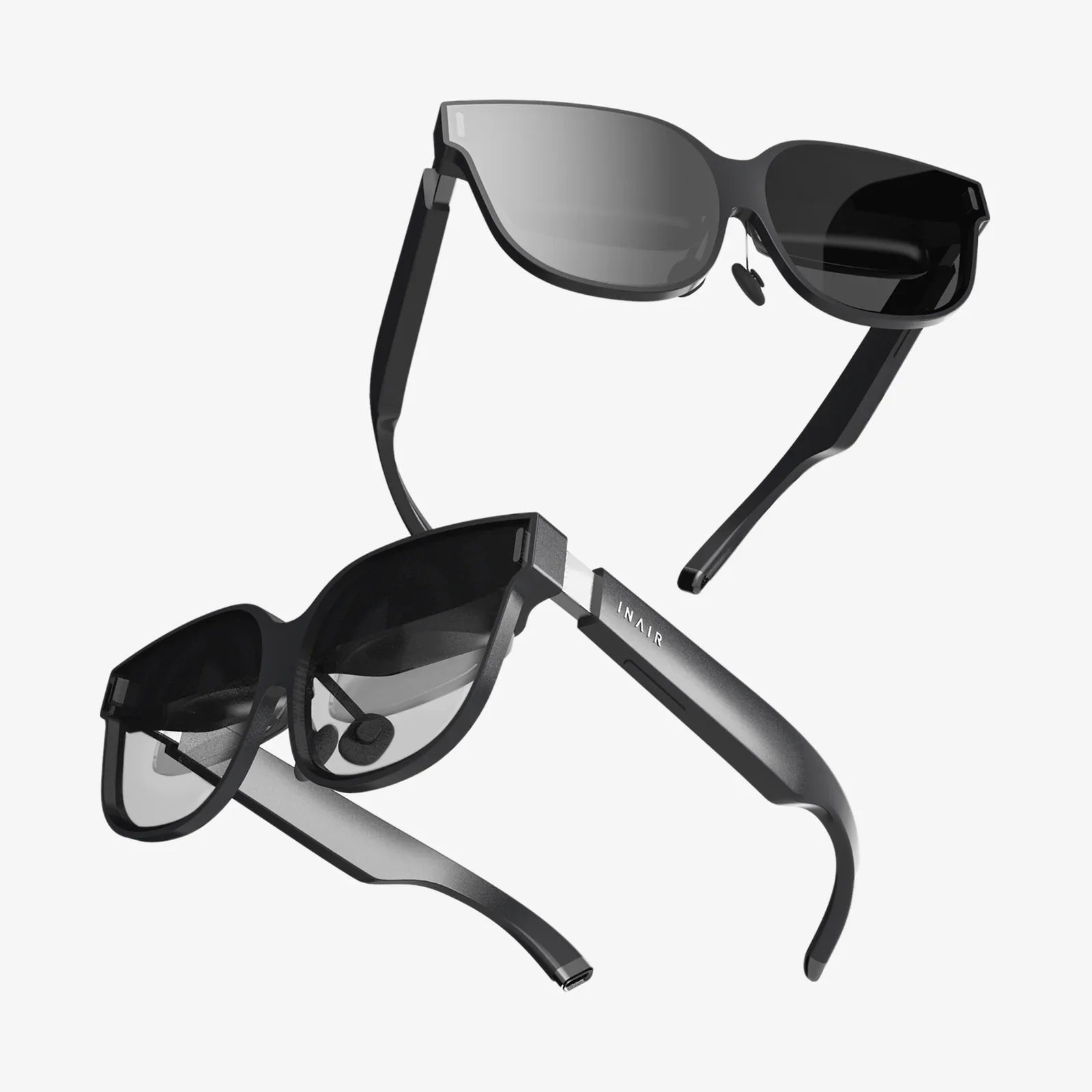
Imagine a world where your morning commute is overlaid with real-time navigation cues floating just above the road, where the recipe for your dinner hovers beside the sizzling pan, and a virtual colleague from another continent sits across your physical desk, discussing a project as if they were truly there. This isn't a distant sci-fi fantasy; it's the tangible future being built today, a future that will arrive on the bridge of your nose within the next five years. The journey of augmented reality glasses is accelerating from niche prototypes to a pervasive platform, and the next half-decade will be the most critical and explosive period of their development, fundamentally reshaping how we interact with information, each other, and the world itself.
The Foundation: Where We Stand Today
The current state of augmented reality glasses is a landscape of immense potential tempered by significant, yet surmountable, hurdles. Present-day devices largely fall into two categories: enterprise-focused headsets, which are powerful but often bulky and tethered, and consumer-oriented smart glasses, which are stylish and lightweight but offer limited, often notification-based, functionality. The holy grail—a pair of sleek, untethered, all-day glasses with a wide field of view, high-resolution displays, and powerful, intuitive interaction—remains the industry's overarching quest.
The primary bottlenecks have been technological. Display technology is perhaps the most significant. Waveguides, the transparent lenses that project digital images, need to become brighter, more efficient, and offer a much wider field of view to create truly immersive overlays without the dreaded "ski goggle" effect. Battery life is another monumental challenge. Packing enough power to run complex spatial computing processes, high-lumen displays, and multiple sensors for a full workday into a frame that doesn't feel like an anvil on your face requires breakthroughs in energy density and power management. Finally, spatial computing and perception must become flawless. The glasses need to understand the environment in real-time—mapping surfaces, recognizing objects, and anchoring digital content with rock-solid stability—all while processing this data with minimal latency to avoid user discomfort.
The Five-Year Leap: Key Technological Breakthroughs
Over the next five years, we will witness a convergence of advancements that will systematically dismantle these barriers, transforming augmented reality glasses from curiosities into indispensable tools.
1. The Display Revolution: From Waveguides to Retinal Projection
Advancements in nanofabrication and novel optical materials will lead to a new generation of waveguides. These will be thinner, more transparent, and capable of projecting vibrant, full-color images across a field of view that rivals our natural peripheral vision. We will also see the maturation of alternative technologies like holographic optics and even direct retinal projection systems, which paint images directly onto the retina, potentially offering incredible resolution and brightness without bulky optics. This will result in glasses that are virtually indistinguishable from premium eyewear in both form and weight.
2. The Power Paradigm: All-Day Computing on a Frame
The power problem will be attacked from multiple angles. First, specialized low-power chipsets, designed from the ground up for AR workloads, will become standard. These Systems-on-a-Chip (SoCs) will handle complex computer vision and machine learning tasks with extreme efficiency. Second, battery technology will see incremental but crucial improvements, with solid-state and other advanced lithium formulations offering greater energy density. Perhaps most importantly, we will see the rise of context-aware power management. The glasses will intelligently dim displays, throttle processing power, and activate specific sensors only when needed, dramatically extending usable life. The concept of a charging case will become as ubiquitous as it is for wireless earbuds today.
3. The Invisible Interface: Beyond Controllers and Hand-Tracking
Interaction will evolve beyond rudimentary hand-tracking and voice commands. Multimodal interfaces will combine subtle eye-tracking (knowing where you are looking), precise voice control, and nuanced hand gestures into a seamless symphony of input. Imagine selecting a virtual file with a glance, whispering a command to open it, and then manipulating its components with a pinch of your fingers. Furthermore, emerging input methods like subvocalization (reading nerve signals from the throat) and neural interfaces (in very early, non-invasive forms) will begin to appear in research prototypes, hinting at a future of truly thought-driven control.
4. The Networked World: The Role of 5G-Advanced and 6G
High-bandwidth, low-latency connectivity will be the silent enabler of the AR revolution. The rollout of 5G-Advanced and the initial groundwork for 6G will allow these glasses to offload intensive rendering tasks to edge cloud servers. This means the glasses themselves can be lighter and more efficient, as the heavy computational lifting is done remotely and streamed to the device in real-time. This will enable incredibly complex and photorealistic AR experiences—detailed 3D models, live volumetric video of people, and vast persistent digital worlds—that would be impossible to generate on a device-based processor.
The Impact: Reshaping Industries and Daily Life
By solving these core technological challenges, augmented reality glasses will cease to be a product and instead become a platform, catalyzing change across every facet of society.
Transforming the Workplace
The enterprise will remain the primary driver for adoption. In five years, we will see:
- Remote Collaboration & Telepresence: Instead of a grid of faces on a screen, remote meetings will involve life-sized, volumetric avatars or live video feeds of colleagues placed around a physical table. Engineers on different continents will collaboratively examine and annotate a 3D model of a jet engine as if it were physically between them.
- Field Service & Manufacturing: A technician repairing a complex machine will see animated repair instructions overlaid directly onto the components, highlighting exactly which bolt to turn and with what torque. Warehouse workers will have optimal picking paths and inventory information visually guided into their line of sight, drastically improving efficiency and reducing errors.
- Design & Architecture: Architects and interior designers will walk through full-scale, interactive holograms of their creations before a single foundation is poured, allowing for real-time changes to structures and layouts.
Redefining Consumer Experiences
For consumers, the changes will be more subtle at first but will gradually become deeply integrated into daily rituals.
- Contextual Computing: Your glasses will recognize the people you meet, discreetly displaying their name and how you know them. They will translate foreign language signs in real-time, overlay historical information when you look at a monument, and highlight the best dishes on a restaurant's menu based on your dietary preferences.
- Immersive Entertainment: Gaming will explode beyond the screen, turning your living room into a dungeon to explore or your city park into a massive multiplayer battlefield. Watching sports will allow you to see player stats floating beside them and choose from multiple camera angles as if you were in the director's chair.
- Personalized Learning: Learning to play the guitar? Fingering charts will hover over the strings. Studying human anatomy? A detailed, interactive 3D heart will pulse in front of you. This "see-it-to-know-it" paradigm will make complex subjects instantly more accessible.
The Challenges on the Horizon: Privacy, Society, and the Digital Divide
This powerful technology does not arrive without profound questions and potential pitfalls that society must grapple with over the next five years.
The Privacy Paradox
A device that sees what you see and hears what you hear is a privacy advocate's nightmare. The always-on cameras and microphones necessary for AR functionality will raise legitimate concerns about constant surveillance, both by corporations and governments. Clear, transparent, and user-centric data policies will be non-negotiable. Features like physical camera shutters, clear recording indicators, and on-device processing for sensitive data will become critical selling points. The debate over digital consent—can you record someone in a public space without their permission?—will reach a fever pitch.
The Blurring of Realities
As digital overlays become more convincing, the line between the physical world and the digital one will increasingly blur. This raises philosophical questions about our perception of reality and shared experiences. Will we retreat into personalized, filtered realities? Could persistent advertising cluttering our vision lead to a new form of visual pollution? Establishing digital etiquette and public space norms for using this technology will be a necessary social evolution.
Bridging the New Digital Divide
Early augmented reality glasses will be expensive. There is a very real risk of creating a new societal schism: between those who can afford to access this layer of augmented information and those who cannot. This "AR divide" could extend into education, employment, and social connectivity. Ensuring the technology becomes accessible and affordable, not just a luxury for the affluent, will be a crucial challenge for developers and policymakers alike.
The next five years will not see everyone wearing AR glasses, but it will see them transition from a developer curiosity to a mainstream professional tool and an emerging consumer phenomenon. The glasses on your face will evolve from simple vision correctors or sun blockers into the most personal and powerful computer you have ever owned—a lens through which the digital and physical worlds finally, and seamlessly, become one. The race is on, and the finish line is a new way of seeing everything.
Share:
AR Specs: The Ultimate Guide to Augmented Reality Specifications
AI Improve Productivity in Virtual Meetings: The Future of Work is Here