


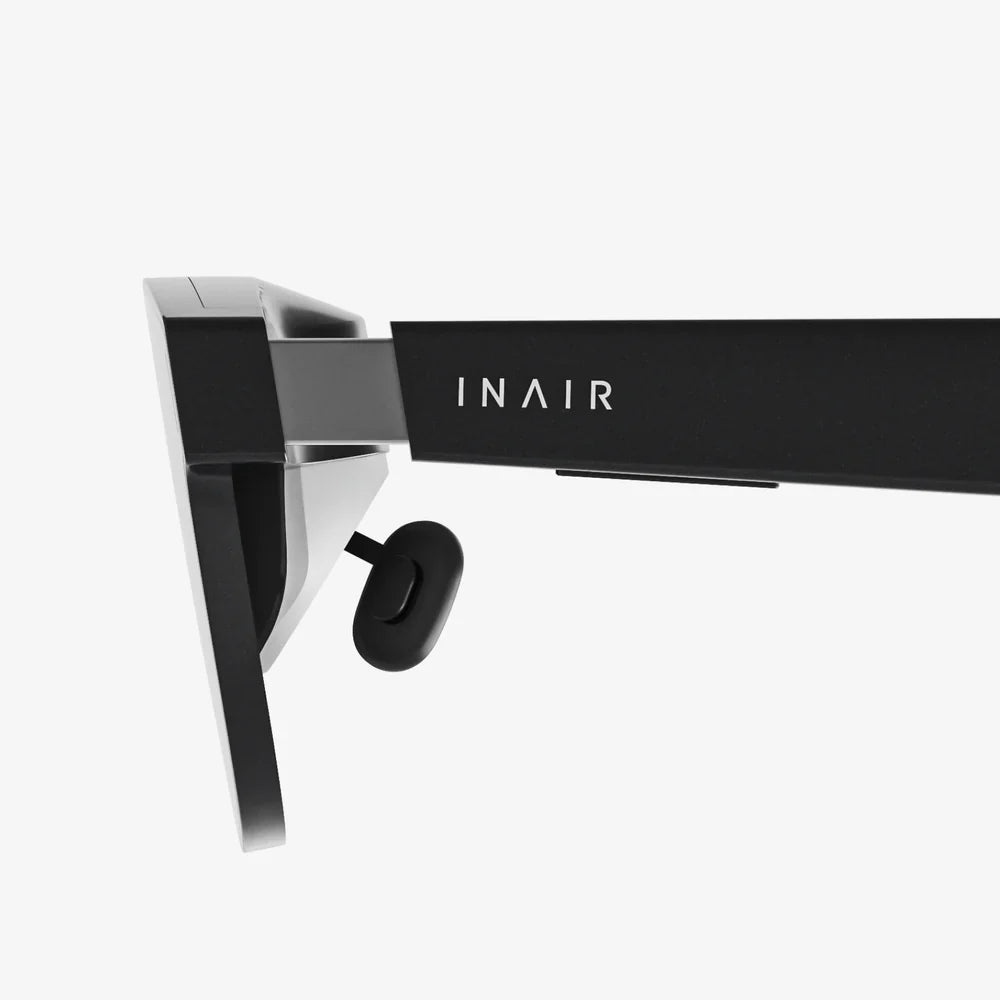
- by wangfred
Augmented Reality Glasses for Work: The Dawn of the Immersive Office
- by wangfred
Imagine a world where the line between your digital workspace and the physical world blurs into irrelevance. Where complex schematics hover over the machinery you’re repairing, where a colleague’s digital avatar points to a 3D model from across the globe, and where the information you need is not on a screen in front of you, but layered seamlessly onto the world itself. This is not a distant sci-fi fantasy; it is the imminent future of professional life, powered by a transformative technology: augmented reality glasses for work.
The journey of augmented reality glasses has been a public rollercoaster, often defined by consumer-focused hype and subsequent disillusionment. Early iterations captured the imagination but struggled with clunky form factors, limited battery life, and a lack of compelling, everyday applications. However, while the consumer market grappled with these challenges, a quiet revolution was brewing in the enterprise sector. Forward-thinking companies in manufacturing, logistics, field services, and healthcare began piloting specialized AR glasses, discovering that the value proposition in a controlled, task-oriented environment was not just real—it was profound.
The fundamental shift is one of purpose. In the workplace, AR glasses are not a entertainment device; they are a tool for solving specific, expensive problems. They are designed to enhance human capability, reduce error, accelerate processes, and bridge vast geographical distances. This practical focus has driven rapid innovation, leading to devices that are more robust, offer longer battery life, and are equipped with enterprise-grade software solutions that integrate directly with existing business systems like Enterprise Resource Planning (ERP) and Computerized Maintenance Management System (CMMS) platforms.
At their core, augmented reality glasses for work are sophisticated wearable computers. They consist of several key components that work in concert to overlay digital information onto the user’s field of view:
The applications for AR glasses are as diverse as the economy itself. They are not a one-size-fits-all solution but a versatile platform that can be tailored to specific verticals.
On the factory floor, AR glasses are a game-changer. They can guide workers through complex assembly processes with step-by-step digital instructions overlaid directly onto the components. This reduces training time for new hires, minimizes errors, and increases overall production speed. Quality assurance checks are also enhanced, as glasses can highlight tolerances, display checklists, and even automatically document the inspection process.
For technicians repairing everything from wind turbines to MRI machines, AR glasses provide an expert eye everywhere. A remote senior engineer can see exactly what the field technician sees and annotate the real world with arrows, circles, and notes to guide them through a complex procedure. This "see-what-I-see" remote assistance drastically reduces travel costs, minimizes equipment downtime, and empowers less experienced technicians to resolve issues far beyond their usual expertise.
In massive distribution centers, efficiency is paramount. AR glasses can display optimal pick-and-pack routes directly in a worker’s vision, guiding them to the correct items and indicating the correct quantities. This eliminates the need to constantly look down at a handheld scanner or paper list, streamlining the process, reducing walking time, and dramatically cutting down on shipping errors.
In hospitals, surgeons can use AR glasses to view critical patient data—such as vital signs or 3D reconstructions from MRI scans—without turning away from the operating table. Medical students can learn anatomy through immersive, interactive models, and nurses can have hands-free access to patient records and medication information, improving both care and safety.
Architects and interior designers can step into a physical space and visualize their 3D models at full scale. They can walk through a digital building before a single brick is laid, making changes to layouts, materials, and lighting in real-time. This enables better client communication and helps identify potential design conflicts long before construction begins.
The adoption of this technology is driven by a compelling return on investment (ROI) that manifests in several key areas:
Despite the immense potential, the path to widespread adoption is not without its obstacles.
The evolution of augmented reality glasses is accelerating. We are moving toward a future of truly intelligent and connected devices. We can expect glasses to become lighter, more powerful, and eventually, indistinguishable from standard eyewear. The user interface will become more intuitive, likely moving toward advanced gaze and neural input systems.
The concept of the "digital twin"—a perfect virtual replica of a physical asset or system—will become central. Workers will be able to interact with the digital twin overlaid on real equipment, running simulations, predicting maintenance needs, and optimizing performance in real-time. Artificial intelligence will be deeply integrated, with AI assistants capable of understanding context, proactively providing information, and even predicting the user’s next move.
This will culminate in the development of the metaverse for enterprise: persistent, shared, and interactive digital spaces where distributed teams can collaborate on 3D models and prototypes as if they were in the same physical room, all accessed through a simple pair of glasses. This isn't about escaping reality; it's about fundamentally enhancing our ability to understand, manipulate, and improve upon it.
The desk, the monitor, and the mouse have dominated knowledge work for decades. That era is now drawing to a close. Augmented reality glasses are not merely another gadget; they are the key that unlocks a new dimension of human potential, transforming every workshop, operating room, and factory floor into a dynamic canvas for innovation. The tools to build this future are already here, waiting to be put to work.