


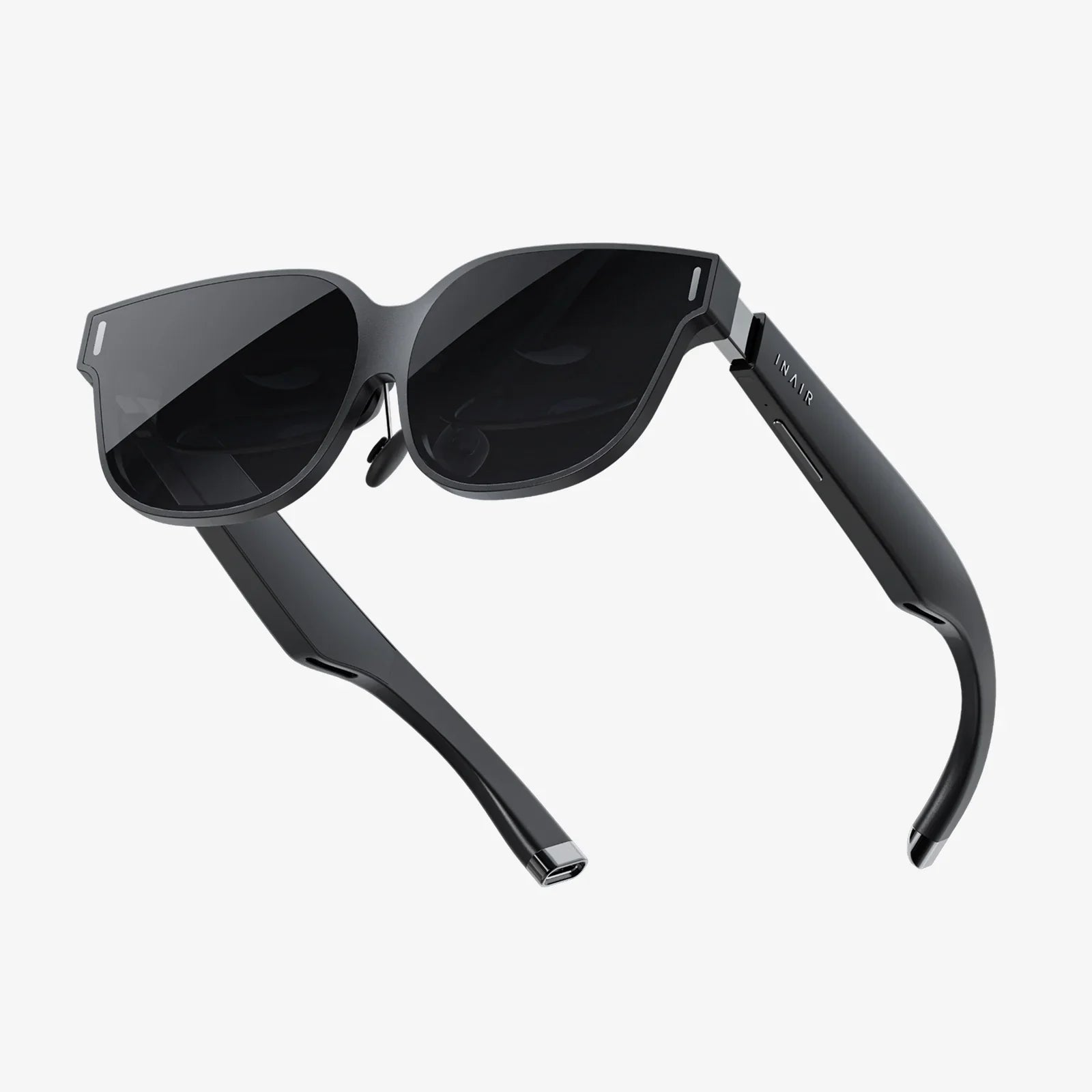
Imagine a world where digital information doesn't live on a screen in your hand or on your desk, but is seamlessly woven into the very fabric of your reality. Directions float on the pavement ahead of you, the history of a landmark materializes before your eyes, and a colleague's 3D schematic hovers over your conference table. This is the promise of augmented reality (AR) glasses, a technological leap that hinges not on software alone, but on a breathtakingly complex and miniaturized symphony of hardware working in perfect harmony. The race to perfect this hardware is one of the most significant technological endeavors of our time, promising to redefine how we work, play, connect, and perceive the world around us.
The Core Components: Deconstructing the Magic
At first glance, a pair of advanced AR glasses might look like slightly bulkier eyewear. But within those frames lies a dense ecosystem of cutting-edge technology, each component pushing the boundaries of physics and engineering.
The Optical Engine: Projecting a New Reality
The heart of the AR experience is the optical engine, the system responsible for generating digital images and overlaying them onto the user's field of view. This is arguably the most significant hardware challenge. Unlike virtual reality, which blocks out the real world, AR must blend light from a digital projector with light from the natural environment. Several competing technologies are vying for dominance:
- Waveguide Displays: This is the leading approach for consumer-ready devices. Light from a micro-display is coupled into a thin, transparent piece of glass or plastic (the waveguide). Using a combination of diffraction gratings (nanoscale structures that bend light) or holographic optical elements, the light is bounced through the waveguide and then ejected directly into the user's eye. The advantage is a sleek, glasses-like form factor, but challenges include limited field of view, potential for visual artifacts like rainbow effects, and complex manufacturing.
- Birdbath Optics: This design uses a combiner—a partially reflective mirror—set at an angle in front of the eye. A micro-display projects an image upward, which is then reflected off the combiner and into the eye, while real-world light passes through it. This can offer brighter images and a wider field of view but often results in a bulkier form factor that is less like traditional glasses.
- Freeform Optics: These are complex, asymmetrical mirrors or prisms that are precisely sculpted to fold optical paths and project images directly into the eye. They can be highly efficient but are difficult and expensive to design and manufacture at scale.
- Holographic Systems: Seen as a potential future holy grail, these systems use holographic optical elements to manipulate light waves and create truly three-dimensional images that can be viewed from different angles. The technology remains largely in the R&D phase.
The Micro-Display Panels: Tiny Windows to a Big World
Feeding the optical engine is the micro-display, a minuscule screen that must be incredibly bright, high-resolution, and power-efficient. The key technologies here include:
- Liquid Crystal on Silicon (LCoS): A reflective technology that uses a liquid crystal layer on top of a silicon backplane. It offers high resolution and good color fidelity but can struggle with latency and motion blur.
- Micro-LED: Considered the future of micro-displays, Micro-LEDs are microscopic light-emitting diodes that are self-emissive, meaning they don't require a backlight. This results in exceptional brightness, high contrast ratios, fantastic color gamut, and low power consumption. The primary hurdle is the monumental difficulty of mass-producing these tiny components and transferring them onto a display substrate at an acceptable yield.
- Organic Light-Emitting Diodes on Silicon (OLEDoS): Similar to the OLED screens in high-end phones but built on a silicon wafer instead of glass, allowing for incredibly small pixels. They offer perfect blacks and high contrast but have traditionally been less bright than Micro-LED alternatives, which is a critical factor when competing with ambient sunlight.
Sensing the World: The Array of Eyes and Ears
For digital content to interact convincingly with the real world, AR glasses must understand their environment with profound depth and accuracy. This requires a suite of sensors:
- Cameras: Multiple cameras serve different purposes. Standard RGB cameras capture the world for video passthrough or photography. Depth-sensing cameras, using technologies like stereoscopic vision, structured light, or time-of-flight (ToF) sensors, map the environment in 3D, measuring the distance to every surface. This is essential for occlusion (having digital objects hide behind real-world furniture) and realistic placement of assets.
- Inertial Measurement Units (IMUs): These are the workhorses of tracking, containing accelerometers, gyroscopes, and magnetometers. They provide high-frequency data on the head's movement and rotation, ensuring the digital overlay remains stable and doesn't jitter or drift as the user moves their head.
- Eye-Tracking Cameras: By projecting infrared light onto the user's eyes and analyzing the reflection, these internal cameras determine precisely where the user is looking. This enables revolutionary interface paradigms like foveated rendering (dynamically rendering the center of vision in high detail while reducing detail in the periphery to save power), as well as intuitive menu navigation and deeper analytical insights.
- Microphones and Speakers: Spatial audio is crucial for immersion, making a digital sound seem like it's coming from a specific point in the room. Beamforming microphones are used to isolate the user's voice from ambient noise for clear voice commands and communication.
The Brain: Processing an Avalanche of Data
The data from these sensors creates a massive computational load that must be processed in real-time. This requires a system-on-a-chip (SoC) that is a marvel of integration, packing a central processing unit (CPU), a graphics processing unit (GPU), a digital signal processor (DSP), and a dedicated neural processing unit (NPU) into a tiny, thermally constrained package. The NPU is particularly important, as it efficiently handles the continuous AI tasks required for AR, such as simultaneous localization and mapping (SLAM)—the process of constructing a map of an unknown environment while tracking the device's location within it—and object recognition.
Power and Form: The Eternal Struggle
All of this technology demands significant power, creating the ultimate engineering trade-off: performance versus battery life versus size. The goal is to achieve all-day battery life in a form factor that is socially acceptable and comfortable to wear. This often leads to a split architecture, where a lightweight, glasses-style unit is connected via a thin cable to a slightly larger battery and compute pack that can be stored in a pocket. Advances in low-power display technologies, more efficient processors, and innovative battery chemistries are all critical to solving this puzzle.
The Immense Challenges on the Path to Ubiquity
Bringing all this hardware together into a consumer-friendly product is a Herculean task. The challenges are multifaceted and deeply interconnected.
- The Form Factor Dilemma: The public will only adopt AR glasses if they are lightweight, comfortable, and aesthetically pleasing. Today's most powerful prototypes often look like bulky safety goggles. Shrinking high-performance optics, displays, and compute into something that resembles Ray-Bans is a monumental feat of miniaturization.
- Visual Fidelity and Comfort: The image must be bright enough to be visible in daylight, high-resolution enough to read text comfortably, and must be presented in a way that doesn't cause eye strain or vergence-accommodation conflict (where your eyes struggle to focus because the digital image is on a single 2D plane despite having 3D depth cues).
- Thermal Management: Powerful processors generate heat. Dissipating that heat from a device sitting on a user's face is an extreme challenge, with very limited options for fans or large heat sinks without compromising comfort or noise.
- Cost and Manufacturing: Waveguides, particularly those with complex diffraction patterns, are incredibly difficult to manufacture at high yield. Micro-LED displays are still prohibitively expensive for mass-market devices. Achieving scale to bring costs down is a chicken-and-egg problem requiring massive investment.
- Social Acceptance and Privacy: A device with always-on cameras and microphones worn on the face raises legitimate concerns about privacy and social etiquette. The hardware must be designed with clear physical indicators of recording and built-in privacy safeguards to gain public trust.
A Future Forged in Light and Silicon
The implications of successfully overcoming these hardware hurdles are staggering. We are moving beyond a world of apps on a phone to a world of contextual information and experiences layered directly onto our reality. The industrial and enterprise sectors are already seeing massive gains, with technicians receiving real-time schematics overlaid on machinery, warehouse workers seeing optimized picking paths, and surgeons visualizing critical patient data without looking away from the operating table. In the consumer space, the potential spans from immersive gaming and new forms of social connection to revolutionizing navigation and providing real-time translation subtitles for the world around you. The hardware inside augmented reality glasses is the key that will unlock this new layer of human experience, transforming them from a niche gadget into an indispensable extension of our minds and capabilities, fundamentally altering the interface between humanity and information.
We stand on the precipice of this invisible revolution, not in a distant future, but within the current decade. The relentless pace of innovation in micro-optics, semiconductor design, and sensor fusion is steadily chipping away at each formidable barrier. The final form of the hardware that will ultimately win the day remains uncertain, but the direction is clear: toward a more intuitive, more immersive, and more intelligent way of interacting with our world. The companies and engineers who can master the intricate dance of physics, material science, and human-centered design will not just create a new product category; they will author the next chapter of human-computer interaction, and the glasses on our faces will be the lens through which we read it.
Share:
Virtual Office Technology Is Redefining the Modern Workplace Forever
Virtual Office Technology Is Redefining the Modern Workplace Forever