


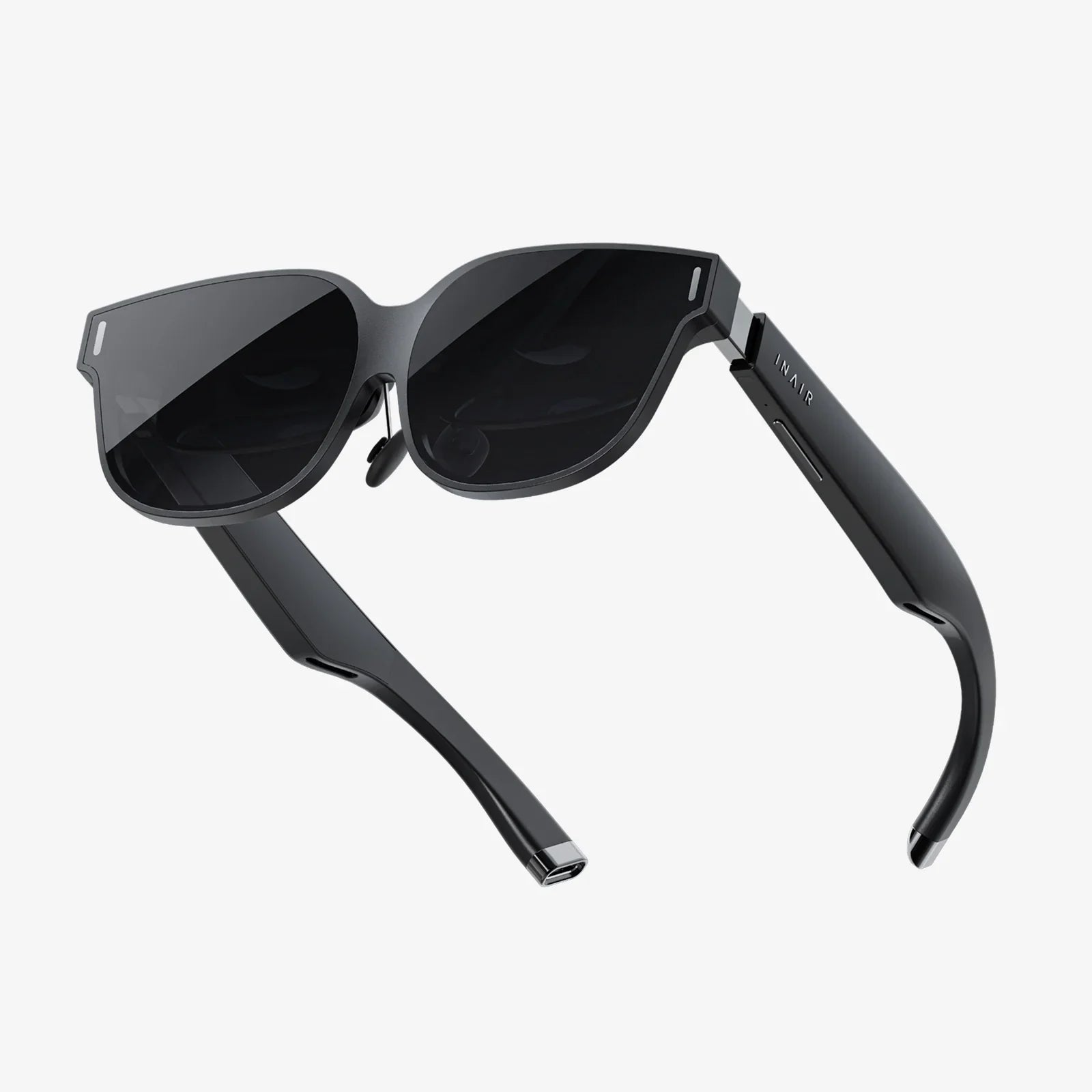
Imagine a world where digital information doesn’t just live on a screen in your hand but is painted onto the very fabric of your reality. Where directions float on the street in front of you, historical figures reenact battles on empty fields, and a schematic for a complex engine hovers in the air before your eyes. This is the promise of augmented reality goggles, a technology poised to leap from the pages of speculative fiction and become the next fundamental shift in how we perceive, interact with, and understand our world. This isn't about escaping reality; it's about enhancing it, and the implications are nothing short of revolutionary.
The Core Technology: How Digital Layers Merge With Physical Sight
At its heart, the magic of augmented reality goggles lies in a sophisticated symphony of hardware and software designed to convincingly blend computer-generated sensory input with the user's real-world environment. Unlike their virtual reality counterparts, which seek to replace vision entirely, AR goggles are additive. They allow the user to remain grounded in their physical space while overlaying relevant digital content.
The process begins with a complex array of sensors. Cameras continuously scan the environment, while depth sensors and light detection and ranging systems map the physical space in three dimensions, understanding the geometry, distances, and surfaces of a room or outdoor area. Simultaneously, an inertial measurement unit tracks the precise movement, rotation, and orientation of the user's head with incredible speed and accuracy. This combination of outward and inward sensing is crucial for anchoring digital objects in the real world, ensuring a virtual vase sits stably on a real table even as the user walks around it.
The real wizardry, however, happens in the display systems. Several competing technologies achieve the effect of optical overlay. Some systems use miniature projectors to beam images onto transparent lenses, which then reflect the light into the user's eyes. Others employ waveguides, intricate patterns etched into glass that channel light from a micro-display, creating a bright, high-resolution image that appears to be out in the world. The ultimate goal is to achieve what experts call "visual coherence"—where digital objects are indistinguishable from real ones in terms of lighting, occlusion, and perspective, seamlessly integrating into the user's field of view without blocking their natural vision.
Beyond Novelty: Practical Applications Reshaping Industries
The true power of this technology is revealed not in flashy demos but in its profound practical applications, which are already beginning to transform entire sectors of the economy and society.
Revolutionizing the Industrial and Manufacturing Sectors
On factory floors and in repair shops, augmented reality goggles are moving from experimental tools to essential equipment. Technicians performing complex maintenance on machinery can see animated, step-by-step instructions overlaid directly onto the equipment they are fixing, highlighting which bolt to turn next or displaying a warning if a component is too hot to touch. This reduces errors, slashes training time for new employees, and allows experts to provide remote guidance, seeing what a field technician sees and annotating their view in real-time from thousands of miles away. For designers and engineers, these goggles enable them to visualize and interact with full-scale 3D prototypes long before a physical model is ever built, facilitating collaboration and identifying design flaws early in the process.
Transforming Healthcare and Medicine
In the medical field, the stakes are even higher, and the potential benefits are immense. Surgeons are experimenting with goggles that can project critical information—such as a patient’s vital signs, ultrasound data, or a 3D model of a tumor from a recent MRI scan—directly into their line of sight during an operation, eliminating the need to look away at monitors. This allows for greater precision and focus. Medical students can practice procedures on hyper-realistic virtual patients, and nurses can use the technology to instantly locate veins for injections, dramatically improving patient comfort and success rates.
Redefining Retail and E-Commerce
The retail experience is on the cusp of a massive disruption. Imagine trying on a new wardrobe without ever stepping into a fitting room, with virtual clothes dynamically conforming to your body's shape and movement. Or visualizing how a new sofa would look in your living room, perfectly scaled and colored, before you commit to the purchase. Augmented reality goggles turn any space into a showroom, bridging the gap between the convenience of online shopping and the confidence of in-person evaluation, and potentially saving billions in return shipping costs for retailers.
Creating Immersive Educational and Training Experiences
Education stands to be one of the biggest beneficiaries. Textbooks become dynamic, interactive experiences. History lessons can transport students to ancient Rome, walking through digitally reconstructed forums. Biology students can dissect a virtual frog or take a guided tour of the human circulatory system. This shift from abstract learning to experiential, spatial understanding can dramatically improve knowledge retention and engagement for learners of all ages.
The Social and Ethical Frontier: Navigating a New Reality
As with any transformative technology, the widespread adoption of augmented reality goggles brings with it a host of complex social, ethical, and philosophical questions that society must urgently address.
The Privacy Paradox
Devices equipped with always-on cameras and microphones, continuously scanning and interpreting the world, represent a privacy challenge of unprecedented scale. The data collected is not just about the user; it's about everyone and everything around them. The potential for surreptitious recording, facial recognition on a mass scale, and the aggregation of incredibly intimate behavioral data is a legitimate concern. Clear, robust, and enforceable regulations will be required to prevent a dystopian future of perpetual surveillance and data exploitation, ensuring that the technology serves the user without infringing upon the rights of non-users.
The Blurring Line Between Reality and Fiction
When everyone can customize their perception of reality, what becomes of our shared experience? One person’s city street might be adorned with beautiful virtual art, while another’s is cluttered with aggressive advertisements. The potential for misinformation is staggering; malicious actors could overlay false information, fake street signs, or even impersonate other people. The very concept of "ground truth" could erode, challenging our ability to agree on a common reality. This raises profound questions about authenticity, trust, and the potential for societal fragmentation.
Accessibility and the Digital Divide
The initial cost of advanced AR technology will likely be high, potentially creating a new digital divide between those who can afford to access this enhanced layer of information and those who cannot. This could exacerbate existing social and economic inequalities, creating an information and experiential hierarchy. Furthermore, designing interfaces that are accessible to people with a wide range of physical abilities and disabilities will be paramount to ensuring this technology is inclusive and beneficial for all.
The Future Vision: Where Do We Go From Here?
The current generation of devices is merely the beginning. The trajectory points toward increasingly smaller, lighter, and more powerful goggles, eventually evolving towards socially acceptable forms like everyday eyeglasses or even contact lenses. The user interface will move beyond controllers and hand-tracking to include advanced eye-tracking, gesture control, and ultimately, brain-computer interfaces that allow for control through thought alone.
The long-term network that will power this persistent digital layer is often called the spatial web or the metaverse—a convergence of the physical and digital worlds into an embodied internet that you can navigate and interact with naturally. In this future, your AR goggles could become your primary portal to computing, replacing smartphones, computers, and televisions, and fundamentally changing how we work, socialize, and play.
The journey of augmented reality goggles is just commencing. They represent more than just a new gadget; they are a new lens through which to see our universe, a tool that will redefine human potential and challenge our deepest notions of reality itself. The path forward requires not just technological innovation, but careful, thoughtful, and inclusive stewardship to ensure this powerful tool builds a future that is more connected, informed, and equitable, rather than one that is divided and deceptive.
The world as you know it is on the verge of a spectacular upgrade. The boundary between the digital and the physical is dissolving, and the next time you look at the world around you, it might just be looking back, ready to show you everything you've been missing.
Share:
Augmented Reality Maintenance and Repair: The Digital Revolution Reshaping Industry
AR(VR) in Events: The Ultimate Guide to Immersive Experiences