


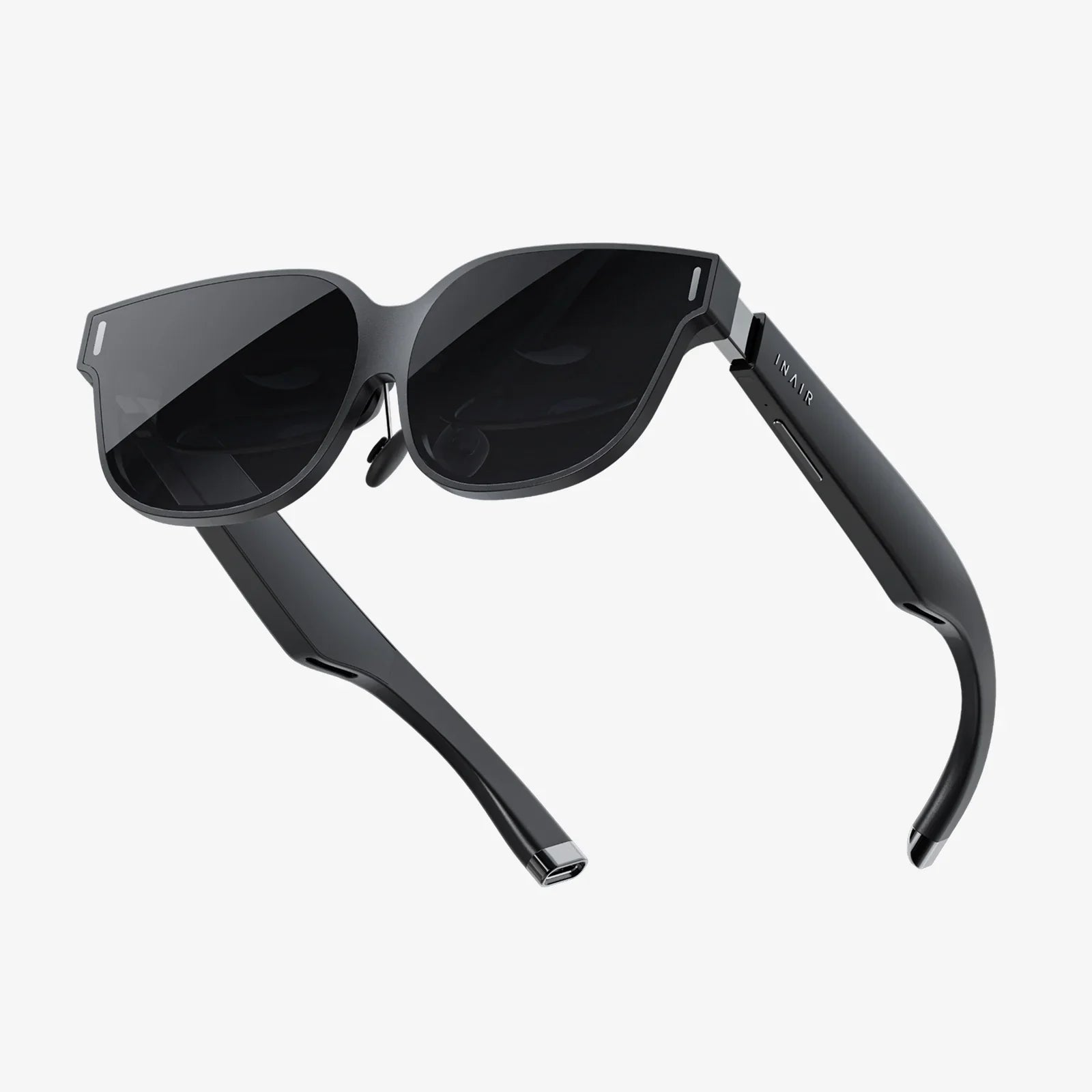
Imagine a world where digital information doesn’t live trapped behind a screen but flows seamlessly into your physical reality, enhancing everything you see, do, and learn. This is no longer the stuff of science fiction; it’s the imminent future being built today, and it’s all happening through a single, revolutionary device: the Augmented Reality Head Mounted Display. Strap in, because the line between the real and the digital is about to get beautifully blurred.
Beyond the Hype: Defining the Augmented Reality Head Mounted Display
At its core, an Augmented Reality Head Mounted Display (AR HMD) is a wearable computing device worn on the head that superimposes computer-generated sensory input—such as graphics, audio, and haptic feedback—onto the user’s real-world view. Unlike Virtual Reality (VR), which creates a fully immersive, artificial environment, AR enhances the real world by layering digital content onto it. The HMD is the physical gateway that makes this augmentation possible.
This technology represents a fundamental shift in human-computer interaction. We have moved from room-sized computers to desktops, to laptops, to smartphones that we hold in our hands. The next logical step is technology that we wear, technology that integrates with our very perception. The AR HMD is not just a new gadget; it is the potential successor to the smartphone, aiming to become the primary interface through which we access the digital universe.
How It Works: The Magic Behind the Lenses
The creation of a convincing and responsive augmented experience is a complex dance of hardware and software. Several critical technologies must work in perfect harmony inside an AR HMD.
The Optical Systems: Waveguides and Combiners
How does digital light get into your eyes without blocking your view of the real world? This is the primary job of the optical system. Most modern AR HMDs use some form of waveguide technology. Essentially, light from a micro-display is projected into a thin, transparent piece of glass or plastic. This light bounces through the waveguide via total internal reflection until it reaches an area with an optical grating or combiner that directs it out into the user’s eye. The result is a bright, digital image that appears to float in the real world, all while allowing the user to see their natural surroundings clearly.
Spatial Mapping and Tracking: The Digital Nervous System
For digital objects to feel like they are truly part of your environment, the device must understand the space you’re in. This is achieved through a suite of sensors, typically including:
- Cameras: Multiple cameras track the environment, identify surfaces, and help map the room in 3D.
- Inertial Measurement Units (IMUs): These sensors, including accelerometers and gyroscopes, track the headset’s precise orientation and movement with incredible speed, preventing motion lag.
- Depth Sensors: Some devices use LiDAR (Light Detection and Ranging) or similar time-of-flight sensors to accurately measure distances and create a detailed depth map of the environment. This allows digital objects to be occluded by real-world objects—a crucial element for immersion.
This constant stream of data creates a live digital twin of your physical space, allowing the software to anchor content precisely on a table, a wall, or even a moving object.
Processing Power: The Brain of the Operation
All this sensor data must be processed in real-time. This requires immense computational power. Some AR HMDs are tethered, relying on a wired or wireless connection to a powerful external computer. Others are standalone, packing all the necessary processing, battery, and components into the headset itself, offering greater mobility at the potential cost of maximum graphical fidelity. The choice between tethered and standalone often depends on the use case, balancing power for freedom.
A World of Applications: More Than Just Games
While consumer entertainment is a major driver, the true transformative power of AR HMDs is being realized across numerous professional fields.
Revolutionizing Enterprise and Industry
In factories and workshops, AR HMDs are becoming indispensable tools. Technicians can see step-by-step repair instructions overlaid directly on the machinery they are fixing, with arrows pointing to specific components and warnings highlighting potential hazards. This reduces errors, slashes training time, and improves safety. Architects and engineers can walk through full-scale 3D models of their designs before a single brick is laid, identifying structural or design flaws in the virtual blueprint phase.
Transforming Healthcare and Medicine
The medical field stands to benefit enormously. Surgeons can use AR HMDs to view critical patient data, such as MRI scans or vital signs, directly in their field of view without looking away from the operating table. This can improve precision and outcomes. Medical students can practice complex procedures on detailed holographic anatomies, and therapists can use immersive AR environments for rehabilitation and phobia treatment.
Redefining Education and Training
Imagine learning about ancient Rome by walking through a holographic recreation of the Forum, or understanding the solar system by having planets orbit around your classroom. AR HMDs can make abstract concepts tangible and create engaging, interactive learning experiences that cater to different learning styles. From complex machinery operation to soft skills training, the potential for immersive education is limitless.
Enhancing Retail and Remote Collaboration
Try on clothes virtually, see how a new sofa would look in your living room, or visualize a full kitchen remodel—all from your home. AR is poised to revolutionize e-commerce. Furthermore, remote collaboration is transformed. Instead of a flat video call, colleagues from across the globe can appear as holograms in your room, able to interact with and manipulate 3D models together as if they were physically present.
Navigating the Obstacles: Challenges on the Road to Ubiquity
Despite the incredible promise, the path to mainstream adoption of AR HMDs is fraught with significant technical and social hurdles.
The Form Factor Dilemma: Style vs. Substance
The ultimate goal is a device that is as socially acceptable and comfortable to wear as a pair of everyday eyeglasses. Current technology often requires trade-offs between field of view, processing power, battery life, and size. Achieving high-resolution, wide-field-of-view graphics in a slim, lightweight, and affordable package remains the industry's holy grail.
Battery Life: The Tether of Power
High-performance computing and bright displays are power-hungry. For standalone devices to be viable for all-day use, massive improvements in battery technology or power efficiency are required. Users will not adopt a technology that needs recharging every two hours.
The User Interface Paradigm Shift
How do you interact with a interface that has no physical buttons or touchscreen? The development of intuitive input methods is critical. While voice commands and handheld controllers are used, the future lies in more natural interactions: eye-tracking, gesture recognition, and even neural interfaces. The UI must feel like a natural extension of the user, not a separate tool to learn.
The Privacy Conundrum
An AR HMD is, by its nature, a device that sees what you see. This raises profound privacy questions. Constant environmental scanning and recording could lead to unprecedented surveillance capabilities. Who owns the data collected about your home, your workplace, or the people you interact with? Establishing clear ethical guidelines and robust data protection frameworks is not optional; it is essential for public trust.
The Societal Impact: A Blended Future
The widespread adoption of AR HMDs will ripple through society, changing how we work, socialize, and perceive reality itself.
We may see the emergence of a new digital divide—not just based on who has access to the technology, but also on who can afford the premium experiences and software. There are also concerns about further blurring the lines between work and personal life if we are constantly connected to a digital stream of information and communication.
On the positive side, this technology could make information and expertise radically accessible, democratizing knowledge and skills in unprecedented ways. It could break down geographical barriers for collaboration and create new forms of art and storytelling that are inherently spatial and interactive.
Gazing into the Crystal Ball: The Future of AR HMDs
The trajectory is clear: AR HMDs will become lighter, more powerful, more affordable, and ultimately, indistinguishable from regular eyewear. The eventual convergence with other technologies is inevitable. We are moving towards a future where your prescription glasses will also be your computer, your phone, and your portal to an enriched layer of reality.
The long-term vision is the concept of the Mirrorworld or the Metaverse—a persistent, shared, and synchronized digital layer over the entire physical planet. In this future, every place and thing could have a digital twin, rich with information and interactivity, all accessible through your AR HMD. This will require advancements in 5G/6G connectivity, edge computing, and AI to become a reality.
The journey has just begun. The current generation of devices are the pioneering prototypes, the clunky first steps into a new dimension of computing. They are the equivalent of the early mobile phones from the 1980s. We can barely imagine the applications and experiences that will be created once the technology matures and becomes woven into the fabric of daily life.
We are standing at the precipice of a fundamental shift in human experience, one where our reality becomes a canvas for imagination, productivity, and connection. The Augmented Reality Head Mounted Display is the brush that will allow us to paint on this new canvas, and the masterpiece we create together will redefine what it means to live, work, and play in the 21st century and beyond. The future isn't just something you read about; soon, you'll be wearing it.
Share:
Screen Glasses UK: The Ultimate Guide to Protecting Your Eyes in the Digital Age
Glasses with Camera and Screen: The Dawn of Personal AI and the Future of First-Person Perspective