


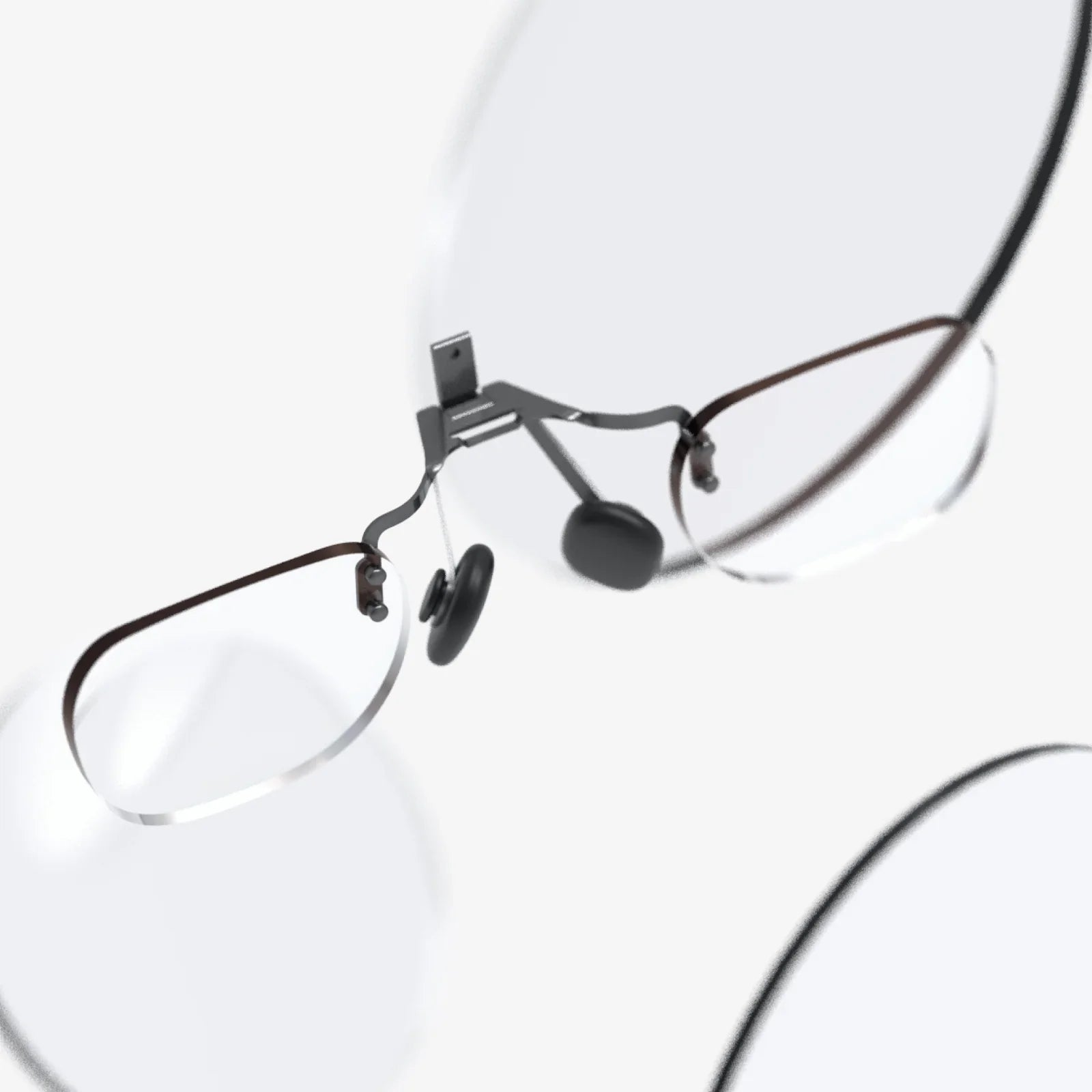
Imagine a world where your memories are not just mental snapshots but high-definition recordings you can revisit anytime. Envision receiving real-time translations of foreign street signs directly onto your lenses or having a master chef guide your hands through a complex recipe without ever being in your kitchen. This is not a distant sci-fi fantasy; it is the imminent reality being ushered in by the rapid development of glasses with an integrated camera and screen. This convergence of optics, computation, and connectivity is poised to fundamentally reshape how we perceive, interact with, and document our world, moving us from the era of handheld devices to one of seamless, always-available augmented intelligence.
The Architectural Marvel: Deconstructing the Technology
At its core, this category of wearable device is a feat of miniaturization and optical engineering. Unlike their bulky virtual reality counterparts that seek to replace reality, these glasses aim to augment it, overlaying a digital stratum onto our physical environment. This requires a symphony of components working in perfect harmony.
The Camera: More Than a Lens
The integrated camera is the device's window to the user's world. Its placement is critical, typically situated on the frame's brow or temple to approximate the user's natural line of sight. Early iterations offered basic video and photo capture, but modern systems are far more sophisticated. They can incorporate:
- High-Resolution Sensors: Capable of capturing 4K video and high-megapixel photos, ensuring clarity and detail for both documentation and computer vision tasks.
- Wide-Angle Lenses: To capture a field of view that closely matches human vision, preventing a restrictive, tunnel-vision effect.
- Advanced Image Signal Processors (ISPs): These handle computational photography in real-time, managing exposure, stabilization, and noise reduction to produce clean, usable footage from a constantly moving platform.
- Low-Light Capabilities: Utilizing larger pixels and software algorithms to see clearly in a variety of lighting conditions.
The Display: Projecting the Digital World
The display technology is arguably the most revolutionary aspect. The challenge is to project digital information onto the transparent lenses without obstructing the user's view of the real world. Two primary methods dominate:
- Waveguide Technology: This method uses microscopic gratings etched into the lens to bend light from a micro-projector at the temple into the user's eye. It's efficient, allows for sleek designs, and can project bright, clear images that appear to float in the distance.
- MicroLED Arrays: Extremely small, bright LEDs are placed directly on the lens. This technology promises incredible brightness and contrast, crucial for use in direct sunlight, though it presents significant manufacturing challenges.
The result is a "heads-up display" (HUD) for life, showing information like notifications, directions, or translated text as a semi-transparent overlay on your natural field of view.
The Brain: Onboard Intelligence and Connectivity
Linking the camera and the screen is a compact yet powerful computer. This system-on-a-chip (SoC) is the brain of the operation, handling tasks from power management to complex AI processing. It is supported by:
- Connectivity Suites: 5G, Wi-Fi, and Bluetooth allow for low-latency streaming, cloud processing, and connection to other devices like smartphones or earbuds.
- Spatial Audio: Speakers built into the temples provide directional sound, making virtual interactions feel present and real.
- Sensor Fusion: An array of sensors—accelerometers, gyroscopes, magnetometers, and sometimes LiDAR—work together to understand the user's head position, movement, and the geometry of the surrounding space. This is essential for anchoring digital objects persistently in the real world.
A World of Applications: Beyond Novelty
The true power of this technology lies not in the hardware itself, but in its software-defined applications. This platform will unlock transformative use cases across every facet of society.
Revolutionizing Enterprise and Industry
The immediate and most impactful adoption is occurring in the professional sphere. These devices act as a silent, knowledgeable partner for workers, providing contextual information hands-free.
- Remote Expertise and Guided Assistance: A field technician repairing a complex piece of machinery can stream their first-person view to an expert thousands of miles away. The expert can then draw digital annotations—arrows, circles, instructions—directly onto the technician's field of view, guiding them through the repair step-by-step. This slashes travel costs, downtime, and error rates.
- Logistics and Warehousing: Workers fulfilling orders can have optimal pick paths, item locations, and inventory data displayed before their eyes, dramatically increasing efficiency and accuracy without constantly consulting a handheld scanner or clipboard.
- Design and Architecture: An architect can walk through a construction site and see the digital building model—conduits, structural beams, plumbing—overlaid perfectly onto the unfinished physical space, identifying potential clashes before they become costly problems.
- Healthcare and Surgery: Surgeons could have vital signs, ultrasound data, or 3D anatomical models from pre-op scans projected into their visual field during procedures, keeping their focus entirely on the patient.
Transforming Social and Personal Interaction
On a personal level, the implications are equally profound, changing how we communicate, learn, and remember.
- Authentic Storytelling and Memory Capture: The concept of "lifelogging"—continuously recording one's experiences—shifts from a niche pursuit to a seamless activity. Users can capture moments from their own perspective, preserving birthdays, a child's first steps, or a breathtaking travel experience with unprecedented authenticity, all without the barrier of a phone screen.
- Real-Time Translation and Navigation: Traveling abroad becomes effortless. Look at a restaurant menu, and the translations appear next to the items. Listen to a foreign language, and subtitles are generated in real-time. Navigation arrows can be painted onto the street itself, guiding you turn-by-turn without ever looking down at a map.
- Accessibility Empowerment: For individuals with visual impairments, the camera can identify and audibly name objects, read text aloud, or highlight obstacles and changes in elevation on the path ahead. For those who are hard of hearing, conversations could be captioned in real-time directly on the lenses.
The Double-Edged Sword: Navigating the Ethical Minefield
This always-on, always-sensing technology does not arrive without significant societal challenges. Its potential for abuse necessitates a parallel development of robust ethical frameworks and privacy norms.
The Privacy Paradox
The most pressing concern is the erosion of privacy. A device that can record video and audio continuously raises alarming questions:
- Consent and Notification: How do we ensure people in the vicinity are aware they are being recorded? Relying on a tiny recording light is insufficient. New social contracts and potentially even technical solutions—like digital signals that announce recording status to other devices—must be developed.
- Surveillance and Data Ownership: Who owns the immense amount of data collected? Could it be mined by corporations or accessed by governments? Clear regulations must dictate data storage, processing, and ownership, ensuring it serves the user first and foremost.
- The End of Anonymous Public Life? The ability to identify strangers through facial recognition, paired with such a device, presents a dystopian scenario. Strict limitations, or outright bans, on real-time facial recognition in public spaces will be crucial to prevent a chilling effect on society.
The Psychological and Social Impact
Beyond privacy, the always-available digital layer could alter human behavior and cognition.
- Digital Distraction and Presence: While designed to be less intrusive than phones, there is a risk of creating a new form of distraction, where users are mentally "elsewhere," consumed by notifications and information overlays instead of engaging with the people and environment directly in front of them.
- Reality Bending and Misinformation: If our perception of reality is being actively augmented, what stops a bad actor from manipulating that feed? The potential for targeted misinformation, malicious AR graffiti, or even psychological manipulation is a serious threat that platform developers must guard against with extreme vigilance.
- The Authenticity of Experience: If every experience is recorded and viewed through a filter of potential sharing or augmentation, does it change our relationship with the moment itself? There is a risk that we become performers in our own lives, rather than purely living them.
The Road Ahead: From Prototype to Paradigm Shift
Current technology is already demonstrating compelling utility in enterprise settings. The path to mass consumer adoption, however, hinges on overcoming a few final hurdles.
- Form Factor and Social Acceptance: The devices must become indistinguishable from fashionable eyewear—lightweight, comfortable, and available in a variety of styles. The goal is for them to be a desirable accessory, not a conspicuous piece of tech.
- Battery Life: Powering a high-resolution display, camera, and computer is immensely demanding. All-day battery life is a prerequisite for mainstream use, requiring breakthroughs in battery density and power management.
- The Killer App: Just as email drove the PC and the touchscreen interface drove the smartphone, a single, irresistible application may be needed to catalyze widespread consumer demand. Whether it's a revolutionary social media experience, a transformative fitness coach, or an unparalleled navigation tool, this app has yet to fully emerge.
The journey of glasses with a camera and screen is just beginning. They represent a fundamental shift in human-computer interaction, moving us from a model of pulling information from a device to one where information is gently pushed into our perception of the world. They promise to make us more capable, more connected, and more knowledgeable. But with this great power comes immense responsibility. The choices we make today—on privacy, ethics, and design—will determine whether this technology becomes a force for universal empowerment or a tool for division and control. The future is not just something we enter; it's something we actively build with every innovation, and this one is set to change the very lens through which we see everything.
Share:
Augmented Reality Head Mounted Display: The Ultimate Guide to the Future on Your Face
How to View Augmented Reality: A Comprehensive Guide to the Digital Overlay