


Imagine a world where information doesn’t just live on a screen in your hand but is painted onto the very fabric of reality itself. Directions materialize as glowing arrows on the sidewalk, historical figures step out of museum paintings to tell their stories, and the instruction manual for a complex piece of machinery hovers, piece by piece, over the actual device. This is the promise of augmented reality (AR), a technology not of distant science fiction, but of here and now. Yet, for many, the question remains: how do you actually view this magical convergence of bits and atoms? The answer is both wonderfully simple and profoundly complex, requiring not just a device, but a new way of seeing.
The Philosophical Lens: More Than a Tool, A New Perception
Before we delve into the hardware and software, the first and most crucial step in understanding how to view augmented reality is to adopt the right mindset. AR is not merely an app you open; it is a layer of perception. Viewing AR is about training your brain to accept digital information as a valid and useful part of your environment. It’s a shift from looking at a screen to looking through a window into an enhanced world. This philosophical lens is the foundation upon which all AR experiences are built. It requires a suspension of disbelief, similar to watching a movie, but with the critical difference that you are an active participant within the narrative of your own life.
This new mode of perception challenges our traditional boundaries between the digital and the physical. To view AR effectively is to become comfortable with a hybrid existence, where data has a place and a context in the three-dimensional space around you. It’s about understanding that the value of AR isn't in the spectacle of digital objects, but in their relevance and connection to your immediate physical context. The 'how' begins with accepting that the world can be annotated, and that you have the power to read those annotations.
The Hardware Portal: Your Window to an Augmented World
The physical act of viewing augmented reality is mediated through hardware, which acts as a portal or a window. These devices range from the ubiquitous to the specialized, each offering a different level of immersion and fidelity.
The Smartphone: The Gateway Drug to AR
For the vast majority of people, the smartphone is the primary and most accessible tool for viewing AR. It requires no specialized equipment; the powerful camera, sensors, and processor in your pocket are already a capable AR machine. Viewing AR through a smartphone is often called "magic window" AR. You hold up your device and look at the world through its screen, where digital content is composited over the live camera feed. This method is fantastic for short-burst experiences: trying on virtual glasses, placing a new piece of furniture in your living room via a retail app, or playing a game that transforms your kitchen table into a battlefield. It’s an intuitive entry point, leveraging a familiar device to introduce the core concept of spatial digital overlay.
Smart Glasses and Headsets: The Hands-Free Future
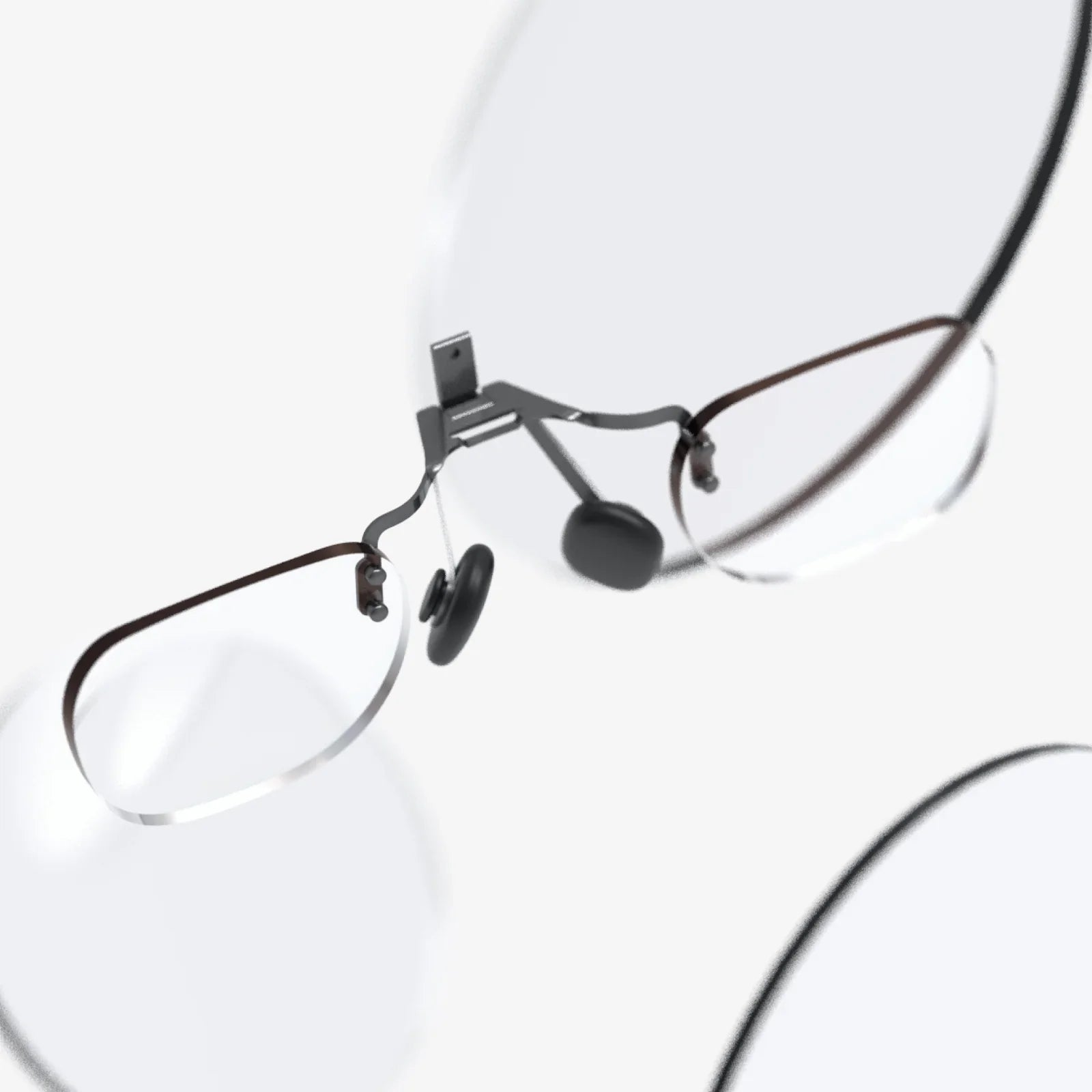
While smartphones offer a peek into AR, smart glasses and headsets are designed to make the augmented layer a persistent and seamless part of your vision. These wearable devices project digital imagery directly onto your retinas or into your field of view using transparent lenses or screens. This is where viewing AR becomes truly transformative. Instead of holding up a rectangle of glass, you simply wear your glasses and information appears contextually around you—a weather readout next to your door, your day’s schedule hovering by your coffee machine, or translated subtitles seamlessly appearing under a foreign street sign.
This category represents the ultimate goal of AR: information available at a glance, integrated so completely that the technology itself fades into the background. Viewing AR through these devices feels less like using a tool and more like possessing a superpower—the ability to see hidden layers of data and interaction that are invisible to the naked eye. The hardware becomes an extension of your own perception.
Specialized Enterprise Equipment
Beyond consumer gadgets, there exists a tier of specialized AR viewers designed for industrial, medical, and military use. These are often ruggedized headsets with advanced tracking capabilities, thermal imaging, and other specialized sensors. For a surgeon, viewing AR might mean seeing a patient’s vital stats and 3D scan data overlayed directly on their body during an operation. For a field engineer, it could mean seeing schematic diagrams and instructions superimposed on a malfunctioning engine. These devices showcase the most critical and high-stakes applications of AR, where viewing enhanced reality isn't about entertainment but about precision, safety, and efficiency.
The Software Symphony: The Engine Behind the Illusion
Hardware provides the eyes, but software provides the brain. Viewing a stable and convincing AR experience is a computational ballet orchestrated by sophisticated software.
Computer Vision: Teaching Machines to See
At the heart of every AR experience is computer vision—the field of AI that enables computers to derive meaningful information from visual inputs. To view digital content that feels locked in place, the software must first understand the environment. It does this by scanning the scene through the camera, identifying feature points, flat surfaces (like floors and tables), and objects. This process, often called SLAM (Simultaneous Localization and Mapping), allows the device to create a rough 3D map of the space and understand its own position within that map. This is why you can place a virtual cat on your rug and have it stay there even as you walk around it; the software remembers where the rug is in relation to the world.
Tracking and Anchoring: Locking the Digital to the Physical
There are several methods software uses to anchor digital content:
- Marker-based Tracking: This uses a predefined visual marker (like a QR code) as a anchor point. The software recognizes the unique pattern of the marker and places the digital content relative to it. This is a highly reliable and simple method, often used in museums and marketing campaigns.
- Markerless Tracking (or Location-based): This uses GPS, compass, and accelerometer data to place content in a specific geographic location. Viewing AR this way allows for experiences like seeing historical photos pinned to their original city locations or finding virtual collectibles scattered around a park.
- Projection-based AR: This less common method actually projects light onto physical surfaces to create interactive displays. While not something a user "views" on a device, it is a form of augmenting reality that alters the perception of a space.
Rendering and Occlusion: The Art of Believability
For an AR experience to be convincing, the digital objects must obey the rules of the physical world. The software must render them with realistic lighting and shadows that match the environment. More importantly, it must handle occlusion—the effect where real-world objects pass in front of digital ones. Advanced AR systems use depth-sensing cameras to create a depth map of the scene, allowing a virtual dragon to convincingly hide behind your very real sofa. This attention to the physics of vision is what sells the illusion and moves AR from a neat trick to a believable overlay.
Interacting with the Augmented Layer
Viewing AR is only half the experience; the other half is interaction. How do you manipulate the digital things you see? Methods are evolving rapidly:
- Touchscreen: The most basic method, tapping, swiping, and pinching on your smartphone screen.
- Gesture Control: Using the camera to track hand and finger movements, allowing you to push, pull, and rotate virtual objects with a wave of your hand.
- Voice Commands: Speaking to control and manipulate the AR environment hands-free.
- Gaze and Dwell Control: In head-mounted displays, simply looking at an object for a moment (dwelling) can activate it.
- Haptic Feedback: Wearable devices can provide subtle vibrations to simulate the tactile feel of interacting with a digital object, completing the sensory loop.
The Ethical and Social Lens: What Are We Really Viewing?
As we learn how to view augmented reality, we must also develop a critical lens through which to assess its impact. This powerful technology raises profound questions.
Privacy: AR devices, with their always-on cameras and microphones, are arguably the most intimate surveillance tools ever conceived. They see what you see, and potentially hear what you hear. The data collected about your environment, your interactions, and even your eye movements is incredibly valuable and incredibly sensitive. Who owns this data? How is it used? Viewing AR might come at the cost of being constantly viewed yourself.
Reality Blur and Addiction: If we can craft perfect, engaging augmented worlds, what incentive do we have to engage with the un-augmented, and sometimes flawed, real world? The potential for escapism and addiction is significant. It could lead to a new digital divide, not just in access to technology, but in the shared experience of a common reality.
Advertising and Manipulation: The potential for AR advertising is staggering. Instead of a banner ad on a website, a virtual billboard could be placed directly in your field of view, tailored to your gaze and biometric data. The line between useful information and manipulative commercial intrusion could become dangerously thin.
Learning how to view AR responsibly means being aware of these issues and advocating for ethical design, transparent data policies, and digital literacy. It’s about choosing when to augment and, just as importantly, when to put the glasses away and simply be present.
The Future of Viewing: Towards a Pervasive Reality
The trajectory of AR is clear: the technology will become smaller, more powerful, more energy-efficient, and ultimately, invisible. The goal is to move from a device we consciously use to a medium we unconsciously inhabit. Future viewing methods might involve contact lenses with embedded displays, or even more direct neural interfaces that project information directly into our visual cortex. The hardware will dissolve, leaving only the enhanced perception.
In this future, viewing AR won’t be an action we take, but a state of being. The digital layer will be a constant, contextual, and customizable companion to our lives. The question will shift from "how to view augmented reality" to "how do we choose to design and govern this new layer of human experience?" The choices we make today, as developers, users, and citizens, will shape the reality that future generations will learn to view.
The ability to weave digital threads into the physical tapestry of our lives is no longer a fantasy. The portals are already in our pockets and on our faces, waiting to be opened. The next time you raise your phone to scan a room, or you see someone gesturing to the air with a pair of sleek glasses, know that you are witnessing a fundamental shift in human-computer interaction. This is not just about viewing a clever animation through a screen; it is about learning to see the world anew, to perceive the invisible data that surrounds us, and to interact with information in the space where life actually happens. The augmented layer is here. The only question left is how you will choose to see it.
Share:
Glasses with Camera and Screen: The Dawn of Personal AI and the Future of First-Person Perspective
XR VR AR Spatial Computing News Today: The Future Is Already Here