


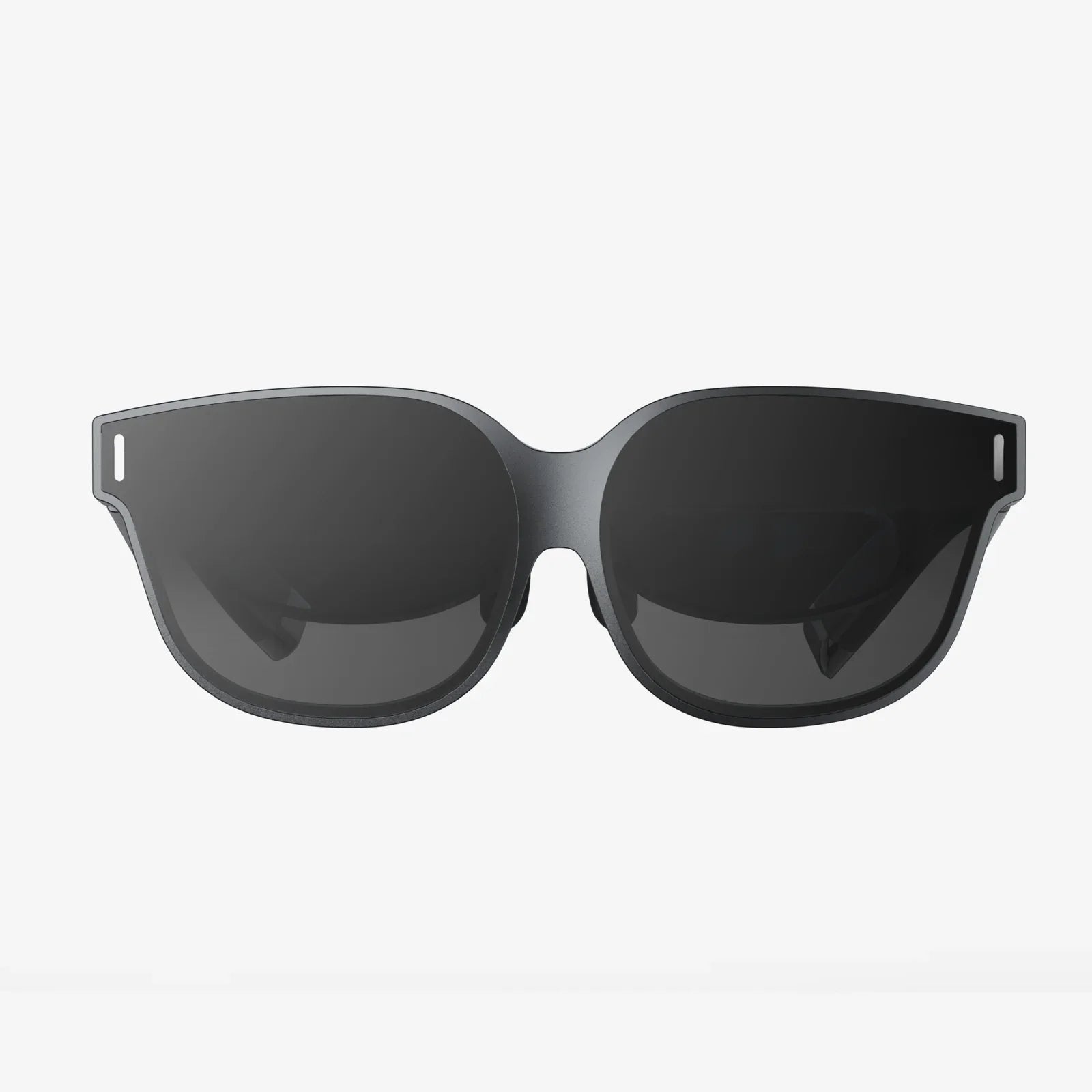
The digital and physical worlds are colliding in ways once confined to science fiction, and the pace of change is nothing short of breathtaking. Keeping up with the relentless stream of innovations in extended reality (XR), virtual reality (VR), augmented reality (AR), and the overarching field of spatial computing can feel like a full-time job. Today's developments aren't just incremental updates; they are foundational shifts, setting the stage for a future where our interaction with technology is seamless, intuitive, and fundamentally integrated into the fabric of our daily lives. This isn't a distant promise—it's happening now, and the news emerging today paints a vivid picture of a world transformed.
The Semantic Layer: Understanding the Terminology
Before diving into the latest headlines, it's crucial to demystify the lexicon that defines this space. These terms are often used interchangeably, but they represent distinct, albeit interconnected, concepts.
Virtual Reality (VR) is the most immersive of the technologies, completely replacing a user's real-world environment with a simulated one. Through a head-mounted display, users are transported to entirely digital landscapes, whether for gaming, training simulations, or virtual tourism.
Augmented Reality (AR) overlays digital information onto the real world. Unlike VR, it does not replace reality but enhances it. Using devices like smartphones or smart glasses, users can see digital objects, data, or animations superimposed on their physical surroundings.
Mixed Reality (MR) sits on the spectrum between AR and VR. It not only overlays digital content but also allows that content to interact with the real world in real-time. A digital ball can bounce off a real-world table, or a virtual character can hide behind your sofa.
Extended Reality (XR) is the umbrella term that encompasses all these immersive technologies: VR, AR, and MR. It represents the entire spectrum of experiences from the completely real to the fully virtual.
Spatial Computing is the foundational technology that makes all of this possible. It's the practice of using digital technology to interact with and within spaces. It involves understanding the geometry of a room, tracking objects and people within it, and allowing software to behave in a context-aware manner. Think of it as the operating system for the next computing platform, one where the world itself is the interface.
Today's Headlines: Enterprise and Industrial Applications Lead the Charge
While consumer applications often grab the most glamorous headlines, the most significant and impactful news in XR today is emerging from the enterprise sector. Companies are leveraging these technologies to solve real-world problems, boost efficiency, enhance safety, and save millions of dollars.
In manufacturing, spatial computing is revolutionizing assembly lines. Workers wearing AR smart glasses can see digital work instructions overlaid directly onto the machinery they are assembling. This reduces errors, accelerates training for new employees, and eliminates the need to constantly consult paper manuals or static computer screens. Today's news often features case studies from automotive and aerospace giants reporting double-digit percentage increases in productivity and significant reductions in time-to-market.
The field of remote assistance and collaboration is another area exploding with activity. Using AR platforms, a senior engineer located thousands of miles away can see what a field technician sees through their glasses. The expert can then draw digital arrows, highlight components, and pull up 3D schematics directly into the technician's field of view, guiding them through a complex repair. This application has become invaluable, minimizing travel costs and downtime while ensuring expertise is available anywhere, anytime.
In healthcare, the news is equally transformative. Surgeons are using VR to rehearse complex procedures on patient-specific 3D models reconstructed from CT and MRI scans. In the operating room, AR is being used to project vital signs, ultrasound data, or critical navigation cues onto the surgical field, improving precision and outcomes. Medical students are learning anatomy by dissecting virtual cadavers, and therapists are using immersive environments to treat PTSD, anxiety, and phobias.
The Consumer Horizon: Beyond Gaming
For consumers, gaming remains the primary driver for VR adoption, with today's headsets offering unparalleled immersion. However, the news points to a rapid expansion beyond entertainment. The social aspect of the metaverse—persistent, shared virtual spaces—continues to evolve. Platforms are becoming more sophisticated, allowing for more nuanced avatars, realistic interactions, and integrated economies for virtual goods and experiences.
AR is slowly permeating daily life through our smartphones. Social media filters are a ubiquitous example, but more practical applications are emerging. Shopping for furniture? You can use your phone's camera to see how a new sofa would look in your living room, perfectly scaled. Navigating a new city? Directional arrows can be overlaid onto the street in front of you. Learning a new skill? Interactive AR tutorials can guide you through fixing a bike or cooking a recipe, with instructions appearing right on your tools or ingredients.
The next giant leap for consumer XR will be the widespread adoption of stylish, comfortable, and powerful AR glasses. While this form factor is still in its relative infancy, news from research labs and tech giants indicates intense competition to crack this code. The device that successfully merges digital content with the real world in a socially acceptable package will be the next smartphone—a platform shift that will redefine personal computing.
Under the Hood: The Technological Engine Driving Progress
The exciting applications making news are all powered by staggering advancements in core technologies.
Hardware: Processors are becoming more powerful and energy-efficient, enabling complex simulations and high-resolution graphics without being tethered to a powerful computer. Display technology is improving, offering higher resolutions, wider fields of view, and solutions to challenges like the vergence-accommodation conflict (which can cause eye strain). Inside-out tracking, where sensors on the headset itself map the environment without external beacons, has become the standard, making setup easier and use more flexible.
Software and AI: This is where the magic of spatial computing truly happens. Machine learning algorithms are getting exceptionally good at understanding scenes. They can identify surfaces (floors, walls, tables), segment objects (a chair, a monitor, a cup), and understand spatial relationships. This allows digital content to behave realistically. Artificial intelligence is also powering more natural input methods, such as hand-tracking and eye-tracking, moving us beyond controllers towards intuitive, gesture-based interaction.
Connectivity: The rollout of high-bandwidth, low-latency 5G networks is a critical enabler for cloud-based XR. Instead of requiring immense local processing power, complex rendering can be done in the cloud and streamed to a lighter, more comfortable headset. This could dramatically lower the cost of high-end experiences and make powerful XR accessible to a much broader audience.
Challenges and Considerations on the Road Ahead
Despite the exciting progress, the path forward is not without its obstacles. Making headlines alongside the technological triumphs are important discussions about the societal implications of these technologies.
Privacy and Data Security: Spatial computing devices are data collection powerhouses. They have cameras, microphones, and sensors that continuously scan and map your personal environment. This raises profound questions: Who owns this spatial data? How is it stored and used? Preventing unauthorized access and ensuring user consent is paramount. The news today includes increasing calls for robust regulatory frameworks to govern this new frontier of data collection.
User Safety and Accessibility: Immersing users in digital worlds presents physical risks, from tripping over real-world objects to simulator sickness. Ensuring these experiences are safe and comfortable for people with different abilities is a critical design challenge that the industry is actively addressing.
The Digital Divide: There is a risk that these transformative technologies could become a privilege for the wealthy, exacerbating existing social and economic inequalities. Ensuring equitable access and developing applications that address a wide range of human needs, not just entertainment or corporate profit, is a challenge that developers and policymakers must tackle together.
From the factory floor to the operating room, and from the living room to the global stage, the convergence of XR, VR, AR, and spatial computing is fundamentally altering our relationship with the digital realm. The news breaking today is not just about cooler gadgets or more realistic games; it's about the foundational infrastructure for a new era of human experience. The lines between bits and atoms are blurring, creating a hybrid reality rich with potential. Staying informed on these developments is no longer optional for those who want to understand—and shape—the world of tomorrow. The future is spatial, and it's being built right before our eyes.
Share:
How to View Augmented Reality: A Comprehensive Guide to the Digital Overlay
Global AR VR Market Size 2025 Forecast: A Deep Dive into the Next Digital Frontier