


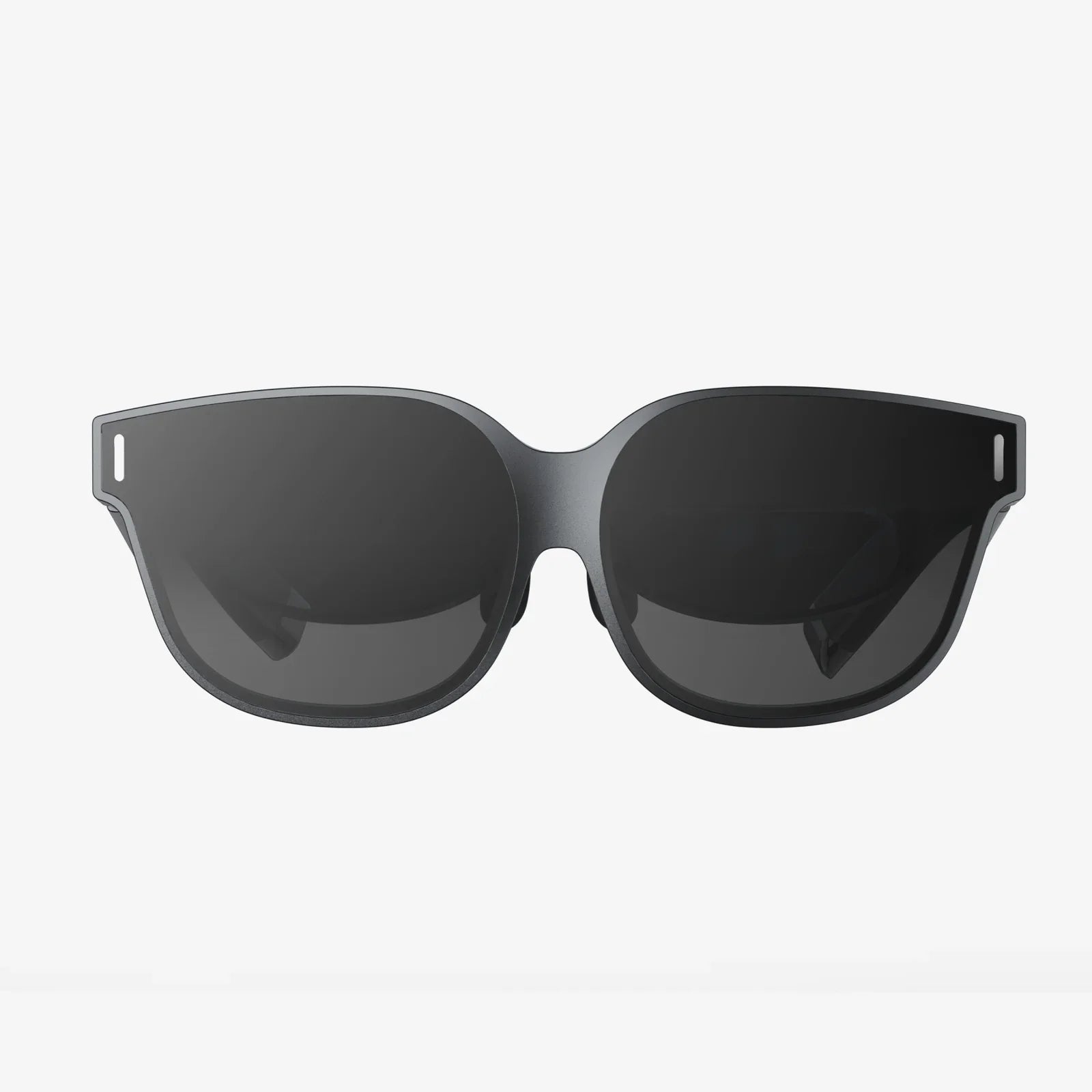
- by wangfred
Augmented Reality Headset Launch: The Dawn of a New Digital Epoch
- by wangfred
Imagine a world where digital information doesn’t just live on a screen in your hand or on your desk, but is woven seamlessly into the very fabric of your physical reality. This is the promise, the potential, and the profound shift heralded by the latest augmented reality headset launch. This isn't merely another gadget release; it is the sounding of a starting pistol for a new era of computing, one that promises to fundamentally alter our perception of reality itself. The boundary between the atoms of our world and the bits of the digital realm is about to become astonishingly thin.
To understand the significance of this launch, one must first move beyond the science-fiction allure and grasp the core technological ambition. Unlike virtual reality, which seeks to replace the user’s environment with a completely digital one, augmented reality aims to supplement and enhance the real world. The goal is to create persistent, interactive digital layers that coexist with physical space. This means information, tools, entertainment, and social connections can exist as holographic entities anchored to your kitchen table, your office wall, or a city street, accessible instantly and intuitively.
The recent headset launch represents a monumental leap toward realizing this vision. It's a convergence of several cutting-edge technologies, each pushed to its limit. It's about achieving a level of visual fidelity where digital objects are indistinguishable from real ones, and developing spatial awareness so precise that a virtual ball can convincingly roll under a real couch. This launch is the culmination of decades of research in miniaturization, display technology, computer vision, and user interface design, packaged into a single, wearable device.
At its heart, this new category of device is an architectural marvel. It is a symphony of advanced components working in perfect harmony to create the illusion of a blended world.
The most critical component is the display system. This is not a simple screen. It involves ultra-high-resolution micro-OLED or similar panels that pump out incredibly sharp imagery. This is paired with a complex array of lenses and, in some designs, innovative pancake optics to fold the light path, making the device more compact. The real magic, however, lies in its ability to seamlessly blend bright digital light with the natural light from your environment, ensuring virtual objects don’t appear as ghostly, transparent overlays but as solid, believable entities.
For digital content to interact with the real world, the device must understand the world itself. This is achieved through a sophisticated array of sensors, including LiDAR scanners, depth sensors, and high-resolution cameras. These components continuously scan the environment, creating a real-time, millimeter-accurate 3D map of the room. This digital twin allows the device to understand surfaces, recognize objects, and precisely occlude digital content behind physical ones—a crucial detail for maintaining the illusion of reality.
Processing the immense amount of visual and spatial data requires immense computational power. This is handled by a custom-designed system-in-package, likely containing a powerful CPU, a high-performance GPU, and, most importantly, a dedicated Neural Processing Unit (NPU). This NPU is the engine for on-device machine learning, handling tasks like hand-tracking, scene recognition, and avatar rendering in real-time, all while preserving user privacy by processing data locally instead of sending it to the cloud.
A new reality demands a new interface. The launch introduces a paradigm shift in how we communicate with technology, moving beyond the touchscreen to a more natural, intuitive form of interaction.
This multimodal approach—combining eyes, hands, and voice—creates a fluid and remarkably human-centric computing experience, reducing the cognitive load associated with traditional interfaces.
While the consumer applications are thrilling, the professional and industrial implications are staggering. This launch isn't just for gamers and tech enthusiasts; it's a powerful tool for countless sectors.
Architects and engineers can step inside their 3D models at a 1:1 scale before a single brick is laid. They can walk through a building's plumbing and electrical systems, identifying conflicts and making changes in real-time. This can save millions in construction costs and drastically reduce errors.
Surgeons can overlay MRI or CT scan data directly onto a patient's body during procedures, providing an X-ray vision-like capability for unparalleled precision. Medical students can practice complex procedures on detailed holographic anatomies, accelerating learning and improving outcomes.
The concept of a video call will become obsolete. Instead, colleagues from across the globe can appear as photorealistic avatars in your living room, standing around a shared 3D model, a virtual whiteboard, or a prototype. This sense of "presence"—feeling like you are truly in the same room—is a quantum leap for remote collaboration, making it more effective and emotionally resonant.
Such a powerful technology does not arrive without significant questions. This launch is the beginning of a crucial societal conversation.
Navigating these challenges will require proactive collaboration between developers, policymakers, and ethicists to ensure this technology empowers humanity without diminishing it.
The initial launch is just the first step on a long road. The first generation of any transformative technology is often bulky, expensive, and limited by battery life. However, it establishes the foundational platform. The true explosion of potential will come from the developer community. As creators and engineers get their hands on the technology, they will dream up applications we haven't yet imagined, pushing the hardware and the very concept of augmented reality to new heights.
Future iterations will become lighter, more powerful, more energy-efficient, and eventually, as ubiquitous and socially acceptable as a pair of eyeglasses. The goal is a device that you forget you're wearing, where the technology fades into the background and the enhanced experience becomes the foreground.
We are standing at the precipice of a change as significant as the advent of the personal computer or the smartphone. The latest augmented reality headset launch is not the culmination of a journey, but the very first, bold step into a future where our digital and physical lives are no longer separate, but are combined into a richer, more informed, and infinitely more connected human experience. The real world is about to get an upgrade.
Share:
What Is Augmented Reality Headset: A Portal to Blended Worlds
Augmented Reality Set: Transforming Reality and Redefining Human Potential