


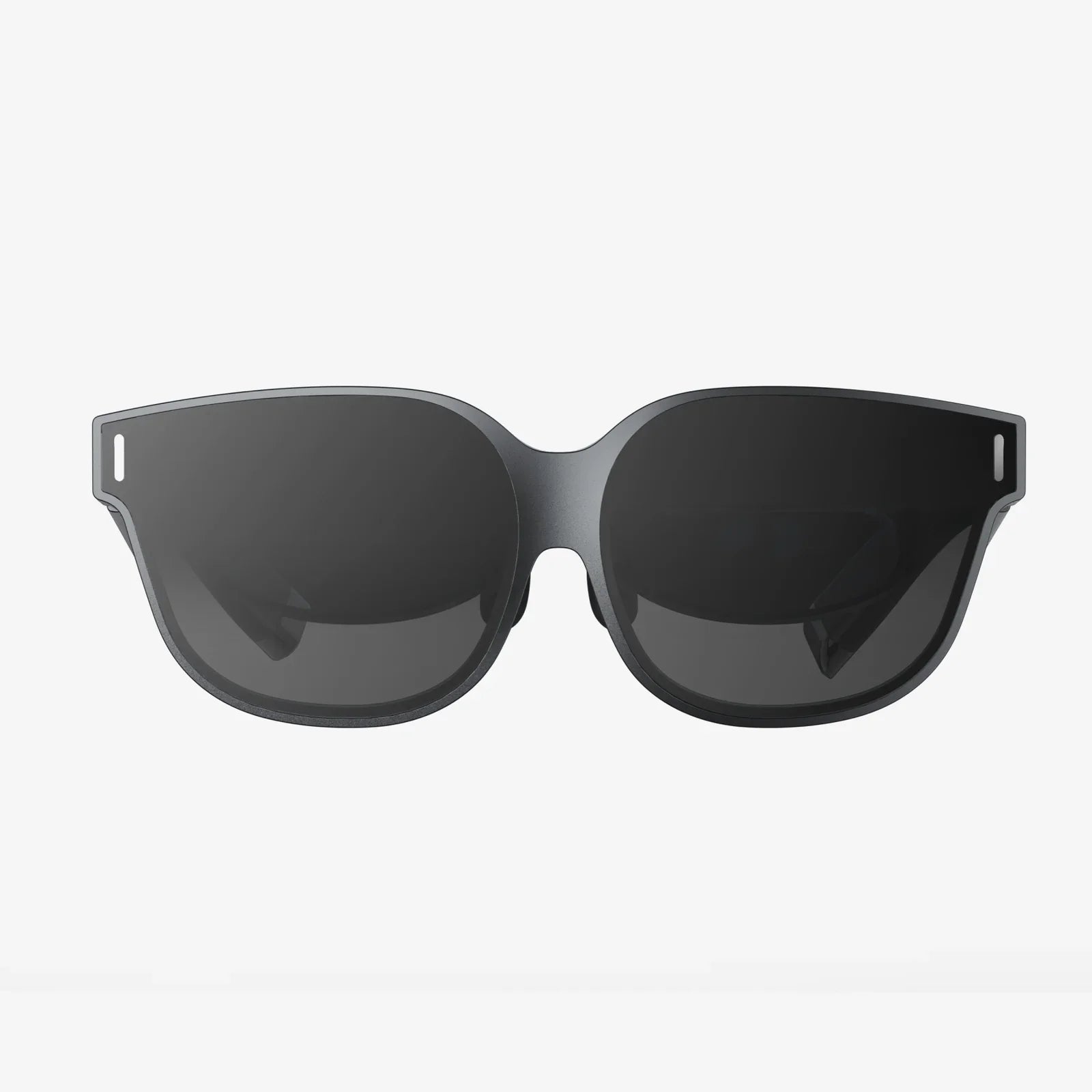
- by wangfred
Augmented Reality Headset Price: A Comprehensive Guide to Cost and Value
- by wangfred
The dream of seamlessly blending digital information with the physical world around us is no longer science fiction; it's a reality you can wear on your head. But as you embark on the journey to purchase your portal to this enhanced existence, one question dominates all others: what is the real cost of an augmented reality headset? The price tag you see is more than just a number—it's a key that unlocks a spectrum of possibilities, limitations, and future potential. Understanding the landscape of augmented reality headset pricing is the first critical step in making an informed decision that aligns with your budget and your vision for the future.
The market for augmented reality headsets is not a monolith. It is a rapidly evolving ecosystem with distinct tiers, each catering to vastly different needs and, consequently, commanding wildly different price points. The first rule of understanding augmented reality headset price is to identify which segment a device belongs to.
At the most accessible end of the spectrum are solutions that often don't require a dedicated, standalone headset. This tier leverages the powerful processors and high-resolution displays of modern smartphones, placing them into simple head-mounted holders with lenses. The augmented reality headset price for these kits is remarkably low, sometimes under a hundred currency units. They offer a tantalizing glimpse into AR, perfect for casual gaming, basic educational apps, and simple visualizations. However, the experience is limited by the phone's computational power, battery life, and field of view, making them a gateway rather than a destination.
This category represents the true beginning of the dedicated AR hardware market. These are self-contained units with their own processors, displays, batteries, and tracking systems. Designed for developers, tech enthusiasts, and prosumers, they offer a significantly more robust and immersive experience. Here, the augmented reality headset price jumps considerably, typically ranging from several hundred to over a thousand currency units. You are paying for integrated spatial mapping, hand tracking, higher-fidelity displays, and a dedicated software ecosystem. This is the playground for innovative applications and the current benchmark for what a personal AR device can be.
At the pinnacle of the market are headsets designed not for entertainment but for mission-critical industrial applications. These devices are built for durability, precision, and integration into complex workflows in fields like manufacturing, surgery, architecture, and military training. The augmented reality headset price in this tier reflects its ruggedized construction, industrial-grade sensors, unparalleled processing power, and specialized enterprise software suites. Prices can soar into the thousands, often representing a professional tool and a capital investment for a business rather than a consumer purchase. The return on investment is measured in increased efficiency, reduced errors, and enhanced training, not just hours of entertainment.
Why does the price vary so dramatically? The answer lies in the sophisticated technology packed into the frame. Each component represents a significant portion of the research, development, and manufacturing cost.
The technology used to project digital images onto your view of the real world is one of the most critical and costly aspects of a headset. Basic systems use simple optics, while high-end devices employ complex solutions like micro-OLED displays paired with waveguide combiners or birdbath optics. These advanced systems are engineered to be bright enough to overlay graphics onto sunlit environments, offer a wide field of view to create a more immersive canvas, and provide high resolution to ensure text and graphics are sharp and legible. The R&D behind miniaturizing these components while achieving optical clarity is immense, directly impacting the final augmented reality headset price.
For an AR headset to understand and interact with its environment, it needs a sophisticated array of sensors. This typically includes multiple high-resolution cameras for simultaneous localization and mapping (SLAM), depth sensors (like time-of-flight cameras or LiDAR) to understand the geometry of a space, inertial measurement units (IMUs) for tracking head orientation, and often eye-tracking cameras for foveated rendering and intuitive interaction. The quantity, quality, and calibration of these sensors are a major driver of both capability and cost. A headset designed for precise digital twin overlays in a factory will need far more advanced sensing than one designed for watching floating screens.
All the data from the sensors must be processed in real-time to track the user's position and render the appropriate graphics. This requires significant computational horsepower, typically provided by a customized system-on-a-chip (SoC). The need for powerful processing while maintaining low thermals and power consumption for all-day battery life is a monumental engineering challenge. The choice of processor is a key differentiator between a sluggish, low-fidelity experience and a smooth, convincing one, and its cost is factored directly into the augmented reality headset price.
Form factor is no afterthought. A device meant to be worn for hours must be lightweight, well-balanced, and comfortable. Using premium materials like magnesium alloys and carbon fiber to reduce weight adds cost. Furthermore, the battery technology and its capacity dictate how long a user can remain untethered. Integrating a large enough battery for a full workday, without making the headset too heavy or bulky, involves expensive compromises and innovations.
Focusing solely on the initial purchase price is a common mistake. The true cost of entering the AR world often extends further.
Some enterprise-focused platforms operate on a subscription model. The hardware may be sold at a reduced cost or even leased, but the crucial software that enables specific industrial applications requires ongoing payments. For consumers, while many apps are free or low-cost, premium professional or creative software for these platforms can represent a significant additional investment.
To unlock the full potential of a system, users may need to purchase additional controllers, specialized styluses for design work, or alternative head straps for improved comfort. These add-ons, while optional, are essential for certain use cases and add to the total investment.
AR technology is advancing at a breakneck pace. A headset purchased today may be technologically obsolete in two to three years. This rapid iteration cycle presents a financial consideration: is it better to invest heavily in a current high-end model or purchase a more affordable option now with the expectation of upgrading sooner? There is no right answer, but it's a crucial factor in evaluating the long-term value of an augmented reality headset price.
Historical precedent in technology, from personal computers to flat-screen TVs, shows a consistent trend: prices fall as technology matures and scales. AR is expected to follow the same path, but with its own unique twists.
As the addressable market expands from niche professionals to a broader consumer base, manufacturers will produce components in much larger volumes. This increased scale drives down the per-unit cost of displays, sensors, and processors. Furthermore, competition will fuel innovation in manufacturing processes, leading to more efficient and cost-effective ways to produce complex optics and assemblies.
The ultimate goal for many tech companies is to create a pair of AR glasses that are as socially acceptable and lightweight as regular eyeglasses. Achieving this "holy grail" of form factor requires breakthroughs in micro-displays, battery technology, and thermal management. The first generation of these devices will likely carry a premium price, but they will pave the way for mass-market adoption and subsequently lower prices for more standard models.
In the future, the value of an AR headset may be less about the hardware itself and more about the ecosystem it connects to—the "metaverse" or spatial computing environment. A more affordable headset could serve as a gateway to vast digital worlds and services, with the hardware cost potentially being subsidized by software and content sales, much like gaming consoles.
Navigating the world of augmented reality headset price is about balancing aspiration with practicality. It requires a clear understanding of your intended use, a recognition of the advanced technology you're paying for, and a keen eye on the horizon for what's coming next. The initial investment is your ticket into a revolution that is redefining how we work, learn, play, and connect with the world around us. The question is no longer if you will join this revolution, but when and how your budget will allow you to step through the looking glass and into a truly augmented life.
Share:
Augmented Reality Step by Step Instructions: The Ultimate Guide to Mastering AR
Definisi Augmented Reality AR: Bridging the Physical and Digital Worlds