


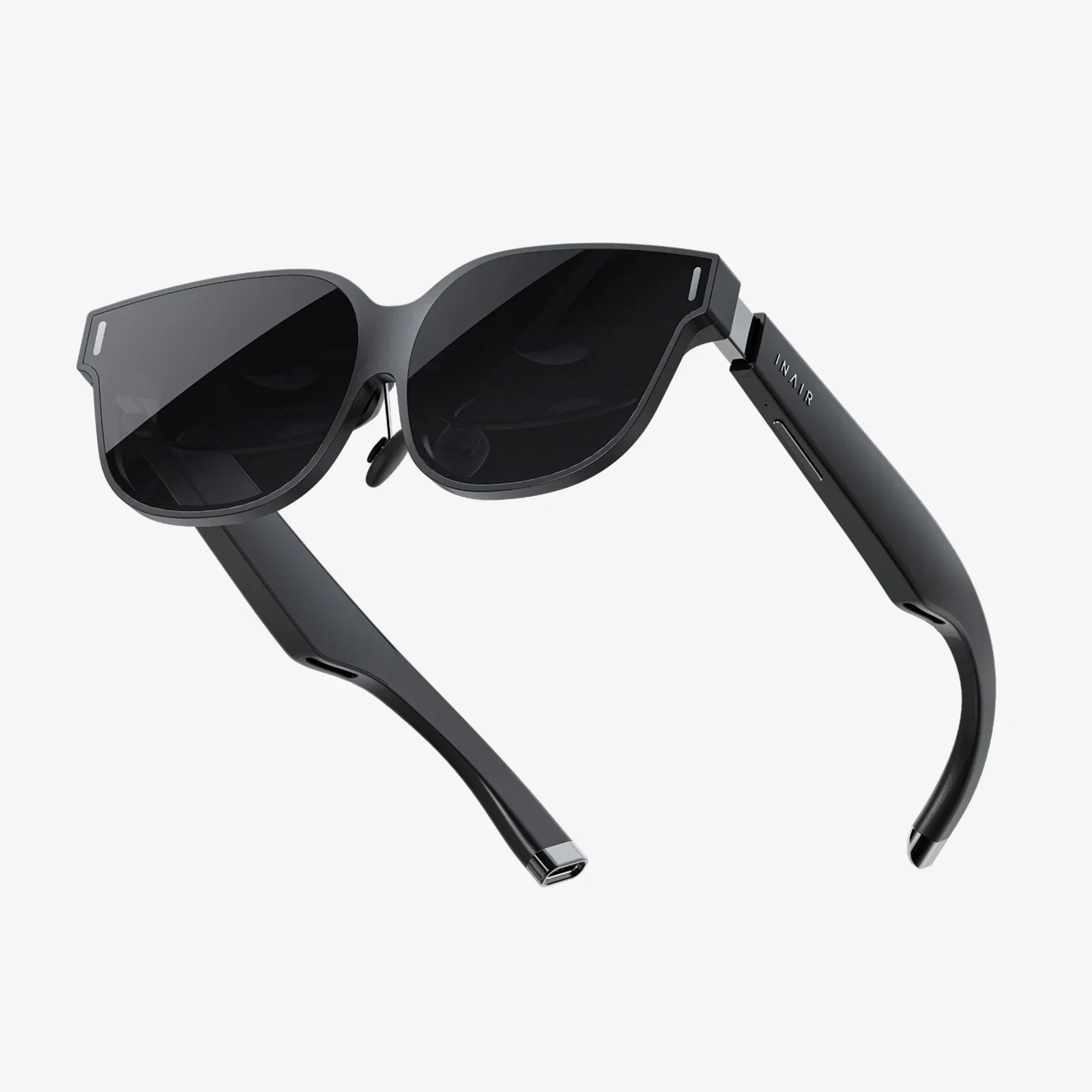
Imagine a world where your next career move doesn't just exist on a screen or in an office, but is seamlessly layered onto the very fabric of reality around you. This isn't science fiction; it's the burgeoning professional landscape being defined by augmented reality (AR), and the job descriptions emerging from this sector are as dynamic and innovative as the technology itself. The quest to bridge our physical and digital worlds is creating a surge in demand for a new breed of professionals, making an augmented reality job description one of the most exciting and sought-after documents in the tech industry today.
The Foundation: What is Augmented Reality in a Professional Context?
Before dissecting the roles, it's crucial to understand the professional scope of AR. Unlike its fully immersive cousin, virtual reality (VR), augmented reality enhances the real world by overlaying digital information—be it 3D models, data streams, or interactive instructions—onto a user's physical environment via devices like smart glasses, smartphones, and tablets. In a professional context, this translates to revolutionary applications: a surgeon visualizing a patient's anatomy during a procedure, a field technician receiving real-time, hands-free guidance to repair complex machinery, an architect walking clients through a life-size, digital model of their unbuilt home, or a warehouse worker seeing the most efficient picking route superimposed on the aisle. The augmented reality job description is, therefore, inherently interdisciplinary, sitting at the potent intersection of software development, creative design, user experience, and specific industry expertise.
Deconstructing the Core Roles: A Taxonomy of AR Talent
The ecosystem of AR development and implementation is complex, requiring a diverse team with specialized skills. An overarching augmented reality job description often branches into several key specializations.
1. The AR Software Developer/Engineer
This role forms the technical backbone of any AR project. The developer is responsible for building the core software, writing the code that makes digital objects understand and interact with the physical world. A typical augmented reality job description for a developer would emphasize:
- Technical Proficiency: Expert knowledge in game engines, particularly Unity and/or Unreal Engine, is almost non-negotiable. These platforms provide the essential tools for rendering 3D content and handling real-time graphics.
- Programming Languages: Strong skills in C# (for Unity) and C++ (for Unreal Engine) are paramount. Knowledge of native mobile development languages like Swift for iOS and Kotlin for Android is a massive advantage for smartphone-based AR experiences.
- AR-Specific SDKs: Experience with Software Development Kits such as ARKit (Apple), ARCore (Google), and Windows Mixed Reality is essential. These kits provide the pre-packaged capabilities for motion tracking, environmental understanding, and light estimation.
- 3D Mathematics: A solid grasp of linear algebra, 3D vectors, matrices, and quaternions is required to manage object transformation, rotation, and spatial anchoring.
2. The AR/VR UX/UI Designer
If the developer makes it work, the UX/UI designer makes it work for a human being. This role is arguably more challenging than traditional app design because there are no established conventions. The designer must invent intuitive ways for users to interact with a blended reality. An augmented reality job description for this role would highlight:
- Spatial Design Thinking: The ability to design user interfaces that exist in three-dimensional space, considering depth, scale, and occlusion (where real-world objects block digital ones).
- Interaction Paradigms: Designing and prototyping novel interaction methods like gesture controls, voice commands, and gaze-based selection that feel natural and effortless.
- User Empathy and Testing: A deep understanding of user comfort and safety is critical to avoid simulator sickness and create accessible experiences. This involves extensive user testing in real-world environments.
- Visual Design for Reality: Crafting digital elements that believably blend with the physical world, considering lighting, shadows, and material properties.
3. The 3D Artist and Modeler
AR is a visual medium, and high-quality 3D assets are its currency. This role creates the characters, objects, and environments that users interact with. A job description here focuses on:
- 3D Modeling and Sculpting: Proficiency in tools like Blender, Maya, 3ds Max, or ZBrush to create low-poly, optimized models that perform well on mobile processors.
- Texturing and Materials: Expertise in creating realistic PBR (Physically Based Rendering) materials that react correctly to the real-world lighting conditions captured by the device's camera.
- Animation: The skill to rig and animate 3D models, bringing them to life within the AR experience.
- Optimization: A critical skill: expertly balancing visual fidelity with performance to ensure a smooth, jitter-free experience that doesn't drain the device's battery excessively.
4. The AR Product Manager
This strategic role connects the technology to business value. The AR product manager defines the vision, roadmap, and requirements for an AR product or feature. Their augmented reality job description is less about technical skills and more about vision and execution:
- Market Analysis: Identifying viable use cases where AR solves a real problem for a specific industry (e.g., retail, manufacturing, healthcare).
- Cross-Functional Leadership: Bridging the gap between engineers, designers, executives, and marketing teams to align goals and resources.
- Agile Methodology: Managing the product lifecycle using agile frameworks to adapt to the fast-paced and experimental nature of AR development.
- Metrics and ROI: Defining key performance indicators (KPIs) and measuring the success and return on investment of AR deployments.
Beyond the Tech: Industry-Specific AR Roles
As AR matures, specialized roles are emerging that combine AR expertise with deep domain knowledge. An augmented reality job description might now appear in a hospital, a factory, or a construction firm, not just a tech startup.
- Enterprise AR Solution Architect: This professional designs large-scale AR systems for Fortune 500 companies, integrating AR software with existing enterprise systems like ERP, CRM, and IoT platforms.
- Medical AR Specialist: A role requiring both knowledge of AR development and human anatomy, focused on creating applications for surgical planning, medical training, and patient education.
- Industrial AR Trainer: An expert who uses AR authoring tools to create interactive, on-the-job training modules for complex assembly, maintenance, and safety procedures.
The Essential Skillset: What Every AR Professional Needs
While technical skills vary by role, certain core competencies appear across almost every augmented reality job description:
- A Problem-Solving Mindset: AR is about solving real-world problems in novel ways. The best AR professionals are curious, inventive, and relentlessly focused on utility.
- Adaptability and Continuous Learning: The AR field evolves at a breakneck pace. New hardware, SDK updates, and design patterns emerge constantly. A commitment to lifelong learning is mandatory.
- Collaboration: Building AR experiences is a profoundly collaborative effort. Developers, designers, and artists must work in tight feedback loops, requiring excellent communication skills.
- Portfolio Over Pedigree: More than most fields, AR values a strong portfolio of working prototypes and projects. A demonstrable ability to create functional AR experiences often trumps a traditional resume.
The Future of the Augmented Reality Job Description
The trajectory of AR is pointing towards more seamless integration into daily life and work. The evolution of lighter, more powerful AR glasses will be a major catalyst, moving experiences from handheld smartphones to a hands-free, always-available format. This will inevitably reshape the augmented reality job description yet again. We will see a greater demand for experts in areas like:
- Spatial Computing: Designing persistent digital content that is tied to specific locations, creating a shared "digital twin" of the world.
- AI and Machine Learning Integration: Using AI for advanced scene understanding, object recognition, and predictive contextual overlays, making AR experiences smarter and more proactive.
- Privacy and Ethics: As AR devices with always-on cameras become prevalent, new roles will emerge to navigate the complex ethical and privacy implications of blending the digital and physical so intimately.
The augmented reality job description is more than just a list of requirements; it's a snapshot of a technological revolution in progress. It represents a frontier where the lines between the digital and physical are not just blurred but deliberately and usefully merged. For those with the skills and the vision, these roles offer a chance to be architects of the next computing platform, building the interfaces and experiences that will define how we work, learn, and interact for decades to come. The future of work isn't just about doing a job; it's about enhancing reality itself, and the door to that future is now open.
Share:
Problems with Augmented Reality: Navigating the Unseen Obstacles to a Digital Overlay
Lightweight VR Glasses: The Unseen Revolution Reshaping Our Digital Reality