


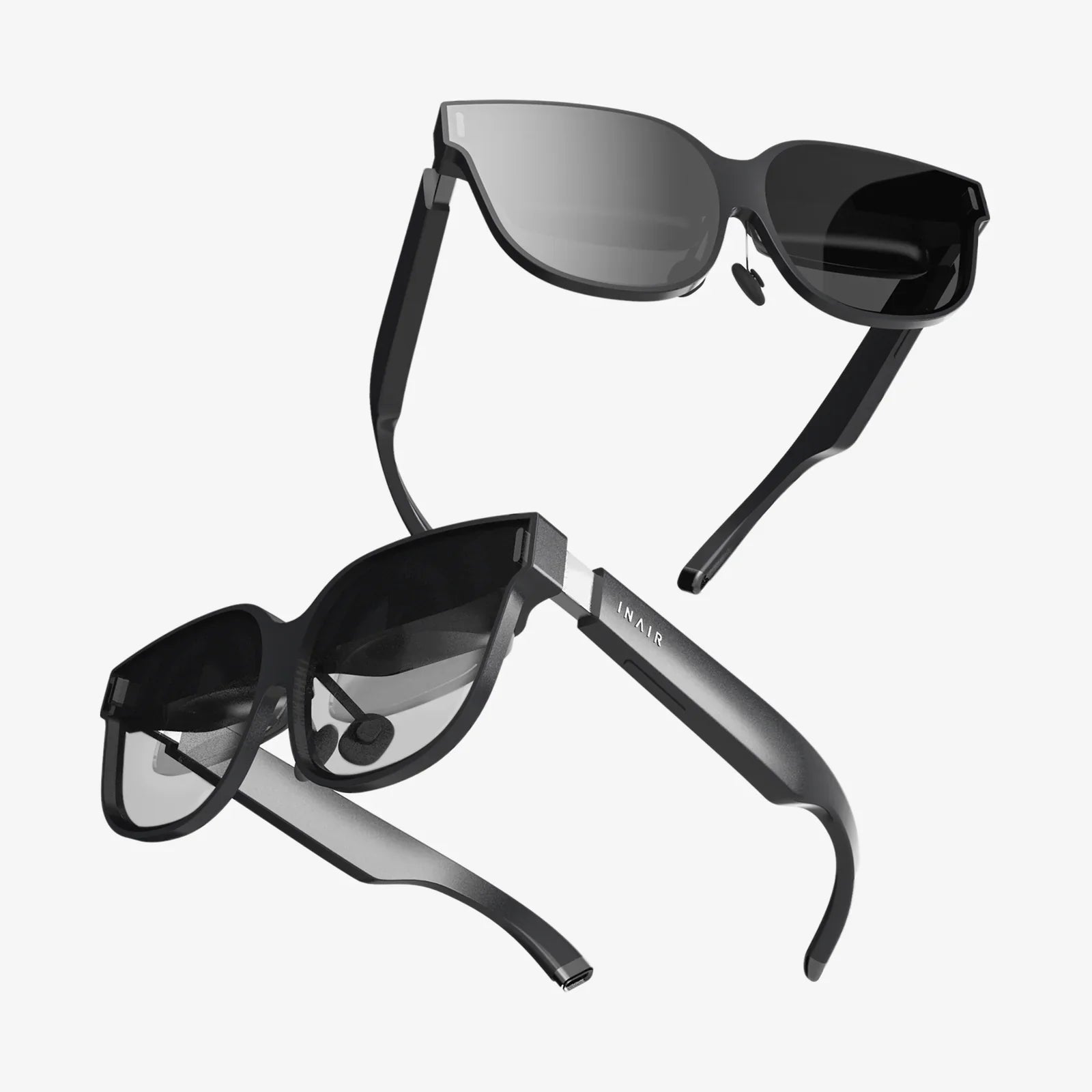
Imagine a world where digital information isn't confined to a screen but is seamlessly woven into the fabric of your physical reality, enhancing everything from how you work and learn to how you shop and receive medical care. This is the promise of augmented reality (AR), a technology poised to redefine human interaction with the digital world. While often discussed as a singular phenomenon, the true story of AR's explosive growth and profound impact lies in its diverse and rapidly evolving market segments. Each sector presents a unique set of challenges, opportunities, and transformative applications, painting a complex and fascinating picture of our augmented future.
The Enterprise and Industrial Segment: The Bedrock of AR Value
Far from the consumer-focused hype, the enterprise and industrial segment has emerged as the undeniable powerhouse and primary revenue driver within the augmented reality market. This sector prioritizes practical problem-solving, operational efficiency, and a clear return on investment (ROI), making it a fertile ground for AR adoption.
The core applications here are revolutionizing traditional workflows:
- Remote Assistance and Expert Guidance: This is a killer app for industrial AR. A field technician facing a complex repair can wear AR glasses that allow a remote expert, thousands of miles away, to see their field of view. The expert can then annotate the real-world components with digital arrows, instructions, and diagrams, guiding the technician through the procedure in real-time. This drastically reduces downtime, minimizes travel costs for specialists, and empowers less-experienced workers to perform complex tasks.
- Assembly, Manufacturing, and Quality Control: On assembly lines, AR systems can project digital work instructions directly onto the physical components in front of a worker. This can visually guide them through each step, highlight the correct parts and tools, and ensure procedures are followed with precision, reducing errors and training time. In quality control, AR can overlay the digital ideal model (CAD data) onto a physically manufactured object, instantly highlighting any dimensional discrepancies or defects invisible to the naked eye.
- Design and Prototyping: Engineers and designers can use AR to visualize and interact with full-scale 3D models of their creations in the real world long before physical prototypes are built. An automotive designer can project a life-sized model of a new car into an empty studio, walk around it, and assess its design from every angle, facilitating collaborative decision-making and accelerating the design iteration process.
- Logistics and Warehouse Management: In massive distribution centers, AR smart glasses can display optimal picking routes, directly identify the correct items on a shelf, and verify order accuracy by cross-referencing digital data with the physical world. This leads to a significant increase in picking speed and accuracy, streamlining the entire supply chain.
The growth in this segment is fueled by the tangible metrics it delivers: reduced operational costs, enhanced worker safety, improved first-time fix rates, and accelerated time-to-competency for new employees.
Healthcare and Medical AR: Enhancing Precision and Patient Outcomes
The healthcare segment represents one of the most impactful and life-changing applications of augmented reality. Here, the technology moves beyond efficiency to directly enhance patient care, surgical precision, and medical training.
- Surgical Assistance: Surgeons can use AR headsets or displays to see critical patient data—such as MRI or CT scans—superimposed directly onto their field of view during an operation. This can precisely show the location of tumors, blood vessels, or nerves beneath the surface of the tissue, acting as an intuitive GPS for the human body. This enhances surgical accuracy, minimizes incision sizes, and can lead to reduced operation times and improved patient recovery.
- Medical Training and Education: AR provides an unparalleled tool for anatomy education. Instead of relying solely on textbooks or cadavers, students can use AR to explore detailed, interactive, and layered 3D models of the human body. They can peel back virtual layers of muscle, bone, and organs, gaining a deeper understanding of spatial relationships and physiological functions. This immersive learning accelerates comprehension and retention of complex medical knowledge.
- Patient Care and Rehabilitation: AR applications can assist patients in their recovery. For instance, a physiotherapy app can use a device's camera to track a patient's movements during an exercise and provide real-time, on-screen feedback to ensure they are performing it correctly. For patients with phobias or anxiety disorders, AR can be used in controlled exposure therapy, gradually introducing stimuli in a safe and manageable way.
- Vein Visualization: A practical and already deployed application involves AR projectors that map a network of veins onto a patient's skin, making it dramatically easier for nurses to locate veins for injections or blood draws, especially in patients with difficult venous access.
The adoption in healthcare is understandably cautious due to stringent regulatory hurdles and the critical nature of the applications, but the potential for positive disruption is immense.
Retail and E-commerce: Bridging the Digital and Physical Shopping Experience
The retail segment leverages AR to solve a fundamental e-commerce problem: the inability to try before you buy. This segment is focused on enhancing customer engagement, reducing return rates, and creating exciting new marketing opportunities.
- Virtual Try-On: This is most prevalent in apparel, eyewear, and cosmetics. Customers can use their smartphone cameras or webcams to virtually "try on" clothes, see how a new pair of glasses looks on their face, or test different shades of makeup. This immersive experience builds consumer confidence in their purchase decisions, leading to higher conversion rates and fewer product returns.
- Furniture and Home Décor Visualization: Perhaps one of the most popular consumer AR applications, this allows users to place virtual models of furniture, appliances, and décor items into their actual living space. They can see exactly how a new sofa will fit, both in size and style, within their room before committing to a purchase. This eliminates the guesswork and helps consumers create a cohesive design for their homes.
- In-Store Navigation and Product Information: Within large physical stores, shoppers can use an AR app on their phone to navigate to the exact aisle where a product is located. By pointing their camera at a product, they can access a digital overlay showing additional information, customer reviews, promotional offers, or comparable items.
- Interactive Marketing and Advertising: Brands are creating AR-powered packaging and print ads. By scanning a product's box or a magazine page with a smartphone, consumers can unlock interactive 3D content, games, or demonstrations, transforming static marketing into an engaging experience that drives brand recall.
For retailers, this segment is all about enhancing the customer journey, creating a "wow" factor, and driving sales by merging the convenience of online shopping with the confidence of physical inspection.
Education and Training: The Future of Immersive Learning
Beyond medical training, the broader education and training segment is being revolutionized by AR's ability to make abstract concepts tangible and create engaging, interactive learning environments.
- Interactive Textbooks and Learning Materials: Static diagrams in history or science books can spring to life. Students studying astronomy can point their device at a page to see a 3D solar system rotate above it. Biology students can explore a beating heart model from all angles. This transforms passive reading into an active discovery process.
- Skills-Based and Vocational Training: Similar to industrial applications, AR is used to train mechanics, welders, electricians, and other skilled trades. Trainees can practice complex procedures on virtual machinery overlaid onto real-world workbenches, receiving guided instructions without the risk of damaging expensive equipment or injuring themselves. This allows for safe, repeatable, and scalable training.
- Museum and Cultural Heritage Experiences: Museums are deploying AR to bring exhibits to life. Pointing a device at a fossil might show a full-scale, animated dinosaur walking through the hall. At historical sites, visitors can see reconstructions of ancient ruins overlaid onto the current remains, effectively traveling back in time and gaining a deeper contextual understanding.
- Corporate Training: Companies use AR to train employees on everything from complex software systems and sales protocols to safety procedures. New employees can learn about equipment by pointing their tablet at it to see animated instructions and warnings, accelerating onboarding and ensuring consistency.
The key driver here is the enhancement of comprehension and retention through visual and kinesthetic learning, making education more accessible, effective, and captivating for all age groups.
Gaming and Entertainment: The Consumer Gateway
While the enterprise sector drives revenue, the gaming and entertainment segment, ignited by a global phenomenon, served as the massive catalyst for public awareness and adoption of AR technology. This segment focuses on pure engagement, fun, and social interaction.
- Location-Based Gaming: This genre uses GPS and AR to turn the entire real world into a game board. Players explore physical parks, neighborhoods, and landmarks to discover virtual characters, collect items, and engage in battles with other players. This encourages physical activity and social interaction in a shared digital-physical space.
- Interactive Storytelling and Narrative Experiences: AR allows for stories to unfold in the user's environment. A ghost story might have spectral figures appearing in your own home, or a detective game might have clues hidden on your desk. This creates a powerful sense of presence and immersion that is impossible to achieve with traditional media.
- Live Events and Sports Broadcasting: Broadcasters are experimenting with AR to enhance the viewing experience. During a sports game, virtual first-down lines on a football field or race car telemetry data projected onto the track are early examples. In the future, this could extend to richer statistical overlays and interactive elements for home viewers.
- Social Media Filters and Lenses: Perhaps the most ubiquitous form of consumer AR, these face filters that add bunny ears, funny masks, or beauty effects to selfies have become a cultural staple. They represent a lightweight, social, and highly shareable application of the technology that has normalized AR for hundreds of millions of users.
This segment, while often perceived as frivolous, is crucial for driving hardware adoption, developer interest, and mainstream cultural acceptance, creating a foundation upon which more serious applications can build.
Emerging and Niche Segments with High Potential
Beyond these core areas, several other segments are beginning to leverage AR in innovative ways, indicating the technology's pervasive potential.
- Automotive and Transportation: AR head-up displays (HUDs) are being integrated into vehicles, projecting navigation arrows, speed, and safety warnings directly onto the windshield, aligned with the driver's view of the road. This reduces distraction and improves safety by keeping the driver's eyes on the road. Maintenance technicians also use AR for repairs, similar to industrial applications.
- Real Estate and Construction: Architects and developers use AR to showcase unfinished properties, allowing potential buyers to walk through a physical construction site and see fully rendered interiors, furniture, and finishes through a tablet or glasses. On construction sites, AR can project digital blueprints onto the physical structure to verify alignment and prevent errors.
- Marketing and Advertising: As mentioned in retail, this is a cross-cutting segment. AR creates interactive print ads, packaging, and billboards, offering consumers a "magic window" into a brand's story and creating memorable, interactive campaigns that drive engagement far beyond a static image.
Challenges and the Road Ahead
Despite its promise, the proliferation of AR across these market segments faces significant hurdles. The technology's success is not guaranteed by software alone; it is inextricably linked to hardware development. For widespread adoption, AR wearables need to become lighter, more comfortable, socially acceptable, and offer all-day battery life, all while delivering high-resolution, immersive visuals. The current divide between powerful tethered systems and limited standalone devices needs to be bridged.
Furthermore, creating compelling and intuitive content remains a challenge. The design language for spatial computing is still being written. Developers must learn to design experiences that feel natural within a user's physical environment rather than confined to a rectangle. Issues of privacy, data security, and digital litter—the problem of virtual objects cluttering the real world—also need to be addressed through clear ethical guidelines and regulations.
Finally, the cost of development and deployment, particularly for enterprise-grade solutions, can be prohibitive for smaller organizations, potentially slowing adoption until the technology becomes more accessible and standardized.
The trajectory of the augmented reality market is not a single path but a sprawling network of interconnected industries, each adopting and adapting the technology to its own needs. From the factory floor to the operating room, from the classroom to the living room, AR is quietly and profoundly changing how we interact with information and with our world. The true power of AR lies not in replacing reality, but in augmenting it—enhancing human capability, enriching experiences, and unlocking possibilities we are only beginning to imagine. The next time you look at the world around you, remember: it's about to become a whole lot more interesting.
Share:
Best AI Glasses for Work: The Ultimate Guide to Augmented Productivity
Augmented Reality Market Size 2025 CAGR: A Meteoric Rise Fueled by Innovation