


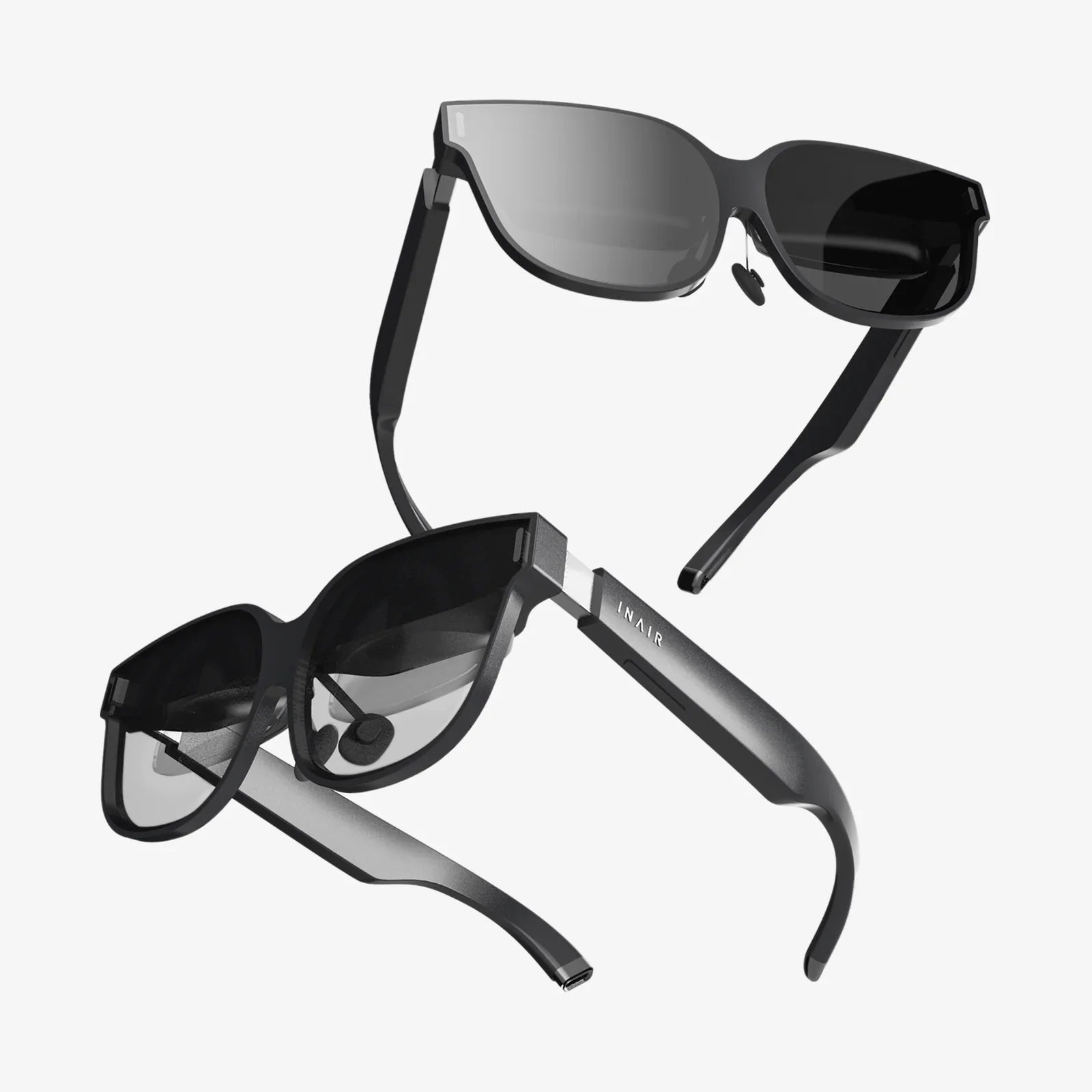
The digital and physical worlds are colliding in ways once confined to science fiction, and if you're not paying attention to the latest augmented reality and mixed reality news today, you're missing the dawn of a fundamental shift in human-computer interaction. This isn't about donning a headset to play a game; it's about overlaying a rich tapestry of information, context, and digital creation onto the reality we already know. The pace of innovation is staggering, with breakthroughs announced not yearly, but weekly, signaling that the future is arriving faster than anyone predicted.
The Semantic Layer of Reality: Understanding AR and MR
Before diving into the headlines, it's crucial to distinguish between the two intertwined technologies dominating the discourse. While often used interchangeably, Augmented Reality (AR) and Mixed Reality (MR) represent different points on a spectrum of immersion.
Augmented Reality (AR) primarily involves superimposing digital elements—images, text, animations—onto the user's view of the real world through a device screen, like a smartphone or tablet, or through smart glasses. The digital objects are placed within the environment but don't necessarily interact with it in a physically meaningful way. Think of popular social media filters or navigation arrows projected onto the street view on your phone.
Mixed Reality (MR) is the more advanced evolution of this concept. It not only overlays digital content but anchors it to the physical world, allowing for real-time interaction. Using advanced sensors, cameras, and spatial mapping, MR devices understand the geometry of a room. A digital character can hide behind your real sofa, a virtual monitor can be placed on your real wall and stay there, and your real hands can manipulate a digital engine model. MR requires more sophisticated hardware, often in the form of untethered headsets, to achieve this seamless blend.
The key differentiator is contextual awareness. AR adds a layer; MR creates a symbiotic relationship between the layer and the world.
Headlines from the Frontlines: Enterprise and Industry Lead the Charge
While consumer applications grab flashy headlines, the most profound and immediate impact of AR and MR news today is happening in enterprise and industrial settings. Companies are leveraging these technologies to solve real-world problems, boost efficiency, and enhance safety.
Revolutionizing Manufacturing and Field Service
Technicians repairing complex machinery, from wind turbines to MRI scanners, are now using AR smart glasses or tablet-based guides. Instead of juggling physical manuals or scrolling through PDFs on a laptop, they see animated, step-by-step instructions overlaid directly onto the equipment they are fixing. They can access schematics, receive remote guidance from an expert who can see their view and draw annotations into their field of vision, and identify specific parts using object recognition. This reduces errors, slashes training time, and minimizes downtime, translating into millions saved.
The Digital Twin Revolution
One of the most powerful enterprise applications is the concept of the digital twin—a virtual, real-time replica of a physical asset, process, or system. Using MR, engineers and designers can walk around and through a full-scale 3D model of a new jet engine or a factory floor layout before a single physical component is built. They can simulate workflows, identify potential clashes in design, and train personnel in a risk-free environment. This merges the digital planning stage with physical execution in an unprecedented way.
Transforming Healthcare and Medicine
The healthcare sector is experiencing a renaissance driven by spatial computing. Medical students are now learning anatomy by dissecting detailed, life-sized holograms of the human body, able to peel back layers and examine systems from every angle. Surgeons use AR for “X-ray vision,” overlaying CT scans and MRI data directly onto a patient’s body during procedures to precisely locate tumors or blood vessels, enhancing accuracy and improving outcomes. Furthermore, MR is being used for revolutionary physical therapy and cognitive rehabilitation, creating immersive, engaging exercises for patients.
The Social and Consumer Landscape: Beyond Novelty Filters
On the consumer front, the narrative is rapidly evolving from simple entertainment to integrated utility and new forms of social connection.
The Persistent Metaverse and Shared Spaces
The vision of a persistent, shared digital layer on top of our world is inching closer to reality. Today's news often highlights platforms allowing users to create and place digital artwork, messages, and games that remain anchored to specific locations for others to discover. Imagine leaving a virtual review hovering over a restaurant's doorway, a historical figure reenacting a speech on the street corner where it happened, or a global game of AR treasure hunt unfolding in cities worldwide. This creates a shared, contextual narrative for physical spaces.
Retail and Try-Before-You-Buy
The retail apocalypse is being countered with AR innovation. Furniture retailers have long allowed customers to see how a sofa looks in their living room through their phone camera. This technology is now expanding to try on makeup, sunglasses, and clothing virtually with astonishing accuracy. Automotive companies offer immersive configurators where you can walk around a holographic car, change its color, and peek inside. This drastically reduces purchase hesitation and product returns, creating a more confident consumer.
Under the Hood: The Technological Breakthroughs Making It Possible
The exciting applications we see are built on a foundation of relentless hardware and software innovation. The key areas of progress making headlines include:
- Spatial Mapping and Scene Understanding: Advanced LiDAR scanners and depth sensors allow devices to create a precise 3D map of their surroundings in milliseconds, understanding the difference between a wall, a floor, and a moving person.
- Visual Inertial Odometry (VIO): This technology enables a device to track its precise position and orientation in space without external markers, crucial for stable placement of holograms.
- Avatar and Presence Technology: For realistic social interaction, capturing and transmitting a user's facial expressions, eye gaze, and body language into a digital avatar is vital. Recent advancements are creating eerily lifelike digital doubles for meetings and social gatherings.
- AI-Powered Object Recognition: Machine learning models can now identify thousands of objects in a user's view, providing instant information—from translating foreign text on a menu to identifying a plant species or providing nutritional info about a food item.
Navigating the Uncharted: Ethical and Social Considerations
With great power comes great responsibility, and the proliferation of AR and MR raises critical questions that society must address.
The Privacy Paradox
Always-on cameras and microphones mapping our every move present a monumental privacy challenge. The data collected about a user's environment, daily habits, and even what they look at is incredibly intimate. The news today is filled with debates on data ownership, consent, and how to prevent this new layer of reality from becoming the most pervasive surveillance tool ever created.
Digital litter and Reality Pollution
Who controls what we see in public spaces? The potential for visual spam, obstructive advertisements, or even malicious digital graffiti is high. Without clear norms and regulations, our shared reality could become a cluttered, distracting, or even hostile landscape.
The Blurring of Truth
Deepfakes demonstrated the power to manipulate video, but spatial computing takes this further. How do we know if the compelling historical reenactment we see through our glasses is accurate? What prevents bad actors from creating convincing but false events anchored to real locations? This technology could become the ultimate tool for misinformation, making the need for verification and digital provenance more critical than ever.
The Horizon: What's Next in the Blend
The trajectory of AR and MR points toward even more seamless integration. The next generation of devices aims for socially acceptable form factors—think sleek eyeglasses rather than bulky helmets. Advances in neural interfaces may eventually allow us to manipulate digital content with our thoughts. The concept of the “spatial web” will mature, where information is not tied to URLs but to physical coordinates, creating a world where every object and location has a digital history and capability.
The most compelling augmented reality and mixed reality news today isn't just about a new headset launch; it's about the quiet, steady integration of this technology into the scaffolding of our society. It's the surgeon who saved a life with better visualization, the engineer who prevented a catastrophic failure, and the family member who felt truly present from across the globe. This is the story of our reality getting an upgrade, and it's a story that is only just beginning to be written.
Imagine a world where your environment is not just something you see but something you interact with, learn from, and connect through—this is the promise unfolding right now, and the next headline could change how you perceive everything around you tomorrow.
Share:
Augmented Reality Capabilities Are Reshaping Our World and Redefining Human Experience
AI Glasses for Kids: A Parent's Guide to the Future of Learning and Play